

British Administrative Policies: In the subject of Modern History of India, British administrative policies were introduced to establish a centralised and efficient system of governance over India. Institutions such as the civil services, codified laws, judiciary, police system, and district administration strengthened colonial control while leaving a lasting impact on India’s administrative framework.
British Administrative Policies
Evolution of Civil Services in India
Origin of Civil Services
- The East India Company introduced civil service system.
- Initially meant to manage the commercial affairs of the Company.
- Later transformed into a well-structured administrative machinery for governing Indian territories.
- The term ‘civil service’ originally distinguished:
- Company servants engaged in civil/commercial work
- From those employed in military and naval services.
- Over time, civil servants acquired greater authority and administrative responsibilities.
Role of Lord Cornwallis (1786–1793)
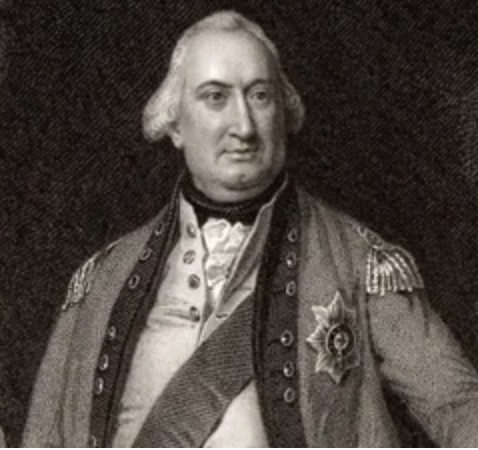
- First Governor-General to organise and institutionalise civil services.
- Introduced measures to check corruption, including:
- Raising salaries of civil servants.
- Strict enforcement of rules against private trade.
- Debarring civil servants from accepting presents and bribes.
- Promotion based strictly on seniority.
- Charter Act of 1793 reserved all posts with salary above £500 per annum for covenanted servants.
- Reasons for exclusion of Indians:
- Belief that only Englishmen could safeguard British interests.
- Belief that Indians were incapable and untrustworthy.
- High competition among Europeans for lucrative posts.
- Exclusion of Indians from Civil Services
- Cornwallis believed:“Every native of Hindustan is corrupt.”
Role of Lord Wellesley (1798–1805)
- Established Fort William College (1800) in Calcutta for training civil servants.
- The Court of Directors disapproved of Fort William College in 1806.
- Instead, East India College at Haileybury (England) was set up.
- Provided two years of training to new recruits.
Charter Act of 1833
- Theoretically opened civil services to Indians.
- Provisions were never implemented in practice
Charter Act of 1853
- Ended the patronage system of recruitment.
- Introduced open competitive examination for civil services.
- However, Indians were excluded from higher posts in practice.
Queen’s Proclamation of 1858
- Issued after the Revolt of 1857.
- Declared British intention to include Indians:
- Freely and impartially in civil services.
Indian Civil Service Act, 1861
- Reserved key offices for covenanted civil servants.
- Examination features:
- Held in England.
- Conducted in English language.
- Based on Greek and Latin classical learning.
- Maximum age limit reduced:
- 23 years (1859)
- 22 years (1860)
- 21 years (1866)
- 19 years (1878)
- Satyendra Nath Tagore became the first Indian ICS officer (1863).
Statutory Civil Service (1878–79)
- Introduced by Lord Lytton.
- One-sixth of covenanted posts reserved for Indians.
- Indians to be nominated by local governments.
- Subject to approval by:
- Secretary of State
- Viceroy
- The system failed and was later abolished.
- Congress Demands (Post-1885)
- Indian National Congress demanded:
- Raising age limit .
- Holding simultaneous examinations in India and Britain.
Aitchison Committee (1886)
- Appointed by Lord Dufferin.
- Recommendations:
- Abolition of terms ‘covenanted’ and ‘uncovenanted’.
- Classification of civil services into:
- Imperial Civil Service (exam in England)
- Provincial Civil Service (exam in India)
- Subordinate Civil Service (exam in India)
- Raising age limit to 23 years.
- 1893:
- British House of Commons passed resolution for simultaneous exams.
- Resolution not implemented.
- Secretary of State Kimberley stated:
- “An adequate number of civil servants must always be Europeans.”
Montagu–Chelmsford Reforms (1919)
- Declared realistic policy:
- More Indians in public services essential for responsible government.
- Recommended:
- Simultaneous examination in India and England.
- One-third of recruits to be appointed in India.
- Indian recruitment to increase by 1.5% annually.
Lee Commission (1924)
- Recommendations:
- Secretary of State to continue recruitment for:
- Indian Civil Service (ICS)
- Indian Forest Service
- Irrigation branch of Engineers
- Provincial governments to recruit for:
- Education
- Medical services
- 40% British, 40% directly recruited Indians, 20% promoted from provincial services.
- Achieve 50:50 parity between Europeans and Indians in ICS within 15 years.
- Secretary of State to continue recruitment for:
- Immediate establishment of a Public Service Commission.
Government of India Act, 1935
- Provided for:
- Federal Public Service Commission.
- Provincial Public Service Commissions.
- Despite reforms:
- Real control remained with the British.
- Indianisation did not lead to transfer of political power.
- Indian bureaucrats functioned as agents of colonial rule.
Evolution of Police System in Modern India
Police System in Pre-Colonial India
- Pre-colonial Indian states (Mughals and other native states) were autocratic.
- There was no separate or formal police system.
- Village watch guards existed from ancient times to protect villages at night.
- Under Mughal rule:
- Faujdars
- maintained law and order.
- Amils
- were revenue collectors but also dealt with rebels.
- Kotwal
- was responsible for law and order in cities.
- During Dual Government (1765–1772) in Bengal, Bihar, and Orissa:
- Zamindars were responsible for law and order.
- They maintained staff including thanedars.
- Duties included maintaining peace and controlling crime.
- Zamindars often:
- Neglected their duties.
- Colluded with dacoits.
- Shared loot with criminals.
- Early British Reforms
- 1770:
- Offices of faujdar and Amil abolished.
- 1774 (Warren Hastings):
- Faujdars restored.
- Zamindars asked to assist in suppression of:
- Dacoity
- Violence
- Disorder
- 1775:
- Faujdar thanas established in major towns.
- Supported by smaller police stations.
- Cornwallis’ Police Reforms (1791) –
- Organised a regular police force.
- Modernised the Indian system of thanas (circles).
- Structure:
- Daroga (Indian) in charge of a thana.
- Superintendent of Police (SP) at district level.
- Zamindars were relieved of police duties.
- Mayo’s Reforms (1808) –
- Appointed one SP for each division.
- SP assisted by spies (goyendas).
- Spies often:
- Harassed people.
- Committed depredations.
- Court of Directors’ Order (1814) –
- Abolished appointment of:
- Darogas
- Their subordinates
- Applied everywhere except Bengal.
- Bentinck’s Reforms (1828–1835) –
- Abolished office of Superintendent of Police.
- Collector/Magistrate made head of police in district.
- Commissioner acted as SP at divisional level.
- Result:
- Police system became poorly organised.
- Heavy administrative burden on collector/magistrate.
- Presidency towns were first to:
- Separate duties of collector/magistrate.
- Police Commission (1860) & Police Act, 1861 –
- Led to enactment of Indian Police Act, 1861.
- Recommendations:
- Creation of civil constabulary system.
- Village watchman retained but linked to formal police.
- Hierarchical structure:
- Inspector-General → Province
- Deputy Inspector-General → Range
- Superintendent of Police → District
- No All-India Police was created.
- Uniform ranks introduced across provinces.
- Curzon’s Police Reforms (1902–03) –
- Police Commission under Sir Andrew Frazer.
- Recommendations:
- No promotion of junior officials to senior posts.
- Senior officials to be recruited directly.
- Establishment of police training schools.
- Increase police strength in all provinces.
- Allow village visits for investigation.
- Increase salaries.
- Creation of Criminal Intelligence Department (CID) at Centre.
- Development of Intelligence Agencies
- Department of Criminal Intelligence (DCI) attached to Government of India.
- Became:
- Central domestic intelligence agency
- Foreign intelligence agency
- CIDs established in all provinces.
- 1929:
- CID divided into:
- Special Branch
- Crime Branch
- CID divided into:
- Police and National Movement
- Police became:
- Tool of colonial repression
- Assisted British Raj in:
- Suppressing nationalist struggles
- Result:
- Loss of public empathy
- Seen as an agent of imperial rule.
- Successfully curbed:
- Dacoity
- Thugee
- Attitude towards people:
- Harsh
- Unsympathetic
Military Under the British
- Importance of Military
- Military was the backbone of Company’s rule.
- Military Structure Before 1857
- Two military forces:
- Queen’s Army
- Crown’s troops stationed in India
- Company’s Army
- European regiments
- Indian soldiers under British officers
- Queen’s Army
- Reorganisation After 1857 Revolt
- Main objective:
- Prevent another revolt
- As warned by Lord Dufferin (1888):
- Lessons of 1857 must never be forgotten
- Other objectives:
- Defend empire from:
- Russia
- Germany
- France
- Use Indian army for expansion in Asia and Africa.
- British troops as army of occupation.
- Defend empire from:
- European Domination
- One-third European soldiers ensured.
- Ratio fixed:
- Bengal Army → 1 European : 2 Indians
- Madras & Bombay → 2 Europeans : 5 Indians
- Europeans monopolised:
- Artillery
- Tanks
- Armed corps
- Indians:
- Given inferior rifles till 1900.
- Excluded from high-tech arms till World War II.
- Higher ranks –
- Indians were not allowed commissioned ranks till 1918.
- Highest rank till 1914:
- Subedar
- 1926 Sandhurst Committee:
- Proposed 50% Indian officers by 1952.
- Policy of Divide and Rule in Army
- Based on balance and counterpoise.
- 1879 Army Commission:
- “Natives against natives.”
- Martial race theory promoted –
- Favoured communities:
- Sikhs
- Gurkhas
- Pathans
- Declared non-martial:
- Awadh
- Bihar
- Central India
- South India
- These areas had participated in the 1857 revolt.
- Communalisation of Army –
- Regiments organised on:
- Caste
- Community
- Tribe
- Region
- Nationalist influence deliberately checked.
- Isolation of Soldiers
- Soldiers isolated from civilian society.
- Measures included:
- Banning nationalist newspapers.
- Preventing political literature.
- Charles Wood stated:
- Regiments should be rivals to each other.
- Overall Evaluation
- Indian Army remained:
- Expensive
- Politically controlled
- Anti-nationalist in orientation
Development of the Judiciary in British India
- Judicial System in Pre-Colonial India
- Judicial system lacked:
- Proper procedures
- Organised hierarchy of courts
- Regular gradation from higher to lower courts
- Proper territorial distribution of courts
- Hindu disputes:
- Decided by caste elders
- Village panchayats
- Zamindars
- Muslim judicial system:
- Based on the institution of Qazi
- Qazis were religious persons
- Located in:
- Provincial capitals
- Towns
- Qasbas (large villages)
- Kings were
- Considered the fountainhead of justice
- Justice delivery was often arbitrary
- Beginning of Common Law System
- Introduction of a common law system based on judicial precedents
- Establishment of Mayor’s Courts by the East India Company in 1726.
- Locations:
- Madras
- Bombay
- Calcutta
- Locations:
- Expansion of judicial reforms followed Company’s transformation into a ruling power
- Judicial Reforms under Warren Hastings (1772–1785) –
- District Diwani Adalats –
- Established for civil disputes, presided by the Collector.
- Laws applied:
- Hindu law for Hindus
- Muslim law for Muslims
- Appeals lay to Sadar Diwani Adalat
- Headed by:
- President
- Two members of Supreme Council
- Headed by:
- District Fauzdari Adalats –
- Tried criminal cases .
- Headed by an Indian officer .
- Assisted by: –
- Qazis
- Muftis
- Supervised by the Collector .
- Muslim law applied
- Capital punishment and property confiscation:-
- Required approval of Sadar Nizamat Adalat
- Located at Murshidabad
- Headed by:
- Deputy Nizam
- Chief Qazi
- Chief Mufti
- Required approval of Sadar Nizamat Adalat
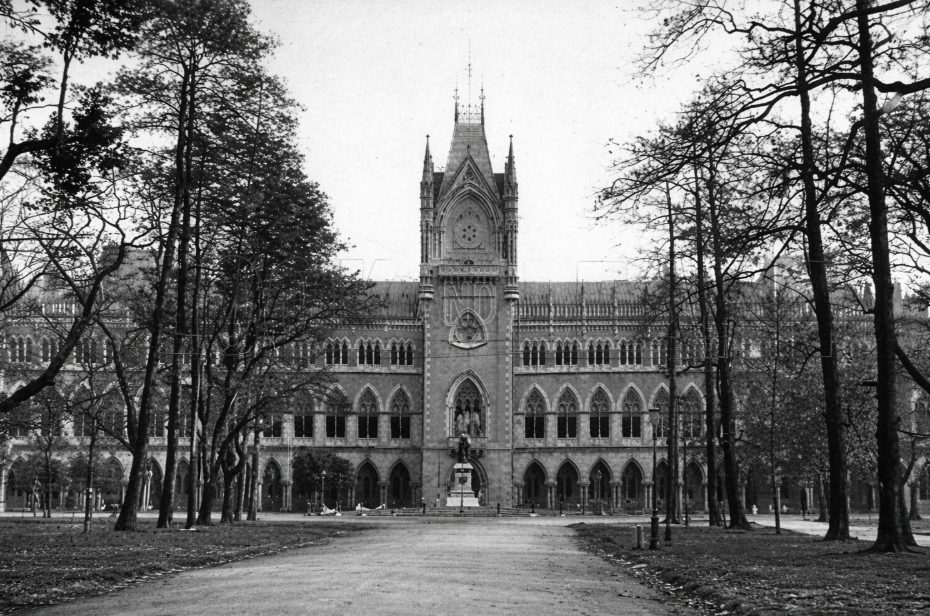
- Supreme Court at Calcutta (1774)
- Established under Regulating Act of 1773
- First Chief justice was Elijah Impey
- Jurisdiction:
- British subjects in Calcutta
- Subordinate factories
- Indians and Europeans
- Powers:
- Original jurisdiction
- Appellate jurisdiction
- Jurisdiction often clashed with other courts
Reforms under Cornwallis (1786–1793):
- Separation of Powers
- Criminal Justice Reforms
- District Fauzdari Courts abolished
- Circuit Courts established at:
- Calcutta
- Dacca
- Murshidabad
- Patna
- Circuit Courts:
- Had European judges
- Acted as appellate courts for civil and criminal cases
- Sadar Nizamat Adalat
- Shifted from Murshidabad to Calcutta
- Placed under:
- Governor General
- Members of Supreme Council
- Assisted by:
- Chief Qazi
- Chief Mufti
- Civil Justice Reforms –
- District Diwani Adalat renamed as:
- District Court
- City Court
- Zila Court
- Placed under District Judge
- Collector:
- Confined only to revenue administration
- No magisterial functions
- Hierarchy of Civil Courts –
- Munsiff’s Court – Indian officers
- Registrar’s Court – European judge
- District Court – District Judge
- Four Circuit Courts – Provincial appellate courts
- Sadar Diwani Adalat – Calcutta
- King-in-Council
- Cornwallis Code
- Separation of:
- Revenue administration
- Judicial administration
- Europeans brought under court jurisdiction
- Government officials:
- Answerable to civil courts
- Established:
- Sovereignty of law
Reforms under William Bentinck (1828–1833) –
- Abolished four Circuit Courts
- Their functions transferred to:
- Collectors
- Under supervision of Commissioner of Revenue and Circuit
- Established:
- Sadar Diwani Adalat at Allahabad
- Sadar Nizamat Adalat at Allahabad
- Objective:
- Convenience of people of Upper Provinces
- Language reforms:
- Persian was official court language earlier
- Now:
- Persian or vernacular languages allowed
- English replaced Persian in Supreme Court
- Law Commission and Codification (1833) –
- Law Commission set up under Lord Macaulay
- Objective:
- Codification of Indian laws
- Outcomes:
- Civil Procedure Code (1859)
- Indian Penal Code (1860)
- Criminal Procedure Code (1861)
- Later Judicial Developments –
- 1860
- Europeans:
- No special privileges in civil cases
- In criminal cases:
- Could be tried only by European judges
- 1865
- Supreme Court and Sadar Adalats merged
- Formation of High Courts at:
- Calcutta
- Bombay
- Madras
- 1883 –
- Illbert bill proposal in British India to allow Indian judges to try European defendants .
- British community opposed this
- Bill was later watered down , allowing europeans .
- 1935
- Government of India Act, 1935:
- Provided for a Federal Court
- Federal Court:
- Set up in 1937
- Settled disputes between governments
- Heard limited appeals from High Courts
Major Changes in Administrative Structure after 1857
Imperial Objectives –
- Primary concern of colonial authority:
- Consolidation of British position in India
- Objectives included:
- Securing British economic and commercial interests
- Protection against political dangers
- Expansion of British influence globally whenever possible
- Reflected in reactionary policies during:
- Lytton
- Dufferin
- Lansdowne
- Elgin
- Curzon (most prominent).
Administration after 1857 – Central Government-
Government of India Act, 1858
- Also called Act for Better Government of India
- Transferred power from:
- East India Company → British Crown
Secretary of State for India –
- Power to govern India vested in Secretary of State
- Secretary of State:
- Member of British Cabinet
- Assisted by a Council of 15 members
- Answerable to British Parliament
- Nature of authority:
- Secretary held all initiative and final decision-making powers
- Council was purely advisory
- Result:
- Dual system of governance (Pitt’s India Act, 1784) ended
- Ultimate authority rested with British Parliament.
Governor General → Viceroy –
- Government in India continued through:
- Governor General
- Prestige increased, but Authority gradually reduced
- Assisted by:
- Executive Council
- Executive Council members:
- Heads of departments
- Official advisers to the Viceroy
Indian Councils Act, 1861 (Central Level) –
- Added:
- A fifth member (jurist) to Viceroy’s Executive Council
- For legislative purposes:
- Viceroy could nominate 6–12 additional members
- At least half were to be non-officials
- Non-officials could be Indians or Europeans.
- Limitations of Central Legislative Council –
- Council was advisory, not powerful
- Major weaknesses:
- Could not discuss important matters without government approval
- Could not discuss financial matters at all without permission
- Had no control over the budget
- Could not discuss executive actions
- Bills required Viceroy’s approval
- Secretary of State could veto even approved legislation
- Indian members:
- Drawn from elite sections only
- Princes, landlords, diwans
- Not representative of Indian public opinion
Provincial Government –
Indian Councils Act, 1861 (Provincial Level)
- Restored legislative powers to:
- Bombay
- Madras
- Powers had been withdrawn in 1833
- Later:
- Legislative councils established in other provinces
Administrative Structure of Provinces
- Presidencies:
- Bombay
- Madras
- Calcutta
- Enjoyed greater powers than other provinces
- Presidencies governed by:
- Governor
- Executive Council of three members
- Appointed by the Crown
- Other provinces governed by:
- Lieutenant Governors
- Chief Commissioners
- Appointed by Governor General
Financial Decentralisation –
- Some decentralisation introduced in later decades
- Nature:
- Administrative reorganisation
- Aimed at:
- Increasing revenue
- Reducing expenditure
- Did NOT signify:
- Real provincial autonomy
Lord Mayo’s Financial Reforms (1870) –
- Provinces given fixed grants from central revenues.
- For administration of:
- Police
- Jails
- Education
- Medical services
- Roads
- Provinces given discretion in administering these services
- Marked first step towards:
- Separation of central and provincial finances.
Lord Lytton’s Reforms (1877) –
- Transferred additional expenditure heads to provinces:
- Land revenue
- Excise
- General administration
- Law and justice
- Provinces entitled to fixed share of income from:
- Stamps
- Excise
- Income tax
Revenue Division (1882) –
- All revenue sources divided into three categories:
- General:
- Entirely to Centre
- Provincial:
- Entirely to Provinces
- Shared:
- Divided between Centre and Provinces
- General:
Limits of Provincial Autonomy
- Central government remained supreme
- Retained detailed control over provinces
- Reason:
- Both Centre and Provinces subordinated to:
- Secretary of State
- British Government
- Both Centre and Provinces subordinated to:
Local Bodies under British Rule in India –
Purpose of Decentralisation
- Administration was decentralised through municipalities and district boards
- These bodies administered:
- Education
- Health
- Sanitation
- Water supply
- Roads
- Other basic civic amenities
- Financed mainly through local taxes.
Reasons for Establishment of Local Bodies –
- Financial difficulties due to excessive centralisation made decentralisation necessary.
- Modern civic amenities developed in Europe had to be introduced in India due to growing economic contacts.
- Nationalist movement demanded improvement in basic facilities.
- Some British policymakers wanted to associate Indians with administration without weakening British supremacy.
- Use of local taxes for local welfare helped counter criticism of British reluctance to:
- Spend from the imperial treasury.
Evolution of Local Government –
Period 1864–1868
- First local bodies formed.
- Mostly nominated members.
- Headed by district magistrates.
- Functioned mainly as tax-collecting agencies, not self-governing institutions.
Mayo’s Resolution (1870) –
- Introduced financial decentralisation.
- Based on Indian Councils Act, 1861.
- Provinces allowed:
- Local taxation
- Annual imperial grants
- Certain departments transferred to provinces:
- Medical services
- Education
- Roads
- Marked the beginning of local finance.
- Emphasised need for:
- Local interest
- Supervision
- Care in managing funds
- Provinces like Bengal, Madras, NW Provinces, Punjab passed municipal acts.
Ripon’s Resolution (1882) –
- Lord Ripon called “Father of Local Self-Government in India”
- Key features:
- Local bodies as instruments of administration and political education
- Urban and rural local bodies with:
- Defined duties
- Independent revenue sources
- Non-officials to be in majority
- Introduction of elections wherever feasible
- Non-official chairpersons
- Minimum official interference
- Official sanction required for:
- Loans
- Sale of municipal property
- New taxes
- Costly works
- Rules and bye-laws
- Limitations after Ripon
- Elected members remained a minority.
- Limited franchise.
- District boards still headed by officials.
- Government retained power to:
- Suspend
- Supersede bodies
- Bureaucracy believed Indians were unfit for self-government
- Lord Curzon increased official control over local bodies.
Royal Commission on Decentralisation (1908) –
- Major Recommendations:
- Strengthen village panchayats by giving powers:
- Minor judicial cases
- Village works
- Schools
- Fuel and fodder reserves
- Adequate income sources
- Establish sub-district (taluka/tehsil) boards
- Separate duties
- Separate revenues
- Remove restrictions on:
- Taxation powers
- Regular grants-in-aid (except for major projects)
- Municipalities to manage:
- Primary education
- Optional middle vernacular schools
- Government to take charge of secondary education, hospitals, police, etc.
Government of India Resolution (1915) –
- Reflected official response to 1908 Commission.
- Most recommendations not implemented
- Condition of local bodies unchanged from Ripon’s time.
- Resolution of May 1918 –
- Issued after August 20, 1917 Declaration (August Declaration)
- Recognised local self-government as:
- First step toward responsible government
- Suggested:
- More representative local bodies
- Real authority, not nominal powers
Local Self-Government under Dyarchy (1919) –
- Local self-government became a ‘Transferred Subject’
- Came under Indian ministers
- Finance remained a ‘Reserved Subject’
- Result:
- Lack of funds
- Limited development of local institutions.
Simon Commission (1930) –
- Observations:
- Panchayats showed little progress except in:
- United Provinces
- Bengal
- Madras
- Elected members reluctant to impose local taxes
- Financial management deteriorated after 1919 reforms
- Panchayats showed little progress except in:
- Suggested:
- Increased provincial control for efficiency (retrograde step).
- Government of India Act, 1935 and After –
- Introduced provincial autonomy
- Finance portfolio transferred to popular ministries
- Positive impacts:
- More funds for local bodies
- Removal of rigid demarcation between provincial and local finance
- New provincial acts increased authority of local bodies
- Limitations:
- Financial powers remained weak
- New restrictions on:
- Terminal taxes
- Property taxes
- Trade and profession taxes
- Provinces ignored liberal taxation powers suggested in 1908
- Conclusion –
- Administrative changes after 1857:
- Strengthened British control
- Increased centralisation
- Expanded imperialist exploitation
- Indian participation:
- Limited
- Elite-based
- Non-representative
- British rule remained:
- Authoritarian
- Reactionary
- Alien in character
Policy of Divide and Rule –
- British aimed to prevent united mass resistance.
- Adopted a deliberate policy of divide and rule.
- Divisions encouraged between:
- Princes and people
- Region vs region
- Province vs province
- Caste vs caste
- Hindus vs Muslims
Communal Strategy –
- After 1857 Muslims faced initial repression.
- After 1870 British sought support of educated middle and upper-class Muslims.
- Result –
- Religious divide among educated Indians
- Strengthening of communal consciousness
Attitude Towards Zamindars and Princes –
- British sought alliance with:
- Princess
- Zamindars
- Landlords
- Consequences:
- Peasant interests ignored
- Zamindars became loyal supporters of British rule.
Attitude Towards Social Reforms –
- British withdrew support from social reform movements.
- Reason:
- Fear of antagonising orthodox and conservative sections.
Underdeveloped Social Services –
- Major expenditure on:
- Army
- Civil administration
- Wars
- Minimal spending on:
- Education
- Health
- Sanitation
- Physical infrastructure
British Policy Towards Princely States –
Basic Objectives of British Policy
- British relations with princely states were guided by a two-point policy:
- Using and perpetuating princely states as bulwarks of the British Empire.
- Subordinating them completely to British authority.
- This approach is known as the policy of subordinate union.
- Abandonment of Annexation Policy –
- After the Revolt of 1857, the British Abandoned the policy of annexation.
- End of Sovereign Status of Princely States –
- Queen Victoria adopted the title Kaiser-i-Hind (Queen Empress of India) in 1876.
- This act emphasized:
- British sovereignty over the entire Indian subcontinent.
- Lord Curzon later clarified that:
- Indian princes ruled their states only as agents of the British Crown.
- Contemporary View –
- Historian F.G. Hutchins observed:
“The British and the princes needed one another; India’s need for either was highly doubtful.”
British Foreign Policy in India –
- Nature of British Foreign Policy
- British foreign policy in India was guided by:
- Interests of British imperialism, not Indian welfare.
- It often led to:
- Conflicts with India’s neighbouring countries.
- Major Aims of British Policy in Asia and Africa
- The British government aimed to:
- Protect the Indian Empire, the most valuable British colony.
- Expand British commercial and economic interests.
- Keep rival European imperialist powers (especially Russia and France) at a distance in Asia and Africa.
- The British government aimed to:
- Burden on India –
- Although British interests were served, the cost was borne by India.
- Indian soldiers’ blood was shed.
White Racism –
- British maintained ideology of racial superiority.
- Indians excluded from:
- Higher civil services
- Military ranks
- Railway compartments
- Clubs, hotels, parks
- Public display of racism:
- Physical abuse
- Beatings
- Murders reported as “accidents”
- Purpose:
- Reinforce image of British as dominant race.
- Retain exclusive control of administration.



