

Indian National Movement (1914–1929) is an important topic in Modern History of India that highlights the struggle of Indians against British rule during the early twentieth century. This period witnessed the rise of mass movements, the leadership of Mahatma Gandhi, and growing national consciousness among the people. The movement played a major role in strengthening the demand for freedom and unity in India.
Indian National Movement ( 1914 – 1929)
- Indian Nationalist Response to First World War (1914–1919)
- Britain allied with France, Russia, the USA, Italy, and Japan against Germany, Austria-Hungary, and Turkey.
- Nationalist response is divided into three groups:
- Moderates: Supported the British war effort as a duty.
- Extremists (e.g., Tilak): Supported war, hoping Britain would reward India with self-government.
- Revolutionaries: Sought to exploit the war to overthrow British rule (via Ghadr Party, Berlin Committee, mutinies like Singapore).
- Revolutionary rationale: With British troops occupied in WWI, the possibility of foreign support (Germany, Turkey), and a reduced British military presence in India.
Home Rule League Movement
- Launched as a moderate but effective nationalist response to WWI.
- Leaders: Bal Gangadhar Tilak, Annie Besant, G.S. Khaparde, S. Subramania Iyer, Joseph Baptista, Muhammad Ali Jinnah.
- Objective: Demand self-government (home rule) for India within the British Commonwealth, inspired by the Irish Home Rule League.
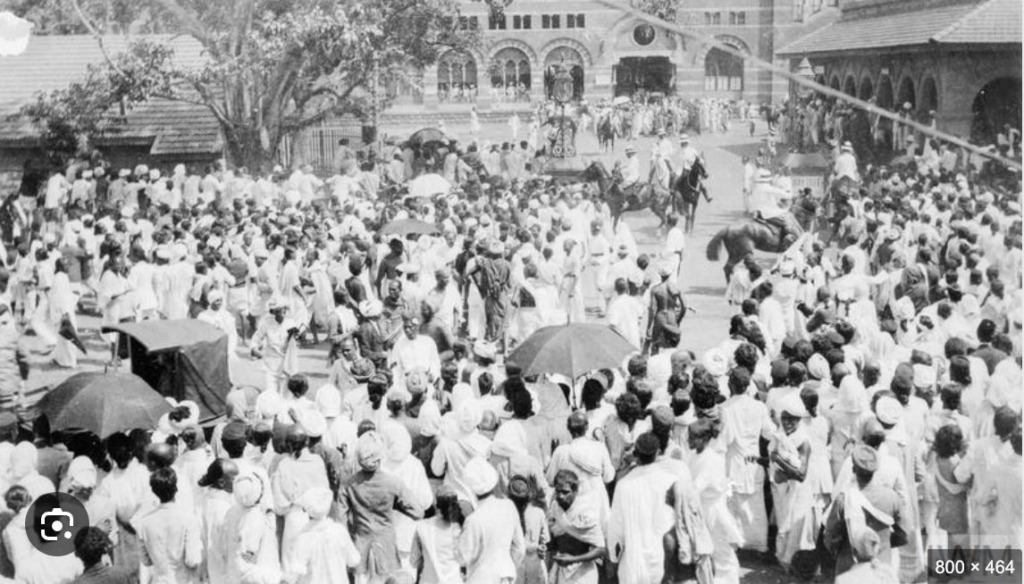
Factors Leading to the Movement
- Need for popular pressure to get concessions from the government.
- Disillusionment with Morley-Minto Reforms.
- Wartime miseries: high taxation, rise in prices, public unrest.
- War exposed myth of white superiority.
- Tilak, after release in June 1914, ready to lead, promoted loyalty + reform.
- Annie Besant, Irish theosophist, wanted to build a national Home Rule movement.
Establishment of Leagues
- Tilak’s Indian Home Rule League (April 1916)
- Headquarters: Poona
- Areas covered: Maharashtra (excluding Bombay), Karnataka, Central Provinces, Berar
- Six branches
- Demands: Swarajya, linguistic states, vernacular education
- Annie Besant’s All-India Home Rule League (September 1916)
- Headquarters: Madras
- Areas covered: Rest of India (including Bombay)
- 200 branches, loosely organised
- Key workers: George Arundale, B.W.Wadia, C.P. Ramaswamy Aiyar
- Methods Used
- Public meetings, conferences, libraries, reading rooms
- Classes for students, plays, religious songs
- Propaganda through newspapers, pamphlets, posters
- Organising social work, participation in local governance.
Home Rule League Programme
- Objective: Convey the message of home rule (self-government) to the common people.
- Wider appeal: Reached previously politically backward regions like Gujarat and Sindh.
- Methods and Activities:
- Promoted political education and discussion through public meetings.
- Organised libraries and reading rooms with books on national politics.
- Held conferences and classes for students on politics.
- Carried out propaganda via newspapers, pamphlets, posters, illustrated postcards.
- Used plays and religious songs to spread the message.
- Collected funds for movement activities.
- Organised social work in communities.
- Participated in local government activities to engage people.
- Influence of global events: The Russian Revolution of 1917 helped energise the campaign.
- Key Leaders Who Joined
- Motilal Nehru, Jawaharlal Nehru, Bhulabhai Desai, Chittaranjan Das, K.M.Munshi, B.Chakravarti, Saifuddin Kitchlew, Madan Mohan Malaviya, Muhammad Ali Jinnah, Tej Bahadur Sapru, Lala Lajpat Rai
- Some became heads of local branches of Annie Besant’s League.
- Muhammad Ali Jinnah led the Bombay division.
- Many Moderate Congressmen, disillusioned with Congress inactivity, also joined.
- Members of Gokhale’s Servants of India Society participated in the movement.
- Government Attitude
- The government imposed severe repression, particularly in Madras, prohibiting students from attending political meetings.
- A case was filed against Tilak, but it was later rescinded by the High Court.
- Tilak was barred from entering Punjab and Delhi.
- In June 1917, Annie Besant, B.P. Wadia, and George Arundale were arrested.
- Their arrest sparked nationwide protests.
- Sir S. Subramania Aiyar renounced his knighthood in protest.
- Tilak advocated a programme of passive resistance.
- The repression hardened the agitators’ resolve against the government.
- Montagu, Secretary of State for India, remarked humorously on the situation, likening it to the legend of Shiva and Sati.
- Annie Besant was released in September 1917.
- Reasons Why the Home Rule Agitation Faded Out by 1919
- Lack of effective organisation within the movement.
- Communal riots occurred during 1917–18, disrupting unity.
- Moderates who joined Congress after Annie Besant’s arrest were pacified by Montagu’s August 1917 statement promising self-government and by Besant’s release.
- Talk of passive resistance by Extremists discouraged Moderates from participating in activities from September 1918 onwards.
- Montagu-Chelmsford reforms (July 1918) caused further division among nationalist ranks.
- Annie Besant was indecisive about how to use the League after the reforms and vacillated over the use of passive resistance.
- Tilak went abroad (September 1918) due to a libel case against Valentine Chirol (Indian Unrest)
- Leaving the movement leaderless along with Besant’s indecision.
- Gandhi’s fresh approach to the freedom struggle gained popularity, and the emerging mass movement sidelined the Home Rule Movement.
- In 1920, Gandhi became president of the All India Home Rule League, renamed it Swarajya Sabha, and within a year the league merged with the Indian National Congress.
- Achievements/Positive Gains of Home Rule Movement
- Shifted focus from elite to masses; prepared people for mass politics.
- Created organisational links between town and country.
- Produced a generation of ardent nationalists.
- Prepared masses for Gandhian style politics.
- Influenced Montagu’s 1917 declaration and Montagu-Chelmsford reforms.
- Facilitated Moderate-Extremist reunion at Lucknow (1916).
- Lent urgency and new dimension to national movement.
Lucknow Session of the Indian National Congress (1916)
- Readmission of Extremists to Congress
- Presided over by Moderate Ambika Charan Majumdar.
- Extremists, led by Tilak, were finally readmitted to Congress.
- Factors facilitating reunion:
- Old controversies had lost significance.
- Both Moderates and Extremists realized that the split caused political inactivity.
- Tilak and Annie Besant actively worked for reunion.
- Tilak reassured Moderates that he supported administrative reforms, not overthrowing the government, and denounced violence.
- Death of Pherozeshah Mehta, a key Moderate opponent of Extremists, eased tensions.
Lucknow Pact: Congress and Muslim League
- Congress and Muslim League came together at Lucknow to present common demands to the British government.
- Muslim League’s attitude shifted due to:
- Britain’s refusal to support Turkey in the Balkan and Italo-Turkish wars.
- Annulment of Bengal Partition (1911), upsetting some Muslim supporters.
- Refusal to establish an Aligarh University with nationwide affiliation powers.
- Younger League members adopting bolder nationalist politics, aiming for self-government.
- WWI repression of Muslim leaders and publications (Maulana Azad, Ali brothers, Hasrat Mohani) generating anti-imperialist sentiment.
Nature of the Lucknow Pact
- League agreed to joint constitutional demands with Congress.
- Congress accepted Muslim League’s demand for separate electorates, lasting until communities opted for joint electorates.
- Muslims granted a fixed proportion of legislative seats at central and provincial levels.
- Joint demands to the government:
- Early declaration to confer self-government on Indians.
- Expansion of representative assemblies with elected majorities and more powers.
- Legislative council term set to 5 years.
- Salaries of Secretary of State for India to be paid by British Treasury, not Indian funds.
- Half of the executive councils at Viceroy and provincial levels to be Indians.
- Critical Comments on the Pact
- Only half of the executive was elected; legislature could not remove them → potential constitutional deadlock.
- Pact was essentially an expanded version of Morley-Minto reforms.
- Acceptance of separate electorates implied Congress and League as separate political entities, laying early groundwork for two-nation theory.
- Leaders united, but masses of both communities were not fully integrated.
- Congress’s acceptance of separate electorates aimed to allay minority fears of majority domination.
- Reunion generated enthusiasm among the people and prompted the government to promise future self-government (Montagu’s August 1917 declaration).
Montagu’s Statement – August 1917 (August Declaration)
- Announced by: Edwin Samuel Montagu, Secretary of State for India.
- Key points of the statement:
- Policy of increasing Indian participation in all branches of administration.
- Gradual development of self-governing institutions.
- Progressive realization of responsible government in India as part of the British Empire.
- Significance:
- Nationalist demand for self-government/home rule was no longer seditious.
- “Responsible government” implied rulers would be answerable to elected representatives, not only to London.
- British did not intend to give full power to Indian-majority legislatures.
- Introduced the concept of dyarchy to make executives somewhat responsible to elected assemblies.
- Indian Objections to Montagu’s Statement
- No specific time frame for implementation of self-government was mentioned.
- Government-controlled: The British alone would decide the pace and nature of advance, which angered Indians.
- Aggressive politics in the national movement, pioneered by Tilak and Annie Besant (inspired by Ireland).
- Tilak and Besant willing to lead the movement.
Montagu-Chelmsford Reforms and Government of India Act, 1919
- Context
- British used “carrot and stick” policy:
- Carrot: Montagu-Chelmsford Reforms (constitutional reforms).
- Stick: Rowlatt Act (repression).
- Reforms announced July 1918, enacted as Government of India Act, 1919.
- Main Features
- Provincial Government – Introduction of Dyarchy
- Dyarchy: Rule of two – executive councillors (bureaucrats) and popular ministers (elected).
- Governor: Executive head of the province.
- Division of subjects:
- Reserved subjects: Law & order, finance, land revenue, irrigation → handled by governor & bureaucrats.
- Transferred subjects: Education, health, local government, industry, agriculture, excise → handled by ministers from elected legislative councils.
- Congress Reaction
- Special session August 1918, Bombay (President: Hasan Imam):
- Reforms declared “disappointing” and “unsatisfactory”.
- Demanded effective self-government.
- Tilak: “Unworthy and disappointing—a sunless dawn.”
- Annie Besant: “Unworthy of England to offer and India to accept.”
Gandhi: Early Career and Experiments in South Africa Early Life and Move to South Africa
- Born 2 October 1869 in Porbandar, Gujarat.
- Father: Diwan (minister) of the state.
- Studied law in England; went to South Africa in 1893 for a legal case involving client Dada Abdullah.
- Witnessed racism and discrimination against Indians in South Africa.
- Decided to stay in South Africa to organize Indian workers for their rights.
- Stayed in South Africa until 1914, then returned to India.
- Indians in South Africa
- Three categories:
- Indentured laborers: Mainly from South India, worked on sugar plantations.
- Merchants: Mostly Meman Muslims who followed laborers.
- Ex-indentured settlers: Lived with families after contracts expired.
- Mostly illiterate, little or no English knowledge.
- Suffered racial discrimination, restricted residence, denied voting rights.
- Restrictions included curfews, no access to public footpaths, and poor living conditions.
Moderate Phase of Struggle (1894–1906)
- Relied on petitions and memorials to South African and British authorities.
- Belief: authorities would redress grievances as Indians were British subjects.
- Set up Natal Indian Congress to unite Indians.
- Started Indian Opinion newspaper.
Phase of Passive Resistance / Satyagraha (1906–1914)
- Characterised by passive resistance and civil disobedience, called Satyagraha.
- Against Registration Certificates (1906)
- The law required Indians to carry certificates with fingerprints.
- Gandhi formed the Passive Resistance Association.
- Indians defied the law, faced jail, and later publicly burned certificates.
- Campaign against Restrictions on Indian Migration
- Indians defied the law by crossing provinces without licenses.
- Many were jailed.
- Campaign against the Poll Tax and the Invalid Marriage Judgement
- Poll tax: 3 pounds on ex-indentured Indians.
- Supreme Court invalidated non-Christian marriages, angering Hindus, Muslims, and Parsis.
- Women were drawn into the movement due to indignity.
- Protest against the Transvaal Immigration Act
- Indians migrated illegally from Natal into Transvaal; many were jailed.
- Support from India: Gokhale toured the country; Viceroy Lord Hardinge condemned repression.
- Resulted in an impartial enquiry and negotiations.
Tolstoy Farm (1910–1913)
- Founded by Gandhi & Herman Kallenbach; inspired by Tolstoy.
- Purpose: House satyagrahi families, sustain struggle, experiment in education & simple living.
- Preceded by Phoenix Farm (1904) inspired by John Ruskin’s Unto This Last.
- Activities: Manual labor, vocational training, co-education, cooking, carpentry, messenger work.
- Gandhi’s Technique of Satyagraha
- Based on truth (satya) and non-violence (ahimsa).
- Influences: Indian tradition, Christian teachings, Tolstoy.
- Key Principles:
- Never submit to wrong; remain truthful, fearless, non-violent.
- Use withdrawal of cooperation and boycott.
- Methods: non-payment of taxes, refusing honors/positions.
- Accept suffering willingly as part of love for truth.
- No hatred for the wrongdoer.
- Never bow before evil; ends do not justify means.
- Only the brave and strong can practice Satyagraha; cowardice is worse than violence.
Gandhi in India and Early Movements (1915-1929)
- Returned to India in January 1915 after South Africa.
- On Gokhale’s advice, travelled across British India to understand ground realities.
- His first major public appearance was at the inauguration of the Banaras Hindu University.
- Political stance for first year: No participation in political organizations or taking positions.
- Gandhi ji was influenced by Ruskin’s ‘Unto this last’, Thoreau’s ‘On Civil Disobedience’ and Tolstoy’s ‘Kingdom of God is Within You’. Gandhiji’s ideas of ‘Sarvodaya’ were influenced by Ruskin’s ideas.
- During the train journey from Johannesburg to Durban, Gandhiji’s friend Pollock gave him Ruskin’s book ‘Unto this last’.
- He translated this book into Gujarati language and named it ‘Sarvodaya’.
- According to Gandhiji, the charkha is a symbol of Indianness and public aspirations. It enhances their pride by providing support to the helpless.
- Charkha teaches the lesson of self-confidence, self-control and self-reliance.
- Charkha is about to bring about a quiet but definite revolution.
- It is not a symbol of commercial war but a symbol of commercial peace.
- Rabindranath Tagore, “a great soul in the attire of a beggar’
- Rabindranath Tagore who first of all described Gandhi ji as “Mahatma”.
Political philosophy in Hind Swaraj (1909).
- Ideal state (Ramrajya):
- Stateless, moral society.
- No army, police, or representative government.
- No capitalism, communism, exploitation, or religious violence.
- Advocated:
- Village republics (self-sufficient, decentralised).
- Minimum state power → “Best government governs least”.
- Seen as a philosophical anarchist.
- Democracy is only possible with high morality.
- Emphasised duties over rights.
- Education –
- Wardha Scheme of Basic Education (Nai Talim), 1937
- Background
- October 1937: Congress organised All India Education Conference at Wardha
- Based on resolutions of the conference, the Zakir Hussain Committee prepared a national scheme of education.
- The scheme came to be known as Nai Talim (Basic Education)
- Inspired by Gandhi’s educational ideas published in Harijan
- Main Provisions of Nai Talim
- Inclusion of a basic handicraft in the curriculum
- First seven years of schooling to be:
- Free and compulsory
- Nationwide
- Imparted through mother tongue
- Medium of instruction:
- Mother tongue
- Hindi to be taught where it was not the mother tongue.
- Education through productive activity using:
- crafts such as:
- Spinning and weaving
- Carpentry
- Agriculture
- Pottery
- Leather work
- Home science (for girls)
- Community contact to be developed through service activities –
- Subjects included:
- Mathematics
- General science
- Social studies
- Painting
- Music
- Physical education
- No religious or moral education included
- Rejected English system & English medium.
Champaran Satyagraha (1917) – First Civil Disobedience
- Rajkumar Shukla requested Gandhi to address indigo planters’ exploitation in Champaran, Bihar.
- Tinkathia system: Peasants forced to grow indigo on 3/20 of land.
- Synthetic dyes reduced demand for indigo; planters demanded high rents and illegal dues.
- Peasants forced to sell at fixed prices set by Europeans.
- Gandhi, with Rajendra Prasad, Mazhar-ul-Haq, Mahadev Desai, Narhari Parekh, and J.B. Kripalani, arrived to investigate.
- Gandhi practiced civil disobedience.
- Government formed a committee including Gandhi; tinkathia system abolished.
- Peasants were partially compensated for illegal dues (25%).
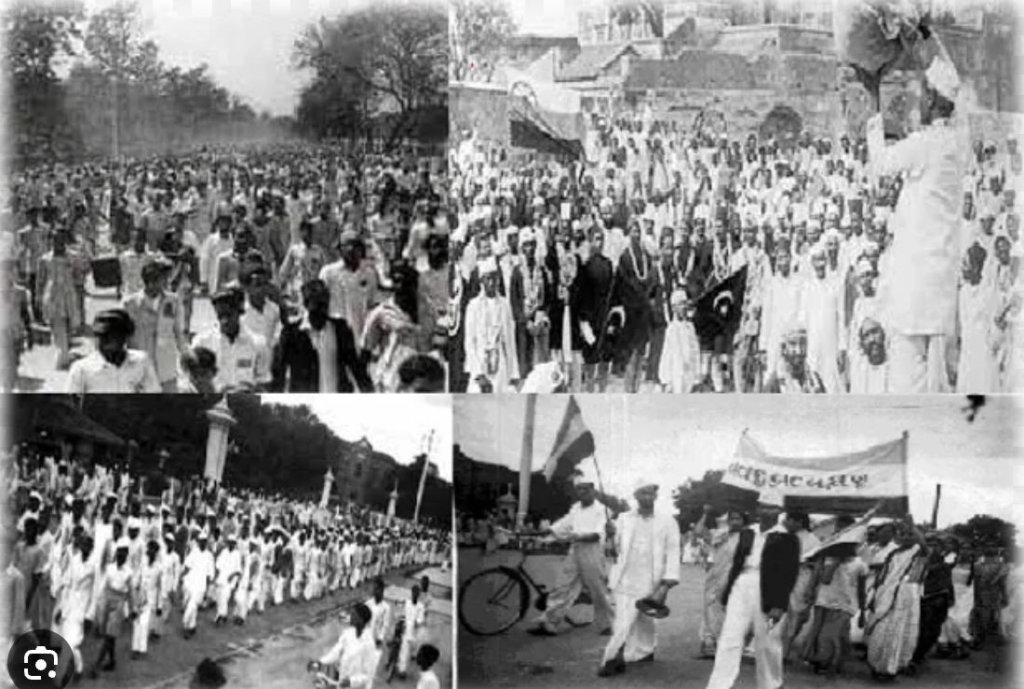
- Result: First successful civil disobedience in India; Indigo planters left the area within a decade.
- Other leaders: Braj Kishore Prasad, Anugrah Narayan Sinha, Ramnavmi Prasad, Shambhu Sharan Verma.
Ahmedabad Mill Strike (1918) – First Hunger Strike
- Dispute between mill owners and workers over discontinuation of plague bonus and wartime inflation.
- Workers demanded a 50% wage increase; owners offered 20%.
- Anusuya Sarabhai approached Gandhi to intervene.
- Gandhi undertook first fast unto death.
- Strike resolved via tribunal; workers received 35% wage hike.
- Anusuya Sarabhai later helped form Ahmedabad Textile Labour Association (1920).
Kheda Satyagraha (1918) – First Non-Cooperation Movement
- Drought caused crop failure; farmers sought tax remission as per Revenue Code.
- Government refused; threatened seizure of property.
- Gandhi advised farmers not to pay taxes.
- Political leadership: Sardar Vallabhbhai Patel, Narahari Parikh, Mohanlal Pandya, Ravi Shankar Vyas.
- Government seized property, but farmers did not desert the movement.
- Result: Government agreed to:
- Suspend taxes for current and next year.
- Reduce rate increase.
- Return confiscated property.
- Outcome: Awakening among peasants; realization that freedom from exploitation requires independence.
Rowlatt Act, Satyagraha, and Jallianwala Bagh Massacre (1919)
The Rowlatt Act
- Introduced in March 1919, six months before the Montford Reforms.
- Officially called Anarchical and Revolutionary Crimes Act, popularly Rowlatt Act.
- Based on Rowlatt Commission (headed by Sir Sidney Rowlatt) recommendations to check ‘seditious conspiracy’.
- Allowed:
- Trial of political activists without juries.
- Imprisonment without trial for up to 2 years.
- Arrest without warrant on suspicion of treason.
- Secret trials with no right to legal aid; evidence rules relaxed.
- Habeas corpus suspended, freedom of speech and assembly restricted.
- Aim: Replace wartime Defence of India Act (1915) with a permanent repressive law.
- Press was strictly controlled, powers given to suppress revolutionary activities.
- Indian elected members (Muhammed Ali Jinnah, Madan Mohan Malaviya, Mazhar Ul Haq) resigned in protest.
Satyagraha Against the Rowlatt Act
- Gandhi called the Act the “Black Act”; argued punishment should not be applied broadly.
- Organized mass protest at all-India level through:
- Nationwide hartal (strike)
- Fasting and prayer
- Civil disobedience and courting arrest.
- Younger members of Home Rule Leagues and Pan Islamists participated.
- Punjab: Most explosive due to wartime repression, forced recruitment, disease; army called in.
Jallianwala Bagh Massacre (April 13, 1919)
- Saifuddin Kitchlew and Dr. Satyapal arrested; caused widespread resentment.
- Brigadier-General Reginald Dyer imposed martial law; issued prohibitory orders (April 13, Baisakhi).
- Nationwide reaction:
- Rabindranath Tagore renounced knighthood.
- Gandhi gave up Kaiser-i-Hind title; withdrew Satyagraha on April 18, 1919.
- Historian A.P.J. Taylor: Massacre was “decisive moment alienating Indians from British rule”.
- Aftermath
- Udham Singh (Ram Mohammad Singh Azad) assassinated Michael O’Dwyer (1940)
- Hunter Committee of Inquiry (1919–1920) (Secretary of State for India, Edwin Montagu)
- On October 14, 1919, the Disorders Inquiry Committee was formed, widely called the Hunter Committee after its chairman, Lord William Hunter.
- Composition –
- Three Indian members:
- Sir Chimanlal Harilal Setalvad
- Pandit Jagat Narayan
- Sardar Sahibzada Sultan Ahmad Khan
- Three Indian members:
- Outcome
- No penal or legal action; Dyer’s actions condoned by superiors.
- Indemnity Act passed by government to protect officers (“white-washing bill”); criticized by Motilal Nehru.
- In Britain:
- House of Lords supported Dyer; Morning Post raised £26,000 for him; Rudyard Kipling was a contributor.
- Some Sikh clergy, led by Arur Singh, honoured Dyer, leading to Gurudwara Reform movement.
- Congress View
- Indian National Congress formed on non-official committee: Motilal Nehru, C.R. Das, Abbas Tyabji, M.R. Jayakar, Gandhi.
Non-Cooperation Movement and Khilafat
- Background
- Post-WWI India faced economic hardship: rise in prices, lower industrial production, higher taxes and rents.
- Political discontent due to Rowlatt Act, martial law in Punjab, and Jallianwala Bagh massacre.
- Hunter Committee seen as a whitewash; British public supported Dyer financially.
- Montagu-Chelmsford Reforms with dyarchy failed to satisfy Indian demands.
- The Lucknow Pact (1916) and Rowlatt agitation encouraged Hindu-Muslim unity.
- Rise of radical nationalist Muslims (Muhammad Ali, Abul Kalam Azad, Hakim Ajmal Khan, Hasan Imam) opposed conservative Muslim League leaders.
- Khilafat Issue
- Post-WWI, the Ottoman Sultan (Khalifa) was deposed and Turkey dismembered.
- Indian Muslims demanded:
- Retention of Khalifa’s control over sacred places.
- Khalifa to retain sufficient territory.
- Khilafat Committee formed in 1919 under Ali brothers, Maulana Azad, Ajmal Khan, Hasrat Mohani.
- Initial methods: meetings, petitions, deputations.
- By November 1919, boycott of British goods was proposed; non-cooperation threatened if Turkey’s peace terms were unfavorable.
- Gandhi, president of All India Khilafat Committee, saw this as an opportunity for mass non-cooperation against British rule.
- Congress Stand
- Support of Congress essential for success of Khilafat movement.
- Initial opposition by Tilak: against alliance on religious issue and sceptical of satyagraha.
- Gandhi convinced Congress to support non-cooperation due to:
- Chance to cement Hindu-Muslim unity.
- Opportunity to bring peasants, workers, women, students, artisans into national movement.
- Disillusionment with constitutional methods after Punjab incidents.
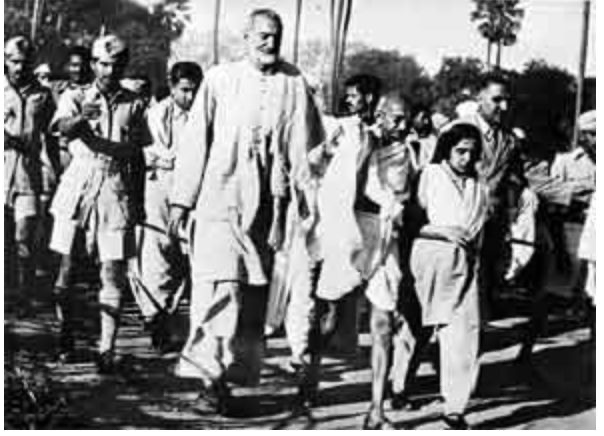
Early Non-Cooperation Steps
- Gandhi declares he will lead non-cooperation if peace terms with Turkey are unfavorable.
- May 1920: Treaty of Sevres dismembers Turkey.
- June 1920: All-party Allahabad conference approves boycott of schools, colleges, law courts and asks Gandhi to lead.
- Non-Cooperation Programme
- August 31, 1920: Khilafat Committee formally launches non-cooperation; Tilak dies August 1, 1920.
- September 1920, Calcutta Congress special session approves non-cooperation programme:
- Boycott government schools and colleges.
- Boycott law courts; justice via panchayats.
- Boycott legislative councils.
- Boycott foreign cloth, promote khadi and hand-spinning.
- Renounce government honours and titles.
- Later phases: mass civil disobedience, resignation from government service, non-payment of taxes.
- Programme emphasizes Hindu-Muslim unity and removal of untouchability, maintaining non-violence.
- Bipin Chandra Pal was an opponent of the Non-Cooperation Movement started by Mahatma Gandhi.
- Mohammed Ali Jinnah left the Congress in protest against Gandhi’s Non-Cooperation Movement proposal at the Nagpur Session of 1920.
December 1920, Nagpur Congress Session
- Endorsed non-cooperation programme.
- Congress shifted goal: from constitutional methods to swaraj through peaceful, extra-constitutional struggle.
- Organisational reforms:
- Congress Working Committee (CWC) of 15 members formed.
- Provincial committees on linguistic basis; ward committees; reduced entry fee.
- Gandhi declared full implementation could bring swaraj within a year.
- Revolutionary groups, especially from Bengal, pledged support.
- Some leaders like Jinnah, Annie Besant, B.C. Pal left Congress due to preference for constitutional struggle.
Spread of Movement
- Gandhi, with Ali brothers, toured India nationwide.
- Students left government schools to join national schools/colleges (Jamia Millia, Kashi Vidyapeeth, Gujarat Vidyapeeth, Bihar Vidyapeeth).
- Acharya Narendra Dev, Rajendra Prasad, Zakir Hussain and Subhash Chandra Bose did teaching work in national universities.
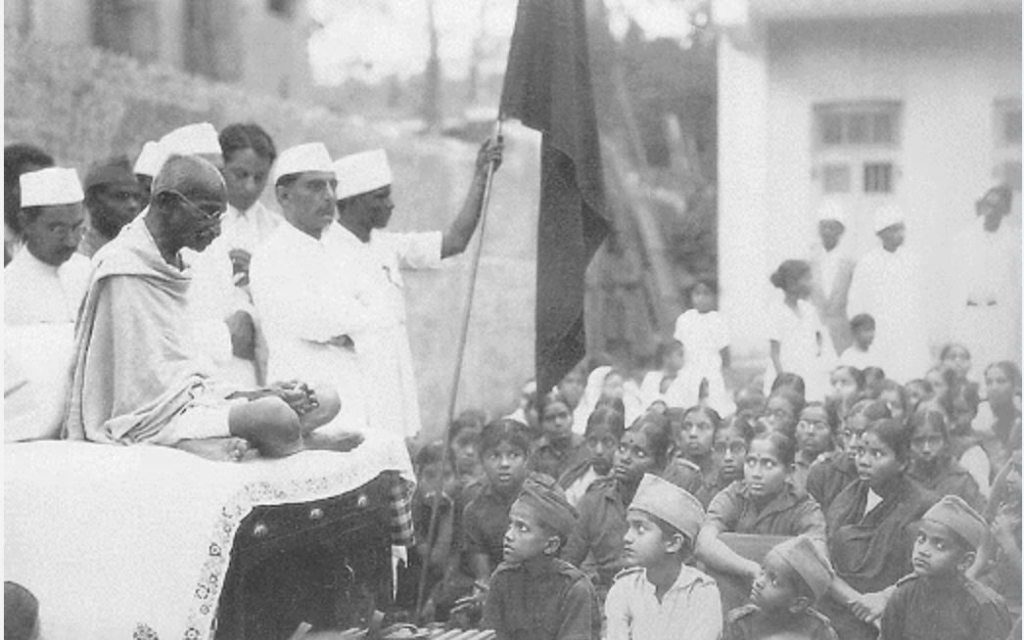
- Prominent leaders in education: Acharya Narendra Dev, C.R.Das, Lala Lajpat Rai, Zakir Hussain, Subhash Bose.
- Lawyers quit practice: Motilal Nehru, Jawaharlal Nehru, C.R.Das, Vallabhbhai Patel, etc.
- Boycott of foreign cloth and liquor; heaps burnt publicly; imports fell by half.
- Tilak Swaraj Fund raised 1 crore rupees.
- Congress volunteer corps acted as parallel police.
- July 1921: Ali brothers call Muslims to resign from army; arrested in September.
- Local civil disobedience in Midnapore, Guntur (no-tax movements), Assam (tea plantation strikes, rail/steamer strikes).
- Gandhi ji selected bardoli for launching mass civil disobedience movement but because of chauri chaura incident gandhi called off.
- Prince of Wales’ 1921 visit sparked strikes and demonstrations.
- Local struggles: Awadh Kisan Movement, Eka Movement (UP), Mappila Revolt (Malabar), Sikh agitation against mahants in Punjab.
Chauri-Chaura Incident
- In Chauri-Chaura, Uttar Pradesh, a group of protestors attacked and set fire to a police station. Gandhi felt that the incident violated the principle of non-violence. He called off the movement in February 1922.
- Subhash chandra bose called it a ‘national disaster’.
- After Gandhi’s Arrest (March 1922)
- Gandhi was arrested in March 1922.
- After his arrest, there was disintegration, disorganisation, and demoralisation among nationalist ranks.
- A debate started on what to do during the passive phase of the movement.
- Two Groups Emerge: Swarajists vs No-Changers
- Swarajists
- Led by C.R.Das, Motilal Nehru, Ajmal Khan.
- Wanted to end boycott of legislative councils.
- Aim: enter councils to expose their weaknesses and use them as arenas of political struggle.
- Their slogan: “end or mend” the councils.
- If demands not met, they would obstruct council functioning.
- Formed the Congress-Khilafat Swarajya Party, also called the Swarajist Party.
- C.R.Das became president; Motilal Nehru became secretary.
- No-Changers
- Led by C. Rajagopalachari, Vallabhbhai Patel, Rajendra Prasad, M.A. Ansari.
- Opposed council entry.
- Advocated constructive work, continued boycott and non-cooperation.
- Wanted preparation for future civil disobedience.
Gaya Congress Session (December 1922)
- Swarajist proposal was defeated.
- Das and Motilal Nehru resigned from presidentship and secretaryship.
- They then formally created the Swarajist Party.
- Swarajists’ Arguments
- Council entry would not negate non-cooperation; it would continue the movement by other means.
- Council participation would keep up public morale in a political vacuum.
- Prevent government from filling councils with undesirable elements.
- Councils used only for political struggle, not for gradual reform.
- No-Changers’ Arguments
- Parliamentary work would neglect constructive work.
- Could lead to loss of revolutionary zeal.
- Could lead to political corruption.
- Constructive work necessary for preparing people for next civil disobedience.
Swarajist Election Manifesto (October 1923)
- Declared British rule guided by selfish interests.
- Stated reforms were a pretense to continue exploitation of India.
- Swarajists would demand self-government in councils.
- If rejected, they would consistently obstruct council functioning.
Gandhi’s Changing Attitude
- Released from prison February 1924 on health grounds.
- Moved towards reconciliation with Swarajists.
- Reasons:
- Public opposition to council entry seemed counterproductive.
- Swarajists won 42 of 141 elected seats in 1923; Their uncompromising conduct convinced Gandhi they would not become collaborators.
- Government crackdown on revolutionaries and Swarajists angered Gandhi and pushed him toward supporting them.
- Agreement in 1924: Swarajists would work in councils as integral part of Congress.
- Belgaum session (December 1924), presided over by Gandhi (only time), endorsed this arrangement.
Swarajists in election –
- Majority in Central Provinces
- Emerged as the largest single party in the Central Assembly, Bombay and Bengal.
- On the whole, the party won 234 seats (42 at the centre and 192 in the provinces).
Swarajist Activity in Councils –
- Motilal Nehru became the leader of the opposition in the Central Legislative Assembly, Vithalbhai Patel was elected as the speaker of the Central Legislative Assembly in 1925.
- Swarajists defeated the Public Safety Bill in 1928.
- Moved adjournment motions effectively.
- With coalition partners, outvoted government several times, including on budgetary grants.
Decline of Swarajists –
- Their position weakened due to communal riots.
- Internal split along communal and Responsivist vs Non-responsivist lines.
- Government successfully divided Swarajists (militant vs moderate, Hindu vs Muslim).
- Loss of Muslim support because they did not support tenants (mostly Muslim) against zamindars in Bengal.
- Communal interests entered the party.
- C.R. Das died in 1925, weakening the party.
Responsivists
- Included Lala Lajpat Rai, Madan Mohan Malaviya, N.C.Kelkar.
- Advocated cooperation with government and taking office.
- Wanted to protect Hindu interests.
- Moderate stance created rifts.
- Some accused leaders like Motilal Nehru of being anti-Hindu; Muslim communalists called Swarajists anti-Muslim.
Withdrawal from Councils
- Main leadership reaffirmed faith in mass civil disobedience.
- Withdrew from legislatures in March 1926.
- Another faction contested 1926 elections but performed poorly.
- Won 40 seats in the Centre; some in Madras; heavy losses in U.P., Central Provinces, and Punjab.
End of the Party
- In 1930, Swarajists withdrew completely after the Lahore Congress resolution on purna swaraj and start of Civil Disobedience Movement.
Drawbacks of Swarajists
- No strategy to coordinate legislative militancy with mass movement.
- Relied heavily on newspaper reporting to reach masses.
- Obstructionist tactics had inherent limitations.
- Coalition with other groups often failed due to conflicting views.
- Some members succumbed to perks and privileges of office.
- Failure to support peasants in Bengal (tenant vs zamindar issue) cost them support.
Constructive Work by No-Changers
- Ashrams were created where young men and women worked among tribals and lower castes, especially in Kheda and Bardoli (Gujarat).
- They popularised the use of charkha and khadi.
- National schools and colleges were set up to train students in a non-colonial ideological framework.
- Significant work was done for:
- Hindu-Muslim unity
- Removal of untouchability
- Boycott of foreign cloth
- Boycott of liquor
- Flood relief
- Constructive workers later served as the backbone of Civil Disobedience, acting as organisers.
Critique of Constructive Work
- National education benefited mainly urban lower-middle classes and rich peasants.
- Interest in national education appeared only during active movements.
- In passive times, students returned to official schools for degrees and jobs.
- Khadi popularisation was difficult because khadi was more expensive than imported cloth.
- Untouchability campaigns focused on social aspects, not on the economic grievances of landless labourers (mostly untouchables).
- Despite working separately, Swarajists and No-Changers remained on good terms and united when necessary.
Sardar Vallabhbhai Patel
- Birth in a farmer’s family in Nadiad of Gujarat.
- After completing his education he started practicing as a ‘criminal lawyer’ in Ahmadabad.
- He started hispolitical life in 1915 from ‘Gujarat Sabha’ whose Chairman was Gandhi ji.
- Patel was fully responsible for active participation in the demonstration against the “Rowlatt Bill”.
- ‘Publication of “Satyagrah Patrika” Participation in the non-cooperation movement and he was related with the establishment of Gujarat Vidyapeeth.
- He successfully led the farmer’s satyagrah in Bardoli in 1928.
- It was after this satyagrah that he received thetitle of ‘Sardar’.
- ‘He was a confidant of Gandhi ji. He played an important role in pacifying the naval mutiny in Bombay in 1946.
- Sardar Patel was one of the principal figures among the founders of modern India.
- He played a crucial role in integrating the native principalities.
- He was regarded as the ‘iron man of India’.
- He passed away in 1950.



