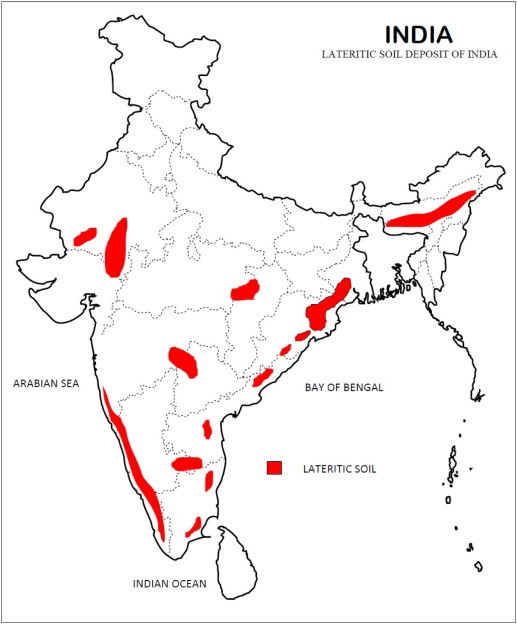
Laterite soils form in areas of high temperature and heavy rainfall due to leaching, which removes silica and lime, leaving iron and aluminium compounds. They are low in fertility but rich in iron and used for brick-making.
They are mainly found in:
- Western and Eastern Ghats
- Karnataka, Kerala, Maharashtra, Odisha
- Rajmahal Hills, Assam hills, and Meghalaya plateau
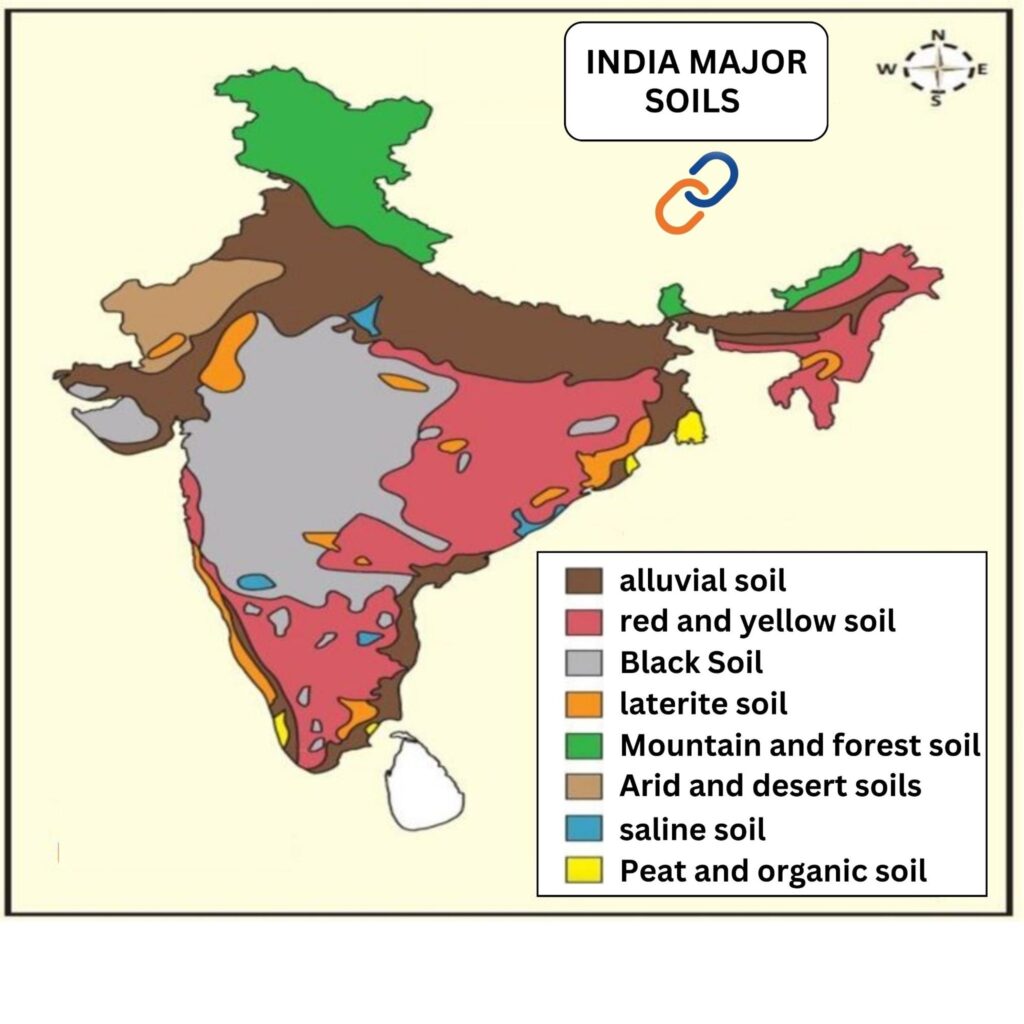
Different types of relief, landforms, climatic zones and vegetation are found in India, which have contributed to the development of many types of soils in India.
Soil Type | Location | Characteristics |
Alluvial Soil | Northern plains and river valleys |
|
Black soil / Regur | Deccan Plateau |
|
Red and Yellow Soil | Parts of, Andhra Pradesh, Odisha, Chhattisgarh, chota nagpur plateau region, NE , south india |
|
Laterite soil | High rainfall and tropical region of Western Ghat region, in eastern ghat region , and NE |
|
Arid soil | Western Rajasthan |
|
Saline Soil | Coastal regions, deltas, swampy , waterlogged regions |
|
Peaty | Northern Bihar, Uttarakhand, Odisha, Tamil Nadu(Tarai belt, delta region) |
|
Montane/Forest Soil | Hilly regions →forest area with adequate rainfall(Himalaya etc) |
|