
Soil – types and uses

Feature BangarKhadar
Soil TypeOlder alluvium (mature soil)Newer alluvium (younger soil)
Location Higher terraces above the floodplain (about 30 meters above flood level)Lower areas close to river beds forming the floodplain
CompositionMore clayey and generally dark-colored; contains beds of lime nodules known as “Kankar”Sandy clays and loams; less calcareous and carbonaceous (less kankar )
FertilityLess fertile compared to KhadarHighly fertile due to annual deposition of new alluvium
FloodingRarely affected by floodsFrequently affected by floods, with new layers of alluvium deposited each year
ExamplesFound in the Doab regions (areas between rivers).  For example- The Ganga- Yamuna Doab and the Plains of Satluj.Found in the floodplains of rivers like the Ganges and Yamuna

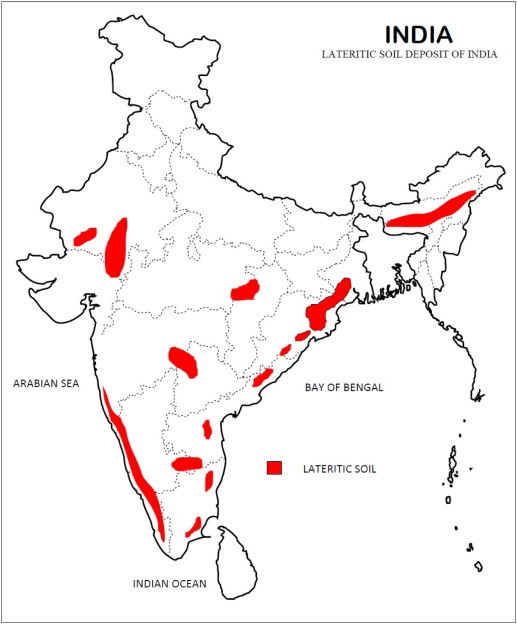
Laterite soils form in areas of high temperature and heavy rainfall due to leaching, which removes silica and lime, leaving iron and aluminium compounds. They are low in fertility but rich in iron and used for brick-making.

They are mainly found in:

  1. Western and Eastern Ghats
  2. Karnataka, Kerala, Maharashtra, Odisha
  3. Rajmahal Hills, Assam hills, and Meghalaya plateau
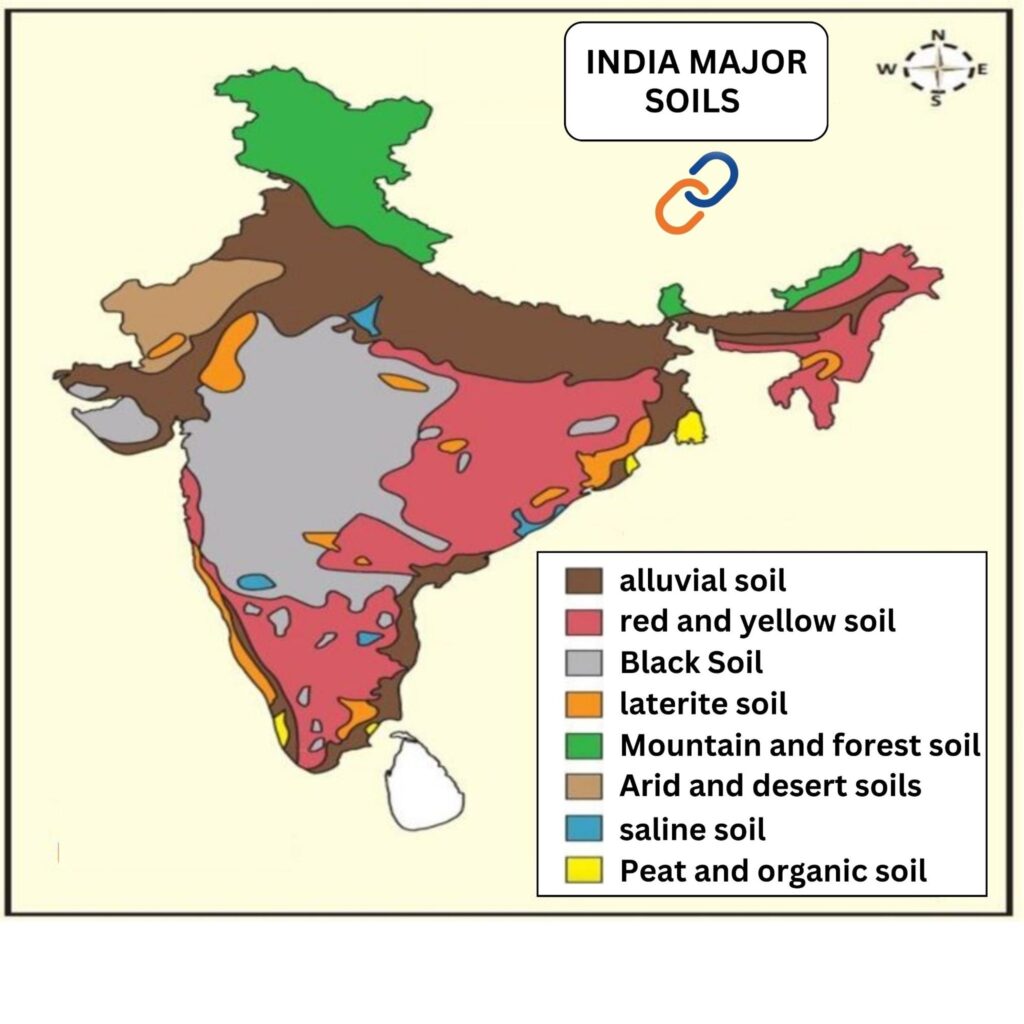
Different types of relief, landforms, climatic zones and vegetation are found in India, which have contributed to the development of many types of soils in India.

Soil Type

Location

Characteristics

Alluvial Soil

Northern plains and river valleys

  • Fine, sandy soil deposited by rivers; highly fertile; 
  • 2 type : Bangar (Old deposits) and Khadar(New deposits)
  • covers 40% of India’s land area.
  • Generally, Poor in phosphorus , nitrogen and hummus, and Rich in potash

Black soil / Regur

Deccan Plateau

  • Black cotton soil formed from basalt rock; 
  • Maximum water holding capacity; self ploughing 
  • rich in iron, magnesium, lime, and aluminum; Poor in phosphorus, Nitrogen  and humus
  • suitable for crops like cotton, soybeans, and wheat.

Red and Yellow Soil

Parts of, Andhra Pradesh, Odisha, Chhattisgarh, chota nagpur plateau region, NE , south india 

  • Red and yellow soils formed from weathering of crystalline igneous rocks  
  • Red colour due iron oxides, when hydrated → Yellow
  • deficient in phosphorus, nitrogen, and organic matter; 
  • suitable for crops like maize, tobacco, sorghum, and millet.

Laterite soil

High rainfall and tropical region of Western Ghat region, in eastern ghat region , and NE 

  • Formation ⇒ Slope area + High rainfall + High Temperature; alternate Dry and Wet period 
  • Reddish-brown soil rich in iron oxides and aluminum hydroxides; 
  • deficient in nitrogen, phosphorus, and organic matter; 
  • suitable for cash crops like cashews, coffee, rubber, and spices

Arid soil 

Western Rajasthan

  • Sandy soil with low nitrogen, organic matter content; normal presence of phosphate ; poor moisture retention 
  • suitable for drought-resistant crops like pearl millet.
  • Lower horizons of soil are occupied by ‘kankars’

Saline Soil

Coastal regions, deltas, swampy , waterlogged regions

  • Also called ‘Usar’ soil
  • Contain a large proportion of salts like sodium, potassium and magnesium ; Poor in nitrogen and calcium → unsuitable for plant growth.

Peaty
Soil

Northern Bihar, Uttarakhand, Odisha, Tamil Nadu(Tarai belt, delta region)

  • in areas with heavy rainfall and high humidity  
  • High Humus → Black color
  • Jute Cultivation ; Mangroves

Montane/Forest Soil

Hilly regions →forest area with adequate rainfall(Himalaya  etc)

  • Thin layered immature soil
  • lacks humus and calcium; acidic soil. 
  • Where the layer of this soil is thicker, tea and potato cultivation is done. In the areas where the granular structure is fine, terraced farming is done to raise rice crops. Pastures are found on the slopes with less fertile soils.

Leave a Comment

Your email address will not be published. Required fields are marked *

error: Content is protected !!
Scroll to Top
Telegram WhatsApp Chat