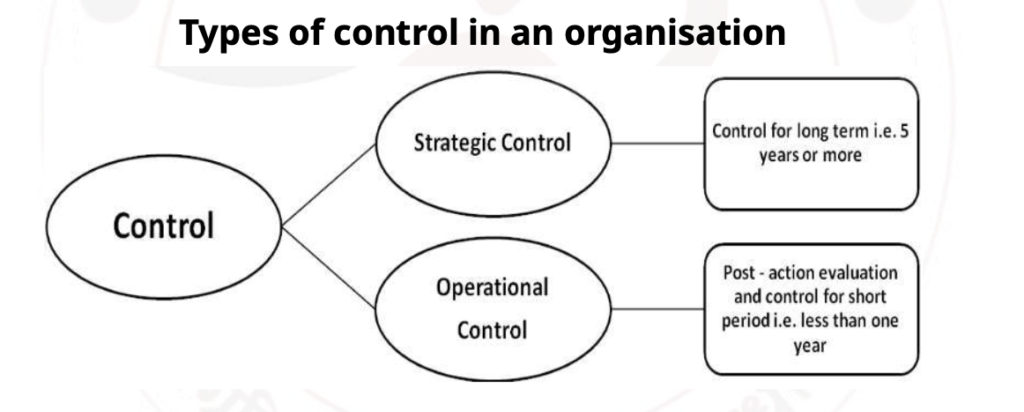

Strategic Evaluation and Control is the final stage of strategic management which ensures that organisational strategies are achieving the desired objectives. Traditionally, evaluation focused mainly on comparing actual performance with predetermined standards. However, the modern business environment requires continuous monitoring and timely corrective action throughout strategy implementation.
| Traditional Approach | Modern Approach |
| Focuses mainly on evaluating performance after implementation. | Focuses on continuous evaluation during strategy formulation and implementation. |
| Performance standards are established before implementation. | Continuous monitoring is carried out throughout the execution of strategy. |
| Actual performance is compared with predetermined standards. | Identifies strategic problems at an early stage before they become serious. |
| Deviations are identified after performance measurement. | Corrective actions are taken immediately whenever deviations are observed. |
| Suitable for stable and predictable business environments. | Suitable for dynamic, competitive, and rapidly changing business environments. |
| Emphasis is on control and correction of completed activities. | Emphasis is on continuous learning, flexibility, and strategic adaptation. |
Strategic Control: Strategic control focuses on monitoring whether the organization is moving in the right
direction to achieve its long-term objectives. It ensures that strategies remain relevant in a changing business environment.
- Premise Control: Premise control involves checking whether the basic assumptions made during strategy formulation are still valid. These assumptions may relate to economic conditions, market trends, or technological developments.
- Example: An automobile company assumes that fuel prices will remain stable while planning to launch petrol vehicles. If fuel prices increase sharply, the company may need to shift its strategy towards electric Vehicles.
- Implementation Control: Implementation control monitors whether the strategies are being executed as planned. It helps in identifying any deviations during execution and taking corrective action.
- Example: If a company plans to open 50 new retail outlets in a year but only 20 are opened within six months, implementation control will help identify delays and improve execution.
- Special Alert Control: Special alert control is used to respond to sudden and unexpected events that may affect organizational strategies.
- Example: During the COVID-19 pandemic, many restaurants shifted from dine-in services to online delivery models through platforms like Swiggy and Zomato.
- Strategic Surveillance: Strategic surveillance involves continuous monitoring of internal and external environmental factors to identify potential opportunities or threats.
- Example: Technology companies continuously monitor advancements in Artificial Intelligence to adopt new innovations and remain competitive in the market.