

British Political Policies: In the subject of Modern History of India, British political policies were designed to establish and consolidate colonial control over India. Strategies such as the Subsidiary Alliance, Doctrine of Lapse, and Divide and Rule not only expanded British authority but also reshaped the political structure of Indian states and governance.
British Political Policies in India
British Paramountcy
Two Methods of British Expansion (1757–1857) –
- Annexation by Conquest/War
- Bengal, Mysore, Marathas, Sikhs, etc.
- Annexation by Administrative Devices
- Ring-Fence Policy (Warren Hastings)
- Subsidiary Alliance (Lord Wellesley)
- Doctrine of Lapse (Lord Dalhousie)
- Total number: 562
- Range of states:
- Smallest: Bilbari (population of 27)
- Largest: Hyderabad
Evolution of British–Indian States Relations
Company’s Struggle for Equality from Subordination – (1740–1765)
- Company try to establish equality before indian states.
- Company also try to change its status from just a commercial entity to political entity.
- After anglo french war and battle of plassey company got success in this .
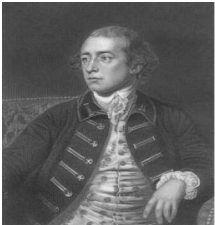
Policy of Ring-Fence (Warren Hastings) – (1765-1813)
- Background
- Warren Hastings assumed office as Governor-General at a critical phase of British rule.
- The Company faced a powerful combination of Indian powers:
- Marathas
- Mysore
- Hyderabad
- Main objective: security of Company territories.
Meaning of the Policy of Ring-Fence
- The policy aimed at creating buffer states around British possessions.
- Broad principle:
- Defending neighbouring states’ frontiers to safeguard British territories.
- In effect:
- British security depended on the security of surrounding Indian states.
Threats Faced by the Company
- Major external threats:
- Afghan invasions
- Maratha expansion
- These threats could directly endanger Bengal, the Company’s core area.
Application of the Policy
- The Company undertook to defend the frontiers of Awadh.
- Condition:
- The Nawab of Awadh would bear the expenses of the British army.
- Rationale:
- Defence of Awadh = Defence of Bengal.
Features of the Ring-Fence System –
- States under the system were:
- Assured military assistance against external aggression.
- But:
- Assistance was provided at their own expense.
- Indian rulers were required to:
- Maintain subsidiary forces.
- The cost of maintenance was borne by the Indian rulers.
- Significance –
- The policy:
- Reduced Indian states to military dependence.
- It was:
- A precursor to the Subsidiary Alliance system.
- Reflected in:
- Hastings’ wars against Marathas and Mysore.
- The policy:
Subsidiary Alliance System (Lord Wellesley) – (1798–1805)
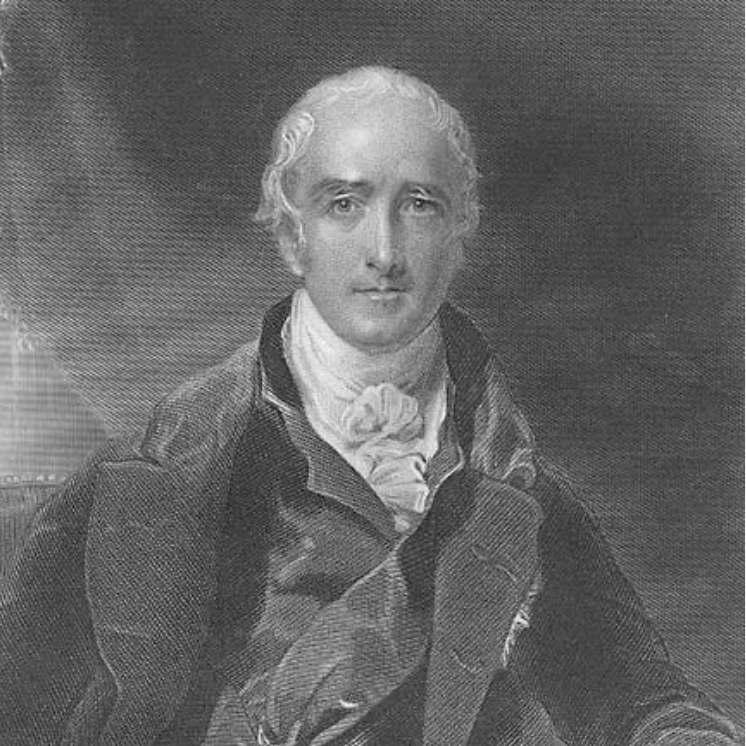
- Introduced and systematised by Lord Wellesley.
- Purpose:
- To build a British empire in India without direct annexation.
- Main Features
- Indian ruler had to:
- Accept permanent stationing of British troops in his territory.
- Pay a subsidy for their maintenance.
- A British Resident was to be posted at the ruler’s court.
- The ruler:
- Could not employ Europeans without Company approval.
- Could not:
- Declare war
- Negotiate treaties
- Maintain foreign relations
- without the Governor-General’s consent.
- In return: The British promised:
- Protection from external enemies.
- Non-interference in internal affairs (in theory).
- Indian ruler had to:
- Strategic Objectives –
- To prevent:
- French revival and expansion in India.
- Context:
- Fear of Napoleon’s eastern expedition.
- Possibility of French attack from Mauritius.
- Hence:
- Indian rulers were forced to:
- Dismiss all Europeans except the British.
- Not employ any European without permission.
- Evolution and Perfection of the System –
- Early Origins
- Dupleix:
- First to lend European troops to Indian rulers.
- The system evolved gradually under:
- Clive
- Hastings
- Cornwallis
- Reached perfection under Wellesley.
- Early Examples
- Awadh (1765):
- First state to fall into a protection arrangement.
- Company agreed to defend Awadh’s frontiers.
- Nawab paid for the defence.
- This arrangement:
- Anticipated the subsidiary alliance system.
- Awadh (1765):
- Wellesley’s Innovation
- Wellesley made surrender of territory a general rule.
- Indian rulers had to cede territory in full sovereignty.
- Purpose was to maintain the subsidiary force.
- This marked the perfection of the subsidiary alliance system.
- Role of British Resident
- A British Resident was installed in the state capital.
- Intervened in administration.
- Accelerated the process of loss of sovereignty and annexation.
- States Which Accepted Subsidiary Alliance
- Hyderabad (Nizam) – 1798 & 1800
- Mysore – 1799
- Tanjore – October 1799
- Awadh – November 1801
- Peshwa (Marathas) – December 1801
- Bhonsle of Berar – December 1803
- Scindia – February 1804
- Rajput States (1818):
- Jodhpur
- Jaipur
- Macheri
- Bundi
- Bharatpur
- Holkars – Last Maratha confederacy to accept (1818)
Policy of Subordinate Isolation (1813–1857) –
- Emergence of imperial ideology
- Development of Doctrine of Paramountcy
- Nature of state relations:
- States to act in subordinate cooperation
- Required to acknowledge British supremacy
- Sovereignty:
- External sovereignty surrendered
- Internal administration retained
- Role of British Residents:
- Shifted from:
- Diplomatic agents to executive and controlling officers.
- Shifted from:
- Charter Act, 1833:
- Ended Company’s commercial functions.
- Retained political authority.
- Succession:
- Prior approval mandatory
- 1834 Board of Directors’ Directive:
- Annex states whenever possible
- Annexations under Dalhousie:
- Eight states annexed
- Major states:
- Satara
- Nagpur
Doctrine of Lapse –
- An adopted son could inherit private property.
- He could not inherit the state without British approval.
- Any particular state under the paramountcy of the british east india company would be annexed if the ruler died without a natural heir
- The British (paramount power) could:
- Accept the adoption, or
- Annex the state.
Role of Lord Dalhousie –
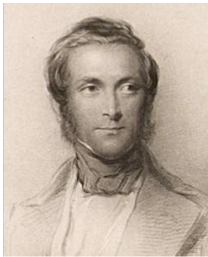
- Not the originator, but:
- Enforced the doctrine rigorously.
- Favoured annexation whenever legally possible.
- Shift in policy:
- Earlier governors avoided annexation.
- Dalhousie annexed whenever justified.
- According to Dalhousie, there were three types of princely states in India-
- The princely states, which were never under supreme power and did not pay taxes.
- Those princely states, which were once under the Mughals or Marathas and now came under the British.
- The princely states, which were alive or restored by the British.
- Annexed States Under Doctrine of Lapse –
- Satara – 1848
- Jhansi – 1854
- Nagpur – 1854
- Other states:
- Jaitpur (Bundelkhand)
- Sambhalpur (Odisha)
- Baghat (Himachal Pradesh)
- Karauli was an exception in its implementation.
- Annexation of Awadh (1856)
- Awadh was under Subsidiary Alliance for 80 years.
- Continuous maladministration under Nawabs.
- British Role
- High costs of subsidiary troops imposed by British.
- Extra contributions taken by:
- Lord Hastings
- Lord Amherst
- Lord William Bentinck
- Nawab granted title of King (1819).
- Reports
- William Sleeman (Resident):
- Reported anarchy and misrule.
- Outram (1854):
- Confirmed Sleeman’s findings.
- Dalhousie’s Action –
- He preferred to maintain british administration with Nawab retaining title.
- Court of Directors ordered full annexation.
- Wajid Ali Shah Refused treaty and exiled to Calcutta.
- Annexation became one of the key causes of Revolt of 1857.
- Overall Assessment of Dalhousie
- Annexed 8 states during 1848–56.
- Added ¼ million square miles to British territory.
- Almost completed British expansion in India.
- Process began with Plassey (1757).
Views on British Imperial Expansion
Shashi Tharoor –
- British expansion as a predatory, exploitative policy that systematically impoverished India, destroyed its industries, and caused immense suffering.
Sir John Seeley –
- British imperial expansion, particularly in India, was largely unintentional, happening almost by “accident” or in a “fit of absent-mindedness,” .
Walter Reid
- British expansion policy, particularly in India, was marked by deliberate obstruction of genuine political progress, economic exploitation, and a betrayal of promises.
Policy of Subordinate Union (1857–1935)
Post-1857 Changes
- Crown assumed direct rule
- Reasons for policy shift was loyalty of princes during 1857 Revolt
- Annexation policy was Abandoned
- Mughal authority ended
- States became subordinate
- Queen’s title:
- Kaiser-i-Hind (Queen Empress of India)
Administrative & Technological Factors –
- British encroachment facilitated by:
- Railways
- Roads
- Telegraph
- Canals
- Post offices
- Press
- Public opinion
- Curzon’s Approach –
- Interpreted treaties expansively
- Princess seen as Co-workers with Governor – General
- Outcome:
- Reduction of all states to:
- Uniform dependency
- Integral parts of Indian political system
- Reduction of all states to:
Post-1905 Developments
- Shift towards:
- Cordial cooperation
- Aim:
- Counter nationalist and revolutionary movements
- Montford Reforms (1921):
- Establishment of Chamber of Princes (Narendra Mandal)
- Nature of Chamber:
- Consultative and advisory body
- No power over:
- Internal affairs of states
- Rights and freedoms
- Classification of states:
- Directly represented – 109
- Represented through representatives – 127
- Recognised as jagirs / feudal holdings.
Butler Committee (1927)
- Purpose:
- Examine sovereignty and paramountcy .
- To clarify the complex relationship between the British Crown and the Indian Princely States.
- Aiming to improve ties
- Recommendations:
- Paramountcy must remain supreme
- States should not be transferred to:
- An Indian government responsible to legislature
- Outcome:
- Paramountcy left undefined.
Policy of Equal Federation (1935–1947) – A Failure
Government of India Act, 1935:
- Proposed All-India Federation
- Federal structure:
- Federal Assembly:
- 125 of 375 seats reserved for princes
- Council of States:
- 104 of 260 seats reserved for princes
- Federal Assembly:
- Federation conditional on:
- Ratification by states:
- Representing at least 50% of total state population
- Entitled to chose not less than 52 members of the council of states.
- Ratification by states:
- Outcome:
- Scheme never implemented
- Dropped after:
- Outbreak of World War II (September 1939)
Constitutional Developments Between 1773 to 1947
Regulating Act of 1773 –
- First direct British government involvement in Indian administration.
- Recognised the Company’s role as administrative and political, not only commercial.
- Introduced centralised administration.
- Company directors must send all revenue, civil, military correspondence to British government.
- Created office of Governor-General of Bengal with a 4-member council.
- Lt-Gen John Clavering
- George Monson
- Richard Barwell
- Philip Francis
- Warren Hastings appointed first Governor-General.
- Supreme Court established at Calcutta with original & appellate jurisdiction.
- Governor-General given limited supervisory powers over Bombay & Madras.
Gurumukh Nihal Singh –
- the act was of great constitutional significance as it recognised the political activities of the company and for the first time, gave British parliament the right to establish a government of its own choice in India.
Amendments of 1781
- Defined Supreme Court jurisdiction: applied personal law of defendant inside Calcutta.
- Government servants immune from court actions done in official duty.
- Social & religious practices of Indians to be respected.
- the Act of Settlement or Settlement Act.
Pitt’s India Act of 1784 –
- British government given greater control; EIC becomes subordinate to the State.
- Indian territories officially called “British possessions.”
- Created Board of Control (Chancellor of Exchequer, Secretary of State, 4 Privy Council members).
- Controlled civil, military, revenue affairs.
- Governor-General to have a 3-member council (including Commander-in-Chief).
- Madras and Bombay subordinate to Governor-General.
- Prohibited aggressive wars and treaties (but often violated).
Sir Courtenay Ilbert, “The Act established a Board of Control which was meant to have control over Directors. Thus, a dual system of governance was established, one by the Company and the other by the Parliamentary Board. This system of inspection and counter-inspection continued until 1858.”
Amending Act of 1786 –
- This Act empowered the Governor General to overrule the decisions of his council and implement his own decisions under special circumstances.
- The Governor General was also granted the powers of Chief Commander.
Charter Act of 1793 –
- The Act laid the foundations of rule of law in British India in place of the personal laws of the past rulers. It was decided that these written laws and regulations were to be interpreted by the judiciary.
- For Governor General and members of the Governor General’s Council, a minimum twelve years of Stay in India was made compulsory as qualification.
- Extended Company’s trade monopoly for 20 more years.
- EIC must pay £500,000 annually to British government.
- Royal approval needed for GG, governors, Commander-in-Chief.
- EIC allowed to grant “country trade” licences to private British traders. → opium trade to China.
- Home Government expenses to be paid from Indian revenues (till 1919)
Charter Act of 1813 –
- Ended Company monopoly over trade with India.
- But monopoly over China and tea trade retained.
- Shareholders guaranteed 10.5% dividend.
- EIC kept control of territories for 20 more years.
- ₹1 lakh annually for education of Indians
- Christian missionaries allowed entry into India
Charter Act of 1833 –
- Extended EIC charter for 20 more years.
- Ended Company monopoly over China trade and tea.
- Allowed unrestricted European immigration & property ownership.
- Marked centralisation:
- Governor-General of Bengal became Governor-General of India.
- Bentinck became the first governor general of India.
- GG given full control over civil, military, revenue matters.
- Legislative and financial powers of the subordinate presidencies were abolished
- Madras & Bombay lost legislative powers.
- The Government of India took guarantee of the company’s debts.
- Governor-General of Bengal became Governor-General of India.
- A Law Member added to GG’s council → beginning of legislative council. Lord Macaulay.
- Attempt to codify Indian laws.
- Declared eligibility of all Indians for government employment irrespective of race, religion, birth.
- Urged improvement of slaves → slavery abolished in 1843.
Charter Act of 1853 –
- Primarily, the Act was based on the report of then Governor General Lord Dalhousie and demands of Indians to end the rule of company.
- The British Parliament was authorised to end the company rule in India at any point of time.
- Law member of the Executive Council was accorded the status of full member.
- Provisions were made for the appointment of a separate Governor General for Bengal
- Governor General was given the right to appoint Vice-Chairman of his Council.
- Provisions were made to separate legislative functions from the administrative ones.
- Number of members at the Board of Directors was reduced from twenty four to eight.
- Provision of competitive examination was made for appointment of the employees of the company.
- For the first time, legislatures were given powers to formulate their own rules.
- GG retained veto power over all laws.
Proclamation of 1858 –
- Promised Indians equality in civil service appointments — but largely unfulfilled.
- Indians excluded from decision-making bodies and higher administration.
- Act for Better Government of India, 1858 (After Revolt of 1857) –
- EIC abolished; India brought under British Crown.
- Governance through Secretary of State for India + Council of 15.
- Council = advisory; real power with Secretary of State.
- Governor-General became Viceroy.
- Lord Canning became the first Viceroy under the new system.
- Ended dual government introduced under Pitt’s Act.
- The Act of 1858 brought the Indian Army under the direct control of the British Crown, with the Commander-in-Chief of India being subordinate to the Governor-General.
- Real power shifted to London → viceroy became subordinate to the Secretary of State.
Indian Councils Act, 1861
- The Indian Council Act of 1861 is a watershed event in the constitutional history .
- Restored legislative powers to Bombay & Madras (lost in 1833).
- Later extended to other provinces.
- It empowered the Governor General to nominate Indian representatives in his expanded Council and to associate them with legislative work.
- Members at the Governor General’s Legislative Council were increased to a minimum of six and maximum of twelve, out of which half of the members were required to be private (non-governmental).
- Non-officials were elite Indians only (princes, landlords, diwans).
- For legislative purposes, Governor General was authorised to carve out new provinces and to appoint a governor or lieutenant governor for such newly created provinces.
- It also paved the way for participation of Indians as non-official members at the Council of Governors General and Governors.
- Governor General was authorised to issue ordinances.
- Governor General was given rights to fix and change the boundaries of Presidencies and Provinces through proclamation.
- Similarly, by the Act of 1869, the Governor General was empowered to make laws for Indians living abroad.
- By the Act of 1873, a provision was made to dissolve the East India Company at any time. Pursuant to this provision, the East India Company was dissolved on January 1st 1874.
Administration Structure
- Presidencies (Bombay, Madras, Calcutta) → Governor + 3-member Executive Council (appointed by Crown).
- Other provinces → governed by Lieutenant Governor or Chief Commissioner appointed by Governor General.
- Added a 5th member (a jurist) to the Viceroy’s Executive Council.
- Introduced portfolio system (beginning of cabinet Govt in India).
Indian Councils Act 1892 –
- Under the Act of 1861, private members in the Council were either large landowners, retired officers or members of the royal families of India. It did not meet the aspirations of popular representation of Indian people. This was one of reason behind this act .
- The Congress was established in 1885 and it gave leadership to Indian people in agitation against the
- British Raj.
- The Indian National Congress demanded greater representation of Indians.
- The demand for greater freedom also came from European traders who demanded freedom from the control of ‘India Office’ ‘, situated in England.
- As a result, a committee was constituted under the
- chairmanship of Sir George Chisjani and its recommendations were incorporated in the Act of 1892.
- By this act, the number of “additional members” to the Central and Provincial Legislative Councils was increased and provision of their election was specifically mentioned.
- Although it provided for limited elections, it ensured representation of key social classes at the Legislative Council.
- Though limited in its scope, the system of elections was accepted in principle.
- Powers of the Council were also increased.
- Presentation of annual income or budget to the Council was made mandatory.
- The Council could discuss various issues but it wasn’t authorised to vote.
- Members could ask questions about the functioning of the executive.
- Members could not ask supplementary questions.
- Although with this Act began a system of limited election for the members at legislature, there were several loopholes in it.
- Therefore, the Indian nationalists repeatedly criticised the act. Also, the powers of legislative councils were very limited.
- Demand from Indian National Congress (est. 1885).
- Number of non-official members increased in central & provincial councils.
- Universities, district boards, municipalities, chambers of commerce allowed to recommend members → indirect elections introduced.
- Members could:
- Discuss budget.
- Ask questions (with 6-day notice).
- Still no real legislative power.
Indian Councils Act, 1909 (Morley-Minto Reforms)
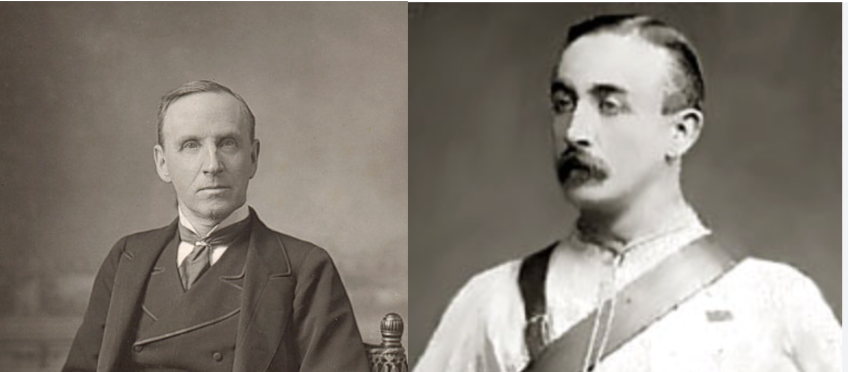
- Based on the recommendations of Sir Arundel Committee.
Background
Shimla Delegation (1906):
- Under the leadership of Aga Khan, demands were made for separate electorates for Muslims.
- Citing their contribution to the defense of the empire, representation exceeded their numerical strength.
- This elite soon came to dominate the Muslim League, founded in December 1906 by Nawab Salimullah, Mohsin-ul-Mulk, and Waqar-ul-Mulk.
- Its aim was to promote loyalty to the British and keep Muslim intellectuals away from the Congress.
- Gopal Krishna Gokhale went to England to demand self-government (a colonial model).
Introduction of the Elective Principle
- Indians were given limited participation in the electoral process, based on class and community.
- Indirect Elections
- Multi-tier system: Local Bodies → Electoral College → Provincial Legislature → Central Legislature.
- This Act increased the number of elected members in the Central and Provincial Legislative Councils.
- Also, a majority of private (non-official) members was ensured in the Provincial Legislative Councils.
- Seats in the Central and Provincial Councils were divided into three categories: General—based on regional/provincial basis.
- Special electorate—Muslims and landowners.
- Special interests—Chambers of Commerce, Planters’ Associations, universities, port trusts, etc.
- Members on general seats were indirectly elected.
- Electoral councils were formed from local bodies.
- These electoral councils elected members of the provincial legislative councils, and the provincial legislative councils elected members of the Central Legislative Council.
- Separate electorates were introduced for Muslims for the first time; a communal electoral system was introduced.
Benefit to the Muslim elite
- Muslims received greater representation than their population ratio.
- The income qualification for Muslim voters was lower than for Hindus.
- The Act provided for the appointment of an Indian member to the Governor-General’s Executive Council.
- The first Indian member to be appointed to the Governor-General’s Executive Council was Mr. Satyendra Sinha.
- Extension of the scope of work of the Legislative Council.
- Members were given the right to propose proposals on the budget, to ask questions and supplementary questions on matters of public interest.
- Subjects excluded from the purview of the Legislative Council included the armed forces, foreign relations, and princely states.
- They were granted the right to vote on individual budget items, but not on the entire budget.
- This Act renamed the Central Legislative Council the Imperial Legislative Council.
- The Act’s major drawback was the separate/communal electoral system.
- It introduced a parliamentary system but did not provide for parliamentary accountability.
- The number of members of the Imperial and Provincial Legislative Councils was increased.
- The Central Legislative Council’s membership increased from 16 to 60.
- According to Sumit Sarkar, the Imperial Legislative Council had 69 members, including 37 officials and 32 non-officials, of whom 5 were nominated.
- The non-officials did not have a majority. The number of members of the Provincial Executive Councils was increased.
- Real power still remained with the government.
- The main problem
- Separate electorates were introduced for Muslims. Muslims were given greater representation and lower income qualifications.
- Elections remained highly indirect. No real political solution was found.
- Morley openly rejected responsible government—
“If it can be said that this constitutes a parliamentary government, I will have nothing to do with it.”
- The objective was to confuse the moderates with minor concessions.
- Dividing Indians through a separate electorate system.
- Uniting the moderates and the Muslim elite against rising nationalism.
- Separate electorates satisfied only the small Muslim elite, not the entire community.
- There was no accountability to Indian representatives.
- The parliamentary structure, without accountability, led to irresponsible criticism and limited constructive influence.
- Only leaders like Gokhale made meaningful use of the councils (education, anti-oppression, labor issues).
Montagu-Chelmsford Reforms and Government of India Act, 1919
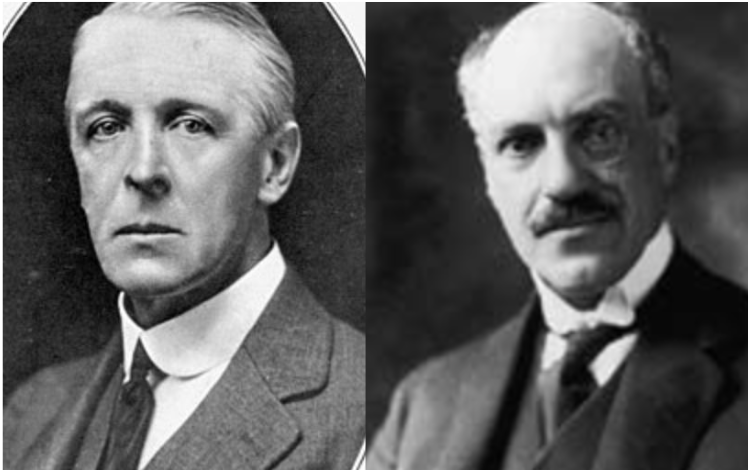
Background –
- Under various pressures –
- Scathing attack on the Act of 1909.
- Circumstances arising out of the First World War
- Spread of revolutionary movements against policies of the British rule
August Declaration –
- Secretary of State for India, Montague gave a historic statement at the House of Commons on August 20, 1917 where he stated the intention of British rule follows :-
- “To integrate Indians with administration and the gradual development of autonomous institutions, so as to establish a responsible government that as integral part of British India.”
- To implement this declaration, “Montford Report, 1918” was published, which became the basis of the Act of 1919.
- Context
- British used “carrot and stick” policy:
- Carrot: Montagu-Chelmsford Reforms (constitutional reforms).
- Stick: Rowlatt Act (repression).
- Reforms announced in July 1918, enacted as Government of India Act, 1919.
- Main Features –
- A new system of “diarchy” was introduced among eight key provinces which were called the ‘Governor’s Provinces’.
- Subjects under the provincial list were divided into two-
- Reserved subjects, under the Governor’s jurisdiction and who was to be assisted by the executive council in running these departments.
- Transferred subjects.
- Subjects on the transferred list were under the jurisdiction of Indian ministers, who were appointed from among the Indian members.
- Subjects under the provincial list were divided into two-
- Dyarchy: Rule of two –
- executive councillors (bureaucrats) and popular ministers (elected).
- Governor: Executive head of the province.
- Division of subjects:
- Reserved subjects: Law & order, finance, land revenue, irrigation → handled by governor & bureaucrats.
- Transferred subjects: Education, health, local government, industry, agriculture, excise,famine relief → handled by ministers from elected legislative councils.
- Franchise was expanded by this Act.
- Qualifications for the electoral college were based on communal membership, residence and property.
- Extended communal representation to Sikhs, Christians, Anglo-Indians.
- Provincial legislature = unicameral.
- Provincial and central budgets separated.
- Created office of High Commissioner for India in London.
- Secretary of State’s salary paid by British Exchequer.
- Legislature had extremely limited powers; GG had:
- Veto power.
- Power to override legislature.
- “Certification” powers (pass laws in name of public order).
- Ministers responsible to legislature; must resign if no-confidence passed.
- Executive councillors not responsible to legislature.
- Governor could take over transferred subjects if constitutional machinery failed.
- Secretary of State and governor general could interfere in reserved subjects; limited interference in transferred subjects.
- Legislature (Provincial):
- Expanded councils → 70% elected members.
- Consolidated communal & class electorates.
- Women given the right to vote.
- Could initiate legislation (governor’s assent required); governor could veto or issue ordinances.
- Could reject budgets; governor could restore if necessary.
- Members were elected directly from the delimited constituencies.
Central Government – No Responsible Government
- The Central Legislative Council was replaced by a bicameral legislature consisting of two houses:
- State Council (Upper House)
- Tenure: 5 years;
- Vidhan Sabha (Lower House).
- Tenure: 3 years.
- Although some provisions to nominate members to the legislature were kept intact, a majority of elected members was ensured in each House.
- State Council (Upper House)
- Executive:
- Governor-General = Chief executive.
- Compulsory presence of 3 Indians in Viceroy’s council out of 8 members
- Governor-General could restore grants, certify bills, issue ordinances.
- Powers: Ask questions, pass adjournment motions, vote on part of budget (75% still non-votable).
- Some Indians were included in important committees (e.g., finance).
- Drawbacks
- Limited franchise: Only ~1.5 million voters out of ~260 million population.
- Centre: Legislature had no control over viceroy & executive council.
- Division of subjects at centre unsatisfactory.
- Seat allocation based on province “importance” (e.g., Punjab = military, Bombay = commercial).
- Provincial dyarchy irrational & unworkable: Reserved subjects included irrigation, finance, police, press, justice.
- Provincial ministers: No control over finances or bureaucrats → constant friction; could be overruled by governor.
- After ten years of the enactment of the Act, a Commission was constituted by the British Parliament to examine the practical aspects of diarchy. As per this provision, Simon Commission was constituted in 1927.
Congress Reaction
- Special session August 1918, Bombay (President: Hasan Imam):
- Reforms declared “disappointing” and “unsatisfactory”.
- Demanded effective self-government.
- Tilak: “Unworthy and disappointing – a sunless dawn.”
- Annie Besant: “Unworthy of England to offer and India to accept.”
- There were many flaws in the act of 1919
- It did not meet the demand of a responsible government.
- Additionally, without the approval of the Governor General, the Provincial Legislatures were not allowed to debate and discuss bills on various subjects.
- In principle, the Central Legislature remained supreme and competent to enact laws for the entire British India.
- Despite the division of powers between the
- Centre and provinces, the constitution of British India remained an unitary one.
- Diarchy among the provinces was a total failure. Governor’s supremacy remained intact.
- In the absence of financial powers, ministers were unable to implement their policies effectively.
- Additionally, ministers were not collectively responsible to the legislature.
- Mudiman Committee (Reform Inquiry Committee)-
- The committee headed by Sir Alexander Mudiman formed in 1924 AD to investigate the diarchy implemented under the Act of 1919 AD.
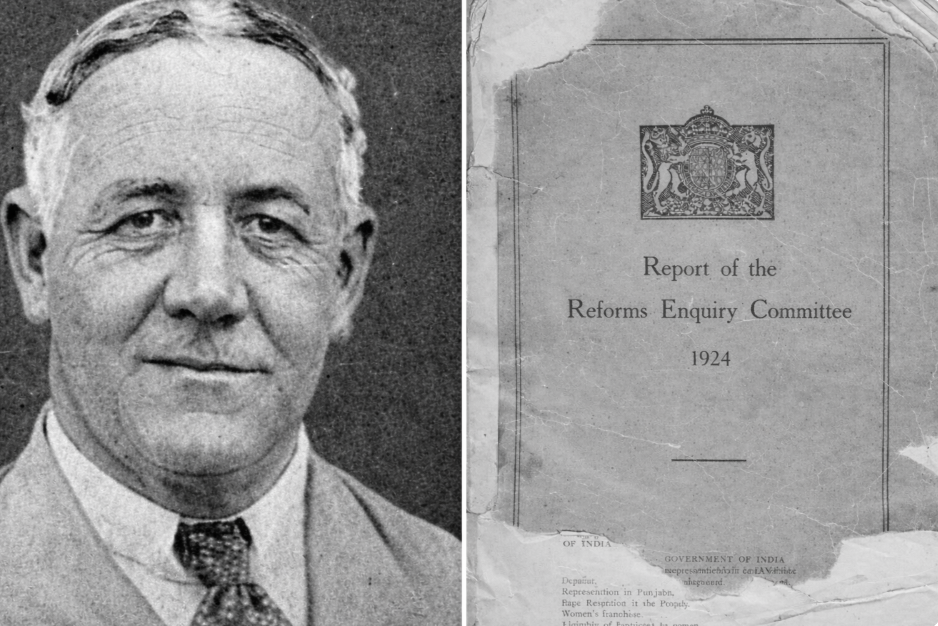
- It had a total of 9 members of which 4 were also Indian members-
- Sir Shiv Swami Iyer
- Dr. R.P . Paranjpe
- Sir Tej Bahadur Sapru
- Mohammad Ali Jinnah
- It submitted its report in 1925 AD.
- Recommendations-
- Criticized the diarchy.
- Recommended fundamental changes in the Act of 1919.
- This recommended the formation of a royal commission for this.
Simon Commission (1927)
- As per Section 84 of the 1919 Act, a commission was constituted under the chairmanship of Sir John Simon.
- The Commission published its report in June 1930.
- After the Simon Commission rejected the demand of Dominion status, the Congress passed the resolution for ‘Purna Swaraj’ at its Lahore session in 1929.
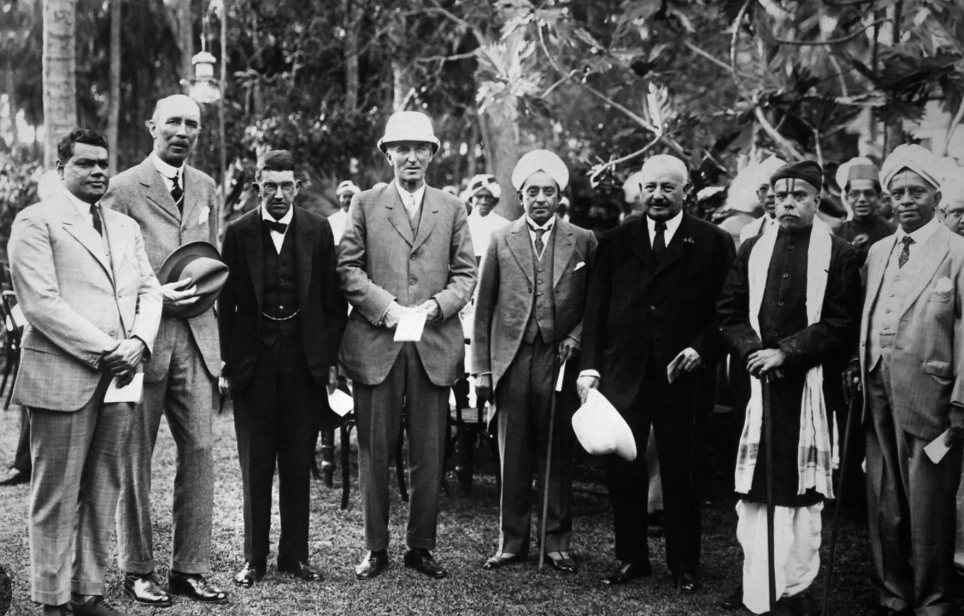
- Set up 2 years early.
- Excluded Indians → massive boycott.
- Recommendations (1930):
- Abolish dyarchy.
- Extend responsible govt in provinces.
- Set up federation (British India + princely states).
- Continue communal electorates.
Round Table Conferences (1930–32)
- Three RTCs were held to discuss proposals.
- 1933 White Paper proposed federal setup + provincial autonomy.
- Joint Parliamentary Committee under Lord Linlithgow:
- Federation only if 50% princely states join.
- Outcome
- Led to Government of India Act 1935.
Government of India Act, 1935 —
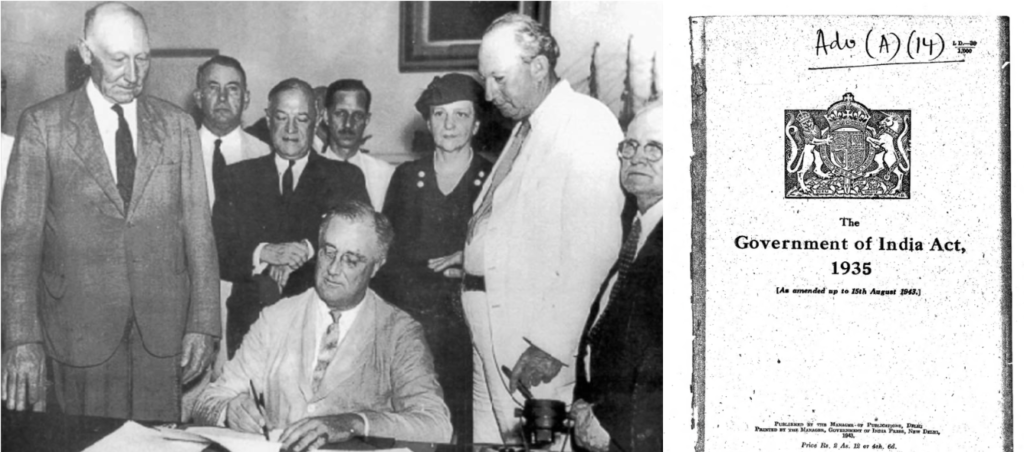
- 10 Schedules –
- First schedule – composition of federal legislature
- Second schedule – provision of this act, which may be amended without affecting the accession of the state
- Third schedule – provision as to the Governor-General and the Governor of the province
- Fourth schedule – forms of oaths and affirmation
- Fifth schedule – composition of provincial legislature
- Sixth Schedule – provision as to franchise
- Seventh Schedule – legislative lists.
- Eighth schedule – federal railway authority
- Ninth Schedule – provision of the Government of India Act continued in force with amendments until the establishment of the federation.
- Tenth schedule – enactment repealed
- 14 Parts of Act –
- Part 1 – Introduction
- Part 2 – The federation of india
- Part 3 – The governor’s provinces
- Part 4 – The chief commissioner provinces
- Part 5 – Legislative powers
- Part 6 – Administrative relations between federation, province and state
- Part 7 – Finance , property, contracts and suits
- Part 8 – Federal Railway.
- Part 9 – The judicature
- Part 10 – Crown Services in India.
- Part 11 – Secretary of State, his advisers and department.
- Part 12 – Miscellaneous
- Part 13 – Transitional provisions.
- Part 14 – Commencement , repeals
- Appointment of the Commander-in-Chief was mentioned in Section 4.
- This Act provided for an all-India union of British provinces and native states.
- It was compulsory for the British provinces to join the union, but the same was kept optional (left to the will of kings and princes) for the princely states.
- Passed by the British Parliament and implemented in 1937.
- Contained 321 Articles 14 parts and 10 Schedules.
- Based on the report of a Joint Select Committee under Lord Linlithgow.
- Proposed an All-India Federation including:
- Governors’ Provinces,
- Chief Commissioners’ Provinces,
- Princely States willing to join.
All-India Federation-
- To include all British Indian provinces + princely states.
- Conditions:
- These states must cover 50% of princely states’ population.
- Conditions not fulfilled → Federation never came into existence.
- Central govt continued under 1919 Act till 1946.
- Federal Level (Centre)
- Executive
- Dyarchy introduced at the Centre .
- Governor General = central authority pivot.
- Subjects divided:
- Reserved subjects: foreign affairs, defence, tribal areas, ecclesiastical affairs
- → Administered by governor general through executive councillors not responsible to legislature.
- Transferred subjects, subjects transferred were handed over to the Council of Ministers.
- Governor general had:
- Individual judgement powers
- Special responsibilities for security & tranquillity.
- Princely states could join by signing an Instrument of Accession specifying powers surrendered to the federal government.
- Legislature
- Bicameral:
- Council of States (upper house) – 260 members
- Partly elected, 40% nominated by princes
- Direct elections
- Permanent body, 1/3 retiring every 3 years
- Federal Assembly (lower house) – 375 members
- Indirectly elected from provinces
- 1/3 nominated by princes
- Council of States (upper house) – 260 members
- Oddity: Upper house elected directly, lower house indirectly.
- 3 legislative lists: federal, provincial, concurrent.
- Joint sitting provided in case of a deadlock between the two houses.
- Federal Assembly could pass no-confidence, Council of States could not.
- Separate electorates extended further.
- 80% of Central budget non-votable.
- Governor general’s powers:
- Restore cuts in grants
- Certify bills
- Issue ordinances
- Veto legislation
- Residuary powers
- Even laws assented by the GG could be disallowed by the King-in-Council.
- Provincial Autonomy
- Dyarchy in provinces abolished.
- Full provincial autonomy established with responsible government.
- The Council of Ministers was made responsible to the legislature and it could be removed by a no confidence motion passed by the legislature.
- Provinces derived authority directly from the British Crown.
- Provincial legislature was given rights to make laws on the provincial list and the concurrent list.
- The legislature could also exercise some control over administration by asking questions an supplementary questions.
- Provinces granted:
- Independent financial powers,
- Power to borrow money on their own security.
- Provincial Legislatures
- Legislatures expanded.
- Bicameral legislatures in 6 provinces:
- Madras, Bombay, Bengal, United Provinces, Bihar, Assam.
- Unicameral legislatures retained in other 5 provinces.
- Central Provinces renamed as Central Provinces and Berar.
- Independent financial powers,
- Executive
- Governor = representative of Crown.
- Special powers regarding:
- Minorities
- Civil servants
- Law & order
- British business interests
- Partially excluded areas
- Princely states
- Could take over provincial administration indefinitely.
- Legislature
- Separate electorates enforced through Communal Award.
- All members directly elected.
- Women got franchise on same terms as men.
- Ministers responsible to legislature.
- Provinces legislate on provincial + concurrent lists.
- 40% of provincial budget non-votable.
- Governor empowered to:
- Refuse assent to bills
- Issue ordinances
- Enact Governor’s Acts
Evaluation of the Government of India Act, 1935 —
- Numerous ‘safeguards’ and ‘special responsibilities’ of the governor-general hindered proper functioning.
- Provincial governors retained extensive overriding powers.
- Only 14% of British Indian population was enfranchised.
- System of communal electorates was extended, promoting separatism → contributed to the partition of India.
- Provided a rigid constitution; no internal amendment allowed within India; British Parliament alone had amendment powers.
- Important Views –
- Lord Linlithgow: Act framed to maintain British influence in India.
- Nehru: “A car, all brakes and no engine.”
- B.R. Tomlinson: Constitutional advance aimed at attracting Indian collaborators to the Raj.
- Response –
- Almost all nationalists condemned and rejected the 1935 Act.
- Congress rejected it unanimously; demanded a Constituent Assembly elected on adult franchise.
- Hindu Mahasabha and National Liberal Federation supported working the Act at both central and provincial levels.
Provincial Elections & Office Acceptance –
Leftist Position (Nehru, Subhas Bose, Socialists, Communists)
- Opposed office acceptance.
- Reasons:
- Accepting office would legitimise the rejected Act.
- Would be responsibility without power.
- Would weaken revolutionary spirit and mass struggle.
Right-Wing / Moderates’ Position –
- Supported office acceptance as temporary tactic.
- Argued:
- Mass movement not possible immediately.
- Legislatures should not be left to pro-government forces.
- Provincial ministries could still perform constructive work.
- Danger of being co-opted existed, but should be fought from within, not avoided.
- Gandhi’s Position
- Initially opposed office acceptance in CWC.
- By early 1936 → willing to give it a trial.
- Lucknow (1936) and Faizpur (1937) sessions:
- Congress decided to fight elections.
- Decision on office acceptance postponed until after elections.
- Resolution: oppose the Act “inside and outside legislatures”.
Elections and Representation
- Communal electorates & weightage extended to:
- Depressed classes,
- Women,
- Labour.
- Gandhi: proposals were a “post-dated cheque”.
- Changes in British Administration
- India Council of the Secretary of State abolished.
- Burma was separated from India.
- Two new provinces, namely Orissa and Sindh, were created.
- The Act also provided for the establishment of a federal bank and a federal court.
- Failure of the Federation –
- All-India Federation never came into existence due to wide opposition.
- Provincial Autonomy introduced on April 1, 1937.
- Central Government continued under 1919 Act with minor changes.
- The operative part of the 1935 Act remained in force till 15 August 1947.
August Offer (August 1940) –
- Background
- Due to Germany’s rapid advances, Britain sought Indian cooperation.
- Provisions
- Dominion status now official British objective.
- Expand Viceroy’s Executive Council → majority Indians from major parties.
- Constituent Assembly (not explicitly mentioned) after the war, mostly Indian, subject to:
- Defence obligations
- Minority rights
- Princely states’ treaties
- All-India services
- No constitution without minority consent (Veto to Muslim League).
- Responses
- Congress rejected it.
- Nehru: “Dominion status is dead as a doornail.”
- Gandhi: widened gulf between Britain & nationalists.
- Muslim League welcomed it.
- Happy with the veto assurance.
- Reaffirmed demand for partition.
Evaluation of August Offer
- Significance
- For the first time, British recognised the inherent right of Indians to frame their own constitution.
- Demand for a Constituent Assembly formally conceded.
- Dominion status was explicitly offered.
Changes in Executive Council (July 1941)
- Viceroy’s Executive Council expanded: Indians = 8 out of 12 members (first-ever Indian majority).
- Key departments – Defence, Home, Finance – remained with the British.
- National Defence Council created with only advisory powers.
Cripps Mission (March 1942) –
- Indian Union with Dominion Status after the war.
- After war → Constituent Assembly formed:
- Partly elected by provinces (PR system).
- Partly nominated by princes.
- British would accept constitution if:
- (i) Provinces could opt out and form separate unions (→ seeds of partition).
- (ii) A treaty would settle transfer of power & minority safeguards.
- During war:
- Defence to remain with British.
- Governor-General’s powers remain intact.
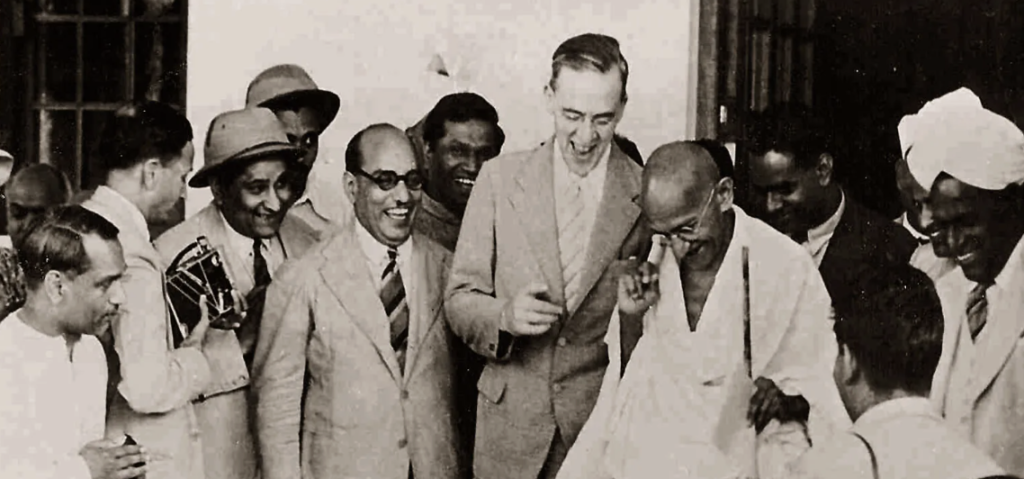
How Cripps Proposals Differed From Past Offers –
- Constitution-making solely in Indian hands (not “mainly” as in August Offer).
- Clear plan for Constituent Assembly.
- Provinces allowed to secede (blueprint for partition).
- More Indians in interim administration.
Why the Cripps Mission Failed
- Congress’ Objections
- Dominion status offered – not complete independence.
- Princely states’ reps nominated, not elected.
- Provincial secession violated unity.
- No immediate transfer of power.
- Defence still with British; Governor-General’s veto unchanged.
- Nehru & Azad represented Congress in talks.
- Muslim League’s Objections
- Opposed single Indian Union.\
- Unhappy with procedure for Constituent Assembly.
- Felt right to self-determination and Pakistan was denied.
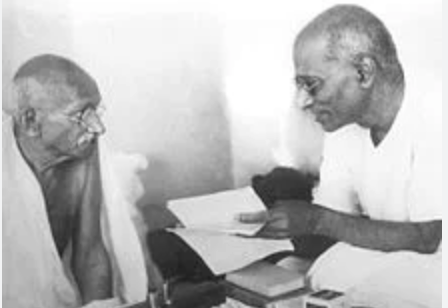
RAJAGOPALACHARI (CR) FORMULA – 1944
- Proposed by C. Rajagopalachari for Congress–League cooperation.
- Muslim League Support for Complete Independence:
- Muslim League to support the Congress’s demand for complete independence from British rule.
- Cooperation:
- The League would cooperate with Congress in establishing a provisional government at the centre.
- Post-War Plebiscite for Muslim-Majority Regions:
- After the war, the populations of Muslim-majority regions in North-West and North-East India would decide through a plebiscite whether to form a separate sovereign state.
- Joint Agreements in Case of Partition:
- If partition was accepted, there would be joint agreements to ensure the safeguarding of defence, commerce, and communications.
- Condition for Implementation:
- These proposals would only come into effect if the British government transferred full powers to India.
DESAI–LIAQAT PACT (Unofficial) –
- Draft agreement between Bhulabhai Desai (Congress) & Liaqat Ali Khan (Muslim League)
- Proposed interim government with:
- Equal number of Congress & League nominees.
- 20% reserved seats for minorities.
- No formal agreement reached.
- But it legitimised parity between Congress and League → had long-term consequences.
WAVELL PLAN (1945) –
Background
- Europe war ended (May 1945) but Japan still fighting.
- Churchill government wanted a solution before elections in Britain.
- Allies pressured Britain to secure Indian support.
- British wanted to channel Indian politics away from anti-British revolt.
- The Plan
- Viceroy Lord Wavell called a conference at Shimla (June 1945).
- Reconstruct Governor-General’s Executive Council. Wavell proposed an Executive Council of 14 members, in which the Congress and the Muslim League would each have 5 members, while the remaining 4 would be nominated by Wavell himself.
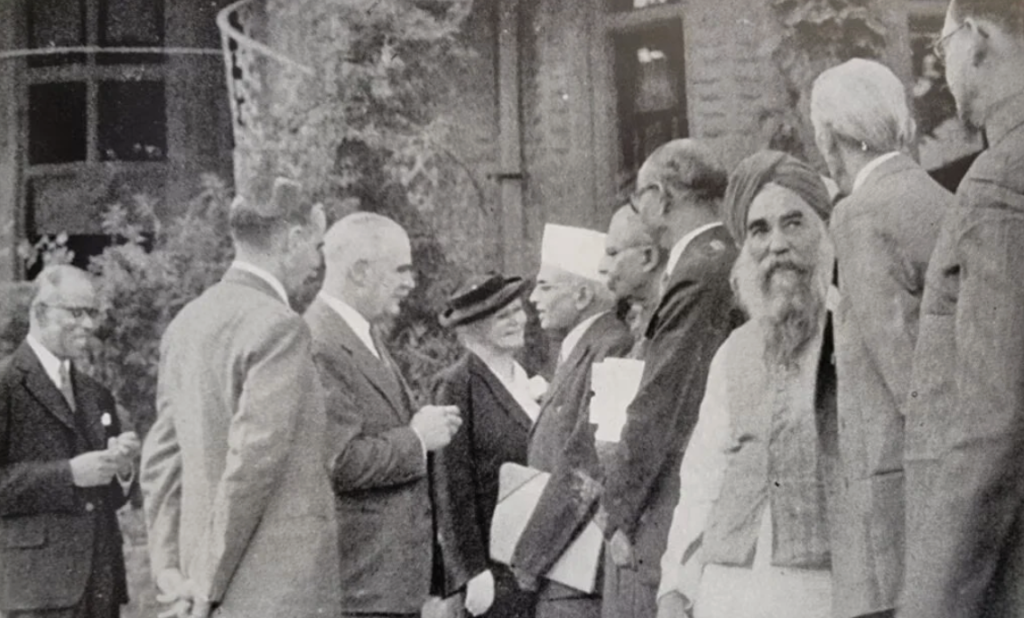
The Shimla conference –
- Attended by Muhammad Ali Jinnah as the representative of the league and Maulana Abul Kalam Azad as the representative of the Congress. Apart from these, Akali leaders Master Tara Singh, Bhulabhai Desai, Liaquat Ali Khan etc. were participating.
Key features:
- Except Viceroy & Commander-in-Chief, all members to be Indians.
- Equal representation for caste Hindus and Muslims.
- Would work as interim government under Act of 1935 (not responsible to legislature).
- GG’s veto to be exercised on advice of ministers.
- Parties to send a joint list; if not, separate lists.
- Future constitution to be discussed after the war.
- Muslim League’s Stand
- Demanded all Muslim seats must be filled by League nominees.
- Congress Stand
- Saw the plan as reducing Congress to a caste Hindu party.
- Wanted right to nominate members of all communities.
- Wavell declared talks failed, effectively giving League a veto.
- Maulana Abul Kalam Azad called the Shimla Conference “Water-Shed” in Indian history.
CABINET MISSION (1946) –
Announcement
- Announced Feb 1946 by Attlee govt.
- Mission members:
- Pethick-Lawrence (Chairman)
- Stafford Cripps
- A.V. Alexander
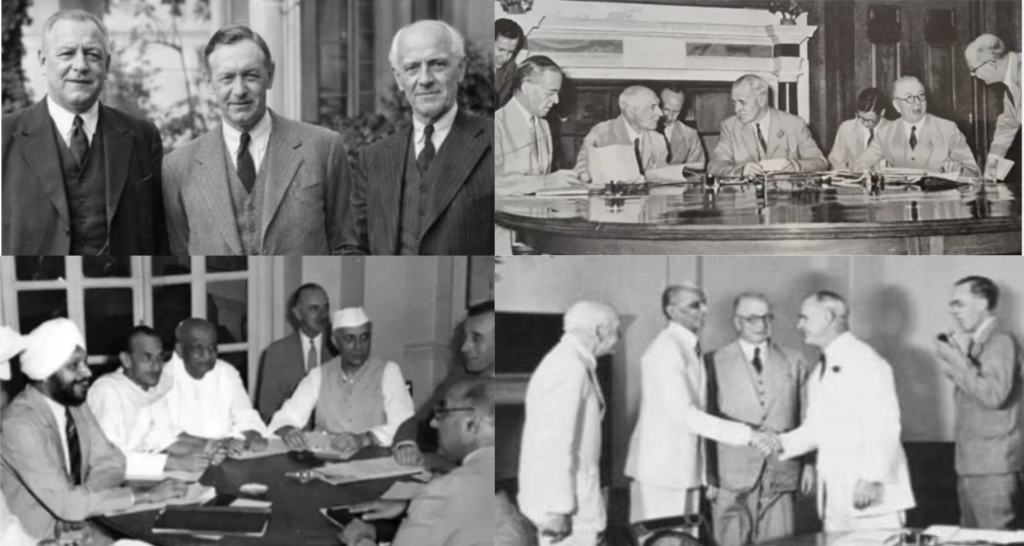
Cabinet Mission Plan – Key Points
- Rejected full-fledged Pakistan because:
- Large non-Muslim population in proposed areas (38% NW, 48% NE).
- Partition would disrupt the regional ties between Bengal and Punjab.
- Economic, administrative, and military issues would arise.
- Grouping of provinces into 3 sections:
- Section A: Madras, Bombay, CP, UP, Bihar, Orissa
- Section B: Punjab, NWFP, Sindh
- Section C: Bengal, Assam
- Three-tier legislature and executive: Provincial, Section, Union levels.
- Constituent Assembly (389 members):
- Elected by provincial assemblies via proportional representation.
- Sections A, B, C to discuss provincial constitutions separately, then together for the Union.
- Federal structure:
- Common centre controls defence, communications, and external affairs.
- Provinces have full autonomy.
- Communal questions in the central legislature are decided by simple majority.
- Princely states free from British paramountcy; can negotiate with successor governments.
- Provinces could leave groups after first general elections; groups could reconsider after 10 years.
- Interim government formed from the Constituent Assembly.
- Interim government formed from the Constituent Assembly.
- Different Interpretations –
- Congress: Grouping is optional; one Constituent Assembly; League no longer has veto.
- Muslim League: Thought grouping implied Pakistan; Mission clarified it was compulsory.
- Acceptance & Rejection
- Muslim League accepted plan: June 6, 1946
- Congress accepted plan: June 24, 1946
- July 10, 1946: Nehru implied provinces may reject grouping.
- July 29, 1946: Muslim League withdrew acceptance → called for Direct Action (August 16, 1946)
Wavell’s ‘Breakdown Plan’
- Proposed withdrawal of British to NW & NE Muslim provinces; rest to Congress.
- Reflected:
- British awareness of Congress-led rebellion
- Some officials wanted a “Northern Ireland”-type Pakistan
Attlee’s Statement (February 20, 1947)
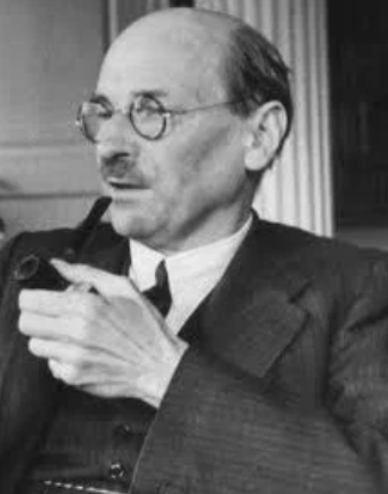
- Deadline: June 30, 1948 for transfer of power, even if constitution not agreed.
- British powers over princely states would lapse, not transferred to successor governments.
- Mountbatten appointed as Viceroy, replacing Wavell.
Growing Realisation of Partition
- March 10, 1947: Nehru stated Cabinet Mission Plan best, else partition of Punjab and Bengal.
- April 1947: Congress president Kripalani signaled acceptance of Pakistan if Bengal and Punjab partitioned fairly.
Dickie Bird Plan –
key provisions
- Provinces as Successor States:
- Each British Indian province – such as Bengal, Punjab, Bombay, Madras, and others—would become an independent successor state immediately after the British withdrawal.
- Option to Join a Union: After achieving independence, each province could decide whether to join a constituent assembly to form a larger federation (India or Pakistan) or remain independent.
- The decision would rest entirely with provincial governments and legislatures.
- Princely States’ Freedom of Choice:
- The princely states, which were under indirect British rule, would be free to join either dominion—India or Pakistan—or to remain independent.
- No Central Authority at the Outset:
- Unlike later plans, the Dickie Bird proposal did not envisage the immediate creation of a central government or dominion structure.
- Transfer of Power by Province:
- The British would withdraw province by province, with authority being handed directly to local governments rather than to an all-India administration.
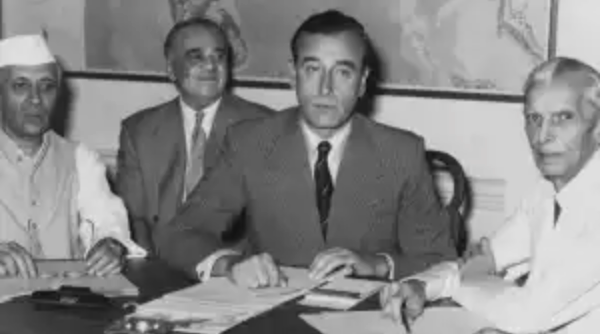
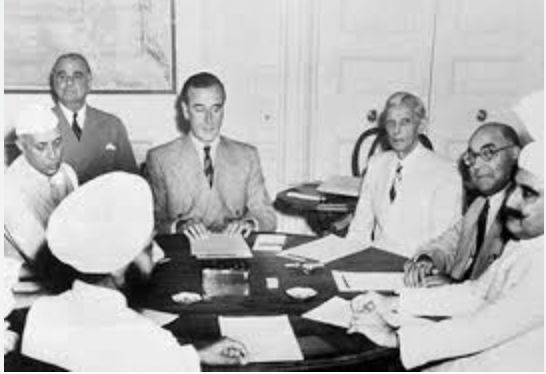
Mountbatten Plan (June 3, 1947) –
- Freedom-with-partition formula widely accepted before arrival.
- Key points:
- Punjab and Bengal assemblies to vote for partition separately by Hindu and Muslim groups.
- If simple majority voted, province partitioned.
- Two dominions and two constituent assemblies created if partitioned.
- Sindh decided independently; referendums in NWFP and Sylhet to decide affiliation.
- No independence for princely states (they must join India or Pakistan).
- No separate independence for Bengal.
- Hyderabad’s accession to Pakistan ruled out.
- Freedom date fixed: 15 August 1947.
- Punjab and Bengal assemblies to vote for partition separately by Hindu and Muslim groups.
Implementation:
- Bengal and Punjab assemblies voted for partition.
- Sylhet incorporated into East Bengal (Pakistan).
- Boundary commissions formed to demarcate new borders.
- NWFP referendum favored Pakistan; Baluchistan and Sindh joined Pakistan.
Indian Independence Act (July 5, 1947) –
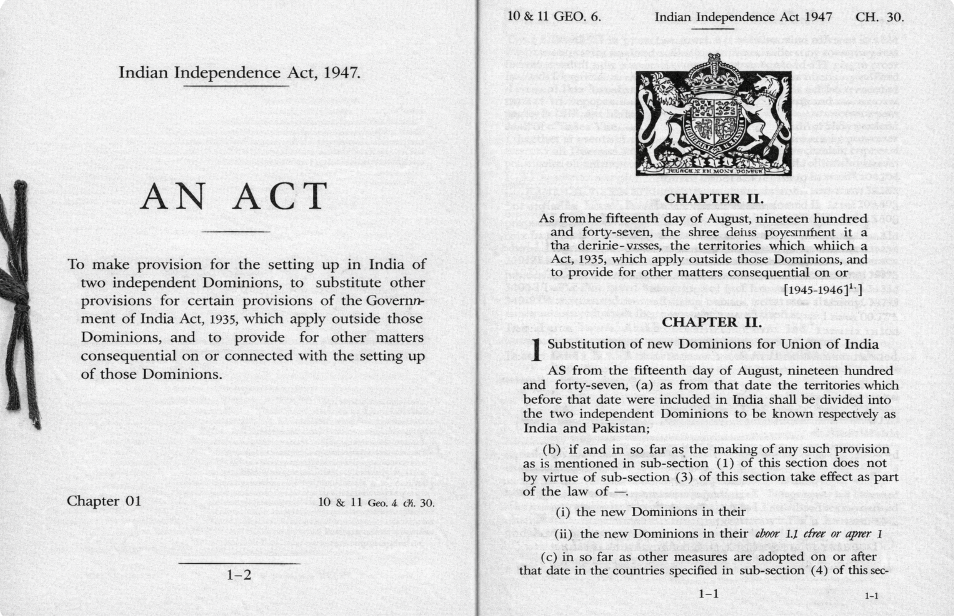
- The British Parliament proposed The Indian Independence Act on 4 July 1947.
- On July 15, 1947, Prime Minister Attlee introduced the Mountbatten Plan as a bill in the House of Commons and on July 16 in the House of Lords.
- The Bill was passed on 18 July 1947 and after the royal signature it enacted the Indian Independence Act.
- The Act legalized the Mountbatten plan of 3 June 1947. The Act had 20 sections and three schedules.
- On August 15, 1947, the Indian subcontinent was divided into two Dominion- Indian Union and Pakistan.
- The borders of Punjab and Bengal were determined through a Boundary Commission, plebiscite (public voting), and elections.
- All treaties and contracts between the British government and the Indian princely states were cancelled.
- The word ‘Emperor of India’ was removed from the title of British Crown.
- After August 15, 1947, the British Parliament ended the jurisdiction over India and Pakistan.
- The Central Assembly and the State Councils were dissolved.
- There was to be a separate legislature for each dominion, having full authority of legislation, without any interference from the British Parliament.
- Both the Constituent Assemblies were given the status of parliament and were bestowed full powers of dominion legislature through temporary provision for the dominion governments.
- For effective implementation of the Act, the Governor General was given powers to issue such ordinances as he deemed necessary.
- Native princely states could join either India or Pakistan.
- The Government of India Act 1935 will remain in force until the two Dominions create a new constitution.
- On 20 June 1947, Bengal and on 23 June, the Punjab Legislative Assembly voted in favor of Partition.
- Two Boundary Commissions were formed under the chairmanship of Cyril Radcliffe, each having two members from the Congress and two from the Muslim League. The Radcliffe Commission’s report was published on 17 August 1947.
- Punjab Border Commission: Justice Mehar Chand Mahajan and Justice Teja Singh from Congress; Deen Muhammad and Muhammad Munir from the Muslim League.
- Bengal Border Commission: Justice C.C. Biswas and B.K. Mukherjee from the congress; Abu Saleh Mohammed Akram and S.A. Rahman from the Muslim League.
- Lord Mountbatten became the first and final British governor-general of independent India. Muhammad Ali Jinnah became the first Governor-General of Pakistan.
- India Secretary Herbert Samuel called the Act a “Peace agreement without war”.



