

Heat is a fundamental topic in Physics that explains how energy is transferred and affects matter. It covers concepts like temperature, thermal expansion, change of state (solid, liquid, and gas), conduction, convection, and radiation, which help us understand both natural phenomena and technological applications in daily life.
Previous year Questions
| Year | Question | Marks |
| 2016 | State Hess’s law-a corollary of the first law of thermodynamics, with suitable examples. | 2M |
Introduction to Heat and Temperature
What is Temperature?
- Temperature is a measure of the average kinetic energy of molecules in a substance.
- It is a relative measure, meaning that an object is only “hotter” or “colder” when compared to something else.
- Measured in Celsius (°C), Fahrenheit (°F), and Kelvin (K).
- Example: Boiling water has a higher temperature than ice because its molecules move faster.
What is Heat?
- It is a form of energy that is transferred between objects due to a temperature difference.
- It flows from hot to cold until thermal equilibrium is reached.
- Measured in Joules (J) or Calories (cal).
- Example: When you touch a hot cup of tea, Iti flows from the cup to your hand.
Units of Heat:
- Joule (J) – SI unit of heat.
- Calorie (cal) – The amount of heat required to raise the temperature of 1 gram of water by 1°C.
- 1 cal = 4.186 J
Units of Temperature:
- Celsius (°C) – Based on the freezing (0°C) and boiling (100°C) points of water.
- Fahrenheit (°F) – Used in some countries, with a freezing point of 32°F and boiling point of 212°F.
- Kelvin (K) – SI unit, absolute zero is 0 K (lowest possible temperature).
- Conversion Formulas:
- °C= 5/9 (°F−32)
- °F= 9/5 (°C) + 32
- K= °C + 273.15
Difference Between Heat and Temperature
| Property | Heat | Temperature |
| Definition | Energy transferred due to temperature difference | Measure of molecular kinetic energy |
| SI Unit | Joules (J) | Kelvin (K) |
| Nature | Flows from hot to cold | Does not flow |
| Instrument | Calorimeter | Thermometer |
Measurement of Temperature
- Thermometer: Uses expansion of mercury or alcohol. {liquid-in-glass thermometer}
- Digital Thermometers: Use electronic sensors for accurate readings.
- Infrared Thermometers: Measure temperature without contact, used in medical and industrial applications.
The Clinical Thermometer
A clinical thermometer is used to measure body temperature.
- Features of a Clinical Thermometer:
- It consists of a long, narrow glass tube with a bulb at one end, which contains mercury.
- A small, shiny thread of mercury is visible inside the tube.
- It has a temperature scale in degrees Celsius (°C) ranging from 35°C to 42°C.
The Laboratory Thermometer
Unlike clinical thermometers, a laboratory thermometer has a wider range, from -10°C to 110°C, and is used for measuring temperatures in scientific experiments.
Gas Thermometers
- Unlike liquid-in-glass thermometers, which show varying readings due to different expansion properties of liquids, gas thermometers provide consistent readings, regardless of the gas used. This is because all gases at low densities exhibit the same expansion behavior.
Ideal Gas Equation
By combining Boyle’s and Charles’ Laws, we obtain the ideal gas law:
PV∝T
or, in its standard form:
PV = μRT
where:
- μ = Number of moles of gas
- R = Universal Gas Constant = 8.31 J mol-1K-1
A constant-volume gas thermometer relies on the principle that:
P∝T
This means that at constant volume, temperature can be measured by monitoring pressure.

Graphical Representation
- A pressure vs. temperature graph for gases gives a straight line.
- When extrapolated to very low temperatures, the pressure theoretically drops to zero at -273.15°C.
- This temperature is known as absolute zero, the lowest possible temperature in nature.
Thermal Expansion
Thermal expansion is the tendency of solids, liquids, and gases to expand when heated and contract when cooled due to increased molecular movement.
(A) Expansion in Solids
When solids are heated, their atoms vibrate more, increasing the distance between them. This leads to expansion.
Metals expand more than glass (e.g., copper expands about five times more than glass for the same temperature rise).
Types of Expansion in Solids:
Linear Expansion (Increase in length)
- Example: Metal rods expanding when heated.
- Formula:
ΔL=L0αΔT
Where:
- ΔL= Change in length
- L0 = Initial length
- α = Coefficient of linear expansion
- ΔT = Change in temperature
Area Expansion (Increase in area)
- Example: Metal plates expanding in two dimensions.
- Formula:
ΔA=A0βΔT
- Where β = coefficient of area expansions
- Note: β=2α (since area expansion is twice linear expansion).
Volume Expansion (Increase in volume)
- Example: Iron blocks, glass bottles expanding in all directions.
- Formula:
ΔV=V0γΔT
- Where γ = coefficient of volume expansion ( γ or αv) and
- Note: For a cube of side l expanding uniformly:
γ=3α
(since volume expansion is three times linear expansion).
Applications of Thermal Expansion in Solids:
- Gaps are left between railway tracks to prevent bending in summer.
- Metal bridges have expansion joints to allow for expansion.
- Bimetallic strips (made of two metals) are used in thermostats.
- When wires are tied to electric poles, they are kept slightly loose to allow for expansion and contraction due to temperature changes.
- To remove metal caps from glass bottles, they are kept in mildly warm water: When metal caps are placed in warm water, the metal expands more than the glass, making it easier to open.
(B) Expansion in Liquids
- Liquids expand more than solids since intermolecular forces are weaker.
Applications of Thermal Expansion in Liquids:
- Alcohol and mercury thermometers work due to liquid expansion.
- Hot water rises in a kettle due to expansion.
Anomalous Expansion of Water
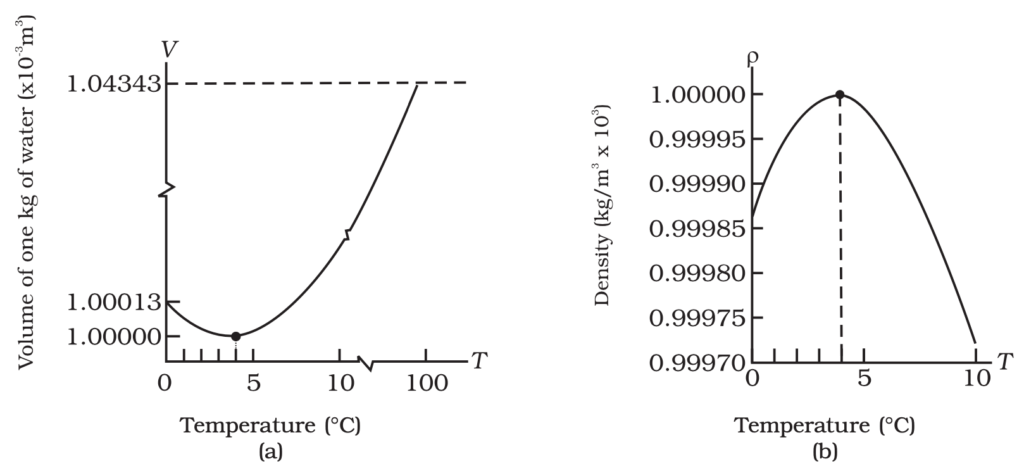
- The anomalous expansion of water refers to the unusual behavior of water in which it expands instead of contractingwhen cooled from 4°C to 0°C. Most substances contract as they cool, but water reaches its maximum density at 4°Cand then expands upon further cooling.
Application
- This property prevents lakes and ponds from freezing from the bottom up, preserving aquatic life.
- It causes icebergs to float.
The anomalous expansion of water is significant for aquatic life. When surface water in colder regions reaches 4°C, it sinks to the bottom because it is denser, and the warmer water rises. This continues until all the water reaches 4°C. If the temperature drops further, the top layer cools below 4°C, expands, and becomes less dense, forming ice on the surface. This ice layer insulates the water below, preventing it from freezing and allowing life to continue beneath the frozen surface.
(C) Expansion in Gases
- Gases expand the most because their molecules move freely.
- Expansion follows Charles’ Law:
V∝T
(At constant pressure, volume increases with temperature.)
For an ideal gas at constant pressure:
αv=1/T
Applications of Thermal Expansion in Gases:
- Hot air balloons rise because heated air expands and becomes lighter.
- Car tires expand in summer, increasing pressure.
Thermal Stress
- If a material is prevented from expanding when heated, thermal stress develops. The stress is given by:
Thermal Stress = Y×αL×ΔT
where Y = Young’s modulus.
For example, Steel rails expand in hot weather, and if not given space to expand, they develop large forces that can cause bending.
Specific Heat Capacity
Specific heat capacity is the amount of heat required to raise the temperature of 1 kg of a substance by 1 K. It depends on the nature of the substance and its temperature.
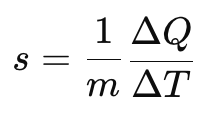
The SI unit of specific heat capacity is J kg⁻¹ K⁻¹.
Molar Specific Heat Capacity Instead of using mass, we can express heat capacity in terms of moles (μ):
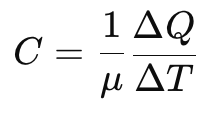
where C is the molar specific heat capacity, defined as the amount of heat required to raise the temperature of one mole of a substance by 1 K. The SI unit is J mol⁻¹ K⁻¹.
Specific Heat Capacity of Gases
For gases, additional conditions are required to define molar specific heat capacity:
- At constant pressure (Cp): When the gas is heated while keeping its pressure constant.
- At constant volume (Cv): When the gas is heated while keeping its volume constant.
Importance of Specific Heat Capacity
- Water has the highest specific heat capacity among common substances.
- Because of this, water is used as a coolant in automobile radiators and a heating medium in hot water bags.
- Metals have low specific heat capacity, so they heat up and cool down quickly.
- In coastal areas, water warms up more slowly than land in summer, leading to cooling sea breezes.
- In deserts, land heats up rapidly during the day and cools quickly at night due to its low specific heat capacity, causing extreme temperature variations.
Calorimetry: Measurement of Heat
A system is considered isolated when there is no exchange of heat with its surroundings. The fundamental principle of calorimetry states that:
Heat lost by the hotter body = Heat gained by the cooler body
(provided no heat is lost to the surroundings).
A calorimeter is used to measure heat transfer.
Formula:
m1c1ΔT1=m2c2ΔT2
Used to find unknown temperature, mass, or specific heat capacity.
Applications of Calorimetry
- Measuring specific heat capacity of unknown substances.
- Mixing hot and cold liquids to determine final temperature.
Change of State: Solid, Liquid, and Gas
A change of state occurs when heat is exchanged between a substance and its surroundings. The key phase changes include:
| Change of State | Definition | Example |
| Melting | Solid → Liquid | Ice melting into water at 0°C. |
| Freezing (Solidification) | Liquid → Solid | Water freezing into ice at 0°C. |
| Vaporization (Boiling/Evaporation) | Liquid → Gas | Water boiling at 100°C. |
| Condensation | Gas → Liquid | Water droplets forming on a cold bottle. |
| Sublimation | Solid → Gas (without becoming liquid) | Dry ice (solid CO₂) turning into vapor. |
Melting and Freezing
- Melting point: The temperature at which a substance transitions from solid to liquid in thermal equilibrium.
- Freezing: The reverse process, where a liquid turns back into a solid.
Regelation: Melting Under Pressure
- If a metal wire with heavy weights is placed on a slab of ice, the ice melts beneath the wire due to increased pressure. However, as the wire passes, the melted water refreezes behind it. This phenomenon is called regelation.
- Example: Skating on Ice
- The pressure of skates causes a thin layer of ice to melt, forming a layer of water that acts as a lubricant, allowing smooth motion.
Boiling (Vaporization) and Condensation
- Boiling point: The temperature at which a liquid changes to a gas while in thermal equilibrium with its surroundings.
- Condensation: The reverse process, where gas turns into liquid.
- At the boiling point, both liquid and vapour states coexist.
Effect of Pressure on Boiling Point
- Higher pressure increases boiling point.
- Example: A pressure cooker cooks food faster because it traps steam, increasing the pressure inside. This raises the boiling point of water from 100°C to around 120°C, allowing food to cook at a higher temperature. The heat penetrates food more quickly, reducing cooking time while also saving energy and retaining nutrients.
- Lower pressure decreases boiling point
- Example: Cooking is difficult in high-altitude areas because the atmospheric pressure is lower, causing water to boil at a lower temperature.
Sublimation: Direct Solid-to-Gas Transition
Certain substances can directly transition from solid to gas without passing through the liquid phase.
- Examples: Dry ice (solid CO₂) and iodine.
Latent Heat: Heat During Change of State
When a substance undergoes a change of state (solid to liquid, liquid to gas, etc.), a certain amount of heat energy is either absorbed or released without changing its temperature. This heat is called latent heat.
- Latent Heat (L): The amount of heat energy required per unit mass to change the state of a substance.
Formula:
Q=mL
where:
- Q = Heat absorbed/released (Joules)
- m = Mass of the substance (kg)
- L = Latent heat (J/kg)
Types :
- Latent Heat of Fusion (Lf) – The heat required to melt 1 kg of a solid into a liquid without temperature change.
Q=mLf
Example: Lf for water = 3.33 × 10⁵ J/kg →
This means 3.33 × 10⁵ J of heat is needed to melt 1 kg of ice at 0°C.
- Latent Heat of Vaporization (Lv) – The heat required to convert 1 kg of liquid into gas without temperature change.
Q=mLv
Example: Lv for water = 22.6 × 10⁵ J/kg →
This means 22.6 × 10⁵ J of heat is needed to convert 1 kg of water into steam at 100°C.
Why Steam Burns are More Dangerous than Boiling Water Burns?
- Steam has extra latent heat (heat energy stored during vaporization). When steam touches the skin, it releases this extra heat as it condenses into water, causing severe burns.
Heat Transfer
It is energy transfer between systems due to temperature difference. It occurs in three main ways:
1. Conduction (Heat Transfer in Solids)
Conduction is the process of heat transfer through direct contact between molecules, without the movement of the substance itself. It happens in solids, liquids, and gases, but is fastest in solids. Example: If one end of a metal rod is placed in a flame, It travels from the hot end to the cooler end, eventually making the entire rod hot.
- Solids are the best conductors of It because their molecules are closely packed.
- Liquids have intermediate conductivity, while gases are poor conductors because their molecules are far apart.
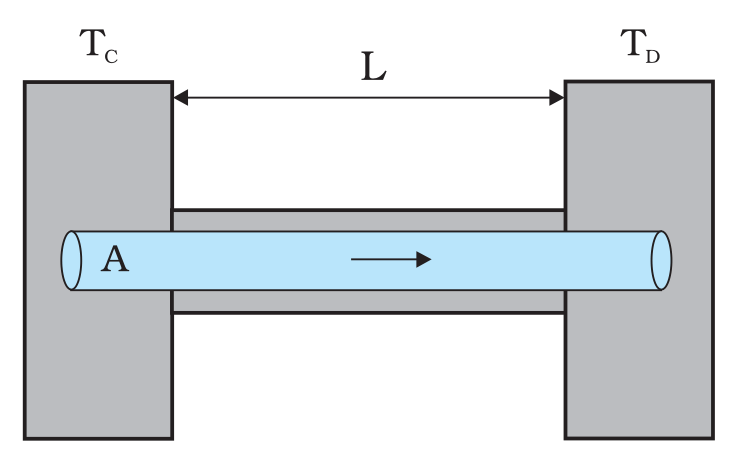
The rate of heat flow (H) through a material is given by Fourier’s Law: “The rate of heat transfer through a material is directly proportional to the temperature gradient and the material’s thermal conductivity.”
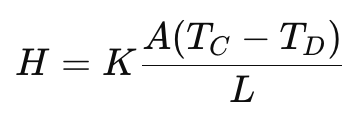
where:
- H = Heat transfer rate (W or J/s)
- K = Thermal conductivity (W/m·K)
- A = Cross-sectional area of the material (m²)
- L = Length of the material (m)
- TC = Higher temperature (°C or K)
- TD = Lower temperature (°C or K)
Thus, More heat is transferred when:
- The temperature difference is greater.
- The material has high thermal conductivity (K is large).
- The cross-sectional area (A) is larger (more surface for heat to travel).
- Less heat is transferred when:
- The length (L) is larger (heat has a longer distance to travel).
Thermal Conductivity (K): How Well a Material Conducts Heat
Different materials have different abilities to conduct heat. Metals have high thermal conductivity, while insulators have low thermal conductivity.
- Metals (copper, silver, aluminum) are excellent conductors.
- Wood, plastic, and glass wool are poor conductors (insulators).
- Air is one of the best insulators, which is why thermal insulation materials trap air.
Applications of Conduction
| Cooking utensils | Being a good conductor of heat, copper or aluminum promotes the distribution of heat over the bottom of a pot for uniform cooking. |
| Metal roofs in summer | Absorb and transfer heat inside, making houses hot. |
| House insulation | Foam layers on roofs keep homes cooler in summer by blocking heat conduction. |
| Double-glazed windows | Traps air between glass layers, reducing heat conduction. |
| Clothing insulation | Wool and synthetic fibers trap air, keeping body heat from escaping. |
| Cooling fins in radiators | Increase surface area for faster heat dissipation in car engines. |
2. Convection (Heat Transfer in Fluids – Liquids & Gases)
Convection is a mode of heat transfer that occurs in fluids (liquids and gases) through the actual movement of matter.
How Natural Convection Works
- When a fluid is heated from below, it expands, becomes less dense, and rises.
- The colder, denser part of the fluid moves down to replace the rising warm fluid.
- This cycle continues, setting up a convection current that transfers heat.
Types of Convection:
- Natural Convection – Caused by density differences.
- Example: Warm air rises, and cool air sinks, creating wind patterns.
- Example: Sea breeze and land breeze due to differential heating of land and water.
- Forced Convection – Created using fans or pumps.
- Example: Human circulatory system where the heart pumps blood to regulate body temperature.
- Example: Automobile cooling system, where a fan circulates coolant to remove engine heat.
Newton’s Law of Cooling

“The rate of heat loss of a body is directly proportional to the temperature difference between the body and its surroundings, provided the temperature difference is small.”
Mathematical Representation
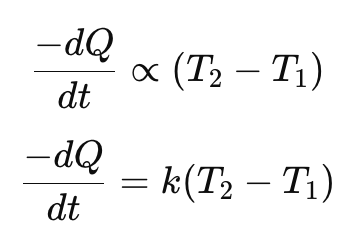
where:
- dQ/dt = Rate of heat loss
- T₂ = Temperature of the object
- T₁ = Temperature of surroundings
- k = Constant (depends on the surface area and nature of the object)
Solving for T₂:
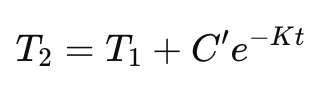
where C’ is a constant.
Application: Cooling of hot drinks → Tea or coffee cools faster initially, then slows down.
Examples of Convection
| Hot Air Balloons | Heated air inside the balloon becomes lighter, causing it to rise. |
| Trade Winds | Global convection currents cause steady winds from northeast toward the equator due to Earth’s rotation. |
| Sea Breeze | During the day, land heats up faster than water. Warm air rises, and cool air from the sea moves in, creating a breeze.  |
| Land Breeze | At night, land cools faster than water. Warm air over water rises, and cool air from land moves in, reversing the cycle. |
3. Radiation (Heat Transfer Without a Medium)
Radiation is the transfer of heat in the form of electromagnetic waves without requiring a medium.
- Example: The Sun’s heat reaches Earth through space via radiation, since space is a vacuum.
- Properties of Radiant Heat
- Travels in waves at the speed of light (3 × 10⁸ m/s).
- All objects emit radiant heat.
- No direct contact needed between objects.
Thermal Radiation
The heat emitted by a body due to its temperature is called thermal radiation. Examples include:
- Red-hot iron glowing due to heat.
- Electric filament lamps emitting visible light and heat.
Stefan-Boltzmann Law:
“The total heat energy radiated per unit surface area of a black body is proportional to the fourth power of its absolute temperature.”
E = σT4
Where:
- E = Energy radiated
- σ = Stefan-Boltzmann constant (5.67×10⁻⁸ W/m²·K⁴)
- T = Temperature (Kelvin)
Blackbody Radiation:
- A blackbody absorbs all radiation falling on it and emits radiation effectively.
- Dark-colored surfaces absorb more heat than light-colored surfaces.
Kirchhoff’s Law
- According to Kirchhoff’s law, “Good absorbers are also good emitters, and poor absorbers are poor emitters.”
- Compared to light-colored objects, black-colored objects absorb and emit radiation energy more effectively.
- Example: A buffalo feels hotter in summer and colder in winter because dark-colored objects absorb and emit more energy than lighter-colored ones.
- If a black and a white object are heated to the same temperature in the dark, according to Kirchhoff’s law, the black object will glow more because it absorbs and emits more radiation.
Applications of Radiation
| Wearing white/light clothes in summer | Light colors reflect more heat, keeping us cooler. |
| Wearing dark clothes in winter | Dark colors absorb more heat, keeping us warm. |
| Cooking pots with blackened bottoms | A black surface absorbs heat efficiently, improving cooking. |
| Solar cookers and panels | Black surfaces absorb maximum solar radiation for heating. |
Thermos flask
A thermos flask is designed to minimize heat loss by reducing conduction, convection, and radiation.
- Structure of a Thermos Flask
- Double-walled glass vessel: Minimizes conduction.
- Vacuum between walls: Prevents convection.
- Silver coating on inner & outer walls: Reflects radiation back into the flask.
- Cork or plastic stopper: Acts as an insulator to block conduction.
How It Works:
- Keeps hot liquids hot by preventing heat loss.
- Keeps cold liquids cold by blocking external heat from entering.
Laws of Thermodynamics
1. Zeroth Law of Thermodynamics (Law of Thermal Equilibrium)
Statement:
“If two bodies (A and B) are each in thermal equilibrium with a third body (C), then A and B are also in thermal equilibrium with each other.”
Explanation:
- This law establishes the concept of temperature and thermal equilibrium.
- It implies that temperature is a fundamental and measurable property.
- It allows the definition of temperature scales (e.g., Celsius, Kelvin).
2. First Law of Thermodynamics (Law of Energy Conservation)
Statement:
“Energy cannot be created or destroyed, only transferred or converted from one form to another.”
Mathematical Form:
ΔU=Q−W
where:
- ΔU = Change in internal energy of a system
- Q = Heat added to the system
- W = Work done by the system
Explanation:
- If a system gains heat (Q), its internal energy increases.
- If a system does work (W) on its surroundings, its internal energy decreases.
- This law is the basis for heat engines, refrigerators, and chemical reactions.
3. Second Law of Thermodynamics (Law of Entropy)
Kelvin-Planck Statement (Heat Engine Statement)
“No heat engine can convert all heat energy into useful work without losing some energy as waste heat.”
- This means that 100% efficiency is impossible in heat engines because some energy is always lost to the surroundings.
Clausius Statement (Heat Flow Statement)
“Heat cannot spontaneously flow from a colder body to a hotter body without external work.”
- This explains why a refrigerator needs electricity—it requires energy to move heat from a cold region (inside the fridge) to a hotter region (outside).
Mathematical Form (Clausius Inequality):
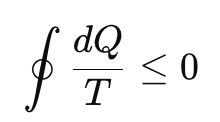
where dQ is the heat transfer and T is temperature in Kelvin.
Entropy Statement (Disorder Statement)
“The total entropy (disorder) of an isolated system always increases over time and never decreases.”
- Systems naturally become more disordered (e.g., ice melts, objects break, and energy spreads out).
4. Third Law of Thermodynamics (Absolute Zero and Entropy)
Statement:
“As the temperature of a system approaches absolute zero (0 K), the entropy of a perfect crystal approaches zero.”
Explanation:
- At absolute zero (0 K), all molecular motion theoretically stops, meaning no disorder (entropy).
- In reality, absolute zero cannot be reached, but scientists can get close to it.
Laws of Thermodynamics and Heat Transfer (Tabular Form)
| Law | Concept | Key Idea |
| Zeroth Law | Thermal Equilibrium | If A = C and B = C, then A = B |
| First Law | Energy Conservation | ΔU=Q−W (Energy is neither created nor destroyed) |
| Second Law | Entropy | Heat flows from hot to cold naturally; entropy increases |
| Third Law | Absolute Zero | Entropy approaches zero at 0 K |
| Hess’s Law | Constant Heat Summation | Total enthalpy change is the same, whether in one step or multiple steps |
| Fourier’s Law | Conduction | Heat transfer depends on material and temperature gradient |
| Newton’s Cooling Law | Cooling | Faster cooling at larger temperature difference |
| Stefan-Boltzmann Law | Radiation | Heat radiation ∝ T4 |
| Planck’s Law | Quantum Radiation | Energy emission depends on temperature and wavelength |
FAQ (Previous year questions)
Hess’s Law states that the total enthalpy change of a reaction is the same, whether it occurs in one step or multiple steps.
Mathematical Form: ΔHtotal=∑ΔHsteps
Example: Formation of CO₂ from Graphite
There are two possible paths:
Direct-
C (graphite)+O2→CO2ΔH=−393.5 kJ/mol
Indirect-
C (graphite)+12O2→COΔH=−110.5 kJ/mol
CO+12O2→CO2ΔH=−283.0 kJ/mol
Total ΔH = –110.5 + (–283.0) = –393.5 kJ/mol



