
Aspect | Fold Mountains | Fault-Block Mountains |
Formation | By compressional forces causing folds | By faulting due to tension or compression |
Structure | Have anticlines and synclines | Formed by uplifted blocks (horsts) and sunken blocks (grabens) |
Age | Generally younger, and still growing (active). | Older and often eroded. |
Diagram | 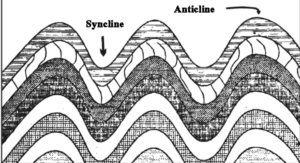 | 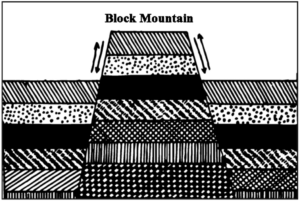 |
Examples | Himalayas, Alps, Andes | Satpura, Black Forest, Sierra Nevada |
Formation
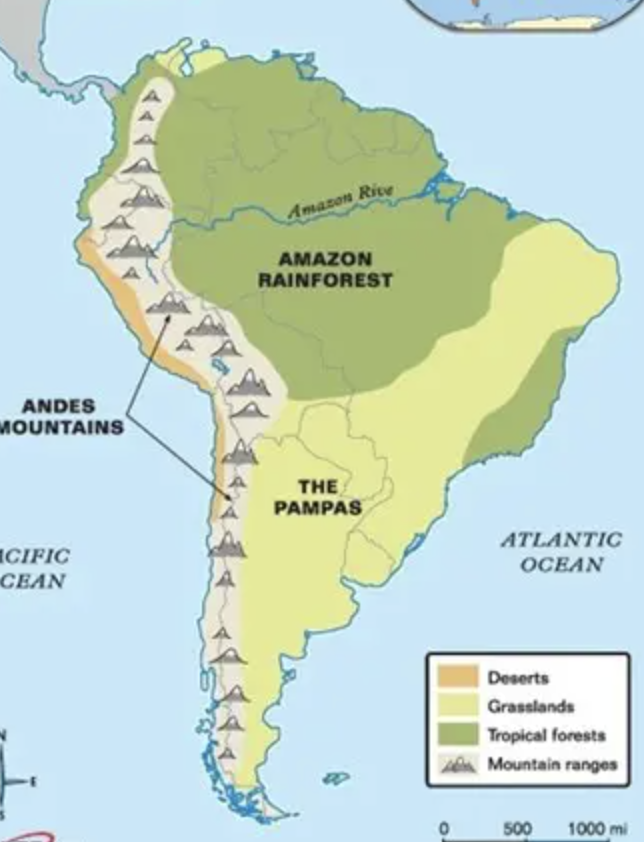
The Andes is a young fold mountain range formed by the convergent boundary interaction between the Nazca Plate and the South American Plate. It is part of the Pacific Ring of Fire, hence prone to volcanic eruptions and earthquakes.
Characteristics
- Location – The Andes stretch along the western coast of South America
- Extent– It passes through seven countries: Argentina, Chile, Bolivia, Peru, Ecuador, Colombia, and Venezuela, covering 7,200 km in length .
- Peaks – Aconcagua(highest peak) , Cotopaxi, Chimborazo,Ojos del Salado
- Intermontane plateau – Bolivian Plateau.
- Rivers – Amazon , Magdalena, Colorado, Peruvian
- Minerals – Copper, silver, gold, lead, zinc, tin, and iron
- Flora and fauna- Flora (Gray fox ,Guanaco,Llama,Alpaca) and Fauna (Oak , potato,yareta)
- Economy – Major economic activities include mining, agriculture, and hydropower.