

The Internet of Things (IoT) refers to an integrated system of physical objects ( from ordinary household objects to sophisticated industrial tools) embedded with sensors, software, and other technologies for the purpose of connecting and exchanging data within the systems over the “internet”.
- Applications – To create smart infrastructure in various verticals such as Power, Automotive, Safety & Surveillance, Remote Health Management, Agriculture, Smart Homes and Smart Cities etc
- Challenges – Security and privacy risks, Interoperability issues, regulatory and legal issues, digital divide,
- Example – Smart City Mission of India is based on the ideas of energy efficiency, smart waste disposal, and smart traffic regulation, all these aspects are enabled by IoT.
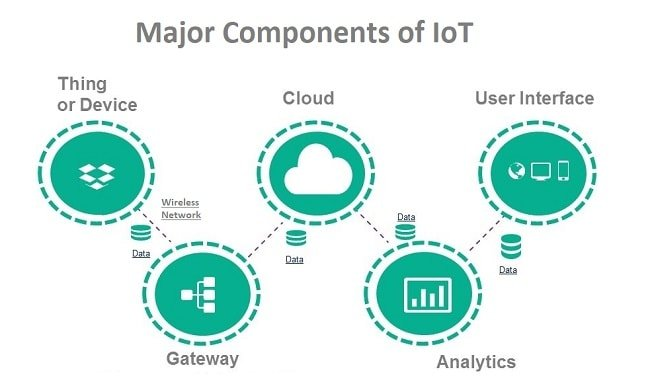
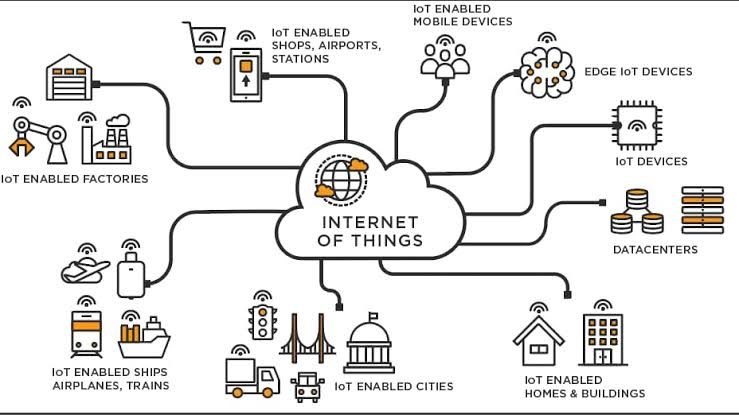
The Internet of Things (IoT) is a network of interconnected devices equipped with sensors and software, allowing them to collect and exchange data over the internet, enabling remote monitoring, control, and automation.
Advantages of IoT: | Challenges of IoT: |
Automation of Tasks:
Increased Efficiency:
Remote Monitoring:
Improved Decision-Making:
| Security and Privacy Risks: Vulnerabilities in IoT devices may lead to unauthorized access to personal data or cyberattacks on critical infrastructure systems.
State-sponsored cyber-espionage targets Industrial IoT (IIoT) devices in critical infrastructure
Users’ lack of IoT security awareness:
Data Overload: making it challenging to extract meaningful insights.
Interoperability Issues:
|
In 2022, in order to secure Consumer Internet of Things (IoT) devices, the Department of Telecommunications has released a report “Code of Practice for Securing Consumer Internet of Things(IoT)”.



