

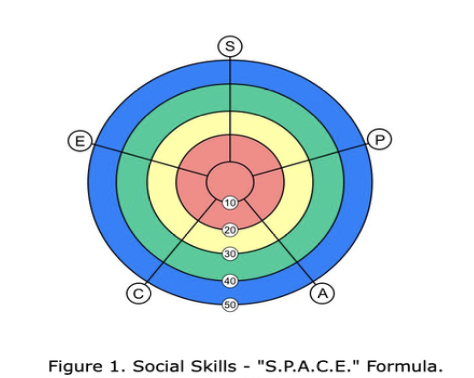
It highlights six key dimensions of social intelligence, represented as “S.P.A.C.E.” These include:
- Situational Awareness: ability to understand the context of a situation and reading cues in social situations.
- Presence: How you present yourself and the impression you make on others.
- Authenticity: Being genuine, trustworthy, and transparent in interactions.
- Clarity: Communicating effectively and clearly.
- Empathy: Understanding and relating to the emotions and perspectives of others.
Albrecht describes these dimensions as essential for building effective interpersonal relationships and social Competence.
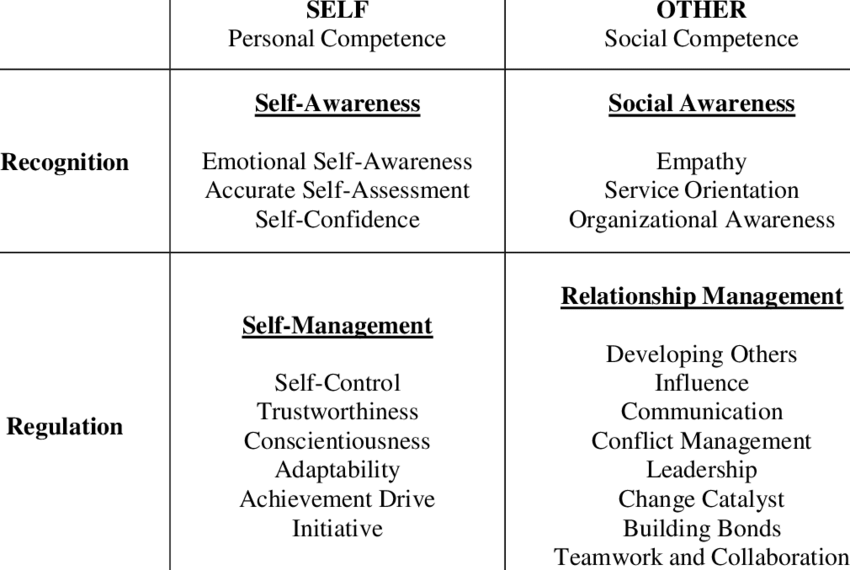
- Self-Awareness: Recognizing and understanding one’s own emotions.
- Self-Management: Regulating and controlling one’s own emotions and behaviors.
- Social Awareness: Recognizing and understanding the emotions of others (empathy).
- Relationship Management: Managing interactions and relationships with others effectively.
According to Salovey and Mayer, emotional intelligence is “the ability to monitor one’s own and other’s emotions, to discriminate among them, and to use the information to guide one’s thinking and actions”.
It involves empathy, self-awareness, self-regulation, social skills, and motivation.
Significance in Achieving Success:
- Leadership: empathy, communication, and conflict resolution, leading to better team dynamics and organizational success.
- Relationship Management: fosters healthy interpersonal relationships, crucial for collaboration, networking, and career advancement.
- Decision Making: considering both logical reasoning and emotional implications, leading to better outcomes.
- Adaptability: Navigate change, setbacks, and challenges with resilience, fostering adaptability and innovation.
- Personal Well-being: High EI correlates with reduced stress, improved mental health, and overall well-being, contributing to sustained success and fulfilment.
E.I is the ability to monitor one’s own and other’s emotions, to discriminate among them, and to use the information to guide one’s thinking and actions”–(Salovey and Mayer)
- Improved Communication: EI enhances interpersonal skills, leading to clearer and more effective communication. For Eg. IAS Divya Devrajan (Learned Gondi within 3 months for Effective communication )
- Conflict Resolution: Individuals with high EI can manage and resolve conflicts more effectively, fostering a collaborative work environment. For eg. IPS Chetan Singh Rathor persuaded protesters to sing the national anthem.
- Leadership Skills: EI helps leaders inspire and motivate their teams by understanding their emotions and needs. For eg. IAS N Prabhakar Reddy enrolled his children in a government.
- Adaptability: High EI enables professionals to adapt to changing situations and navigate workplace challenges with resilience.
- Better Decision-Making: EI facilitates emotional regulation, leading to more rational and balanced decision-making processes.



