
Sexual reproduction in plants

Sol –

Feature

Sexual Reproduction

Asexual Reproduction

Number of Parents

Two (Male and Female)

One (Parent plant)

Genetic Variation

High (offspring inherit traits from both parents)

Low (offspring are genetically identical)

Reproduction Speed

Slow (requires pollination, fertilization, and seed formation)

Fast (offspring are produced quickly)

Energy Requirement

High (flower production, pollination, etc.)

Low (no need for flowers or pollination)

Genetic Adaptability

High (promotes genetic diversity and adaptability)

Low (offspring are clones and lack adaptability)

Examples

Most flowering plants (e.g., apple, pea)

Potatoes, strawberries, dandelions, onions

Reliance on Pollinators

Yes (in animal-pollinated plants)

No (does not require pollinators)

Advantages

Promotes genetic diversity, which enhances disease resistance and survival.

Rapid propagation and preservation of desirable traits in offspring.

Disadvantages

Slower and requires more energy; may fail if pollinators or conditions are unavailable.

Lacks genetic diversity, making plants less adaptable to environmental changes.

In asexual reproduction new plants are obtained without production of seeds.(Single Parents)

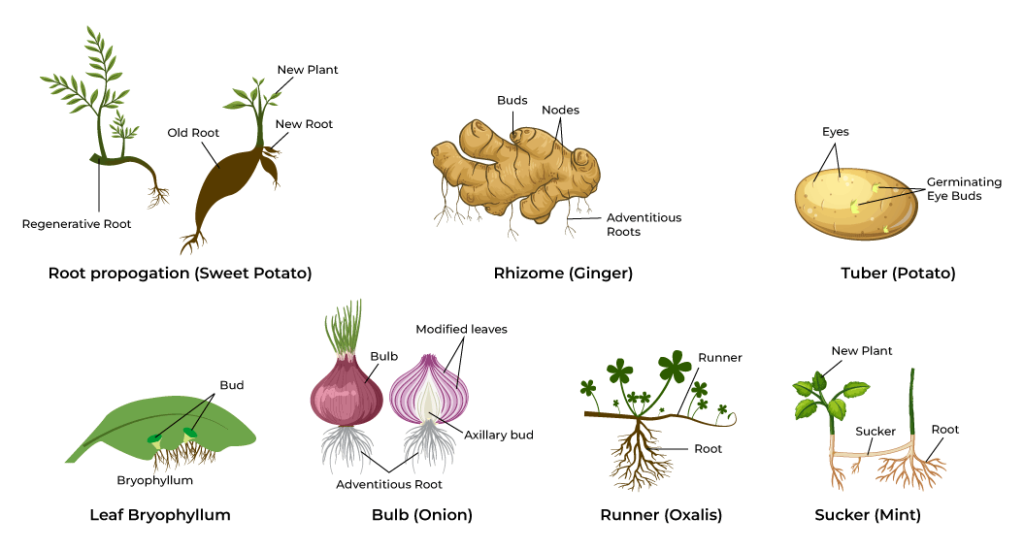
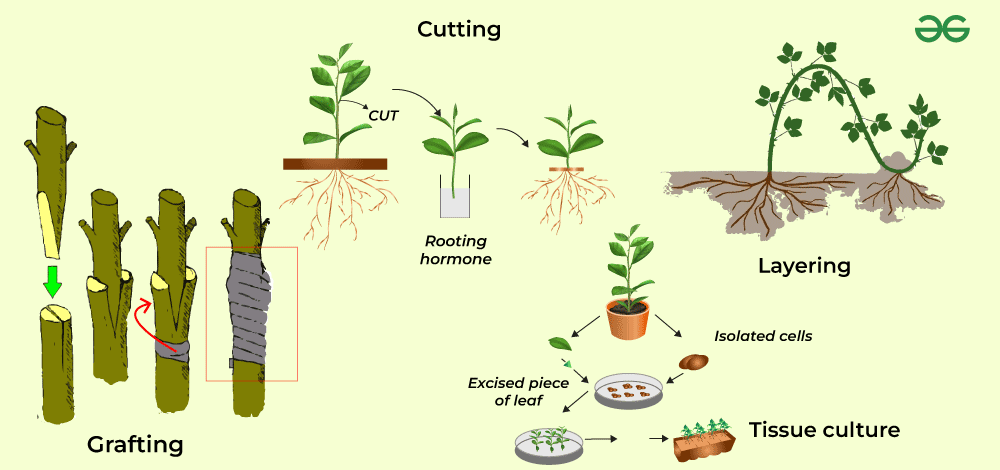
  1. Vegetative Propagation: New plants are produced from vegetative parts i.e. roots, stems, leaves and buds. It may be natural or artificial.

Natural Vegetative Propagation

Artificial Vegetative Propagation

Natural Vegetative Propagation:

  • Roots: Guava, Sweet potato.
  • Leaves : Bryophyllum(buds in margins of leaves )
  • Tubers: Potatoes (eyes).
  • Stem :  Onion, Garlic and tulip
  • Roots : sweet Potato and Dahlia

Artificial Vegetative Propagation:

  • Cutting: Lemon, Rose, Sansevieria.
  • Grafting: Mango, Guava.
  • Layering: Jasmine, Tomatoes.
  • Tissue Culture: Bananas, Orchids.

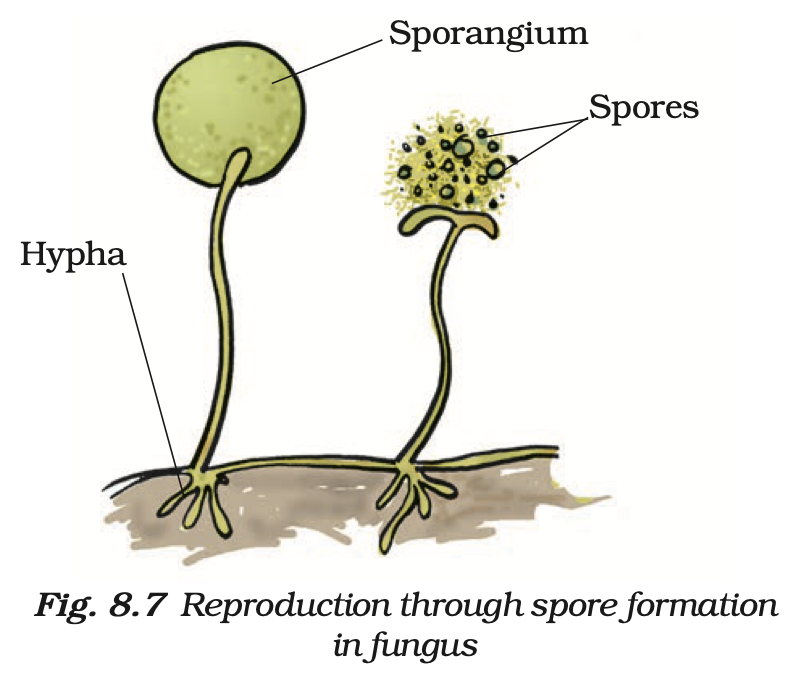
2. Spore Formation: Specialized reproductive structures called spores are produced and released into the environment by fungi, mosses, ferns, and other organisms. These spores travel long distances and, under suitable conditions, germinate into new individuals, facilitating habitat colonization.
    3.Fragmentation: Organisms break into fragments, each growing into a new individual. Algae (Spirogyra) quickly multiply this way, spreading in ponds and forming green patches. 

    4. Budding: Budding involves the formation of small outgrowths, called buds, on the parent plant. These buds develop into new individuals before detaching. Examples include yeast, Hydra, and certain plants like Bryophyllum.


      Leave a Comment

      Your email address will not be published. Required fields are marked *

      error: Content is protected !!
      Scroll to Top
      Telegram WhatsApp Chat