

As a way of life, yoga gives direction about food, eating habits, thinking, recreational means and conduct. Yogic way of life empowers us to deal with stress and promote physical and mental health.
The components of yogic way of life are —
- Ahara (Food) – Yoga emphasises on mitahara, which is related to quality and quantity of food and also the state of mind during the intake of food.
- Vihara (Relaxation) – Can be brought about by activities, such as, exercise, recreational and creative activities which help to regulate and channelise our emotions
- Achara (Conduct) – Includes emotions, attitudes, desires, instincts and habits.
- Vichara (Thinking) – Help us in controlling our thoughts and thereby promoting optimism in life.
- Vyavahara (Behaviour or actions)– The result of ahara, vihara, achara and vichara
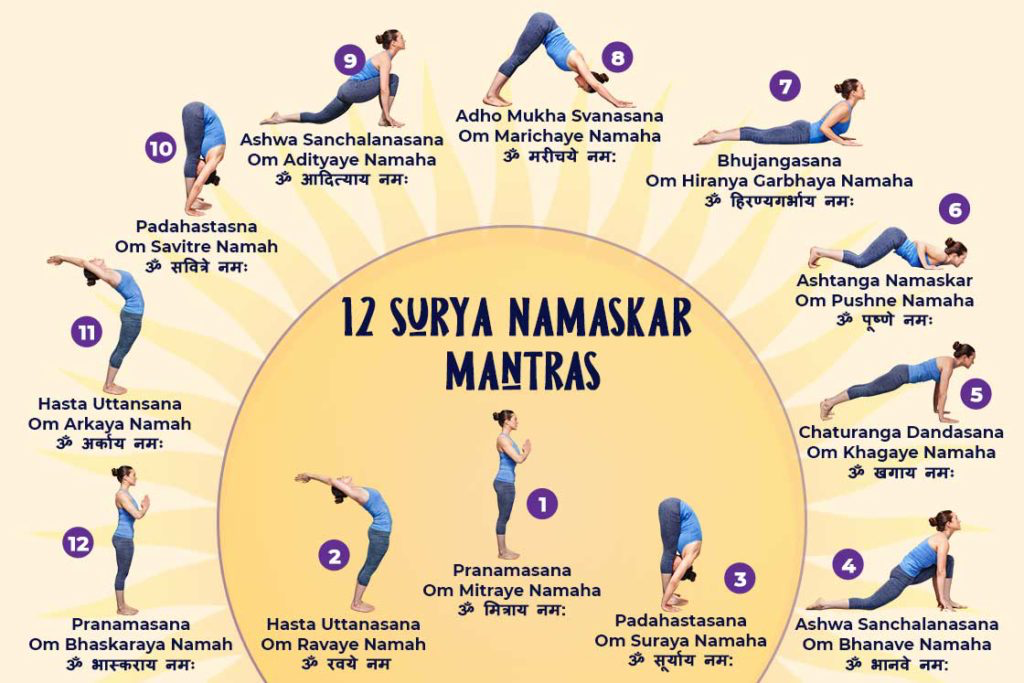
Surya Namaskara, also known as Sun Salutation, consists of a sequence of seven asanas performed in twelve steps.
- Pranamasana (Prayer Pose): Start standing, palms together.
- Hasta Uttanasana (Raised Arms Pose): Inhale, arms up.
- Hastapadasana (Hand to Foot Pose): Exhale, fold forward.
- Ashwa Sanchalanasana (Equestrian Pose): Inhale, step back with one leg.
- Dandasana (Plank Pose): Hold, step back with the other leg.
- Ashtanga Namaskara (Eight-Limbed Pose): Exhale, lower knees, chest, chin.
- Bhujangasana (Cobra Pose): Inhale, lift chest.
- Parvatasana (Mountain Pose): Exhale, lift hips.
- Ashwa Sanchalanasana (Equestrian Pose): Inhale, step one foot forward.
- Hastapadasana (Hand to Foot Pose): Exhale, step other foot forward.
- Hasta Uttanasana (Raised Arms Pose): Inhale, arms up.
- Pranamasana (Prayer Pose): Exhale, palms together.
- Repeat, alternating leading legs in steps 4 and 9.
Yoga contributes significantly to holistic personality development across various dimensions:
- Physical Dimension: Yoga postures (asanas) like Sarvangasana, Pranayama (Anulom Vilom, Bhastrika), Surya Namaskar, and Uddiyana Bandha enhance physical development.
- Emotional Dimension: Yoga fosters positive emotions, emotional stability, and control over negative emotions through practices like Yama, Niyama, Pranayama, Pratyahara, and meditation.
- Intellectual Dimension: Practices such as Pranayama, Dharana, and Dhyana (meditation) improve concentration, memory, and overall intellectual development.
- Social Dimension: Yoga principles, especially those of Yama (ethical guidelines), promote respect for others, attentive listening, clear communication, and improved interpersonal relationships with friends, family, and colleagues.
- Spiritual Dimension: Yama and Niyama instill moral values, while Pranayama and meditation aid in self-realization and introspection, facilitating spiritual growth.
- A way of life for stress management: emphasizes Ahara (mindful eating of nutritious food), Vihara (relaxation through activities like exercise and creative pursuits), Achara (cultivating positive emotions and ethical behavior), Vichara (controlling thoughts through meditation and study), and Vyavahara (advocating Karma Yoga principles for dedicated action without attachment to outcomes)


