Rajasthan Major Forts are remarkable symbols of the state’s rich history, bravery, and architectural excellence. In the subject of Rajasthan Art & Culture, these forts reflect the military strength, artistic skills, and cultural heritage of various Rajput dynasties. Famous forts such as Chittorgarh, Kumbhalgarh, Mehrangarh, and Jaisalmer showcase Rajasthan’s glorious past and strategic architectural planning.
Rajasthan has the highest number of forts & castles after Maharashtra & Madhya Pradesh.
Rajasthan Forts and Their Historical Significance
Shukraniti: 9 Fort Types
FortCategory
Significance
Dhanvan Fort
Surrounded by desert: Sonargarh (Jaisalmer), Junagarh (Bikaner)
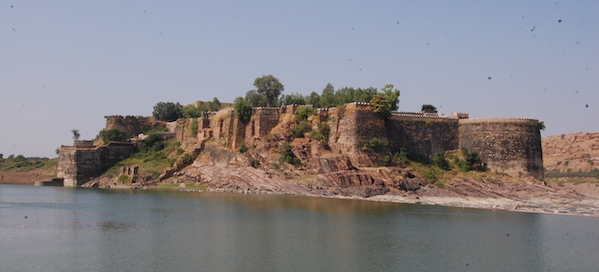
Audak/ Water Fort
Surrounded by water: Gagron Fort
Van (Forest) Fort
In dense, rugged forest: Siwana
Parikh Fort
Surrounded by deep Rift: Lohagarh (Bharatpur)
Paaridh Fort
Surrounded by massive wall: Kumbhalgarh, Chittor, Bikaner
Giri Fort
On high, inaccessible hill: Mehrangarh, Ranthambore
Airan Fort
With difficult access due to rifts, thorns & stones: Chittor, Jalore
Military Fort
Housing military contingent: Chittorgarh, Gagron
Sahaay Fort
Built with intention: assist king in emergencies: Siwana Fort
Kautilya: 4 Fort Types
FortCategory
Significance
Audak/ Jal:
surrounded by water
Giri/ Parvat:
located on high, inaccessible hill
Dhaanvan:
surrounded by desert
Van (Forest):
in dense, rugged forest
Vishnu Dharmasutra: 4 Fort Types
Category
Major Forts Included
Auduk Fort
Gagron Fort, Bhainsrorgarh Fort, Chittorgarh Fort
Giri Fort
Gagron Fort, Jalore Fort, Siwana Fort, Chittorgarh Fort, Ranthambore Fort, Taragarh Fort Ajmer, Taragarh Fort Bundi, Mehrangarh Fort, Amer Fort, Jaigarh Fort, Dausa Fort, Kuchaman Fort
Chittorgarh Fort and almost all major forts fall under this category
Sahay Fort
Siwana Fort
UNESCO World Heritage Sites in Rajasthan
Cultural Heritage (8), Natural Heritage (1)
Jaipur City, Jantar Mantar, Forts, Keoladeo National Park
Trick – ChiKu-GaJaR-Aam
Chittorgarh Fort
Kumbhalgarh Fort
Gagron Fort
Jaisalmer Fort
Ranthambhore Fort
Amer Fort
Forts of Ajmer Division
Feature
Information
Taragarh Fort (Ajmer)
Other names: Ajaymeru Fort; Heart of Rajasthan; Aravalli’s Arman (Desire); Rajputana’s Key; Gadh Bithali
Built: Ajaypal (according to Colonel Tod: Ajayraj)
Named After: Tarabai, wife of flying prince Prithviraj of mewar
Famous quote:
Bishop Heber: “Gibraltar of rajasthan”
Dr. Harvilas Sharda: India’s 1st hill fort
Lord William Bentinck: “World’s 2nd Gibraltar”
Historical facts: It faced most local attacks; Dara Shikoh’s birth; Dara Shikoh took refuge after defeat in Battle of Dholpur.
British Era: used as sanatorium in Taragarh Valley
Major sites: Mian Miran Sahib Dargah (Mir Syed Hussain: Taragarh’s 1st governor); Ghode ki Majaar (horse’s tomb -Miran Sahib’s beloved horse); Chhatri of Roothi Rani Uma De; Prithviraj Memorial; Nana Sahib’s Jhalra; Gol Jhalra; Bada (big) Jhalra; Ibrahim Sharif’s Jhalra & court building (Kchahari Bhawan)
Famous Quotes: “Rani Jaye may have such a fort, but Thukrani Jaye does not.”
Mandalgarh Fort
One of the 3 Sentinels of Mewar (1. Mandalgarh 2. Bhesrodgarh 3. Chittor)
Catagory – Giri / jal durg
Location: confluence of Banas, Bedach & Menal rivers
According to folklore: built by Chanana Gurjar in Mandia Bhil’s name. In sage Shringi’s inscription: it’s named Mandalgarh due to its bowl shape. Later, Kumbha rebuilt it.
Historical significance: Akbar launched campaigns against Maharana Pratap from here, as it’s an important entry point into Mewar
Main Sites: Madina Mosque, Bijasan Hill, Undeshwar Temple, Charbhujanath Temple, Rishabhdev Jain Temple, Sagar Pond, Sagari Pond, Jaleshwar Pond, Devsagar Pond
Kehrigarh (Kishangarh), Todgarh (Beawar – built by James Tod, where Gopal Singh Kharwa and Vijay Singh Pathik were imprisoned)
Forts of Jaipur Division
Forts of Alwar District
Feature
Information
Bala Fort (Alwar)
Other names: (Bada) Big Fort, Alwar Fort, Bawangarh’s beloved, Eye Fort/ आँख वाला किला (due to gun holes in wall)
Type: Mountain Fort
Built: (1049) Kokil Dev’s son Alughrai
Rebuilt: (1524) Hasan Khan Mewati
Akbar imprisoned son Jahangir
Rao Raja Pratap Singh conquered without fight, establishing Alwar
After this, fort was never fought over. Hence called Bala (Unmarried) Fort
Main sites: Salim place (jahangir), Salim Sagar (by Sher Shah Suri’s Hakim Haji Khan), Surajkund Water Tank(by bharatpur’s surajmal), Sitaram Temple (by Pratap Singh), Chaturbhuj devi temple
5 gates – Jaipol, Surajpol, Chandpol, Laxman Pol, Andheri Pol
Bastions – 15 large and 52 small bastions
Kabul Khurd Burj, Hawaburj, Naugaja Burj, Chauburj, Chhatanki Burj
Kankanwadi Fort
Built: Sawai Jai Singh for famine relief
Aurangzeb imprisoned Dara Shikoh here.
Ajabgarh (Rajgarh)
Built: (1635) Ajab Singh
Bhangarh & Ajabgarh called: “treasure of history & archaeology”
Bhangarh Fort
Nicknames: City of Ruins, Bhutaha/ Haunted Fort
On Sawa River banks (tributary of Banganga), Sariska Sanctuary, Rajgarh Tehsil
Built: (1574) Amer’s Bhagwant Das
Rajorgarh Fort
Giri / Van durg
Built – Mathandev badgurjar
Old name – Rajyapuri, Paranagar
Main Sites –
Neelkanth shiv Mandir
Near dancing Ganesh idol
Stone statue of Shantinath
called Nau gaja (नौ गज़ा)
Forts of Jaipur District
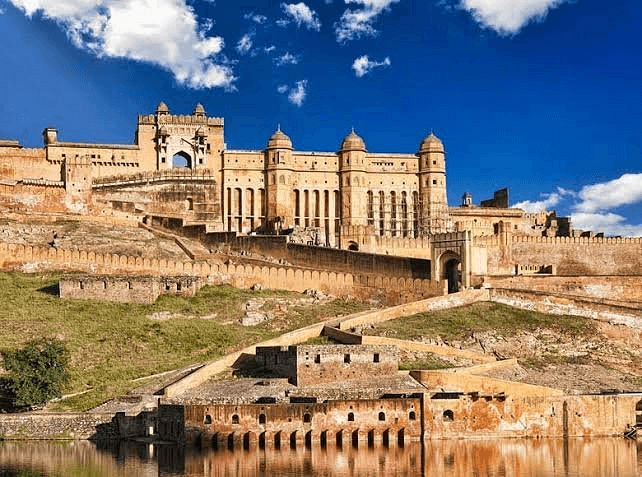
Amer Fort
Mythological names: Amber; Ambikapur; Ambarish, Ambavati, etc.
Built: Dulherai; Rebuilt: King Man Singh, completed: reign of Mirza Raja Jai Singh.
Bahadur Shah I: renamed it: Mominabad
Main gates/ sites: Jaipol; Surajpol; Chandpol; Singhpol; Jaleb Chowk (horse racing); Ganeshpol (Sawai Jai Singh; Ferguson::world’s best gateway”);; Diwan-e-Aam;; Majlis Vilas;; Diwan-e-Khas;; Sheesh Mahal;; Balambai’s Saal Saal ((House);); Kadmi Mahal (coronation site)
MainMain temples/ gardens:: Shila Devi; Jagat Shiromani (Queen Kanakavati; Krishna’s black stone statue: worshipped by Mirabai); Ambikeshwar Mahadev; Narsingh Ji Narsingh Ji; Dilkhush Mahal; Palace of the 24 Queen; Bukhara Garden; Sukh Mandir; Yash/ Jas Mandir; Saubhagya/ Suhag Mandir (sandalwood doors, ivory work); Bhool Bhulaiya; Kesar Kyari; Mavtha Lake; Dilaram’s Bagh/ Garden (built: 1664, Mirza Raja Jai Singh);;Arambagh
Famous quote:s: Bishop Reginald Heber: “More magnificent than Kremlin (fortress in Moscow, Russia) && Alhambra (historical fortress: Spain)”
Jaigarh Fort
Location: Cheel ka Teela (Eagle Hill); mysterious fort
Built: Mirza Raja Man Singh; according to Gopinath Sharma: Jai Singh; several palaces by Sawai Jai Singh II.
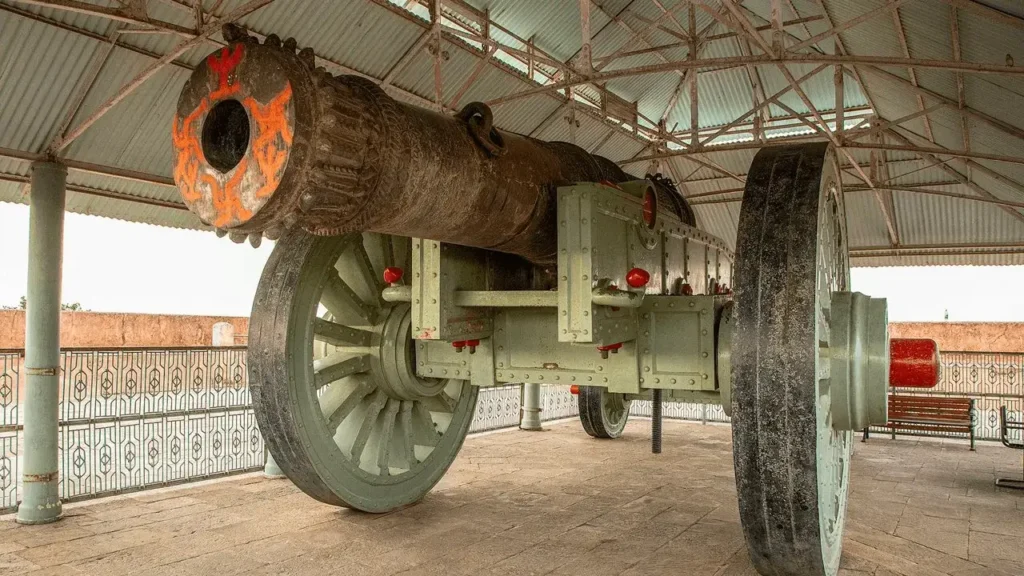
Specialty – India’s only fort where Asia’s largest cannon casting factory was located
Main cannon: Jaiban (202 foot barrel, range 22 miles): Asia’s largest wheeled cannon
Other cannons: Badli; Bajrangbaan; Machwan
Entrance gates: Dungar Pol (Nahargarh), Avani Pol (Amer), Bheru Darwaza (Sagar Reservoir)
1444: Invasion by Mahmud Khilji – I Vs Palhan Singh
UNESCO Heritage Site
21 June 2013: 6 forts of Rajasthan (Trick: Chikoo Gajar Aam)
Major Sites
Dargah of Peer Hamiduddin Chishti (Mithhe Saheb); Buland Darwaza (by Aurangzeb); Samadhi of Saint Pipa Ji; Zalim Kot (massive rampart built by Jhala Zalim Singh)
Other Forts
Feature
Information
Shergarh Fort (Baran)
Location: On Koshvardhan Hill, Parvan River banks
Other names: Koshvardhan Fort
Rebuilt: Sher Shah Suri, hence renamed Shergarh. Later, came under Mughal control
Farrukhsiyar rewarded Maharao Bhim Singh with this, who renamed it Barsana
Main Sites: Jhalaon ki Haveli; Amir Khan’s Palace, Barkhedi Gate (Entrance)
Shahabad Fort (Baran)
Other names: Salimabad Fort (after Sher Shah Suri’s son Salim)
Built: 1521, Chauhan King Mukut Manidev; on Mukundara Hill
Main Sites: Bala Quila (inside quadrangular palace), Badal Mahal; Alal Pankh ( carvings on Badal Mahal doors), Jama Masjid; Nawalbaan Cannon; Kundkoh waterfall
Nahargarh Fort (Baran)
Built by – Qutbuddin
Nickname – Red Fort of Hadoti
Similar to Delhi’s Red Fort
Kota Fort
Built: Madho Singh; on Chambal River banks
Except Agra Fort, India’s no fort’s rampart islarger than Kota Fort
Jhala Haveli: Famous for murals
Forts of Udaipur Division
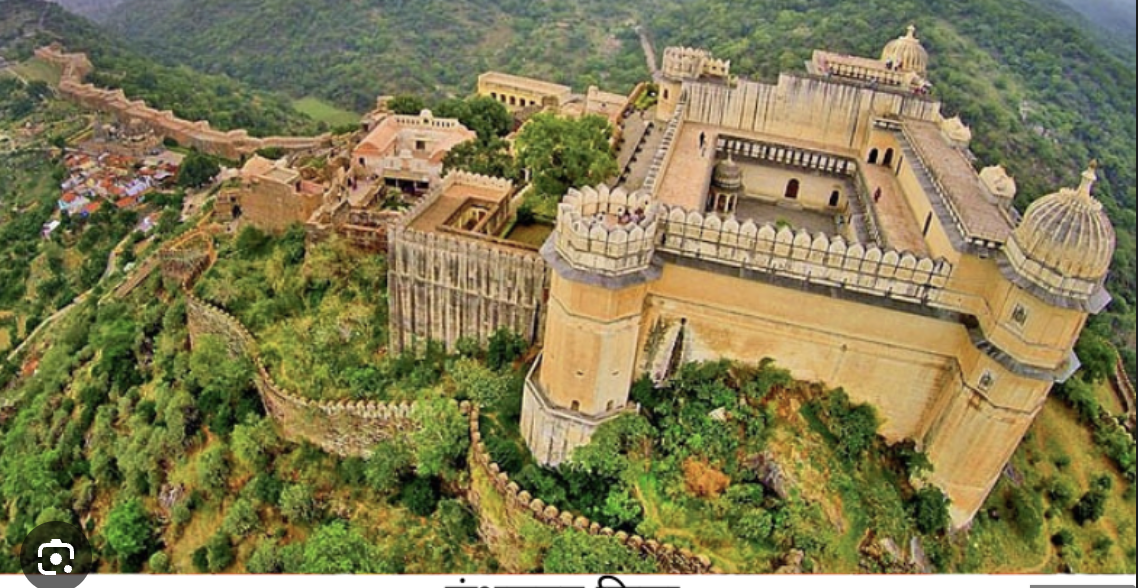
Kumbhalgarh Fort
Feature
Information
Other Names
Matsyendra; Kamalmir; Kumbhapur; Kumbhalgarh Fort
Location
border of Mewar-Marwar, near Sadri village, for security of Godwad region
Built
According to ‘Veer Vinod’: Kumbha built this fort in V.S. 1505 (1448 AD) on ruins of an ancient fort built by Mauryan ruler Samprati (second son of Ashoka).
Main Sculpture
Mandan (Kumbha’s chief architect & engineer)
Famous Quotes
Abul Fazal:“built at such a height that if you look up from below, your turban falls off your head.”
Rai Bahadur Harbilas Sharda: “symbol of Kumbha’s military genius.”
Colonel Tod compared it to Etruscan (Italian) architecture.
Historical Events
Birthplace of Maharana Pratap, coronation of Udai Singh, assassination of Maharana Kumbha (near Mamadev Kund)
Mughal Victories
Captured only once: by Shahbaz Khan (Akbar’s general) in 1578.
Length of safety Wall
Lenght: 36 Km; width:8 horsemen ride abreast. Hence called “Great Wall of India”
Main Sites
Katargarh – A small fort on top from where Kumbha kept watch over Mewar (therefore called the Eye of Mewar)
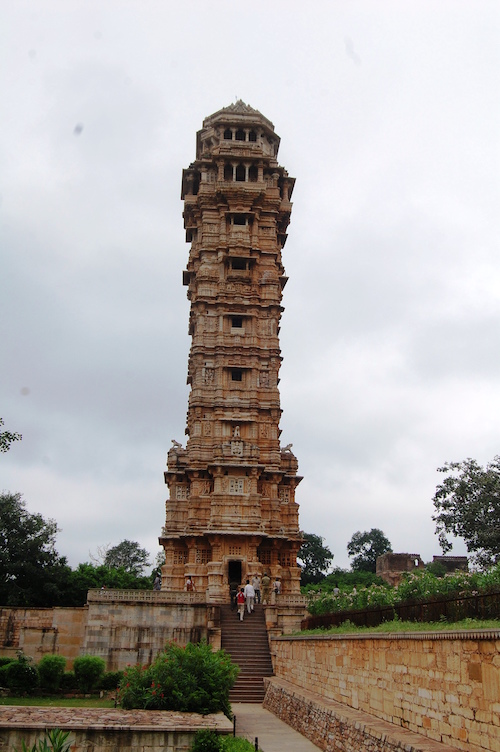
Other Names: As it’s dedicated to Lord Vishnu, it’s called Vishnu Dhwaj Garh (by Upendra Nath Dey)/ Museum of Sculptures/ Encyclopedia of Indian Sculpture (by Dr. Gotuz)/ Victory Pillar/ Kirti Stambh, Museum of Hindu Gods & Goddesses
Built by: Kumbha to commemorate his victory over Mahmud Khilji I in Battle of Sarangpur (1437)
under the direction of: Jaita & his sons: Natha (Napa), Poma & Poonja.
9 stories tall (20 feet high), having 57 steps. The word “Allah” is written 9 times on the 3rd floor.
engraved with Kirti Prashasti: composed by Atri & Mahesh. It’s 9th floor was destroyed by lightning & rebuilt by Swaroop Singh.
Colonel Tod said, “This building is even more magnificent than Qutub Minar.”
15 Aug 1949: Rajasthan’s 1st building to receive 1 rupee postal stamp
It’s the emblem of Rajasthan Police & Board of Secondary Education, Ajmer.
It refers to Hammir as the Visham Ghati Panchanan.
Other Forts
Feature
Information
Sajjangarh Fort (Udaipur)
Nickname: Mewar’s Crown Jewel
Location: On Bansdhara Hill, near Fateh Sagar Lake
Untala Fort
Jahangir took control after death of Maharana Pratap
Battle of Untala (1600): reign of Maharana Amar Singh
Jait Singh Chundawat beheaded & threw his head in the fort, retaining leadership of Harawal part with Chundawats
Sarada Fort (Salumbar)
Nickname: Mewar’s Kala Pani
Prisoners kept here during Prajamandal Movement
Bhainsrorgarh Fort
Type: Jal (Water) Fort
Nickname: Vellore of Rajasthan
Built: Bhainsa Shah (merchant) & Roda Charan
Location: confluence of Chambal & Bamani rivers
Purpose: Protect from mountain robbers
Colonel Tod: “If I were offered any estate in Rajasthan, I would choose this fort.”
Forts of Bharatpur Division
Ranthambore Fort (Sawai Madhopur)
Feature
Information
Other Names
Ranstambhpur/ Ranthapur (according to Hammir Raso: city located in valley of battle); Durgadhiraj; younger brother of Chittorgarh; symbol of Hammir’s pride.
Built By
8th CE: Thakur Rantidev of Maheshwar or Chauhan ruler Jayant.
994: Chauhan king Ranthambhan Dev of Sapadalaksha.
Size
Oval (by G.H. Ojha)
Geographical Feature
Surrounded by hills hence Abul Fazal said, “अन्य सब दुर्ग नंगे हैं, यह दुर्ग बख्तरबंद है”
Religious Feature
Rajasthan’s only fort housing a temple, a mosque & a church in Supari Mahal.
Jalaluddin Khilji
2 unsuccessful attacks; Quote: “I would attack such a fort for a hair on a Muslim’s head/ मैं ऐसे दुर्ग को मुस्लिम के सिर के बाल के बदले वार दूँ”
Rajasthan ‘s 1st Saka
1301: Alauddin Khilji vs. Hammir Dev (Jal Jauhar: Queen Rangdevi)
Alauddin’s Victory
Amir Khusrau: “Today the door of disbelief has been broken/ आज कुफ़्र का दरवाज़ा टूट गया है”
Doha on Hammir
“सिंह सुवन, सत्पुरुष वचन… हम्मीर हठ, चढ़े न दूजी बार”
Other Forts of Sawai Madhopur
Jhain Fort – Key to Ranthambore Fort
Khandar Fort (Sahay Fort)
Forts of Karauli
Mandrayal Fort
Key to Gwalior Fort
Dargah of Mardan Shah Pir
Timangarh Fort / Tribhuvangarh
Construction – 11th century by King Tribhuvan Pal
Located on Tribhuvan Hill
Fact – Well of Nanad Bhojai is situated here
Later named Islamabad
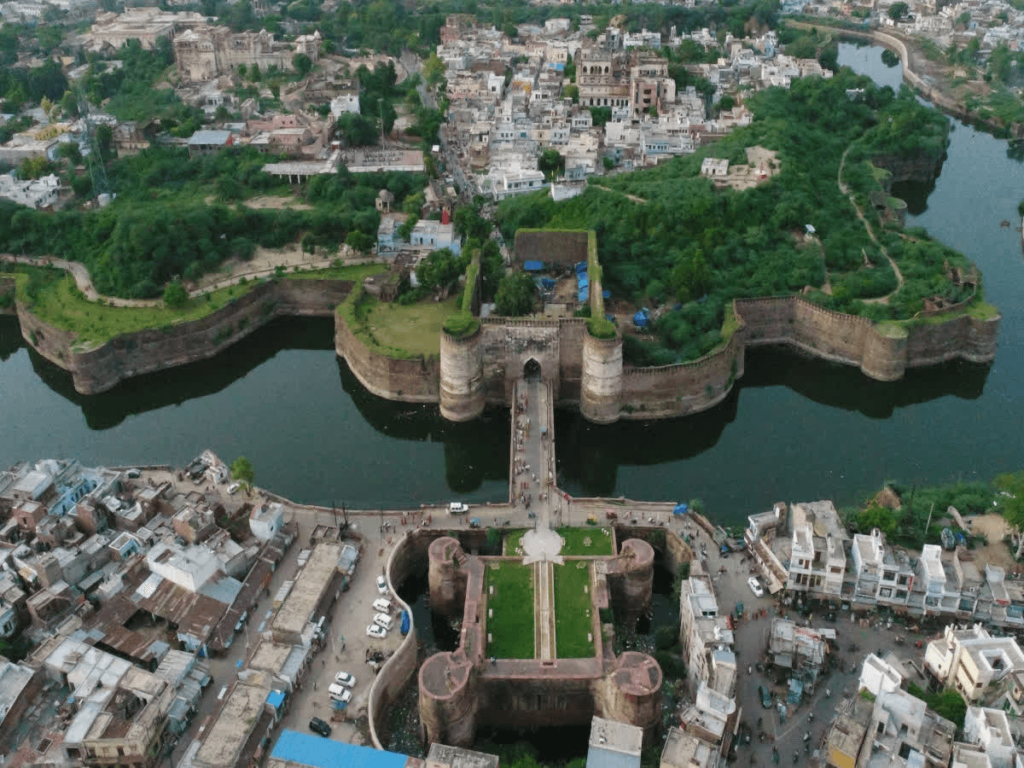
Lohagarh Fort (Bharatpur)
Feature
Information
Other Names
Lohagarh; Ajay Durg (Invincible); Bhatti Fort; Ajaygarh; fort made of Mud; the sentinel of eastern frontier; cottage of Khemkaran Jat
Features
1733: Surajmal Jat (Plato/ Aflatoon of Jats)
Deep moat all around; water supplied by Sujan Ganga Canal from Moti Lake
1805: Maharaja Surat Singh conquered it & renamed it Hanumangarh
Famous Quotes
Tuzuk-i-Timuri: “इतना मजबूत व सुरक्षित किला पूरे हिन्दुस्तान में कहीं नहीं देखा”
Churu Fort
Feature
Information
Built by
1739: by Thakur Kushal Singh
Main Sites
Mehta Meghraj’s memorial; Gopinath Temple (built by Shiv Singh)
Historical Significance
Famous as “Fort that fired silver cannonballs” [During war, when lead supply ran out, merchants & commoners brought silver from homes; firing silver cannonballs from cannons]
Nagnechi Mata Temple (Kuldevi of Rathores), Chamunda Mata Temple, Murli Manohar Temple, Anandghan Temple, Suri Masjid/ Mosque(Sher Shah Suri), Bhure Khan’s Majaar/ Tomb
1565: Hasan Quli Khan’s rule; later granted to Mota Raja Udai Singh by Akbar; 1678: Mughal Khalsa after Jaswant Singh I’s death
Ajit Singh reasserted Rathore dominance after struggle by Durgadas Rathore
Famous Quotes
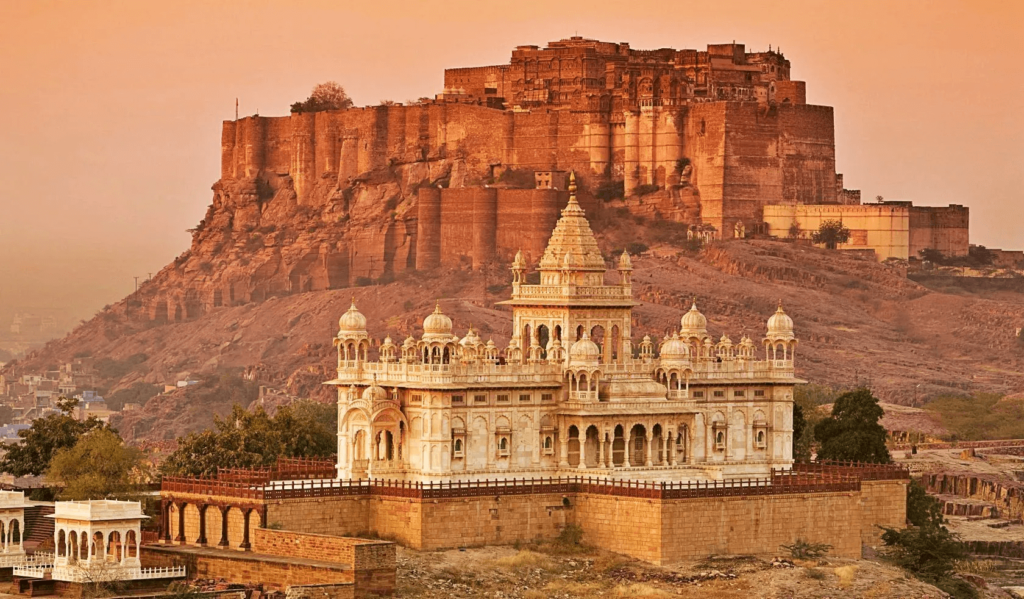
Jacqueline Kennedy: 8th Wonder of the World
Rudyard Kipling: Made by fairies and gods
Colonel Tod: Jodhaji’s son could see entire kingdom from a window
Mandore Fort
Marwar’s ancient capital. ancient name: Mandovar/ Mandavyapur Fort (named after Sage Mandavya)
Initially under control of Nagavanshi dynasty, followed by Pratiharas & Chauhans.
Ruled by Inda branch of Pratiharas, later given as dowry to Chunda, son of Viramdev Rathore.
Jalore Fort
Feature
Information
Other Names
Jabalipur, Songiri, Swarnagiri, Sonalgarh, Kanchangiri, Kankachal (named after the hill), Jalandhar Fort, Jalalabad Fort
Built by
According to G.H. Ojha: by Parmar rulers Dharavarsha & Munj
According to Dasharatha Sharma: by Pratihara ruler Nagabhatta I on banks of Sukdi River
Main Sites
Chamunda Mata Temple, Jogmaya Mata Temple, Malik Shah Pir’s Mosque, Alauddin Khilji/ Top Masjid, the Parmar period Kirti Stambh, Jhalar Bavdi, Sohan Bavdi, Jabali Kund, Raja Man Singh’s Palace, Swarngiri Jain Temple
Past Quotes
Hasan Nizami: “This is a fort whose doors no invader could open.”
Jalore ‘s Saka: 1311
Jaisalmer Fort
Feature
Information
Other Names
Gorharagarh (built on hill), Swarngiri, Sonar Fort/Sonargarh, Golden Fort, Rose of the Desert, Fort of streets, Sentinel of Western Border, Rajasthan’s 2nd Residential Fort, Andaman of Rajasthan, Trikutagarh
Built by
1155: start- Bhati ruler Rawal Jaisal; most construction completed by Shalivahan II.
Dynastic Traditions
Bhati rulers consider themselves descendants of Yaduvanshi Shri Krishna.
Entrance Gate
Akshay Pol (main), Suraj Pol, Bhoota Pol, Hawa Pol
Rulers Veer Sataldev/Sheetaldev and Somdev attained martyrdom (Veergati)
Jauhar under the leadership of Meenade (wife of Sheetaldev)
Bhandelav Talab contaminated with beef to destroy the water source
2nd Saka (1582)
Attack by Mota Raja Udai Singh on Akbar’s orders
Ruler Veer Kalla Rathore / Kalla Raymalot
Jauhar performed by Hadi Rani (Kalla’s wife, daughter of Surjan Hada)
Main Sites
Maharaja Ajit Singh’s Gate, Kot (fort complex), Haldeshwar Mahadev Temple, Kalla Raymalot’s Thada (Than)
Jaynarayan Vyas (Sher-e-Rajasthan) was imprisoned here during the Praja Mandal movement
Famous Quotes
Amir Khusro – “The heads of the Rajputs were cut off, yet they continued to fight”
Alauddin Khilji – “This fort situated in a terrible jungle, where Sataldev lives like a Simurgh” (Tarikh-e-Firishta)
Achalgarh Fort
Feature
Information
Location
Located on Mount Abu / Arbudaanchal / Arbudagiri, a Giri Durga
Built By
Original construction around 900 AD by Parmar rulers; reconstruction in 1452 AD by Maharana Kumbha on the ruins
Historical Significance
Major fort for the strategic security of the Mount Abu mountainous region • Center for the defense of the Mewar–Gujarat border
Main Religious Sites
Achaleshwar Mahadev Temple (presiding deity of Mount Abu; Brahm-khand in place of Shivling, worship of Shiva’s toe/thumb), Arbuda Mata Temple, Gomukh Temple (14 idols of Sarvadhatus), Kumbhswami Temple (built by Rana Kumbha), Jain temples of Rishabhdev and Parshvanath (2)
Water Structures
Mandakini Kund (near Achaleshwar Temple), Kapoor Sagar Talab, Sawan-Bhado Lake
Palaces & Architecture
Okhi Rani ka Mahal (Kumbha’s wife), Alam Tower (built by Parmars), Champapol, Bhairavpol, Sawan-Bhadwa (statues of Rana Kumbha and Uda), Dursa Adha ki peetal pratima, Maharav Man Singh (Sirohi) ki chhatri on the banks of Mandakini Kund, Bhanwarathal (a place where during Mahmud Begada’s attack, when he broke the Devi idols, swarms of bees attacked)