

Medieval Fine Art: In the subject of Ancient and Medieval History, medieval fine art in India reflects a rich synthesis of religious themes, regional styles, and cultural influences. This period witnessed remarkable developments in painting, sculpture, and architecture, including temple art and Indo-Islamic styles, showcasing technical excellence and aesthetic diversity.
Medieval Fine art
Provincial style (Mandu, Gujarat, Bengal and Jaunpur)
Provincial ‘styles’ of architecture
- During this period the Indo-Islamic style also began to influence local architectural styles. Bengal, Bijapur, Jaunpur, and Mandu became important centers for the development of architecture.
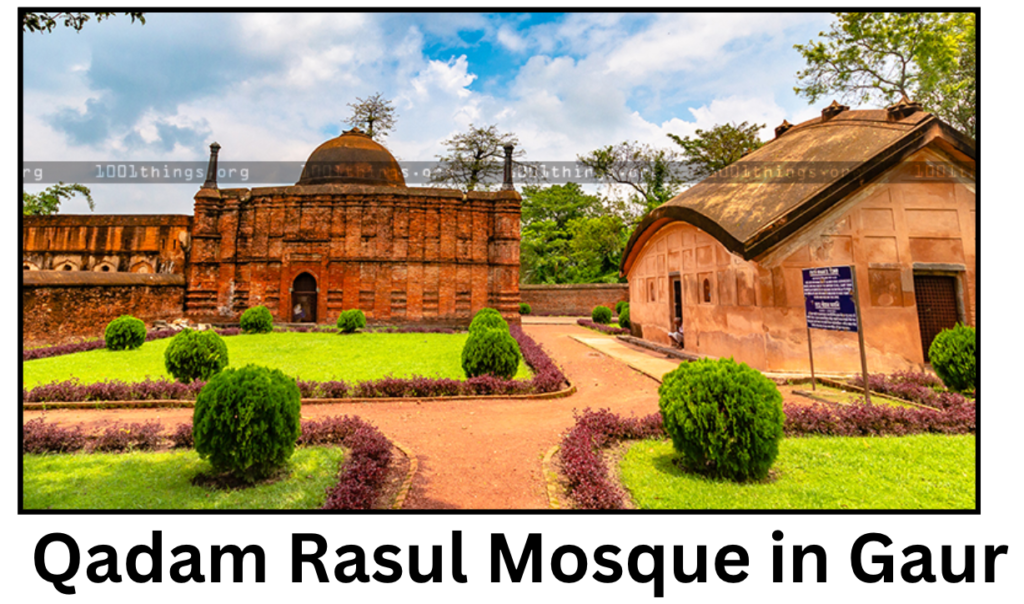
Bengal Style
- The Bengal style of architecture was characterized by the use of bricks and black marble.
- The use of sloping ‘Bangla roofs’ continued in mosques built during this period. Earlier it was used for temples.
- Examples: Kadam Rasul Mosque of Gaur, Adina Mosque of Pandua etc.
Malwa Style
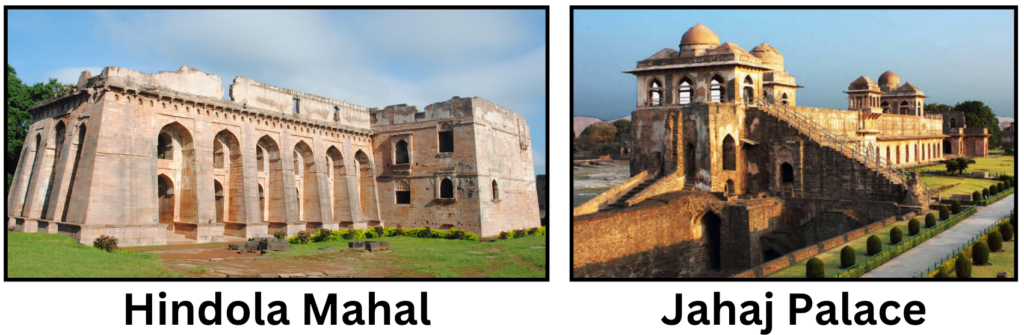
- The towns of Dhar and Mandu on the Malwa plateau became major centers of architecture.
- The most prominent feature of the buildings here was the use of stones and marbles of different colors.
- The buildings had huge windows and were decorated with a stylized use of arches and columns.
- Even staircases were designed to enhance the aesthetic appeal of structures.
- However, minarets were not used in this architectural style.
- The Malwa style, also known as the Pathan style of architecture, is considered one of the best examples of environmental adaptation due to the following features:
- The use of huge windows made the buildings and rooms well ventilated.
- The mandapams were slightly arched. This feature made them airy, and the buildings remained cool even in summers.
- Artificial reservoirs known as ‘baoris’ were constructed in the complex for water storage.
- The availability of local stone and marble was effectively utilized in construction.
- The Malwa style is famous for High Plinths and lofty flights of Stair.
- Examples: Queen Roopmati’s Pavilion, Jahaaz Mahal, Ashrafi Mahal [a madrasa], etc.
Architecture of Mandu
- Mandu city is situated at a distance of 60 miles from Indore, Madhya Pradesh.
- The position of Mandu is naturally very safe.
- Seeing its strategic feature, Parmar Rajputs, Afghans, and Mughals made it their residence.
- This city gained a lot of fame as the capital of the Ghori dynasty. It was the Ghori Dynasty, followed by the Khaljis of Malwa, established by Hoshang Shah in 1401-1561 AD.
Hindola Mahal
- It looks like a big railway bridge whose walls are resting on big disproportionate pillars.
- Diwan-e-Aam (Hall of Public Audience). The Sultan used this space to grant audiences to his subjects.
- To create the illusion of a swinging effect (Hindola), sloping walls were skillfully incorporated into the design.
Jahaj Palace
- A two-storey structure resembling the shape of a ship.
- Located between two reservoirs, its roof, verandas, balconies, and pavilions appear to be floating on water.
- Built by Sultan Ghiyasuddin Khilji.
- Features canals and drainage systems, with a swimming pool on the terrace.
Queen Roopmati’s mandap
It is built on the southern rampart from where a beautiful view of the Narmada valley is visible.
Tomb of Hoshang Shah
- Known for its beautiful dome, intricate marble lattice work, grand gateways, courtyards, minarets, and turrets.
- Considered an exemplary representation of Afghan architectural masculinity and strength
Jaunpur style
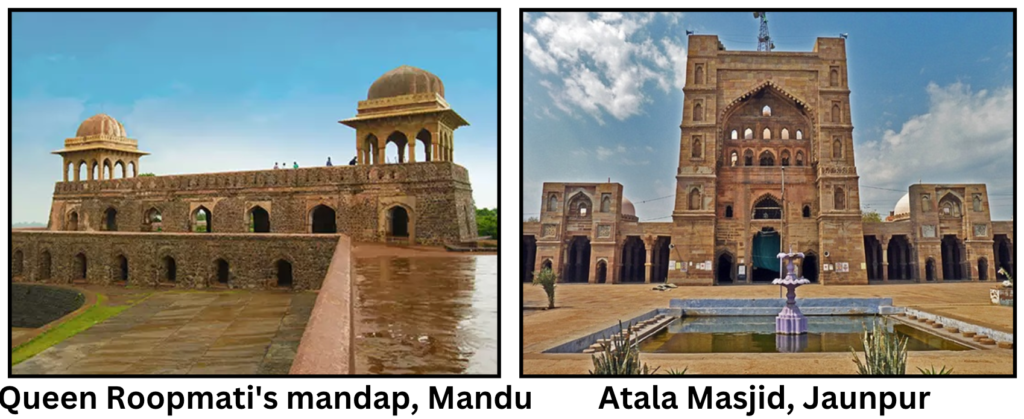
- Under the patronage of the Sharqi rulers, Jaunpur became a center of art and cultural activities.
- This style of architecture also came to be known as the Sharqi style, and like the Pathan style, it avoided the use of minarets.
- A unique feature of the buildings here is the use of large, bold, and powerful inscriptions painted on massive screens in the central prayer hall and its adjacent sections.
- Example: Atala Masjid, etc.
Bijapur style
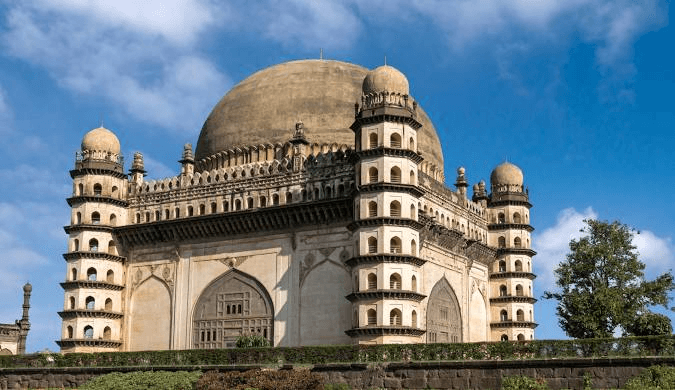
- The Bijapur style or Deccan style of architecture developed under Adil Shah’s patronage.
- He built a number of mosques, tombs, and palaces.
- Their uniqueness lay in the use of three-arched facades and bulbous domes, which were almost spherical with narrow necks.
- The cornice was also a prominent architectural feature.
- A key characteristic of the Bijapur style was its treatment of roofs, which appeared to be suspended without any visible support.
- To reinforce the structures, iron clamps and strong mortar plaster were extensively used.
- The walls were adorned with intricate carvings, adding to the architectural grandeur.
- Example: Gol Gumbad at Bijapur, Tomb of Adil Shah.
Gol Gumbad
- Located in Bijapur, Karnataka.
- It is the tomb of Muhammad Adil Shah (1626-56 AD), the seventh sultan of the Adilshahi dynasty of Bijapur.
- The Sultan himself started the construction during his lifetime. It is a magnificent building even though it is not yet complete.
- The tomb has many small and big buildings, like a huge entrance door, a Naqqarkhana, a mosque, and a sarai, which are situated within a large garden surrounded by walls.
Painting of Sultanate period
- Remnants of Sultanate-era painting have been discovered at the Makhdoomwali Mosque, situated between Siri and Begampur.
- Miniature paintings have been retrieved from the Nimatnama (a treatise on culinary arts) and the Miftah-ul-Fuzala (a Persian dictionary).
- The Nimatnama was discovered by Robert Skelton.
- Due to the prohibition in Islam against depicting living beings, most Sultans of the Sultanate period did not take much interest in painting.
- The first mention of Sultanate-era painting is found in the History of the Ghaznavids, written by Baihaqi.
- According to Futuh-us-Salatin, painters from China visited Delhi during the reign of Iltutmish.
- Shams-i-Siraj Afif provides some description of Sultanate-era painting in his work Tarikh-i-Firoz Shahi. According to him, Firoz Tughlaq issued an order prohibiting the display of portraits of Hindu kings in royal resting quarters.
- The Sultans of Malwa, Jaunpur, and Bengal extended their patronage to the art of painting.
- The Chaurapanchasika, Laur Chanda, and Indo-Persian styles of Sultanate painting paved the way for the emergence of Mughal painting.
- It was Herman Goetz who, in 1947, first asserted in an article published in The Journal of the Indian Society of Oriental Art that painting existed during the Delhi Sultanate period.
- The early phase of medieval painting—which shares characteristics with the remains found at Ellora and Ajanta—is distinguished by sharp lines, acute angles, lack of tonal modeling, and a strong tendency toward colorful ornamentation.
Musical Arts of the Delhi Sultanate
The Sultanate period witnessed a magnificent fusion of Indian and Persian musical traditions, leading to the birth of the “Hindustani” classical style.
Islam and Music
- Although music is technically prohibited in orthodox Islam, many Sultans provided significant patronage.
- The Turks introduced new musical instruments to India, such as the Rabab and Sarangi.
Amir Khusrow
- Regarded as the founder of medieval music.
- Inventions: Credited with creating the Sitar (a fusion of the Indian Veena and Persian Tambura) and the Tabla (modified from the Mridangam).
- Styles: Popularized forms like Qawwali, Kaul, and Tarana.
- Title: He was a Gandharva and a Sufi poet-musician for introducing 19 new ragas (such as Tilak, Aunam, and Sanam).
Major Musical Texts
- Sangit Ratnakara: Written by Sharangadeva (1210–47). It is pivotal as it marks the first clear division between Hindustani (North Indian) and Carnatic (South Indian) music.
- Ghunyat-ul-Munya (1375): The first musical treatise written by a Muslim author (Malik Shamsuddin Abu Raja); the title means “Pleasure of Desire.”
- Lazzat-e-Sikandari: Compiled during the reign of Sikandar Lodi.
- Man Kautuhal: Developed by Raja Mansingh Tomar of Gwalior to promote the Dhrupad style.
- Kitab-e-Navras: A collection of Hindi songs written by Ibrahim Adil Shah II.
- Other Texts:
- Sangeet Shiromani – Era of Ibrahim Shah Sharqi
- Sangeetraj, Sangeet Mimamsa – Maharana Kumbha
- Ragatrangini – Lochan Kavi
- Sangeet Darpan – Damodar
- Sangeet Chudamani – Jagadekamalla
- Ragavibodha – Somadeva
Patronage of Music
- Jalaluddin Khalji: His court featured famous female singers like Shahchungi and Nusrat Khatun.
- Alauddin Khalji: Patronized Amir Khusrow and the great southern musician Gopal Nayak.
- Ghyasuddin Tughlaq: He was an opponent of music, banned it in the empire, and even filed a case against Nizamuddin Auliya regarding the use of music (Sama).
- Muhammad bin Tughlaq: A great lover of music; he maintained nearly 1,200 singers in his court.
The Sharqi Sultans and Jaunpur Tradition
- Husain Shah Sharqi: Organized the first music conference in North India. He adopted the title “Gandharva” and he is credited with the “Bara Khayal” or the “Jaunpuri” style
- New Ragas: Created several Ragas like Jaunpuri Todi, Sindhu Bhairavi, and Malhar Shyam.
Saints and Regional Contributions
- Sufis: Popularized Ghazal and Qawwali. A ghazal’s first couplet is called the matla, and the last is the maqta.
- Bhakti Saints: Chaitanya Mahaprabhu introduced the Kirtan style in Bengal. Shankaradeva popularized music in Assam.
- Vidyapati (Tirhut): Composed Kajari and Radha-Krishna songs.
Urdu Poetry
- Wali Dakkani (Shamsuddin Wali): Considered the father of modern Urdu poetry; his collection of poems is known as the “Diwan.”
- Guru: His spiritual and literary teacher was Sadullah Gulshan.
Pahari Painting Styles
- This style of painting developed in the sub-Himalayan states under the Mughal rule.
- There were many styles flourishing in the smaller states, which came under the name of ‘Pahari.’ painting. These included the picture galleries in the courts of about 22 princely states spread from Jammu to Almora.
- Therefore, Pahari paintings can be divided into two groups:
- Jammu or Dogra style: Northern series
- Bashauli and Kangra styles: Southern series
- The themes depicted ranged from mythology to literature using new techniques.
- A typical Pahari painting style brought many figures on the canvas, all of them full of dynamism.
- Each figure differed in structure, color, and pigmentation.
- The two greatest painters of this style were Nainsukh and Manku.
Bashauli style
- The paintings made in the Pahari style in the 17th century are called the Bashauli style.
- This was the early phase, characterized by large lotus-petal-shaped eyes, a receding hairline, and expressive, emotive facial features. The paintings prominently used primary colors such as red, yellow, and green.
- This style incorporated Mughal techniques for depicting clothing, yet it developed its own distinct identity and methods.
- The first patron of this style was Raja Kripal Singh, who commissioned illustrations for Bhanudatta’s Rasamanjari, Gita Govinda, and the Ramayana.
- The most renowned painter of this school was Devi Das, celebrated for his portrayals of Radha-Krishna and royal portraits, often depicting figures in regal attire or simple white garments.
- This style is associated with color contrasts and also borrowed stylistic elements from Malwa painting.
Kangda Style
- After the fall of the Mughal Empire many artists moved to the Kangra region as they received patronage from Raja Govardhan Singh in 1774. This gave birth to the Guler Kangra style of painting.
- It first developed in Guler and then came to Kangra.
- This style reached its zenith under the patronage of Raja Sansar Chand. Its paintings were characterized by sensitivity and intelligence, which were lacking in other styles.
- The most popular subjects were Geeta Govinda, Bhagvat Purana, Satsai of Biharilal, and Nala-Damayanti. Scenes from Krishna’s Raasleela were very prominent. Another very famous group of paintings is ‘Twelve Months’ or ‘Barah Masa,’ in which the artist has tried to bring forward the impact of twelve months on human emotions.
- This expressive style remained popular until the 19th century.
- The Kangra style became the parent style for other art galleries that developed in the courts of Kullu, Chamba, and Mandi.
Ragamala painting
- Ragamala painting is a medieval Indian artistic tradition based on Ragamala, or the “Garland of Ragas,” which visually represents different Indian musical ragas.
- Ragamala paintings were created in most styles of Indian painting beginning in the 16th and 17th centuries and are today referred to accordingly as Pahari Ragamala, Rajasthan or Rajput Ragamala, Deccani Ragamala, and Mughal Ragamala.
- Each painting personifies a raga through a narrative featuring a hero (nayak) and heroine (nayika), depicting the emotional essence of the raga.
- These paintings also symbolize seasons, times of the day or night, when the specific raga is meant to be performed.
- The six major ragas present in Ragamala are Raga Bhairava, Deepak, Shree, Malkaus, Megh, and Hindol.



