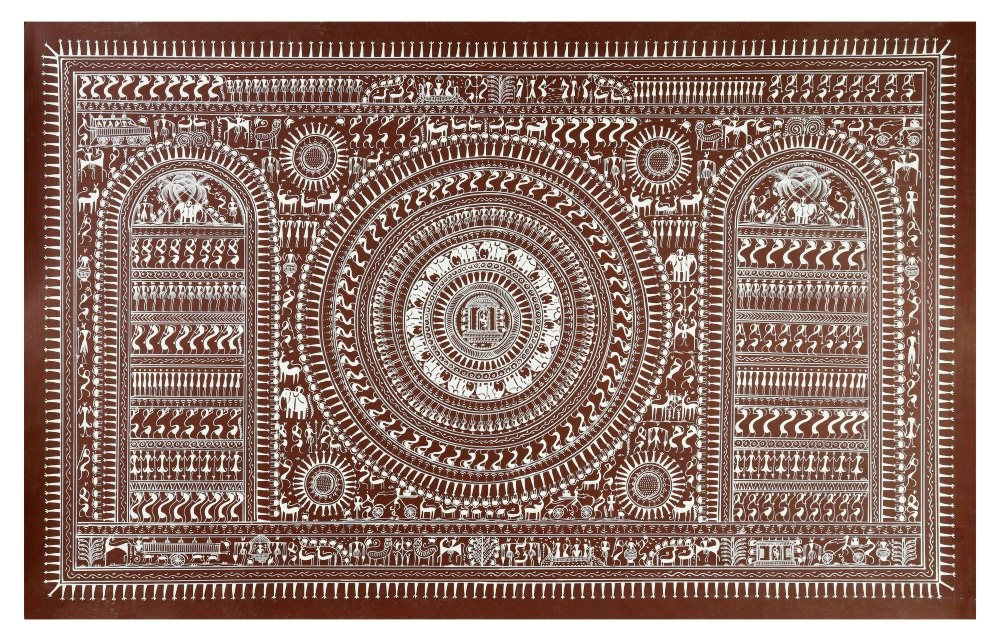
Folk Paintings in India: In the subject of Ancient and Medieval History, folk paintings represent the vibrant artistic traditions of rural and indigenous communities, deeply rooted in local culture and rituals. Styles such as Madhubani, Warli, Pattachitra, and Phad reflect everyday life, mythology, and social beliefs through simple yet expressive forms and natural colors.
Folk Paintings in India
Madhubani Painting
- The themes are religious and cultural, depicting deities such as Krishna, Rama, Durga, Lakshmi, and Shiva. It is created on auspicious occasions like birth, weddings, and festivals, with gaps filled using flowers, trees, and animals.
- Originally, it was painted on mud-coated walls using rice paste and natural colors. Today, it is also done on handmade paper, fabric, and canvas. The paintings are two-dimensional, with no shading effects.
- Madhubani gained recognition in 1970 when Jagadamba Devi from Jitbarpur village was awarded by the president of India. Other renowned artists include Bua Devi, Bharti Dayal, Ganga Devi, and Sita Devi.

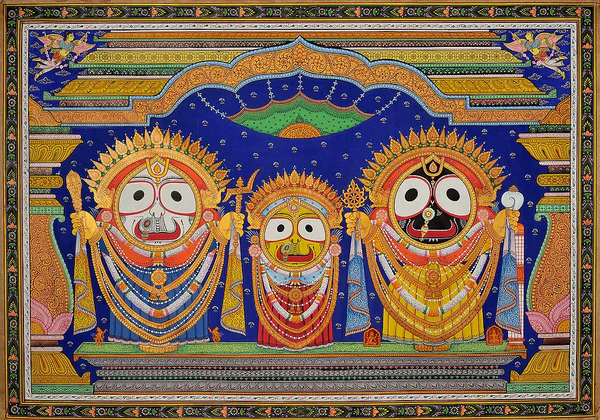
Pattachitra,Odisha
- A traditional art form of Odisha, Pattachitra derives its name from Sanskrit, where “patta” means “cloth/canvas” and “chitra” means “painting.” It blends classical and folk elements, with a strong folk influence.
- Painted on treated cloth, it uses natural colors like coconut shell, cinnabar (hingula), and lamp soot (deep kajal). The backgrounds are decorated with leaves and flowers, framed with intricate borders, and finished with a lacquer coating for a glossy effect.
- Its themes revolve around Jagannath, Vaishnavism, and occasionally Shakti and Shaivism.
Patua Art, Bengal
- Patua artists, known as Patua painters, would sing and narrate stories while displaying their painted scrolls in villages. Traditionally painted on cloth scrolls, it is now done on stitched sheets of paper using poster colors.
- In modern times, Patua art has evolved into a medium of social and political commentary.
fad painting, Rajasthan
- Phad paintings of Rajasthan are religious scroll paintings depicting tales of folk deities like Pabuji and Devnarayan on cloth (phad).
- These 15-30 feet long paintings made with natural colors depict pageantry and processions with figures having large eyes and round faces.
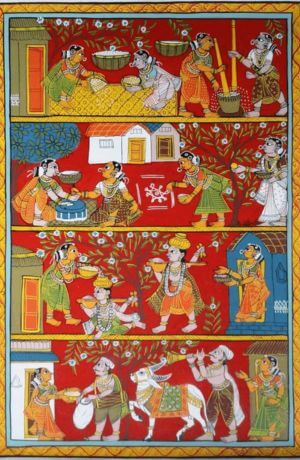
Cheriyal scroll paintings
- Scroll paintings are used by artists to move from one location to another and to tell stories accompanied by music.
- Scroll paintings are used by artists to move from one location to another and to tell stories accompanied by music.
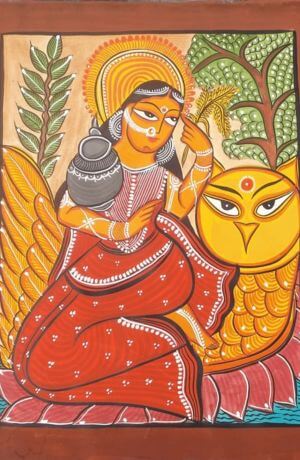
Kalighat Paintings
- Watercolors were applied on mill paper using brushes made of calf and squirrel hair. Paintings made in this style had a panoramic effect on a neutral background, expressing shaded outlines and motion.
- Initially it was for religious depictions, but over time it expanded to social issues and satirical depictions. The art is particularly known for expressing the sentiments of the lower classes of society.
- Initially it was for religious depictions, but over time it expanded to social issues and satirical depictions. The art is particularly known for expressing the sentiments of the lower classes of society.
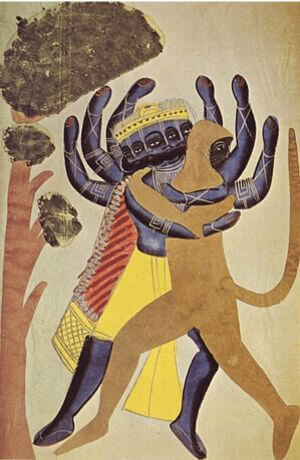
Patakar Painting
- Patkar painting of Jharkhand is an ancient scroll painting style created by tribal people.
- It has cultural connection with Maa Manasa, who is worshipped in Bengali homes.
- These paintings are related to social and religious rituals.
- The general theme of this art is related to life after death. Though it is an ancient art, it is on the verge of extinction due to continuous decline.
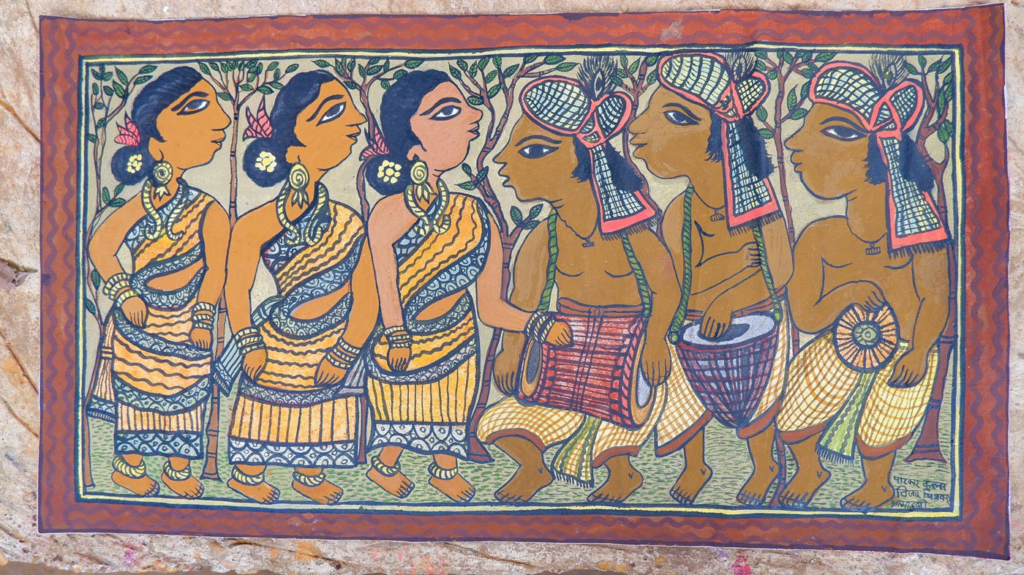
Kalamkari Painting, Andhra pradesh
- The basis of this art is cotton cloth, and the colors are made from vegetable dyes.
- The major centers are Srikalahasti and Machilipatnam, where artists use traditional designs such as chariot wheels, lotus flowers, and leaf patterns.
- The kalam is mixed with a chopped jaggery and water mixture and is applied on the dry vegetables one by one.
Warli Paintings
- Prehistoric Similarity: Resembles the cave paintings of Bhimbetka.
- Main Themes:
- Fishing, hunting, farming, dance, festivals, animals, birds, and trees.
- Depiction of Palghat Devi (goddess of fertility) and ancestral male deities.
- Technique:
- Uses triangles, circles, and squares inspired by nature.
- Red ochre background made from mud, branches, and cow dung.
- White figures drawn using a rice paste mixed with gum.
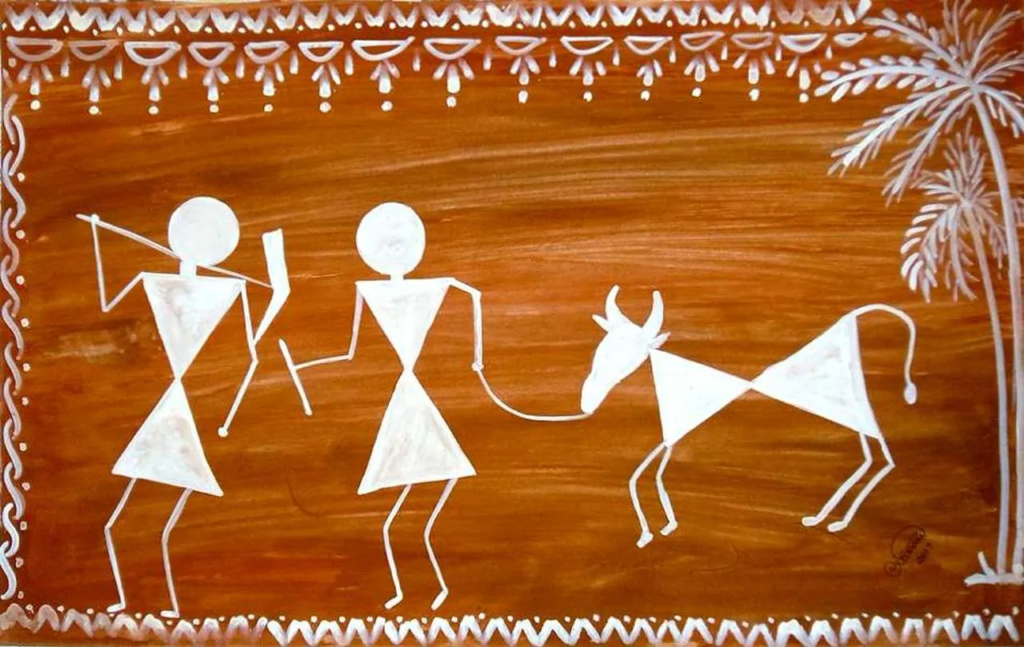
Thanga painting
- Location: Practiced in Sikkim, Himachal Pradesh, Ladakh, and Arunachal Pradesh.
- Technique:
- Painted on cotton canvas using natural colors.
- Color symbolism: Red (emotional intensity), White (peace), etc.
- Once completed, it is mounted on embroidered silk fabric.
- Types of Thangka Paintings:
- Depictions of Buddha’s life.
- Illustrations of the cycle of life and death.
- Meditative and deity-honoring artworks.
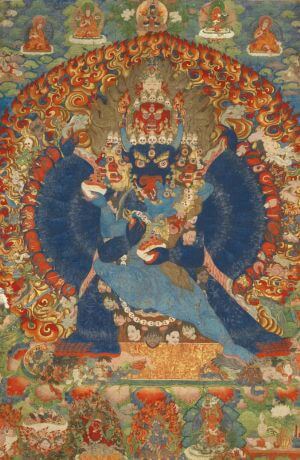
Manjusha Painting
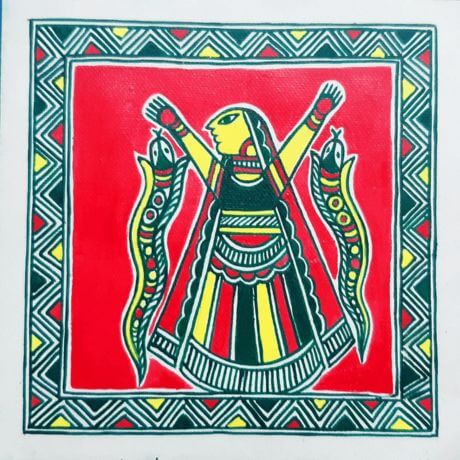
- This form of art belongs to the Bhagalpur region of Bihar. It is also called Angika art, where ‘Ang’ refers to a Mahajanapada.
- The motif of a snake is always present in it; hence, it is also called “snake painting.”
- This painting is made on jute and paper boxes.
Pithora Paintings
- These paintings are made by some tribal communities of Gujarat and Madhya Pradesh, and their purpose is said to be religious and spiritual.
- They are painted on the walls of houses to bring peace and prosperity.
- They are carved as a ritual on special family occasions.
- Depictions of animals, especially horses, are common.
Saura painting, Odisha
- They are made by the Saura tribe of Orissa and are similar to Warli paintings.
- It is essentially a wall painting and is ritualistic.
- Saura wall paintings are also called Italon or Icon and are dedicated to Idital, the principal deity of the Sauras.
- These paintings are mainly done in white color, while the background is red or yellow.
- Colors are obtained from minerals and plants.
- The human figures are geometric and stick-like.
- These designs have become fashionable in recent times, and many T-shirts and women’s dresses have these Saura-style designs depicted on them.