

Arab and Turkic Invasion on India: In the subject of Ancient and Medieval India, the Arab and Turkic invasions marked a significant turning point in the subcontinent’s political and cultural history. Beginning with the Arab conquest of Sindh in the 8th century and followed by Turkic incursions such as those of Mahmud of Ghazni and Muhammad Ghori, these invasions led to the establishment of new political structures and facilitated cultural interactions.
Arab invasion on India
The Rise of Islam
- Islam is one of the major world religions and historically one of the fastest-spreading religions.
- Prophet Muhammad Saheb is considered to be the founder of Islam.
- Hijri calendar started in 622.
- In 622 itself, Mohammad Saheb travelled from Mecca to Medina which is called Hijrat.
- The Holy Quran is the most sacred book of Islam, which was revealed (Wahi) over time between 610 and 632 CE in both Mecca and Medina.
- Mohammad Saheb was the last prophet of Islam, there were a total of 2.5 lakh prophets in this religion, the first prophet was Mohammad Adam.
- Mohammad Saheb is known by names like Nabi, Rasool, Imam Saheb etc.
- Complete surrender to God is Islam.
- Five characteristics of a true Muslim are mentioned –
- Shahada – Testimony
- Salat – Namaaz
- Saum – Roza
- Hajj
- Zakat – Giving 2% of total savings/wealth, to the poor.
- In 632 A.D., after Mohammed Saheb went to heaven, a new position was created which was the successor to the throne of Madina and was called Khalifa.
- Order of Caliphs –
- Abu Bakr – father-in-law of Sahib – Sunni
- Hazrat Umar
- Hazrat Usman
- Hazrat Ali – son-in-law of Sahib – Shia
- All belonged to Quraysh tribe.
Battle of Karbala
- This war took place on 10 October 680 AD in the plains of Karbala in Iraq. In this war,Husayn ibn Ali(grandson of Prophet Muhammad)was killed by the forces of Yazid I.
- This event is called the Tajia festival as a day of mourning, which is celebrated on the 10th of the month of Muharram.
Capitals of the Caliphs respectively –
- Medina (632–656 CE): The capital during the reign of the first three “Rightly Guided” Caliphs (Abu Bakr, Umar, and Uthman).
- Kufa (656–661 CE): The fourth Caliph, Hazrat Ali, moved the capital from Medina to Kufa (in modern-day Iraq).
- Damascus (661–750 CE): During the Umayyad Caliphate, the capital was shifted to Damascus, Syria.
- Baghdad (762–1258 CE): The Abbasid Caliphate established Baghdad as its capital, turning it into a global center for science and culture.
- Cairo (1261–1517 CE): After the Mongols destroyed Baghdad, the Abbasid Caliphate relocated to Cairo, Egypt.
- Istanbul (1517–1924 CE): Under the Ottoman Empire, Istanbul (formerly Constantinople) served as the final seat of the Caliphate.
- Last Caliph – Abdulmejid 2
- The Islamic legal system – Sharia itself is the main religious law system
- The order issued against Kafirs is called Fatwa.
Turkic invasion of India
The Turks invaded India through two dynasties
- Yamini dynasty
- Sanshabani dynasty
Yamini dynasty
Alpatgina
- Alptegin was a slave of Abul Malik, the ruler of the Samani dynasty. Impressed by his talent and military qualities, Abul Malik appointed him governor of Khurasan.
- When Abul Malik died, Alptegin established a new state near Afghanistan and made Ghazni its capital.
- This Ghazni Empire was the founder of the Yamini dynasty/Ghazni dynasty.
Subuktagin
- Subuktagin (977-997) ascended the throne of Ghazni after the death of Alptigin. Alptigin → a few short rulers → Sabuktigin
- Initially he was a slave, whom Alptigin had bought. Impressed by the talent of his slave, Alptigin made him his son-in-law and honoured him with the title of ‘Amir-ul-Umara’
Subuktagin was the first Turk ruler to attack India.
- He attacked and defeated Jaipal (king of Shahi dynasty) in 986 AD.
- Jaipal’s kingdom extended from Sirhind to Lamgan (Jalalabad) and Kashmir to Multan. The capitals of Shahi rulers were Ond, Lahore and Bhatinda respectively.
Mahmud Ghaznavi
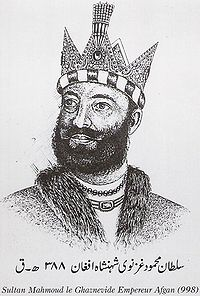
- Title – Sultan, Yamin-ud-Daula and ‘Amin-ul-Millah’
- Mahmud Ghaznavi was born on 1 November 971 AD.
- Mahmud Ghaznavi was the son of Subuktagin.
- Mahmud became ruler in 998 CE after defeating his brother.
- The Caliph Al-Qadir-Billah gave Mahmud the ‘robe of honour’ and conferred the titles of Yamin ud-Daula (the right arm of the empire), Amin-ul-Millat (protector of religion).
- The title of Sultan was started by the Turkish rulers. He was given this title by the Caliph of Baghdad. Mahmud Ghaznavi was the first ruler to take the title of Sultan.
Reasons for the invasion of Mahmud Ghaznavi
- To attack the royal dynasty to protect his kingdom.
- To supply money for expanding the kingdom and defeating his enemies.
- He did not want to give the Indian kings an opportunity to organize or form groups against him.
- Spreading Islam was also one of his secondary objectives.
Indian invasions of Ghaznavi
- He first attacked India through the Khyber Pass in 1001 AD in the areas around Punjab. Mahmud Ghaznavi’s first attack was against the Hindu Shahi ruler Jaipal.
- Mahmud Ghaznavi attacked India 17 times between 1001 AD and 1027 AD.
- 1.Border area of Punjab, 2. Peshawar, 3.Bhatinda, 4.Multan, 5.Multan, 6.Vaihid (Peshawar), 7.Narayanpur (Alwar), 8.Multan, 9.Thaneshwar, 10.Nandan, 11.Kashmir, 12.Mathura and Kannauj, 13.Kalinjar, 14.Kashmir, 15.Gwalior and Kalinjar, 16.Somnath Temple, 17.Jats of Sindh.
- Battle of Peshawar (near Waihind) – Mahmud Ghaznavi and Jaipal (Ghaznavi won)
- Second Battle of Vaihind – Mahmud Ghaznavi and Anandpal (Ghaznavi won)
- Mahmud Ghaznavi attacked Kashmir in 1015 but was unsuccessful.
- The most famous attack of Mahmud Ghaznavi was on the temple of Somnath in 1025. Mahmud Ghaznavi attacked the Somnath temple and destroyed the Shiva temple and looted immense wealth. This attack took place during the time of Bhim Dev/Bhim-1, the ruler of the Chalukya (Solanki) dynasty. This temple was located on the seashore in the Kathiawar district of Gujarat province.
- In the attack on Somnath, two Hindus Sevantraya and Tilak supported him.
- After Ghaznavi left, it was Bhima-1 who got the Somnath temple rebuilt.
- 17th and last attack (1027 A.D.) —
- Mahmud Ghaznavi attacked India for the last time in 1027 AD to punish the Jats and Khokhars because the Jats and Khokhars had caused heavy damage to Mahmud’s army while leaving after looting the Somnath temple. Mahmud Ghaznavi died in 1030 AD.
Consequences of the invasion
- Radical change in the political situation of North India.
- Increase in Indian trade with Central and West Asia through Muslim traders.
- Entry of Islamic preachers in India along with Muslim traders.
- Lahore became the centre of Arabic and Persian literature.
- The path was paved for the establishment of a Muslim state.
- Mahmud Ghaznavi’s aim of attacking India was only looting and acquiring wealth. He did not come to India to establish a permanent empire or to expand his empire.
- Argument – Ghaznavi did not stay permanently in the conquered territories, he used to return to Ghazni again and again.
- Ghaznavi neither annexed the conquered territories to his kingdom nor made any permanent settlement in the conquered territories.
- Ghaznavi wanted to establish a vast empire in Central Asia by looting wealth from India.
- Ghaznavi destroyed many temples in Mathura, which is called the Bethlehem of India.
- Ghaznavi is known as Butshikan (idol breaker) in Indian history.
Prominent historians
- Alberuni—Alberuni was a Persian writer who came to India with Mahmud Ghaznavi and wrote the famous book Kitab-ul-Hind (Tahqiq-e-Hind).
- Firdausi—He was a Persian poet and wrote the epic poem Shahnama.
- Utbi – Kitab-ul-Yamini
- Vaihaqi – Tarikh-e-Subuktagin
Muhammad Ghori
- Muhammad Ghori is considered the founder of the Turk Empire in India.
- He belonged to the Shansbani dynasty and came from the Ghazni state situated between Ghazni and Herat.
- Ghor, which is a part of present-day Afghanistan, was earlier under the Ghaznavid Empire. After the death of Mahmud Ghaznavi (1030 AD), the Ghaznavid Empire weakened, which led to the rise of Khwarizmi and Ghori powers.
- The base of the Khwarizmi Empire was Iran, while the base of the Ghori Empire was northwestern Afghanistan.
- During this conflict, Qutbuddin Muhammad of Ghor and his brother Saifuddin took control of Ghazni for some time. But this control could not become permanent, and Saifuddin was murdered by Bahram Shah, the ruler of Ghazni.
- Alauddin Hasan of Ghor attacked Ghazni and caused terrible destruction, which earned him the title of “Jahansoz” (World-burner).
- Ghazni remained under the control of the Gruj Turkmans for ten years. “World-burner” Alauddin Hasan’s son and his successor Saifuddin Muhammad died fighting against the Gruj Turkmans. But his cousin and successor, Ghiyasuddin Muhammad, permanently occupied Ghazni in 1173 AD and drove the Gruj Turks out of Ghazni.
- Ghiyasuddin Muhammad Ghori established an independent state in 1163 AD by making Ghor the capital.
- In 1173 AD, Ghiyasuddin handed over the region of Ghor to his younger brother Shihabuddin Muhammad Ghori and himself took over Ghazni and started the struggle against Khwarizm.
- Muhammad Ghori left for India. Muhammad Ghori was an Afghan commander. He was also a great conqueror and military commander.
Muhammad Ghori’s invasion of India
| Year | State | Ruler | Result |
| 1175 | multan | Karmathi ruler | victory |
| 1176 | Uccha | Karmathi ruler | victory |
| 1178 | Anhilwada, Gujarat | Chalukya queen Naik Devi (minor Bhima II) | lost |
| 1179 | peshawar | Malik khusro | victory |
| 1181 | lahore | Malik khusro | victory |
| 1182 | Deval and sindh | Sumra ruler | victory |
| 1185 | syalkot | Malik khusro | victory |
| 1186 | lahore | Malik khusro | victory |
| 1189 | Bathinda | Chouhan subedar | victory |
| 1191 | tarain | Prithviraj chouhan | lost |
| 1192 | tarain | Prithviraj chouhan | victory |
| 1193 | Hansi, Kuhram, Sarsutha and Delhi | ||
| 1194 | Kannauj/Chandravar | jaichand | victory |
| 1195-96 | bayana | kumarpal | victory |
| 1196 | gwalior | Sulakshan Pal | victory |
War between Prithviraj Chauhan and Muhammad Ghori
- Prithviraj Chauhan III, ruler of Ajmer, and Muhammad Ghori of Ghazni fought over Bhatinda (Tabarhind) in Punjab.
First Battle of Tarain (1191 A.D.):
- This battle was fought between Prithviraj Chauhan and Muhammad Ghori in the plains of Tarain (Thaneshwar). Prithviraj defeated Ghori badly with the help of Rajput kings. Ghori returned to Ghazni in a wounded state, and Prithviraj established his authority over Bhatinda.
Second Battle of Tarain (1192 A.D.):
- To avenge his previous defeat, Muhammad Ghori attacked again with a huge army of 120,000 horsemen and generals.
- This time Prithviraj was defeated, and this war led to the beginning of Muslim rule in India.
Indian Campaigns/Invasions of India by Qutubuddin Aibak:
- He conquered Hansi, Meerut, Baran (modern Bulandshahr), and Ranthambore in 1192 AD, Delhi in 1193 AD, and Koyal (Aligarh) in 1194 AD.
- Muhammad Ghori returned to India in 1194 AD. To strengthen his position in the Doab, it was necessary to defeat King Jaichand of Gahadwal, the powerful capital of Kannauj.
Battle of Chandawar, 1194—
- Ghori marched towards Kannauj and Banaras with his 50,000 horsemen. Aibak was the leader of the advance party.
- A battle took place between Ghori and Gahadwal King Jaichand of Kannauj at Chandawar in the Etawah district on the banks of the Yamuna River.
- Muhammad Ghori VS Kannauj Gahadwal King Jaichand
- Jaichand was defeated and killed in this battle. The Gahadwal kingdom could not be completely captured, but military posts were established at places like Banaras and Asni. Many important centers of the kingdom, including Kannauj, remained independent till 1198-99 AD.
Other victories of Qutubuddin Aibak—
- In 1197 AD, Qutubuddin Aibak defeated King Bhima II of Gujarat and looted many cities.
- After this, he conquered Badaun (1197-98 AD) and Kannauj (1198-99 AD).
- In 1199-1200 AD, he attacked the fort of Kalinjar, which was the main center of Chandela Parmardidev. Aibak captured Kalinjar, Mahoba, and Khajuraho and kept them under his control.
Expansion of Turks towards Eastern India –
- Aibak entrusted Bakhtiyar Khalji with the rule of parts of eastern India. Khalji invaded Bihar and Bengal and destroyed Buddhist centers of learning such as Nalanda and Vikramshila. He built a fort at a place called Uddandpur.
- He defeated the Sena ruler Lakshman Sen and made Gauda (Laknauti) in Bengal his capital.
- However, he suffered defeat during a campaign in Assam and was assassinated.
Conclusion –
- By the 13th century, the Turks had taken control of most of North India from Indus to Ganga. On March 15, 1206 AD, Muhammad Ghori was killed on the banks of the Indus River while returning to Ghazni after suppressing the rebellion of the Khokhars. This proved to be an era that ensured the stability of Turkish rule in India.
Delhi Sultanate (1206–1526 AD)
General Information
- Total Duration: 320 years (1206–1526 AD)
- Total Dynasties: 5 dynasties—Mamluk (Slave), Khalji, Tughlaq, Sayyid, and Lodi.
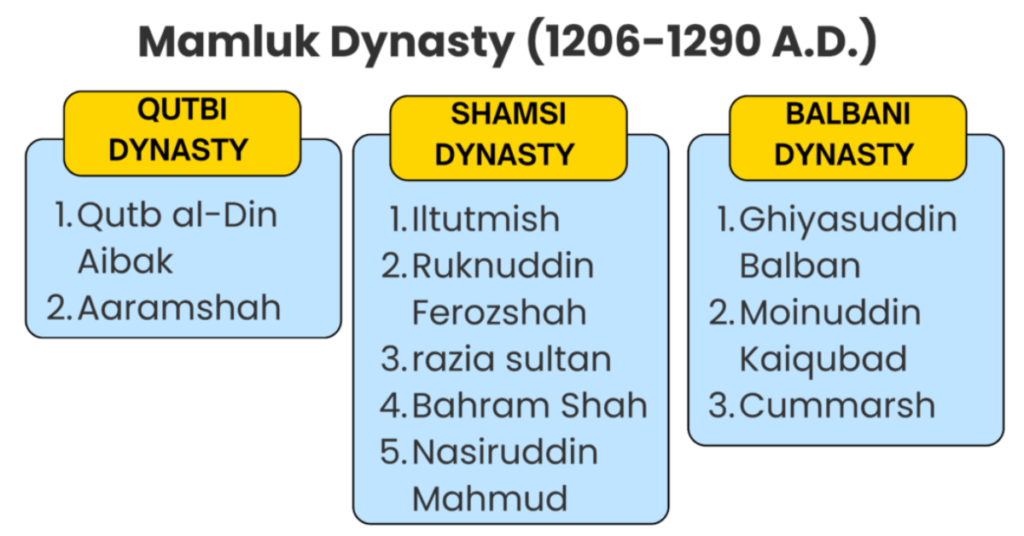
- First Dynasty: Mamluk / Slave Dynasty (1206–1290 AD), ruled for 84 years (approx. 90 years).
- Three Lineages/Branches: the Qutbi, Shamsi, and Balbani dynasties.
- Total Sultans: 10 Sultan
Slave/Mamluk dynasty
Qutubuddin Aibak
- Birth and Early Life:
- Origin: Born in Turkestan.
- Childhood: Sold as a slave in his youth; purchased by Qazi Fakhruddin (Nishapur).
- Later Years: Subsequently purchased by Muhammed Ghori in Ghazni.
- Meanings and Definitions:
- Aibak: “Lord of the Moon.”
- According to Siraj, “The one with a broken finger.”
- According to Habibullah, “Mamluk” (Arabic: a slave born to free parents).
- Titles:
- “Quran Khwan”: Recited the Quran in a melodious voice.
- “Lakh Bakhsh”: Known for excessive generosity (giver of lakhs).
- Minhaj-us-Siraj: Referred to him as “Hatim II.”
Political Achievements
- Aibak’s political career is categorized into three distinct phases:
1. As Representative of Muhammad Ghori (1192–1206 AD):
- Suppressed the second rebellion of Ajmer (1192 AD).
- Played a pivotal role in defeating Jaichand Ghadavala at the Battle of Chandawar (1194 AD).
- Conquered Aligarh (1195 AD) and suppressed the third Chauhan rebellion in Ajmer. Captured the Fort of Ranthambore.
- Plundered Anhilwara, the capital of Gujarat (1197 AD).
- Annexed Badaun, Chandawar, and Kanauj (1197–1198 AD).
- Defeated Paramardidev in 1202 AD, securing Mahoba, Khajuraho, and Kalinjar.
2. Accession to Power (1206–1208 AD):
- Following Ghori’s assassination in 1206 AD, his three prominent slaves—Aibak, Qubacha, and Yildiz—held equal power.
- According to Fakh-e-Mudabbir, Ghori had appointed Aibak as his representative in India and conferred the title of Malik in 1205–1206 AD.
- Supported by historians Dr. A.L. Srivastava and Prof. Habibullah, though K.A. Nizami refutes this claim.
- Upon the request of the citizens of Lahore, Aibak moved from Delhi to Lahore and assumed power.
- He did not adopt the title of “Sultan,” remaining content with the titles Malik and Sipahsalar (Commander).
- Eventually, he was formally manumitted (freed from the bond of slavery). Hasan Nizami arrived in Lahore with the letter of manumission and royal insignia.
3. Period of Challenges (1208–1210 AD):
- Aibak faced three major geopolitical threats: the Shah of Khwarizm, Qubacha (Sindh), and Yildiz (Ghazni).
- Death
- In 1210 AD, he died in Lahore after falling from a horse while playing Chaugan (polo).
Historical Evaluation
- A brilliant general and diplomat.
- Founder of a Turkish state in India independent of Ghazni.
- Habibullah: Credited him with “the fearlessness of the Turks and the refinement of the Persians.”
- Minhaj-us-Siraj: Described him as a “generous and large-hearted Sultan.”
Architecture and Construction
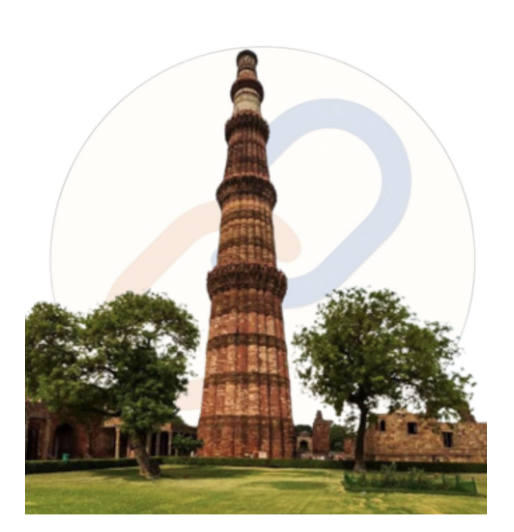
Qutub Minar
- Initiated: 1206 AD by Aibak; Completed: 1232 AD by Iltutmish.
- Architect: Fazl ibn Abul Ma’ali.
- Craftsmanship: The First story is star-shaped, built with a mix of red sandstone and white marble, and features Arabic-Persian inscriptions.
- Height: Originally 225 feet → increased to 240 feet (5 stories) by Firoz Shah Tughlaq.
- Purpose: For the call to prayer (Adhan) and as a Tower of Victory.
- Repairs: Conducted by Muhammad bin Tughlaq (1326) and Sikandar Lodi (1505).
- Established a new city near Rai Pithora (Delhi)—the first of the Seven Cities of Delhi.
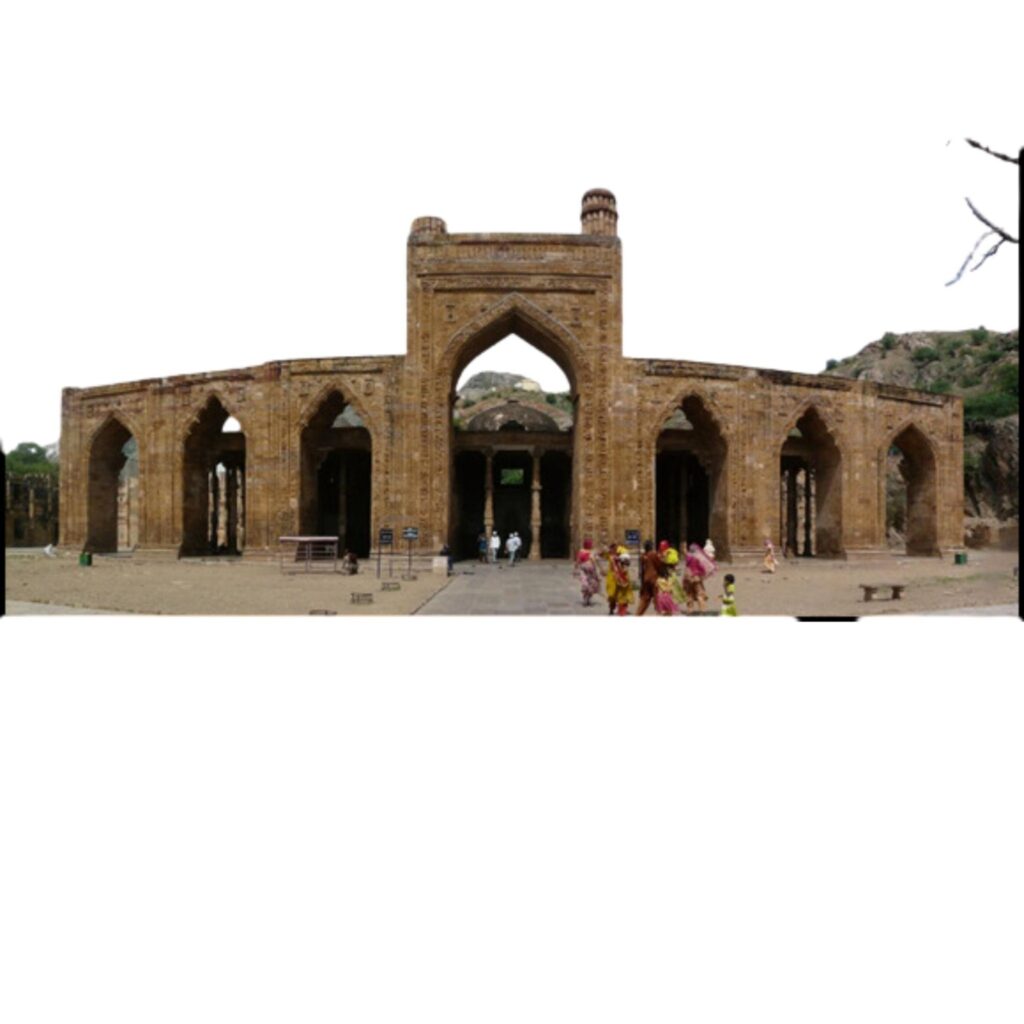
- Adhai Din Ka Jhopra Mosque in Ajmer.
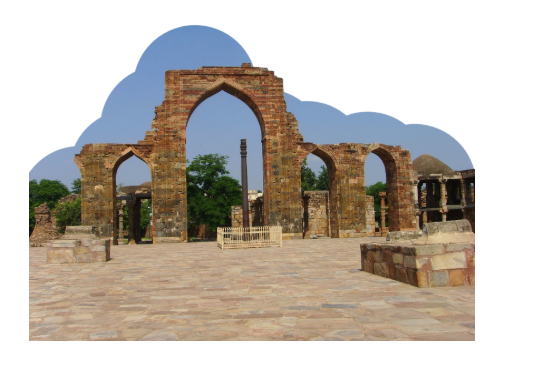
Quwwat-ul-Islam Mosque (1197 AD)
- The first Turkish mosque in India.
- Constructed by Aibak on the site of 27 Jain and Vishnu temples.
- Expansion: Enlarged by Iltutmish and Alauddin Khalji (Quranic verses on pillars).
- The Mehrauli Iron Pillar stands within its courtyard.
Patronage and Administration
- Patronized scholars like Hasan Nizami and Fakhr-e-Mudabbir.
- Appointed Ali Mardan Khan as the governor of Bengal, integrating Bengal into the sultanate.
Iltutmish (1211–1236 AD)
Initial Introduction
- Origin: He belonged to the Ilbari tribe of Turkestan—hence, his reign is also called the “Ilbari Dynasty.”
- Meaning: Iltutmish = “Lord of the Kingdom.”
- Birth: According to Badauni, he was born on a lunar eclipse night, leading to the name “Iltutmish.”
- Nomenclature: Various historians used different names—Elliot called him Altamsh, while Elphinstone used Altamish. However, the name “Iltutmish” is inscribed on the Qutub Minar.
- Slave Status: Sold as a slave five times; hence known as the “Slave of a Slave.”
- Purchase: Qutb-ud-din Aibak purchased him for one lakh Jitals.
- Early Career: Served as Head of Royal Bodyguards → Amir-e-Shikari → granted the Iqta of Baran.
- Manumission: Accompanied Ghori in the Khokhar campaign (1205–06); he was the first Turkish slave to receive a formal letter of manumission (Dasta-mukti).
- Family: Son-in-law of Aibak and former Governor of Badaun.
Accession to Power
- Following Aibak’s death, Aram Shah (likely Aibak’s son or brother) took power.
- Amidst the chaos, there were four contenders: Iltutmish, Qubacha, Ali Mardan, and Yildiz.
- Battle of Jud (1211 AD): Iltutmish defeated Aram Shah and ascended the throne.
- He shifted the capital from Lahore to Delhi.
- He is regarded as the Real Founder of the Delhi Sultanate.
Major Challenges and Military Successes
Adversaries:
- Yildiz (Ghazni)
- Qubacha (Multan-Sindh)
- Ali Mardan (Bengal)
Significant Battles:
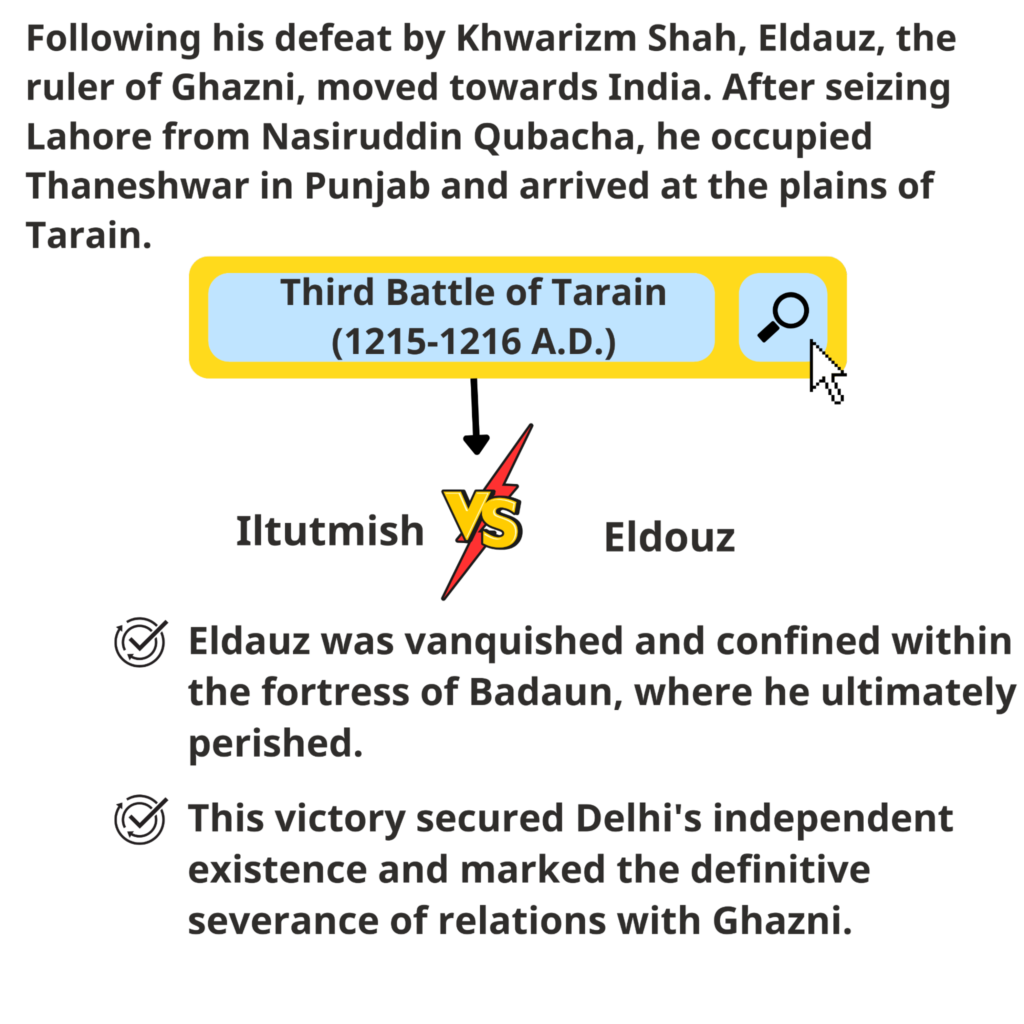
- 1216 AD – Third Battle of Tarain: Victory over Yildiz; Yildiz was imprisoned and executed in Badaun.
- Conquest of Bengal: Defeated Ghyasuddin to establish control over Bengal.
- Victory over Qubacha: annexed Sindh, Multan, and Uch. In 1228 AD, Qubacha committed suicide by drowning in the Indus River.
Administrative Achievements
- Turkan-e-Chahalgani: Formed a council of 40 Turkish nobles (The “Forty”). First mentioned in Isami’s “Futuh-us-Salatin.”
- Inclusion: Appointed non-Turks to high offices, such as Wazir Muhammad Junaidi (a Tajik).
- Titles: Conferred the title “Rawat-e-Arz” upon Imad-ul-Mulk.
- Iqta System: Developed the Iqta system (granting land revenue regions instead of cash salaries; transferable and non-hereditary).
- Standing Army: The first sultan to organize a permanent central army.
- Economic Vision: The first Sultan to recognize the economic significance of the Doab region.
Monetary System
- The first sultan to issue pure Arabic coinage.
- Established the tradition of inscribing the name of the Mint on coins.
- Introduced the Silver Tanka (175 grains) and the Copper Jital.
The Mongol Threat (1221 AD)
- Genghis Khan reached the Indus while pursuing Jalaluddin Mangabarni of Khwarizm.
- Iltutmish refused asylum to Mangabarni, thereby saving Delhi from a Mongol invasion.
- The conflict between Mangabarni and Qubacha weakened the latter, allowing Iltutmish to annex Punjab.
Conquest of Rajput States
- Ranthambore (1226): Defeated ruler Viranarayan.
- 1228: Annexed Bayana, Sambhar, Ajmer, Nagaur, and Jalore (Udai Singh of Jalore accepted suzerainty).
- Battle of Bhutala (1227): Conflict with Jaitra Singh of Mewar (historians generally consider Jaitra Singh the victor).
- Gwalior (1232): Pratihara ruler Mangaldev fled.
- Malwa (1234–35): Destroyed the Mahakal Temple of Ujjain and Bhilsa; brought the statue of Vikramaditya to Delhi.
- Bengal Campaign (1226 AD)
- Divided Bengal and Bihar into two parts.
- Governor of Bihar – Alauddin Jani
- Governor of Bengal – Hisamuddin
- Divided Bengal and Bihar into two parts.
Recognition from the Caliphate (1229 AD)
- Received formal investiture from the Abbasid Caliph of Baghdad, Al-Mustansir Billah.
- Title: “Nasir-Amir-ul-Mominin” (Helper of the Commander of the Faithful).
- Significance: Became the first legal (Sultan-i-Azam) Sultan of Delhi. Mentioned in Tabaqat-i-Nasiri.
Architecture and Cultural Contributions
- A great patron of architecture; completed the top three stories of the Qutub Minar.
- Established Madarsa-e-Nasiri in memory of his son, Nasiruddin Mahmud.
- Known as the “Father of Tomb Building” in India. Built the Sultan Ghari tomb in Delhi.
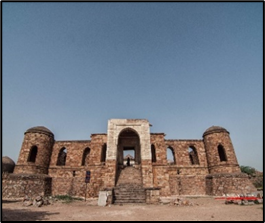
Sultan Garhi tomb
- Other Constructions:
- Atarkin Darwaza in Nagaur.
- Jama Masjid, Hauz-i-Shamsi, and Shamsi Idgah in Badaun.
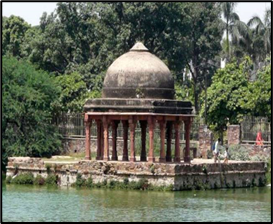
Hauz Shamshi
- Scholarly Patronage: His court hosted scholars like Minhaj-us-Siraj (who wrote Tabaqat-i-Nasiri) and Malik Tajuddin.
- Founded Madarsa-e-Muizzi in Delhi in memory of Ghori.
- Justice: Installed two marble lions with bells around their necks in front of his palace; anyone seeking justice could ring these bells.
Historical Evaluation
- Habibullah: “Aibak outlined the boundaries, but Iltutmish raised the structure.”
- Nizami: “Aibak imagined it, but Iltutmish gave it a concrete shape.”
- R.P. Tripathi: “The real founder of the Muslim state in India.”
- Sir Wolseley Haig: “The greatest of the Slave kings.”
Death
- Fell ill during a campaign against the Khokhars in 1236 AD.
- Died on April 30, 1236 in Delhi.
- The death of his eldest son, Nasiruddin Mahmud (1229 AD), had deeply affected him.
Successors of Iltutmish (1236–1265 CE)
| Ruler | Reign | Major Events and Features |
| Ruknuddin Firoz Shah | May 1236 – Nov 1236 | • Son of Iltutmish, known for his luxurious and pleasure-loving lifestyle. • Real power was in the hands of his mother, Shah Turkan. • Shah Turkan had Qutbuddin (son of Iltutmish) blinded and killed. • Maliks and Amirs revolted, and the public supported Razia. • After 7 months, both Ruknuddin and Shah Turkan were killed. |
| Razia Sultana | 1236–1240 | • First and only Muslim woman ruler of Delhi. • Abandoned purdah and appeared in court in male attire. • Coins carried the title “Umdat-ul-Niswan.” • Appointed Abyssinian Yakut as Amir-i-Akhur, angering the Turkish nobles. • Tried to balance Turkan-i-Chahalgani by promoting non-Turks. • Led campaigns against Ranthambore and Gwalior (unsuccessful). • Revolts: Kabir Khan Ayaz (1238) and Altunia (1240). • Married Altunia and jointly attacked Delhi but were defeated. • Killed near Kaithal in 1240. • Fall due to ambition of Turkish nobles and opposition to a female ruler. |
| Muizuddin Bahram Shah | 1240–1242 | • Placed on the throne by Turkish nobles after Razia’s fall. • Introduced the post Naib-i-Mumlikat; the first Naib was Ikhtiyaruddin Aitigin. • Power divided among Sultan, Naib, and Wazir. • First Mongol invasion of Lahore (1241) by Tair Bahadur. • After the invasion, the Delhi Sultanate’s frontier shrank to the Beas River. • Killed by the nobles in 1242. |
| Alauddin Masud Shah | 1242–1246 | • Son of Ruknuddin Firoz Shah, a nominal ruler. • Real power in the hands of Malik Qutbuddin Hasan and the Chahalgani (Council of Forty). • Appointed Balban as Amir-i-Hajib. • His coins first carried the name of Abbasid Caliph Al-Mustasim Billah. • Deposed by nobles in 1246 and later died in prison. |
| Nasiruddin Mahmud | 1246–1265 | • Grandson of Iltutmish (son of Nasiruddin Mahmud). • Known for his pious, simple, and austere life. • Personally copied the Quran, earning the title “Darvesh King.” • Real power held by Balban. • Balban was given the title Ulugh Khan and appointed Naib-i-Mumlikat (1249). • In 1253, Indian Muslim leader Imaduddin Raihan briefly became Naib (unsuccessful attempt). • Historian Minhaj-us-Siraj dedicated Tabaqat-i-Nasiri to him. • Died in 1265 CE, after which Balban became Sultan. |
Balbani Branch
The Balbani Dynasty was founded by Ghyasuddin Balban. He was a formidable and great ruler of both the Slave Dynasty and the specific Balbani lineage.
Ghiyasuddin Balban (1266-1286 A.D.)
- Giyasuddin Balban’s childhood name was Bahauddin. In his childhood, the Mongols kidnapped Balban and took him to Baghdad and sold him to a person named Jamaluddin Basri. Basri brought Balban to Delhi via Gujarat in 1232 AD and sold him to Iltutmish in 1233 AD. Thus, Balban was Iltutmish’s slave.
- Balan was appointed to special positions during the reign of each sultan on the basis of his work.
| Sultan | Post Held by Balban |
| Iltutmish | Khasdar (Personal Attendant) |
| Razia Sultan | Amir-e-Shikar (Lord of the Hunt) |
| Bahram Shah | Amir-e-Akhur (Master of the Royal Stables) |
| Masud Shah | Amir-e-Hajib (Lord Chamberlain/Special Secretary) |
| Nasiruddin Mahmud | Naib-e-Mumalikat (Regent/Protector of the Sultan) |
Theory of Kingship
His theory of kingship was based on divine right, which was later followed by Alauddin Khalji.
- Balban defined the post of Sultan as Niyamat-e-Khudai (Deputyship of God), meaning a shadow of God on Earth.
- He declared himself Zil-e-Illahi (Shadow of God/Reflection of God).
- Two main features of his theory:
- The office of the Sultan is divinely ordained.
- It is essential for a sultan to be an autocrat (absolute ruler).
- He claimed descent from Afrasiyab, the legendary Persian hero mentioned in Firdausi’s Shahnameh.
- He introduced Persian court etiquettes: Sijda (prostration before the Sultan) and Paibos (kissing the Sultan’s feet).
- He adopted the Policy of Blood and Iron as the foundation of his governance.
- He introduced the festival of Nauroz (Persian New Year) in India.
Administrative Reforms
- Abolition of Chahalgani: Balban abolished the Turkan-e-Chahalgani (The Forty), the council of forty Turkish nobles established by Iltutmish, as he knew they could pose a threat to his power.
- Diwan-e-Ariz: He separated the military department from the finance department (Diwan-e-Wizarat) and established the Diwan-e-Ariz (Military Department). The head of this department was called Ariz-e-Mumalik.
- He appointed Imad-ul-Mulk as his Ariz-e-Mumalik. This department was responsible for recruitment, training, salary, and maintenance of the army.
- Espionage: The head of the intelligence department was called Barid-e-Mumalik, and the spies were known as Barids. A system of espionage was implemented across all Iqtadars.
Death and Succession
- In 1286 AD, Balban’s eldest son, Prince Muhammad, was killed by the Mongols. His second son, Buqra Khan, was the governor of West Bengal.
- Consumed by grief over his eldest son’s death, Balban’s health declined, and he died in 1287 AD. Following him, Buqra Khan’s son, Kaiqubad, was crowned Sultan.
Contributions and Architecture
- Tomb of Balban (Delhi): The first tomb in India built in the pure Islamic style.
- It features the first scientifically correct arch (True Arch) in India.
- Lal Mahal (Red Palace/Qasr-e-Lal) and Qasr-e-Safid (The White Palace of Iltutmish).
- Tomb of Prince Muhammad.
- Dar-ul-Aman: Mentioned by Ibn Battuta as a “House of Safety.”
Amir Khusrow:
- Balban’s court historian and poet was Amir Khusrow. He began his career during the time of Prince Muhammad.
- Khusrow was a contemporary of 8 sultans of the Delhi Sultanate:
- Balban, Kaiqubad, Kayumars, Jalaluddin Khalji, Alauddin Khalji, Qutbuddin Mubarak Shah, Nasiruddin Khusro Shah, and Ghyasuddin Tughlaq.
Successors of Balban (1287–1290 AD)
Situation at the Time of Balban’s Death:
- Following the death of Prince Muhammad, the lineage of Balban weakened significantly.
- His second son, Buqra Khan, moved to Bengal and refused to return to Delhi despite being summoned.
- Balban died in a state of despair in 1287 AD.
- Before his death, Balban had nominated Kaikhusrau (son of Prince Muhammad) as his successor.
The Episode of Kaikhusrau:
- Wazir Hasan Basri supported him, but the Kotwal Fakhruddin opposed his accession.
- Consequently, Kaikhusrau could not become the Sultan and was dispatched to Multan instead.
Kaiqubad (1287–1290 AD)
- He was the grandson of Balban and the son of Buqra Khan.
- Age: Approximately 17–18 years.
- Having been raised under strict discipline, he indulged in extreme debauchery and luxury as soon as he ascended the throne.
Life of Luxury:
- Ferishta: Mentions that Kaiqubad built a palace called “Kilokhari (Kelughari)” on the banks of the Yamuna—a hub for dancers, acrobats, and jesters.
- Barani stated, “Had it not been for Malik Nizamuddin and Malik Qayamuddin Dabir, his reign wouldn’t have lasted seven days.” He described it as a place where “the shadow of prostitutes was on every wall and beautiful faces on every balcony.”
The Conspiracy of Nizamuddin
| Subject | Description |
| Relation | Nephew and son-in-law of Kotwal Fakhruddin |
| Post | Naib (Chief Administrator) |
| Role | Assumed actual power of the state |
| Conspiracies | ① Assassination of Kaikhusrau ② Humiliation of Wazir Khwaja Khatir—paraded through the city on a donkey ③ Execution of Balban-era nobles Malik Tujko and Malik Shahik |
- Warning by Fakhruddin: He warned Nizamuddin, saying, “You do not fear even the stalk of an onion, yet you dream of the royal crown.”
The Meeting of Father and Son (Buqra Khan and Kaiqubad)
- Buqra Khan was observing the deteriorating situation in Delhi from Bengal; he had declared himself an independent ruler with the title Nasiruddin.
- There was deep mutual distrust, but they eventually met in Avadh.
- Amir Khusrow described this meeting in his poetry. work (Masnavi) titled “Qiran-us-Sa’dain” (The Meeting of Two Auspicious Stars).
- A.K. Nizami: “Buqra was as anxious to meet his son as Jacob (Yaqub) was to meet Joseph (Yusuf).”
- Advice: Buqra advised his son to “Abandon luxury and beware of Nizamuddin.” Shortly after, Kaiqubad had Nizamuddin poisoned to death.
The Rise of Firoz Khalji
- After Nizamuddin’s death, Kaiqubad summoned Malik Firoz Khalji to Delhi.
- Post: Ariz-e-Mumalik (Head of the Military).
- Title: Shaista Khan.
- Grant: Awarded the Iqta of Baran (Bulandshahr).
- Firoz had previously fought numerous battles against the Mongols, which earned him great prestige.
Decline and End of Kaiqubad
- Continuous debauchery and the consumption of potent “energy-enhancing” medicines resulted in paralysis.
- His two-and-a-half-year-old son, Kayumars (titled Shamsuddin II), was proclaimed Sultan.
Conspiracies of the Nobles:
- Malik Chajju and Malik Surkha planned to assassinate Firoz Khalji.
- Ahmad Chap informed Firoz of the plot, leading to the execution of the conspirators.
- In 1290 AD, a Khalji soldier named Tarkesh wrapped the paralyzed Kaiqubad in a carpet and threw him into the Yamuna River.
- The infant Kayumars was also murdered shortly thereafter.
End of the Slave Dynasty (1290 AD)
- Last Sultan: Shamsuddin Kayumars (Kaimurs).
- Death: 1290 AD.
- Cause: Assassination by the Khalji soldier Tarkesh.
- Final Successor (Infant): Kayumars (Shamsuddin II).
- Conclusion of Dynasty: 1290 AD.
- Succeeding Dynasty: Khalji Dynasty.
- First Sultan of the new Dynasty: Jalaluddin Firoz Khalji.



