
In India, coal is found mainly in rock sequences of two geological periods – Gondwana and Tertiary deposits. The coal found in these rock sequences is mainly Bituminous type.
Gondwana Coal | Tertiary Coal |
Coal Mines –
|
|
Apart from this, brown coal or lignite is also found.
- Neyvalli (TN), Palana (Rajasthan), Umsar (GJ), Kashmir
- It is the first metamorphic sedimentary rocks in India.
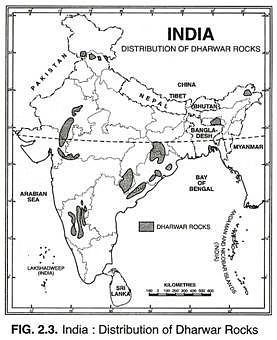
- Geographical Distribution: Predominantly located in the Dharwar region of Karnataka, it is also present in the Aravallis, Tamil Nadu, Chotanagpur Plateau, Meghalaya, Delhi, and the Himalayan region.
- Significance
- Mineral Wealth : Dharwar rocks are highly metalliferous → Economically most important
- rich in iron ore (Singhbhumi, Mayurbhanj ), manganese, lead, zinc, gold(Kolar Gold Fields ), silver, dolomite, mica, copper(Balaghat and Chhindwara of MP), tungsten, nickel,
- Precious stones and building materials (Marbal- Makrana)
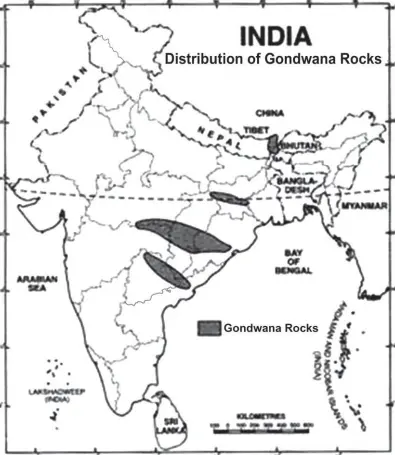
Significance of the Gondwana Rock System in India
Formation – During the Carboniferous to Permian period of the Paleozoic era.
Composition – Composed of fossil-rich sedimentary rocks formed in structural basins due to subsidence.
Significance
- Contains about 98% of India’s bituminous coal reserves, making it crucial for: Thermal power generation , Steel and other heavy industries
- Also holds potential for mineral oil and natural gas in certain regions.
- Rich in plant and animal fossils, aiding studies on: Paleoclimate and Continental drift (Gondwanaland evidence)
- Plays a vital role in India’s energy security, industrial development, and geological research.
Extent – Major Gondwana basins lie along the Damodar, Mahanadi, Godavari, Son, and Narmada rivers. Prominently found in Jharkhand, Odisha, Chhattisgarh, Madhya Pradesh, and Telangana.
- Lignite carries 40 to 55% carbon content and is often brown in colour with high moisture content thus, gives smoke when burnt.
- Rajasthan ranks 3rd in lignite deposits in India (22%).
Distribution of Lignite Coal | Industrial Uses of Lignite Coal |
| Power Generation: The primary use of lignite in Rajasthan is for electricity generation in thermal power plants.
Cement Industry: due to its ability to produce the high temperatures needed for the calcination process in cement kilns. Brick Manufacturing, Ceramic Industry → for firing kilns. |
India possesses vast iron ore reserves, primarily in the form of hematite and magnetite
| State | Major Magnetite Areas |
| Karnataka | Chikkamagaluru (Kudremukh, Baba Budan Hills), Hassan, Shivamogga, North & South Kannada |
| Andhra Pradesh | Anantapur, Kurnool, Guntur, Krishna, Nellore, Cuddapah |
| Tamil Nadu | Salem (Kanjamalai, Godumalai), Tiruvannamalai (Kavuthimalai), Namakkal, Erode, Dharmapuri |
| Telangana | Adilabad, Mahbubnagar, Warangal |
| Kerala | Kozhikode, Malappuram |
| Jharkhand | East Singhbhum, Gumla, Hazaribagh, Latehar, Palamu, Daltonganj |
| Odisha | Keonjhar, Mayurbhanj (Badam Hills, Gurumahisani, Sulepat) |
| State | Major Hematite Areas |
| Odisha | Sundergarh ,Sambalpur,Keonjhar (Barbil–Koira Valley), Jajpur, Cuttack, Koraput |
| Chhattisgarh | Bailadila (Dantewada), Dalli–Rajhara (Durg), Raoghat (Rajnandgaon),Bastar |
| Jharkhand | West Singhbhum (Noamundi, Chiria, Gua, Kiriburu, Meghataburu) |
| Madhya Pradesh | Jabalpur, Katni, Betul, Gwalior |
| Maharashtra | Chandrapur (Lohar, Peepal), Gadchiroli, Ratnagiri |
| Telangana | Karimnagar, Khammam |
| Tamil Nadu | Tiruchirappalli, Nilgiris, Viluppuram |
| Rajasthan | Udaipur, Thur Hunder, Nathra Ki Pal |
A. Iron:
Uses:
- Primary raw material used in the production of steel → construction, automotive, machinery, and appliances.
- Iron is utilized in the production of cast iron and wrought iron for construction purposes, such as bridges, buildings, and pipelines.
- Iron compounds are employed in the pharmaceutical and agricultural industries, as well as in the production of pigments and dyes
Distribution
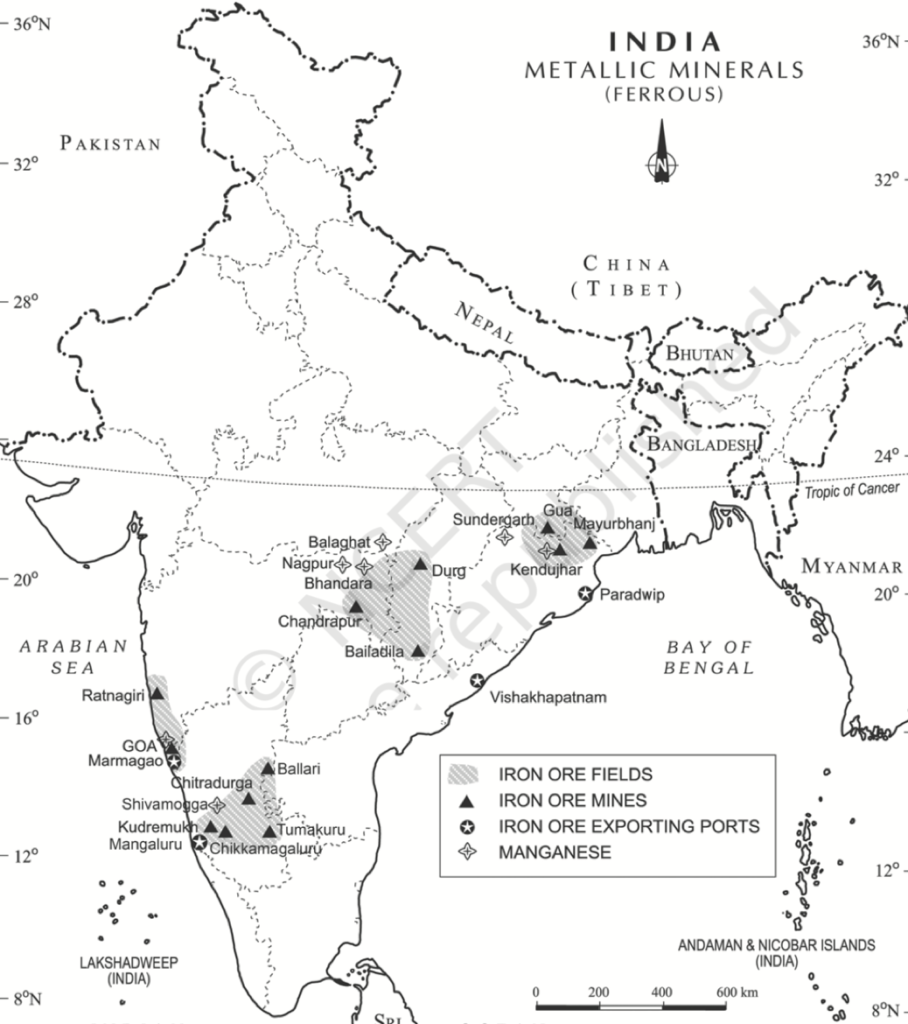
- India possesses abundant iron ore resources, boasting the largest reserves in Asia. The two main types of ore found are hematite and magnetite. Approximately 95% of total reserves are concentrated in states like Odisha, Jharkhand, Chhattisgarh, Karnataka, Goa, Telangana, Andhra Pradesh, and Tamil Nadu.
- Karnataka: Leading producer with one-fourth of the country’s total production, mainly hematite. Rich deposits in Baba Budan Hills (haematite) and Kudremukh Deposits (magnetite); Sandur Range in Bellary and Hosepet districts.
- Odisha: Contributes around 22% of total production, primarily haematite. Deposits in Mayurbhanj, Kendujhar, Cuttack, Sundargarh, and Sambalpur.
- Chhattisgarh: Accounts for 20% of total production, with major mines in Bailadila (Bastar District) and Dalli-Rajhara (Durg district).
- Goa: Fourth-largest producer, contributing about 18% of the total.
- Jharkhand: Contributes about 14% of total production, with significant deposits in Bonai Range and mines like Naomandi and Daltenganj (Palamu District).
- Other states: Deposits found in districts of Maharashtra (Chandrapur, Bhandara, Ratnagiri), Telangana (Karimnagar, Warangal), Andhra Pradesh (Kurnool, Cuddapah, Anantapur), and Tamil Nadu (Salem, Nilgiris).
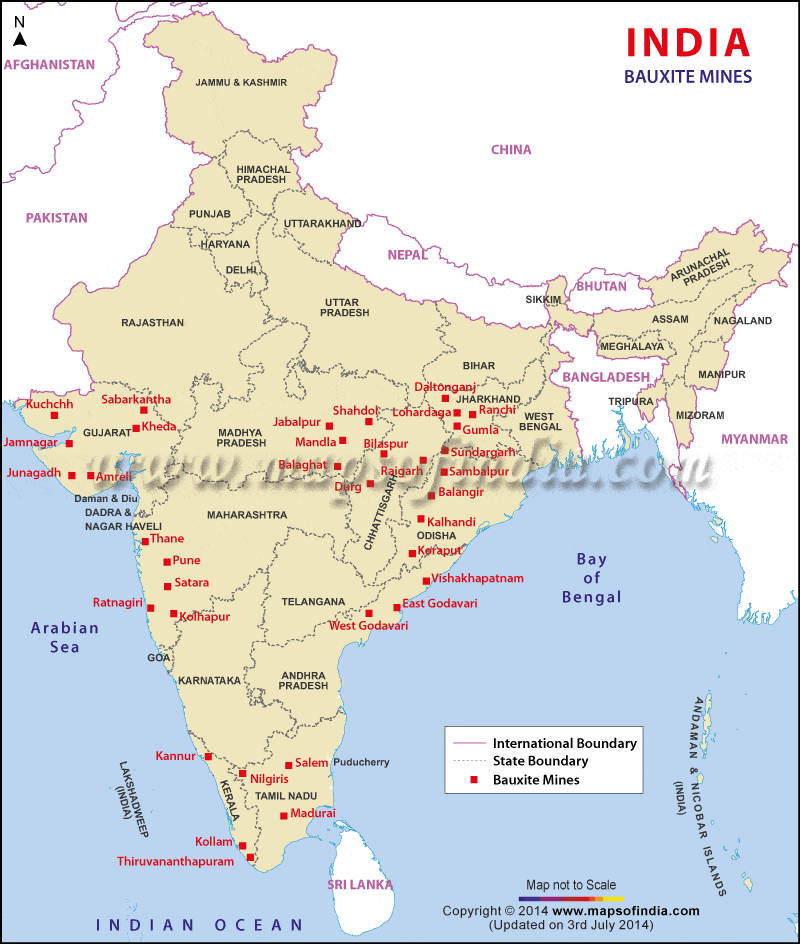
B. Bauxite : non-ferrous metallic minerals
Uses:
- Primary source for extracting aluminum, essential for aerospace, transportation, and construction industries.
- Used in manufacturing refractory materials, abrasives, and cement.
- Derivatives like alumina employed in ceramics, chemicals, and pharmaceuticals.
- Bauxite residue repurposed for soil amendment, construction, and wastewater treatment.
Distribution : Bauxite is found mainly in tertiary deposits and is associated with laterite rocks
- Odisha: Leading producer, contributing over 50% of total output. Mainly from Kalahandi-Koraput belt extending into Andhra Pradesh, with additional deposits in Bolangir, Sambalpur, and Sundargarh districts.
- Gujarat: Accounts for about 16% of total production. Deposits found between Gulf of Kachchh and Gulf of Khambhat in districts of Bhavnagar, Jamnagar, and Amreli.
- Other States:
- Jharkhand: Rich deposits in Lohardaga plateau.
- Chhattisgarh: Deposits in Amarkantak plateau.
- Madhya Pradesh: Katni-Jabalpur area and Balaghat.
- Maharashtra: Kolaba, Thane, Ratnagiri, Satara, Pune, and Kolhapur.
- Tamil Nadu, Karnataka, and Goa: Minor producers.