
Sol –
Impact of child marriage on women’s health –
- Poor Health Indicators: Early-age pregnancies negatively affect the health of foetus.
- Raises maternal mortality and morbidity rates.
- 23.3% of women aged 20-24 were married before 18, leading to higher health risks(NFHS-5).
- High Child Mortality: Children born to young mothers have higher mortality rates and health issues(NFHS-5).
- Nutritional Deficiencies: Unpreparedness leads to various deficiencies in the mother and child.
- Increased STD Risk: Young brides are at higher risk for HIV and other STDs (NFHS-4)
- Mental Health issues: Domestic violence can lead to PTSD and depression.
- Higher Risk of Abuse: Young married women often face domestic and sexual abuse and social isolation.
- Increased Fertility Rates: Lack of awareness about family planning leads to higher reproductive rates.
Sol –
How Socialization and Traditions Sustain Child Marriage
- Socialization → From early childhood, children are taught that marrying girls early is normal and a family duty.
- Traditions and cultural beliefs view early marriage as a way to protect family honor, preserve caste purity, and control female sexuality. Example: In rural India, marrying girls early is seen as protecting them from premarital relations.
- Patriarchal Mindset → Women’s role is limited to marriage and childbearing, reinforcing early marriages.
- Economic Factors → treats girls as economic burdens, encouraging early marriage to reduce dowry costs.
- Community Pressure → Fear of social ostracism for not marrying daughters early.
- Religious & Regional Practices → Legitimize and perpetuate child marriage. Example: Rajasthan sees child marriage peak during Akha Teej festival.
- Limited Education & Poverty → Reduces awareness, limits alternatives for girls.
- NFHS-5 (2019–21): 23.3% of women aged 20–24 married before 18.
Sol –
Measures that the Rajasthan government has taken to control child marriages
- Data:- According to the National Family Health Survey-5, 25.4% of women aged 20 to 24 years in the state were married before the age of 18 years.
- Child Marriage Prohibition Act, 2006
- Appointment of “Child Marriage Prohibition Officers” under sub-section 16 of section 6 of the Child Marriage Prohibition Act 2006.
- “Prevention, Protection and Prosecution” model has been adopted.
- Under the Rajasthan Panchayati Raj Rules, 1996, the village sarpanch is responsible for preventing child marriage.
- Childline 1098
- Operation Ladli: Campaign to stop child marriage
- Organizing “Chetana Baithak” with eminent persons among public representatives.
- Emphasis on printing the birth dates of the bride and groom.
- Setting up control rooms in district and subdivision offices on “Abujh Saavo” like Akshaya Tritiya and Peepal Purnima.
- Collectively discussing the ill effects of child marriage in gram sabhas and taking action to prevent it.
- To prevent child marriage, a calling facility should be available 24 hours a day on 181 call center and the 100 police control room.
- Providing information about the ill effects of child marriage and related legal provisions in schools
Sol –
Constitutional Provisions
- Article 41: Directs the State to make effective provision for securing the right to work, to education, and to public assistance in cases of unemployment, old age, sickness, and disablement.
- Article 46: Promotes the educational and economic interests of weaker sections of the society, including differently-abled persons, and protects them from social injustice and all forms of exploitation.
(General points that can be added)
- Article 14: Equality before the law.
- Article 15: Prohibition of discrimination.
- Article 21: Right to life with dignity.
Legal Provisions
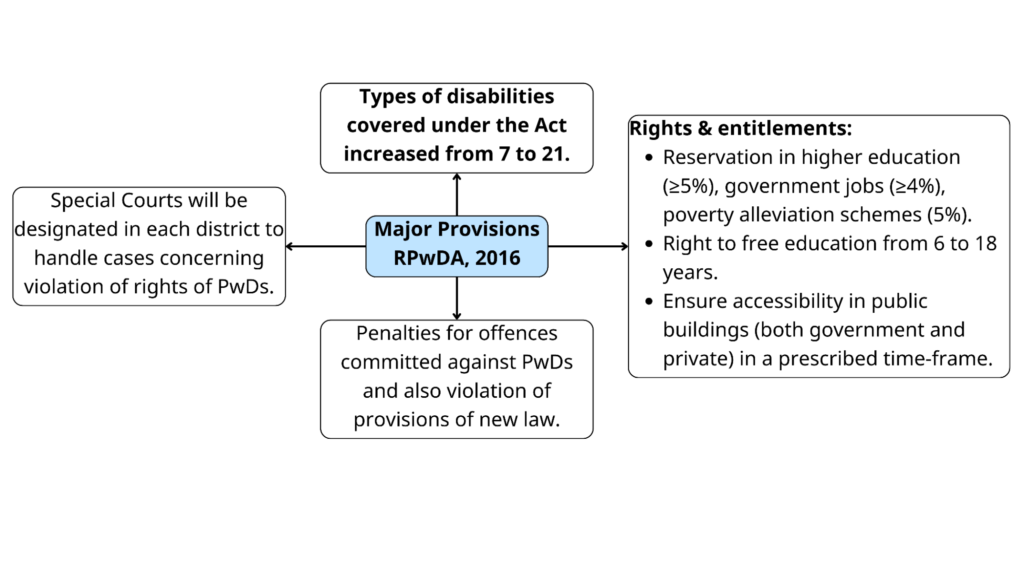
- The Rights of Persons with Disabilities Act, 2016:
- 4% reservation in jobs and education.
- Mandates accessibility in public services.
- Social security, healthcare, and rehabilitation provisions.
- Protection from discrimination and abuse.
- The National Trust Act, 1999: Supports persons with autism, cerebral palsy, mental retardation, and multiple disabilities.
- Rehabilitation Council of India Act, 1992: Regulates training of rehabilitation professionals.
- Mental Healthcare Act, 2017: Provides mental healthcare services and protects the rights of persons with mental illness.
Schemes and Policies
- Deendayal Disabled Rehabilitation Scheme (DDRS): Financial assistance for education and rehabilitation.
- Accessible India Campaign (Sugamya Bharat Abhiyan): Aims to make public spaces and services accessible.
- National Policy for Persons with Disabilities, 2006: Comprehensive measures for rehabilitation and support.
These provisions ensure equality, non-discrimination, and opportunities for differently-abled individuals in India.