

Sol –
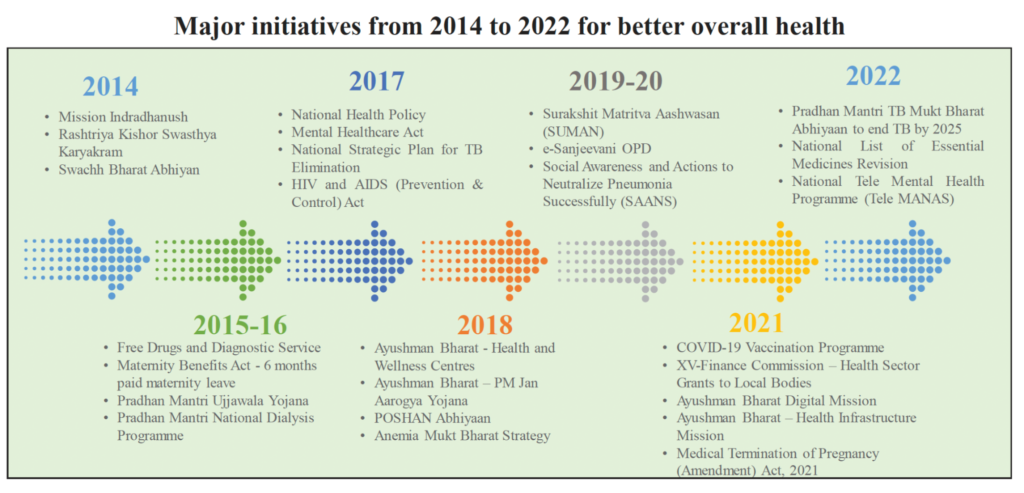
SDG goal 3 calls upon states to ensure healthy lives and promote well-being for all at all ages. In line with this, India has implemented various initiatives aimed at ensuring quality and affordable healthcare accessible to all its citizens.
Major schemes –
Scheme | Scheme | Scheme |
Ayushman Bharat – Pradhan Mantri Jan Arogya Yojana (PM-JAY),
|
|
|
|
|
|
|
|
|
|
|
|
|
|
|
|
|
|
|
|
|
|
|
|
|
|
|
|
|
Improvements in overall health –
- Total fertility rate (children per woman) decreased from 2.2 (NFHS-4) to 2.0 (NFHS-5)
- Health Insurance Coverage increased from 28.7% (NFHS-4) to 41.0% (NFHS-5)
- Institutional births increased from 78.9% (NFHS-4) to 88.6% (NFHS-5)
- Infant mortality rate decreased from 40.7% (NFHS-4) to 35.2% (NFHS-5)
- Children under 5 years who are stunted (height-for-age) decreased from 38.4% (NFHS-4) to 35.5% (NFHS-5)
- Children under 5 years who are wasted (weight-for-height) decreased from 21.0% (NFHS-4) to 19.3% (NFHS-5)
- Government Health Expenditure (GHE) has risen to 48% of Total Health Expenditure, reducing dependence on out-of-pocket payments.
- Out-of-Pocket Expenditure (OOPE) dropped from 62.6% in FY15 to 39.4% in FY22, reflecting financial protection for citizens.
- AI and tech integration (e.g., silicosis screening in Rajasthan, drone-based medicine delivery in NE India) enhanced last-mile care.
In conclusion, prioritizing quality healthcare is paramount for leveraging India’s demographic dividend and advancing the nation’s progress during the next 25 years of Amrit Kaal.


