

Satyendra Nath Bose
- Bose-Einstein Statistics: Developed the Bose-Einstein Statistics (1924) with Albert Einstein → Describes particles that obey Bose-Einstein statistics, now known as bosons.
- Bose-Einstein Condensate: Predicted the existence of Bose-Einstein Condensate (BEC), a new state of matter (later confirmed in 1995).
- Collaboration with Einstein: Collaborated with Albert Einstein to explain the quantum behavior of photons and other particles.
- Pioneered theoretical research in quantum mechanics and statistical physics.
- Worked on X-ray diffraction and cosmology.
- The Bose Institute in Kolkata, founded by him, remains a premier research institution.
Srinivasa Ramanujan
- Self-Taught Mathematical Genius: Born in Erode, Tamil Nadu, displayed exceptional mathematical talent from a young age.
- Major Contributions:
- Infinite Series: Developed unique series for π (pi), foundational in modern algorithms.
- Number Theory: Advanced work on partition functions, divisor functions, and modular forms.
- Ramanujan Prime & Ramanujan Theta Function.
- Mock Theta Functions.
- Hardy-Ramanujan Number: The number 1729:
- It is the smallest number expressible as the sum of two cubes in two distinct ways:
- 1729=13+123=93+1031729=13+123=93+103
- It is the smallest number expressible as the sum of two cubes in two distinct ways:
- Collaboration with G.H. Hardy: published groundbreaking work on elliptic functions, continued fractions, and infinite series.
- Elected a Fellow of the Royal Society (FRS) in 1918, one of the youngest ever.
- Legacy: 22 December, his birthday, is celebrated as National Mathematics Day in India.
C. V. Raman was an Indian physicist known for his work in the field of light scattering. He was the first person from Asia to be awarded a Nobel prize in any field of science.
Contribution / Discovery | Description / Details |
Discovered Raman Effect in 1928 |
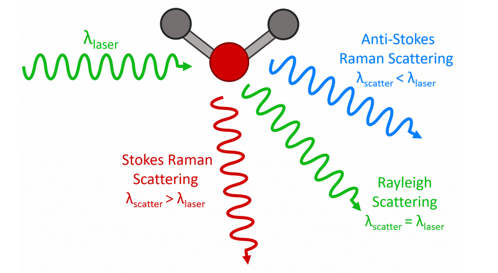 Raman spectroscopy is used to analyze a wide range of materials :
|
Musical sound |
|
Blue color of sea |
|
MS Swaminathan
M.S. Swaminathan, often referred to as the “Father of the Green Revolution in India,” has made significant contributions to agricultural science, food security, and sustainable development.
Contribution / Discovery | Details |
Food security |
|
Support to farmers |
|
Contributions to Agricultural Research and Development |
|
Swaminathan was awarded the first World Food Prize Laureate in 1987. Recently he was conferred Bharat Ratna.



