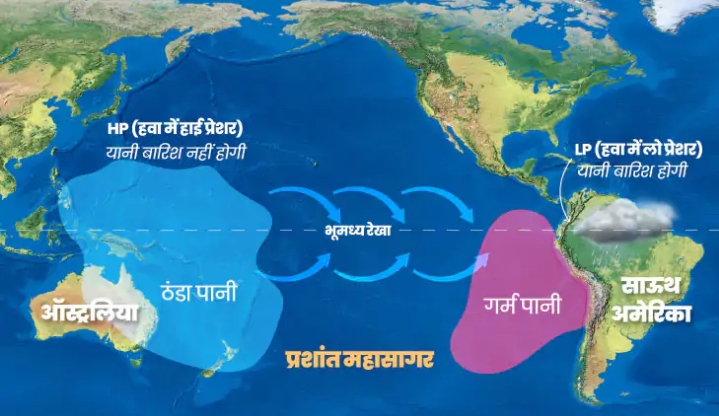

El nino is a warm ocean current formed in the eastern Pacific Ocean every 2 to 5 years, which comes and gets established in place of the cold Peru Current / Humboldt Current.
Impact on rainfall in Rajasthan.
- Monsoon Weakening: El nino causes weakening of the southwest monsoon winds, reducing their moisture-carrying capacity over Rajasthan.
- Rainfall Deficiency: Causes major rainfall shortfall, especially in eastern and northern Rajasthan. The 2015–16 El nino led to severe deficits, worsening farm and water crises.
- Frequent Droughts: Being arid/semi-arid, Rajasthan is highly vulnerable. Since 1950, 7 out of 16 El nino years have seen below-normal monsoon in Rajasthan.
- Agricultural Stress: Crops like bajra, pulses, and mustard, which dominate Rajasthan’s kharif season, are highly dependent on monsoon rainfall.El nino-related rainfall deficits cause low crop yields, food inflation, and distress for lakhs of farmers.
- Water Scarcity: Reduced rainfall affects groundwater recharge, reservoirs, and availability of drinking water in desert and semi-desert regions.After 2015–16, 60% of wells in Rajasthan showed falling water levels.
- Heatwave Intensification: El nino years often bring prolonged heat waves, increasing evapotranspiration and worsening water scarcity.
- Ecosystem Disruption: El nino-related droughts dry up wetlands, reduce vegetation, and impact biodiversity in arid regions.