

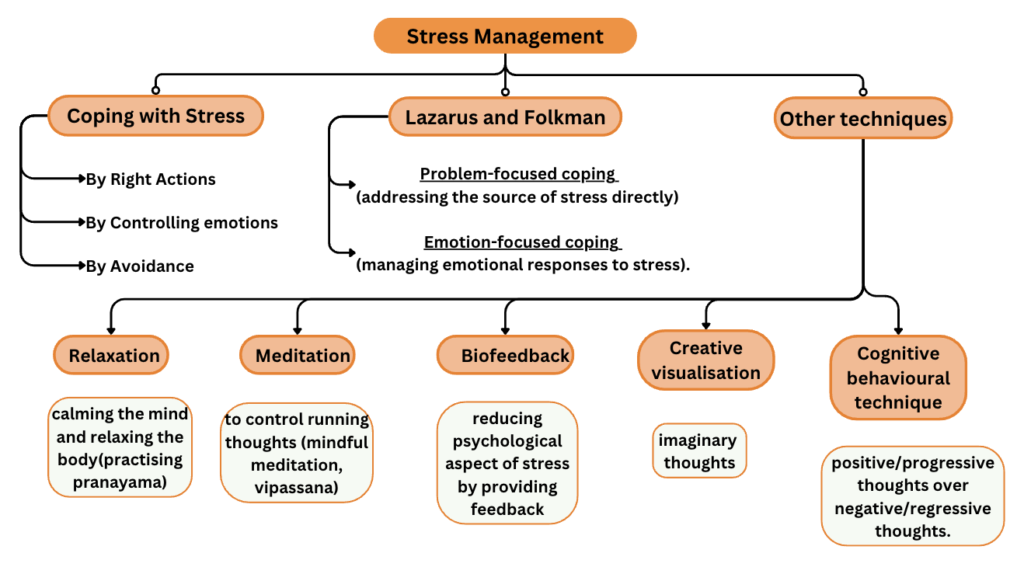
The nature of stress is multifaceted, viewed through various lenses:
- Stress as a Reaction (Selye): It’s a physiological response to external demands, involving the body’s stress response system.Eg . The General Adaptation Syndrome (GAS) mode.
- Stress as a Stimulus (Holmes and Rahe): Certain life events act as stressors, regardless of individual differences, based on objective circumstances.
- Stress as a Process/Transaction (Lazarus and Folkman): Stress arises from the appraisal of situations and one’s ability to cope, emphasizing the subjective nature of stress and coping strategies.
These perspectives collectively shape our understanding of stress, highlighting its biological, environmental, and psychological dimensions.
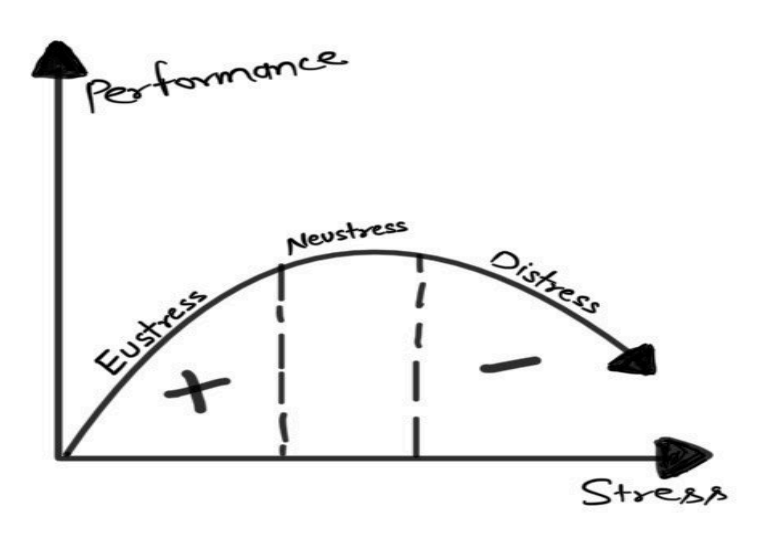
| Eustress | Distress |
| ❖ Positive Stress (desirable) | ❖ Negative Stress (undesirable) |
| ❖ Short Term | ❖ Short-Long Term |
| ❖ Increases Performance | ❖ Decreases Performance |
| ❖ Produces Excitement and fulfillment | ❖ Produces Anxiety and frustration |
| ❖ Eg:- Starting a New Job | ❖ Eg:- Traumatic Events |
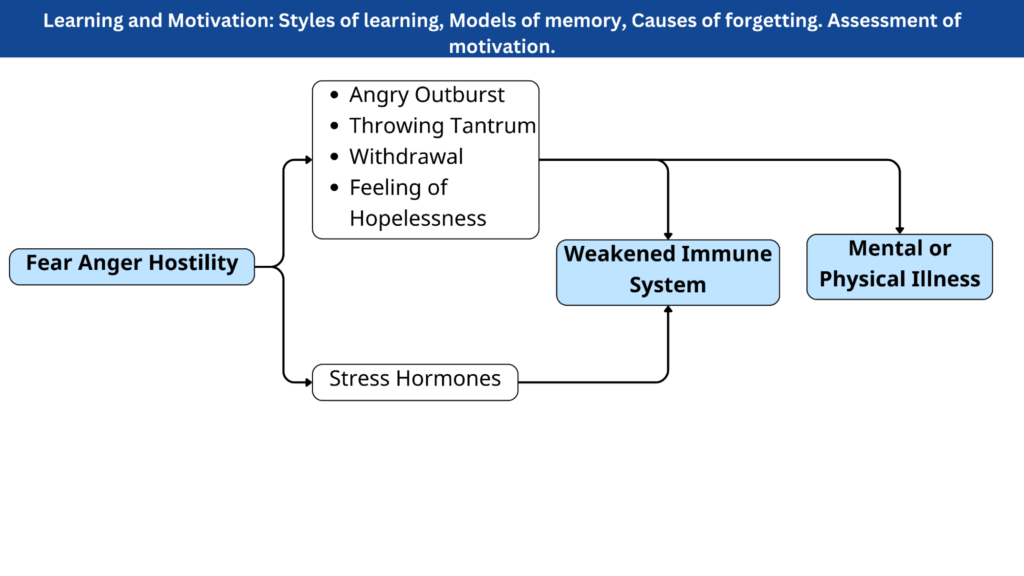
- Stress can have profound effects on both health and the immune system. Researchers estimate that stress contributes to 50-70% of all physical illnesses and is the primary reason behind 60% of medical visits.
- It has been linked to cardiovascular diseases, such as high blood pressure, and psychosomatic disorders, where emotional distress causes physical symptoms.
- Moreover, stress weakens the immune system by affecting natural killer (NK) cell activity, which plays a critical role in defending the body against infections and cancer.
- When stress diminishes NK cell function, the body becomes more vulnerable to infections and diseases. Thus, prolonged stress can significantly compromise the body’s natural defenses, leading to long-term health problems.
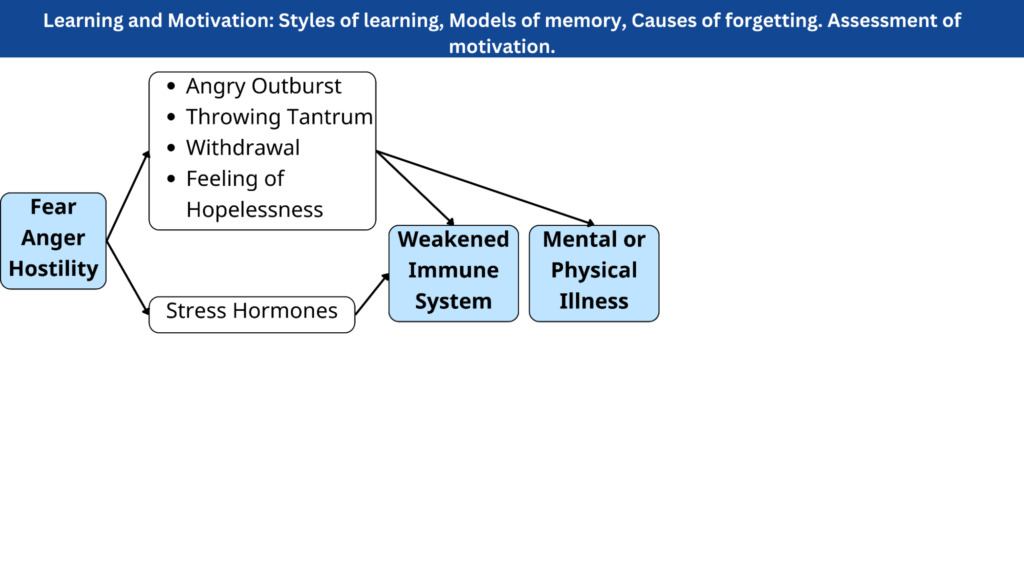
- Stress has a negative effect on health by weakening the immune system.
- It reduces the activity of natural killer (NK) cells, which protect the body from infections and cancer.
- Due to this, highly stressed individuals are more prone to illnesses such as ulcers, asthma, hypertension, and heart disease.
- Research shows that 50–70% of physical illnesses and about 60% of medical visits are linked to stress-related symptoms.
| Aspect | Emotion-Focused Coping | Problem-Focused Coping |
| Definition | Managing or regulating emotional responses to stress rather than changing the stressor itself. | Actively tackling the stressor to eliminate or reduce its impact. |
| Goal | Reduce emotional distress and achieve emotional balance. | Solve the problem or change the stressful situation. |
| Approach | Internal, reflective, and psychological adjustment. | External, action-oriented, practical problem-solving. |
| Examples | Meditation, relaxation exercises, seeking social support, cognitive reframing, venting emotions. | Time management, seeking advice to solve a task, planning, taking direct action to remove the cause of stress. |
| When Used | Useful when the stressor cannot be controlled or changed. | Useful when the stressor is controllable and actionable. |
| Effectiveness | Helps maintain emotional well-being even if the situation persists. | Helps reduce or eliminate the source of stress for long-term resolution. |



