

Sol –
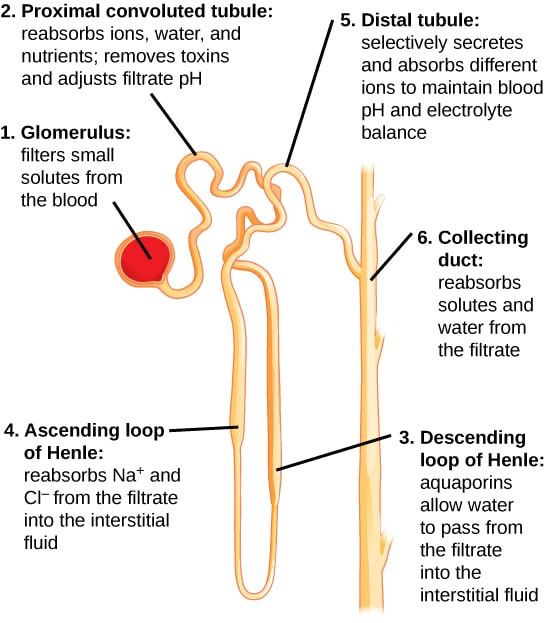
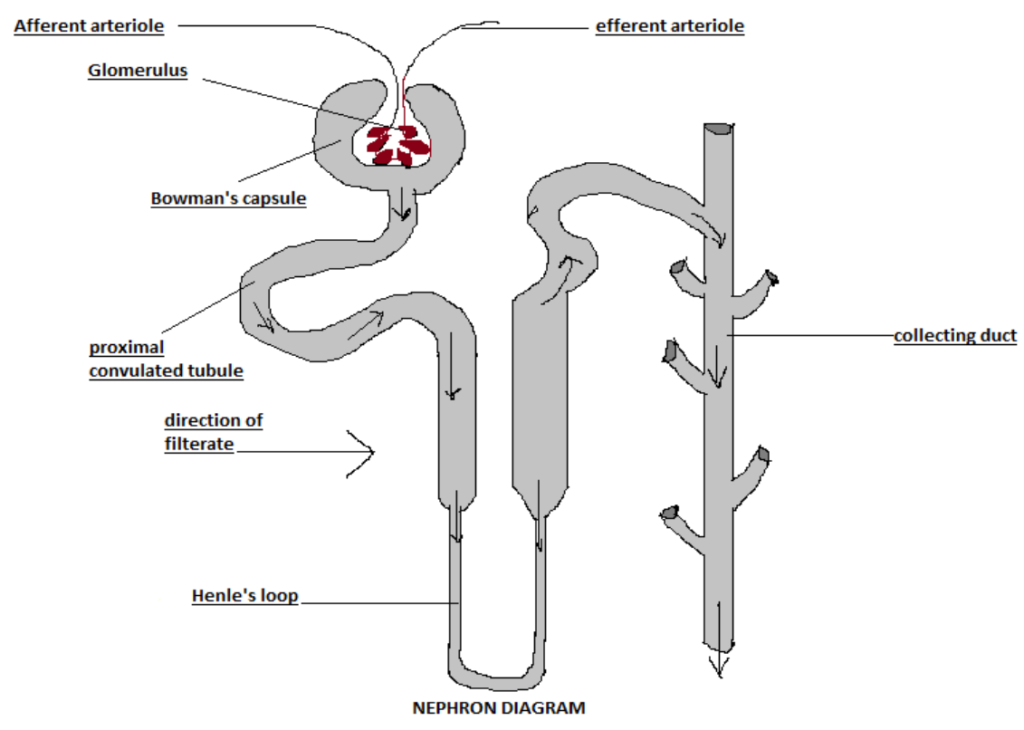
- The nephron is the functional unit of the kidney responsible for filtering blood and forming urine. It consists of a renal corpuscle and a renal tubule
Urine formation and waste excretion
- Filtration: the afferent arteriole brings blood into the glomerulus, where filtration occurs, allowing small molecules and ions to pass into Bowman’s capsule.
- Reabsorption: The Proximal Convoluted Tubule (PCT) reabsorbs most filtered water, ions, and essential nutrients back into the bloodstream. The descending limb of the Loop of Henle allows passive water reabsorption, while the ascending limb actively pumps out sodium and chloride ions.
- Secretion: The Distal Convoluted Tubule (DCT) secretes additional ions such as potassium and hydrogen ions into the tubule lumen, regulating ion balance and pH.
- Adjustment and Concentration: The collecting duct receives urine from multiple nephrons and adjusts its final composition based on the body’s hydration status and electrolyte balance.
- The liver is the largest gland located in the upper right part of the abdomen, just beneath the diaphragm and above the stomach.Given its crucial role in various physiological processes, the liver is Often described as the body’s chemical factory.
Functions:
- Metabolism: carbohydrate metabolism (glycogenesis, glycogenolysis, gluconeogenesis), lipid metabolism (synthesis and breakdown of fats), and protein metabolism (synthesis of plasma proteins, conversion of ammonia to urea).
- Detoxification: The liver removes toxins, drugs, and harmful substances from the bloodstream, making them less harmful and easier to excrete.
- Synthesis: It synthesizes important proteins such as albumin, which helps maintain osmotic pressure in the blood, and clotting factors, which are essential for blood coagulation.
- Storage: The liver stores vitamins (such as A, D, E, K, and B12), minerals (such as iron and copper), and glycogen, which serves as a readily available source of glucose.
- Bile production: The liver produces bile, which is necessary for the digestion and absorption of fats in the small intestine.
- Immune function: contains specialized immune cells called Kupffer cells, which help remove pathogens, bacteria, and foreign particles from the bloodstream.
- Regulation of Blood Glucose: by balancing the processes of glycogenolysis (breakdown of glycogen into glucose), gluconeogenesis (synthesis of glucose from non-carbohydrate sources), and glycogenesis (storage of excess glucose as glycogen). It responds to hormonal signals, such as insulin and glucagon, to regulate blood sugar levels.
- Regulation of cholesterol and hormones: The liver regulates cholesterol levels and metabolizes hormones, helping to maintain hormonal balance in the body.
- Blood filtration: The liver filters and processes blood from the digestive system before it is distributed to the rest of the body.
- Forms blood in embryo



