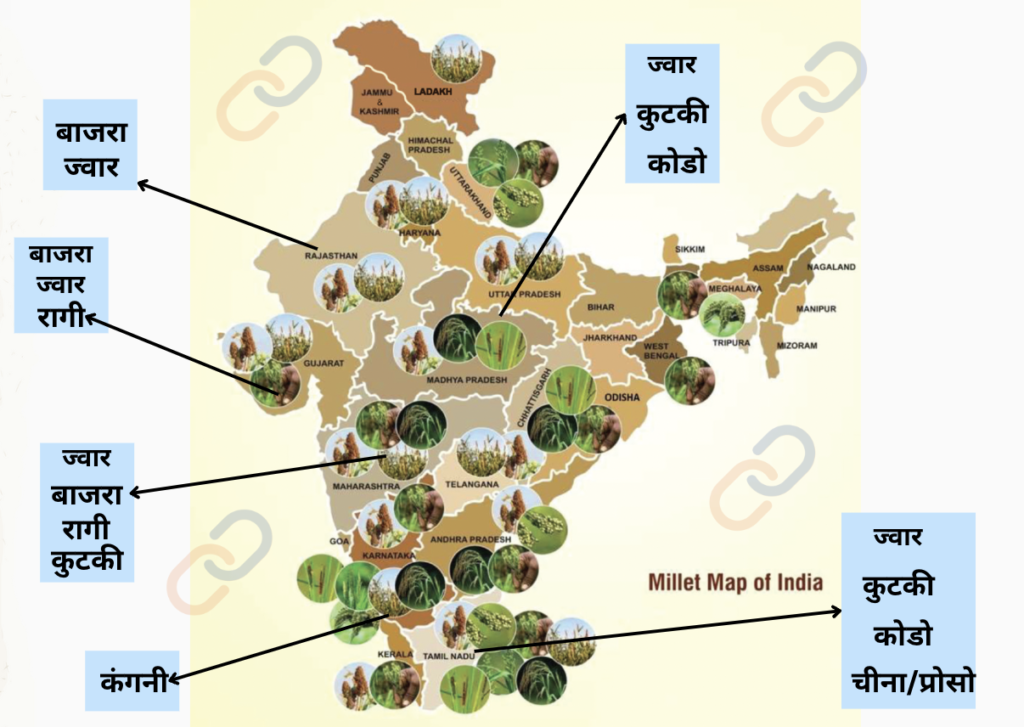

Sol –
Millets are small cereal grains that are very nutritious. Some examples are – Kodo, Kutki, Foxtail, pearl millet, finger millet, Sorghum, etc
Increasing importance at the national and international level –
- The United Nations General Assembly declared 2023 the International Year of Millets (IYM)
- The government of India notified Millets as Nutri-cereals in April 2018
- Millet-based dishes served for lunch and dinner at G20 events
- Millet Menu in Parliament – Bajre ki raab (soup), ragi dosa, Jowar Upma etc
- Included in the National Food Security Mission (NFSM), to provide nutritional support
- A sub-mission on Nutri-cereals has been implemented since 2018-19 in 212 districts of 14 States
- The Indian Institute of Millets Research has incubated 250 start-ups under the Rashtriya Krishi Vikas Yojana
- Globally, India is the largest producer of millet, accounting for about 41% of the world’s production
- India accounts for more than 80 % of the millet produced in Asia
- PM inaugurates the Global Millets (Shree Anna) Conference
Justified because –
- High Nutritional value –
- Millets contain 7-12% protein and 15-20% dietary fiber
- Very good sources of micronutrients, such as vitamins and minerals such as calcium, iron, zinc, potassium, and magnesium
- Climate-resilient, and align with several UN Sustainable Development Goals (SDGs) –
- Requires less water and agricultural inputs than other staple crops
- Potential to generate livelihood, increase farmers’ income, and ensure food & nutritional security all over the world
- India has more than 500 start-ups working in the millet value chains
- Health benefits –
- They are low in Glycemic Index (GI) and, as such, do not cause huge spikes in blood sugar
- Millets are gluten-free and can be consumed by patients suffering from celiac disease
- They help in rendering health benefits like reduction in blood sugar level (diabetes), blood pressure, thyroid, cardiovascular and celiac diseases
- Higher average yield – The global average yield is 1229 kg/ha, whereas India has a higher average yield of 1239 kg/ha
Additional info – The state of Rajasthan has the highest area under millets cultivation (29.05%) followed by Maharashtra (20.67%), Karnataka (13.46%), Uttar Pradesh (8.06%), Madhya Pradesh (6.11%), Gujarat (3.94%), and Tamil Nadu (3.74%).