

Social Life of Rajasthan reflects a vibrant blend of traditions, customs, festivals, and strong community bonds that shape everyday life in the state. Deeply rooted in heritage, the social structure highlights values like respect, hospitality, and cultural pride, making it an important part of Rajasthan Art & Culture. From colorful attire to folk music and traditional gatherings, the social fabric of Rajasthan beautifully represents its rich historical legacy and collective spirit.
Major Fairs and Festivals of Rajasthan
The sequence of festivals in Rajasthan is considered to begin with Teej in the month of Shravan. This cycle concludes with Gangaur in the month of Chaitra.
“तीज त्योहार बावड़ी, ले डूबी गणगौर”
- Vikram Samvat – Lunar-based calendar
- In this system, months are calculated on the basis of the lunar phase (tithi).
- One lunar month is approximately 29½ days.
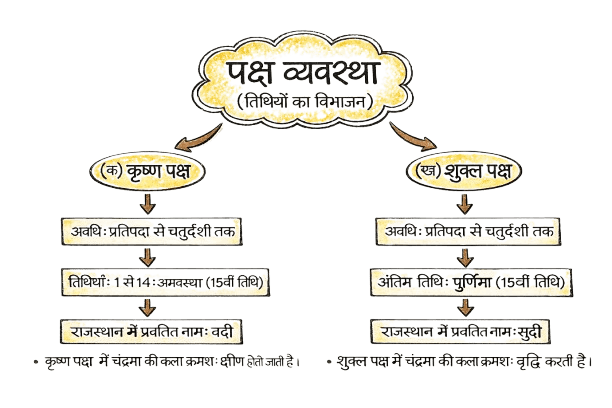
- Calculation of a lunar year –
29½ × 12 = 355 days
Whereas a solar year = 365 days
Difference = 10–11 days- Note – To balance this difference, an extra month is added every third year, called Adhik Maas (Mal Maas).
- Months of Vikram Samvat (Lunar-based) – Chaitra, Vaishakh, Jyeshtha, Ashadha, Shravan, Bhadrapada, Ashwin, Kartik, Margashirsha (Agrahayana), Paush, Magh, Phalgun.
- Chaitra Month – According to the Hindu calendar, Chaitra is the first month of the year. It falls in the spring season, between March and April.
- The Hindu New Year, Vikram Samvat, and Chaitra Navratri begin on Chaitra Shukla Pratipada.
- According to mythological belief, Brahma created the universe in this month, and in astrology, the calculation of planets, lunar days (tithi), and months is also considered to begin from this date.
- In different parts of India, this day is celebrated as Navroz, Ugadi, Gudi Padwa, and Cheti Chand.
Major Hindu Fairs and Festivals
Chaitra Month
Chaitra Month: Major Festivals
|
Date |
Festival / Vrat |
Special Features |
|
Krishna paksha |
||
|
Krishna Paksha |
Dhulandi |
|
|
Pratipada to Panchami |
Phool Dol Utsav |
|
|
Shukla paksha |
||
|
Pratipada |
New Samvatsar Begins |
|
|
Pratipada |
Chaitra Navratri Begins |
|
|
Tritiya |
Gangaur |
|
|
Panchami |
Gulabi Gangaur |
|
|
Trayodashi |
Mahavir Jayanti |
|
|
Vrat |
||
|
Pratipada to Navami |
Chaitra Navratri Vrat |
|
|
Ashtami |
Durga Ashtami Vrat |
|
|
Navami |
Rama Navami Vrat |
|
Chaitra Month’s Major Fairs
| Fair | Location | Date | Major Features |
| Shri Mahavirji Fair | Karauli (Hindaun) | Shukla Trayodashi – Vaishakh Krishna Pratipada | Major Jain fair; Sub-Divisional Collector acts as charioteer of the Rath |
| Kaila Devi Fair | Karauli | Shukla Ashtami | Major Shakti Peeth of North India; Languriya dance |
| Sheetla Mata Fair | Chaksu (Jaipur) | Krishna Saptami – Ashtami | Bullock-cart fair |
| Kesariyaji Fair | Dhulev (Udaipur) | Krishna Ashtami | Dedicated to Rishabhdev (Kalaji); participation of all religions |
| Mallinath Cattle Fair | Tilwara (Barmer) | Krishna Ekadashi – Shukla Ekadashi | Oldest cattle fair of Rajasthan |
Vaishakh Month
According to the Hindu calendar, Vaishakh is the second month of the year. It falls in the latter part of the spring season and the beginning of summer, generally corresponding to April–May in the Gregorian calendar.
- From a religious perspective, this month is considered highly sacred, especially for holy baths in the Ganga and other sacred rivers, charity, fasting, and pilgrimages. According to the Puranas, Vaishakh Shukla Akshaya Tritiya is regarded as a day that grants eternal merit, as it is believed that Lord Vishnu incarnated on this date.
- During this month, the portals of Badrinath Dham are opened, preparations for the Jagannath Rath Yatra begin, and the annual Charan Darshan of Banke Bihari Ji takes place. In folk tradition, Vaishakh is considered especially auspicious for marriages, housewarming ceremonies, and the commencement of new ventures.
Vaishakh Month: Major Festivals Date-Wise
|
Date |
Festival / Vrat |
Major Features |
|
Krishna Paksha |
||
|
Ekadashi |
Varuthini Ekadashi |
|
|
Purnima |
Buddha Purnima |
|
|
Shukla Paksha |
||
|
Tritiya |
Akshaya Tritiya (Akha Teej) |
|
|
Tritiya |
Parashuram Jayanti |
|
|
Saptami |
Ganga Saptami |
|
|
Navami |
Sita Navami |
|
|
Ekadashi |
Mohini Ekadashi |
|
|
Chaturdashi |
Narasimha Jayanti |
|
Vaishakh Month: Major Fairs in Rajasthan
|
Fair |
Date (Tithi) |
Key Features |
|
Dheenga Gawar Betmaar Fair (Jodhpur) |
Vaishakh Krishna Tritiya |
|
|
Gair Fair (Siyava, Abu Road – Sirohi) |
Vaishakh Shukla Chaturthi |
|
|
Narayani Mata Fair (Sariska, Alwar) |
Vaishakh Shukla Ekadashi |
|
|
Banganga Fair (Viratnagar, Kotputli–Behror) |
Vaishakh Purnima |
|
|
Gomti Sagar Fair (Jhalrapatan) |
Vaishakh Purnima |
|
|
Matrikundiya Fair (Chittorgarh) |
Vaishakh Purnima |
|
|
Gautameshwar Fair (Arnod, Pratapgarh) |
Vaishakh Purnima |
|
|
Markandeshwar Fair (Anjani village, Sirohi) |
Vaishakh Purnima |
|
Jyeshtha Month
According to the Hindu calendar, Jyeshtha is the third month of the year. In the Gregorian calendar, it generally falls between May and June. It is considered the peak of the summer season; therefore, water, shade, charity, and fasting hold special significance during this month.
- In folk life, this month is associated with self-restraint, penance, service, and the earning of spiritual merit.
Jyeshtha Month: Major Festivals Date-Wise
|
Date |
Festival / Vrat |
Major Features |
|
Krishna Paksha |
||
|
Ekadash |
Apara Ekadashi |
|
|
Amavasya |
Vat Savitri Vrat |
|
|
Amavasya |
Shani Jayanti |
|
|
Shukla paksh |
||
|
Dashami |
Ganga Dussehra |
|
|
Ekadashi |
Nirjala Ekadashi |
|
|
Purnima |
Vat Purnima |
|
Jyeshtha Month: Major Fairs in Rajasthan
- Sita Mata Fair – Pratapgarh
- Date: Jyeshtha Amavasya
- Associated with religious and tribal faith.
- Sitabari Fair – Kelwara (Baran)
- Date: From Vaishakh Purnima to Jyeshtha Amavasya
- Major fair of the Sahariya tribe.
- Ganga Dashami Fair – Kama (Bharatpur)
- Date: From Jyeshtha Shukla Saptami to Dwadashi
- Related to the descent of the Ganga.
Ashadha Month
According to the Hindu calendar, it is the fourth month of the year, which falls between June and July in the Gregorian calendar and indicates the arrival of the monsoon season. With this month, agricultural activities begin, giving it special importance in rural life. From a religious perspective, Ashadha is considered highly significant because Chaturmas begins during this period, due to which marriages and other auspicious ceremonies are temporarily suspended. It is believed that in this month Lord Vishnu enters Yog Nidra (sleeping period), which increases the importance of penance, discipline, and spiritual practice. The month is also associated with strengthening the Guru–disciple tradition, self-restraint, and religious conduct.
Ashadha Month: Important festivals date-wise –
Krishna Paksha –
- Ekadashi – Yogini Ekadashi
- Fast dedicated to Lord Vishnu.
- Believed to remove disease, sin, and suffering.
Shukla Paksha –
- Pratipada – Beginning of Gupt Navratra
- Period of Shakti worship and Tantric practices.
- Secret worship of the nine goddesses.
- Navami – Bhadliya Navami
- Considered as auspicious as Akshaya Tritiya
- After Devshayani Ekadashi, auspicious works are prohibited for four months.
- Especially famous for marriages.
- Ekadashi – Devshayani Ekadashi
- From this day Chaturmas begins.
- Belief: Lord Vishnu enters Yog Nidra in the Kshirsagar.
- After four months, he awakens on Kartik Shukla Ekadashi (Prabodhini Ekadashi).
- Purnima – Guru Purnima / Vyasa Purnima
- Major festival of the Guru–disciple tradition.
- Birth anniversary of Maharishi Ved Vyasa.
- Special importance of Guru worship and reverence.
Shravan Month
According to the Hindu calendar, Shravan is the fifth month of the year, which generally falls between July and August in the Gregorian calendar. This month is associated with the monsoon season, greenery, worship of Lord Shiva, nature worship, and folk traditions, and is considered an important symbol of faith, environmental awareness, and cultural practices in Indian life.
Shravan Month: Major Festivals
|
Date |
Festival / Vrat |
Major Features |
|
Krishna paksh |
||
|
Panchami |
Nag Panchami |
|
|
Navami |
Nidari Navami |
|
|
Amavasya |
Hariyali Amavasya |
|
|
Shukla paksha |
||
|
Tritiya |
Chhoti Teej (Small Teej) |
|
|
Purnima |
Raksha Bandhan (Nariyal Purnima) |
|
|
Vrat |
||
|
Monday |
Van Somvar Vrat |
|
|
Tuesday |
Mangla Gauri Vrat |
|
Major fairs of the month of Shravan
| Fair | Location | Date | Major Features |
| Kalpavriksha Fair | Mangaliyawas (Ajmer) | Hariyali Amavasya | Worship of Kalpavrikshaassociated with environmental conservation |
| Fateh Sagar Lake Fair | Udaipur | Hariyali Amavasya | Religious rituals on the lakeside; public participation |
| Budha Johad Fair | Sri Ganganagar | Shravan Amavasya | Major fair associated with Sikh tradition |
| Lotiya Fair | Mandore (Jodhpur) | Shravan Shukla Panchami | Folk faith; rural traditions |
| Parashuram Mahadev Fair | Pali | Shravan Shukla Saptami | Shiva–Parashuram tradition; famous fair of the Aravalli region |
| Saleshwar Mahadev Fair | Gudha (Pali) | Shravan Shukla Shashthi–Saptami | Shiva worship; regional faith |
| Veerpuri Fair | Mandore (Jodhpur) | Last Monday of Shravan | Devotion to Lord Shiva; special significance of Monday |
| Mirabai / Charbhuja Nath Fair | Merta City (Nagaur) | From Shravan Shukla Ekadashi to Bhadrapada Krishna Tritiya | Meera devotional tradition; Vaishnav faith |
| Diggi Kalyanji Fair | Diggi (Tonk) | Shravan Amavasya | Vaishnav tradition; one of the three annual fairs of Diggi (Vaishakh Purnima, Bhadrapada Shukla Ekadashi) |
Bhadrapada Month
Bhadrapada is an important month of the Hindu calendar and is considered a month rich in festivals. Major religious and folk celebrations such as Krishna Janmashtami, Ganesh Chaturthi, Teja Dashami, and the Ramdevra Fair are observed during this month.Bhadrapada is also associated with agriculture, rainfall, and the worship of folk deities. Toward the end of this month, Pitru Paksha (Shraddha) begins, which is related to remembrance and reverence for ancestors. In Rajasthan,this month holds special significance due to its folk traditions, fairs, and religious observances.
Bhadrapada month: Major festivals
|
Date |
Festival / Vrat |
Major Features |
|
Krishna Paksha |
||
|
Tritiya |
Badi Teej / Kajli Teej |
|
|
Tritiya |
Satudi Teej |
|
|
Tritiya |
Budhi Teej |
|
|
Shashthi |
Hal Chhath |
|
|
Ashtami |
Krishna Janmashtami |
|
|
Navami |
Gogaji Navami |
|
|
Amavasya |
Sati Amavasya |
|
|
Shukla paksha |
||
|
Dwitiya |
Babe Ri Beej |
|
|
Chaturthi |
Ganesh Chaturthi |
|
|
Panchami |
Rishi Panchami |
|
|
Ashtami |
Radhashtami |
|
|
Dashami |
Teja Dashami / Ramdev Jayanti |
|
|
Ekadashi |
Jaljhoolni Ekadashi / Devjhoolni |
|
|
Chaturdashi |
Anant Chaturdashi |
|
|
Purnima |
Beginning of Shraddha |
|
Major fairs of the month of Bhadrapada
| Fair | Location | Date | Major Features |
| Ramdevra Fair | Ramdevra (Jaisalmer) | Shukla Dwitiya–Ekadashi | Associated with folk deity Ramdevji; famous for foot pilgrimages |
| Rani Sati Fair | Jhunjhunu | Bhadrapada Amavasya | Historical fair associated with the Sati tradition |
| Veer Tejaji Cattle Fair | Parbatsar (Nagaur) | Bhadrapada Shukla Dashami | Nagauri breed of cattle; major cattle fair of Rajasthan |
| Ganesh Chaturthi Fair | Jaipur, Ranthambore (Sawai Madhopur) etc. | Shukla Chaturthi | Ganesh installation and religious processions |
Kartik Month
Kartik is known as the month of holy bathing and charity, as special religious importance is attached to Kartik Snan and donations throughout this month. It is believed that on Devuthani Ekadashi, Lord Vishnu awakens from Yog Nidra, after which marriages and other auspicious ceremonies resume.The Pushkar Fair held during this month is the most colorful and internationally renowned fair of Rajasthan,attracting a large number of tourists from India and abroad. The Kapil Muni Fair (Kolayat) is known as the “Kumbh of Jangal Pradesh” and is famous for its religious and cultural significance.
On Kartik Purnima, rituals such as Deepdan (offering of lamps), holy bathing, and various religious fairs are organized, further enhancing the spiritual importance of this month.
Kartik Month: Major Festivals
| Date | Festival / Vrat | Major Features |
| Shukla paksha | ||
| Pratipada | Govardhan Puja / Annakut | In remembrance of Lord Krishna’s Govardhan PujaAnnakoot Mela is famous in Nathdwara |
| Dwitiya | Bhai Dooj | Festival of affection between brother and sisterConnected to the story of Yama and Yamuna |
| Ekadashi | Devuthani / Devotthan Ekadashi | Lord Vishnu awakens after four months of yogic sleepResumption / recommencement of auspicious activities |
| Purnima | Kartik Purnima | Special importance of bathing in Kartik monthTradition of offering lamps (deepdaan)Organization of many major fairs |
| Entire Month | Kartik Snan | Bathing during Brahma MuhurtaConsidered highly meritorious / bestows great punya |
| Purnima | Satyanarayan Vrat | Observed with the desire for happiness and prosperity in household / family life |
Major fairs of Kartik month
|
Fair |
Place |
Tithi (Date) |
Major Features |
|
Pushkar Fair |
Pushkar (Ajmer) |
Shukla Ekadashi to Purnima |
|
|
Kapil Muni Fair |
Kolayat (Bikaner) |
Kartik Purnima |
|
|
Chandrabhaga Fair |
Jhalrapatan (Jhalawar) |
Kartik Purnima |
|
|
Sahwa Sikh Fair |
Sahwa (Churu) |
Kartik Purnima |
|
|
Kapil Dhara Fair |
Baran |
Kartik Purnima |
|
|
Garud Fair |
Bansi Pahadpur (Deeg) |
Kartik Shukla Tritiya |
|
Margashirsha Month:
- Margashirsha month is considered a major month for Vaishnava devotion, because during this period, worship of Lord Vishnu, bathing, and fasting hold special religious significance.
- Mokshada Ekadashi is associated with the teaching of the Bhagavad Gita, due to which Gita recitation and Vishnu worship hold special importance on this day.
- The Mangarh Dham Mela organized in this month is an important memorial fair connected to the tribal society, which reminds of the sacrifice of Guru Govind Giri.
- On the other hand, the Chandrabhaga Animal Fair is famous in the Hadoti region for the buying and selling of Malvi breed animals, which clearly highlights the economic and cultural importance of this month.
Margashirsha Month: Major Festivals
|
Tithi (Date) |
Festival / Vrat |
Major Features |
|
Shukla paksha |
||
|
Ekadashi |
Mokshada Ekadashi |
|
|
Purnima |
Margashirsha Purnima |
|
|
Vrat |
||
|
Entire Month |
Margashirsha Snan |
|
|
Ekadashi |
Mokshada Ekadashi Vrat |
|
Major fairs of Margashirsha month
|
Fair |
Place |
Tithi (Date) |
Major Features |
|
Mangarh Dham Mela |
Mangarh Hill (Banswara) |
Margashirsha Purnima |
|
|
Chandrabhaga Animal Fair |
Jhalrapatan (Jhalawar) |
Shukla Ekadashi to Krishna Panchami |
|
Paush Month:
- Paush month is considered a major religious month of the winter season (sheet ritu), in which bathing, charity, and fasting hold special importance.
- Bathing and charity (snaan-daan) on Paush Purnima are regarded as extremely meritorious, and devotees perform charity and religious acts with great faith.
- The Nakoda Ji Mela organized in this month is one of the major and famous fairs of Jainism, where Jain devotees from across the country come for darshan (worship) and sadhana (spiritual practice).
Pausha month: Major festivals
| Shukla paksha | ||
| Tithi (Date) | Festival / Vrat | Major Features |
| Krishna paksha | ||
| Amavasya | Paush Amavasya | Importance of Pitru Tarpan (ancestral offerings)Day for charity and meritorious acts |
| Shukla Paksha | ||
| Ekadashi | Safala Ekadashi | Worship of Lord VishnuBelieved to fulfill wishes / desires |
| Purnima | Paush Purnima | Special importance of bathing and charityMeritorious fruit of charity |
| Vrat | ||
| Entire Month | Paush Snan | Bathing during the winter seasonConnected to health and religious merit |
| Ekadashi | Safala Ekadashi Vrat | Devotion to Lord VishnuBelieved to destroy sins |
Paush Month: Major Fairs
|
Fair |
Place |
Tithi (Date) |
Major Features |
|
Nakoda Ji Mela |
Nakoda Tirth (Balotra) |
Paush Krishna Dashami |
|
|
Varkana Mela |
Varkana (Pali) |
Paush Shukla Dashami |
|
Magh Month:
- Magh month is considered the best month for bathing and charity (snaan-daan), because bathing and charity performed during this period are regarded as especially meritorious and fruit-bearing (vishesh punyaphaldayi).
- In this month falls Vasant Panchami, the major festival dedicated to the worship of Goddess Saraswati, the presiding deity of knowledge, learning, and arts.
- The Beneshwar Mela organized in Magh month is famously called Rajasthan’s “Kumbh of the Adivasis”, which serves as a major center for tribal culture and religious faith.
- On the day of Magh Purnima, along with bathing and charity, various religious fairs are organized, which further enhances the religious and cultural importance of this month.
Magh Month: Major Festivals
|
Tithi (Date) |
Festival / Vrat |
Major Features |
|
Shukla Paksha |
||
|
Panchami |
Vasant Panchami |
|
|
Ekadashi |
Jaya Ekadashi |
|
|
Purnima |
Magh Purnima |
|
|
Vrat |
||
|
Entire Month |
Magh Snan |
|
|
Panchami |
Vasant Panchami Vrat |
|
Magh Month: Major Fairs
|
Fair |
Place |
Tithi (Date) |
Major Features |
|
Beneshwar Mela |
Dungarpur (Navatapura) |
Magh Shukla Ekadashi to Purnima |
|
|
Chauth Mata Mela |
Chauth ka Barwara (Sawai Madhopur) |
Magh Krishna Chaturthi |
|
|
Parvatan Maru Mela (Desert Tourism Fair) |
Jaisalmer and Sam |
Magh Shukla Trayodashi to Amavasya |
|
Phalgun Month:
- Phalgun month is considered the month of festivals and colors, because in this month many festivals associated with joy, happiness, and collective participation are celebrated.
- Mahashivratri, which falls in this month, is the supreme festival of worship of Lord Shiva, in which fasting, night vigil (ratri jagran), and special puja hold great importance.
- Holi, celebrated on Phalgun Purnima, is a festival symbolizing social harmony, love, and exuberance, which removes discrimination and promotes mutual brotherhood. On the other hand, Mehndipur Balaji Dham is a major center for the worship of Hanuman Ji in his child form (bal roop), where devotees come for darshan with faith and belief.
- Holi (Dhulandi) – Holika Dahan takes place on the night of Phalgun Purnima. The next day, on Chaitra Krishna Pratipada, Dhulandi (Holi of colors) is celebrated. This festival symbolizes the arrival of spring season (vasant ritu), joy/exuberance, social harmony, and the victory of good over evil.
- Regional Specialties in Rajasthan –
- Jaipur – Symbolic presentation by civilized society of “Birth, Death, and Marriage” (scene of father’s bier, son’s wedding procession, and grandson’s birth)
- Bhilwara (Bhinay, Ajmer) – Kodamar Holi
- Mahavirji (Karauli) – Lathmar Holi in Chandan village (Karauli)
- Barmer – Patthar Maar Holi, Gair dance in Kanuda village
- Mewar region – Bhagoriya game of tribals, Gair dance in rural areas
- Shekhawati region – Geendar dance (Geendad nritya)
- Bikaner – Famous “Rammat” (traditional folk drama), Degchi / Balti Maar Holi (hitting with pots/buckets)
- Beawar (Ajmer) – Badshah ki Sawari (King’s procession)
- Kota (Awa and Sangod) – Nhahn Utsav / Nhahn ki Holi, entertainment through games and spectacles (khel-tamashon dwara manoranjan)
- Various Forms of Holi in Rajasthan –
- Devar-Bhabhi ki Holi – Beawar (Ajmer)
- Rone-Bilakhne wali Holi (Crying and Wailing Holi) – Jodhpur
- Gobar ke Kandon ki Holi (Holi of Cow Dung Cakes) – Galiakot (Dungarpur)
- Raad Raman ki Holi – Bhiluda village (Dungarpur)
- Doodh-Dahi ki Holi (Milk-Yogurt Holi) – Nathdwara (Rajsamand)
- Badshah ki Holi (King’s Holi) – Nathdwara (Rajsamand)
- Angaron ki Holi (Holi of Embers/Fire Coals) – Kekri (Ajmer) and Lalsot (Dausa)
- Murdon ki Holi (Holi of the Dead) – Marudhani (Bhilwara)
- Phoolon ki Holi (Holi of Flowers) – Govind Dev Ji Temple, Jaipur
- Kankad Maar Holi (Stone-Throwing Holi) – Jaisalmer
- Bhata Gair – Jalore
- Kanuda village’s Gair dance – Barmer
- Gota Gair – Bhinmal (Jalore)
Phalgun Month: Major Festivals
|
Tithi (Date) |
Festival / Vrat |
Major Features |
|
Krishna Paksha |
||
|
Trayodashi |
Mahashivratri |
|
|
Shukla paksha |
||
|
Saptami |
Channani Cheri Mela |
|
|
Ashtami |
Bhartrihari Mela |
|
|
Purnima |
Holi |
|
|
Vrat |
||
|
Trayodashi |
Mahashivratri Vrat |
|
|
Purnima |
Holika Dahan Vrat |
|
Phalgun Month: Major Fairs
|
Fair |
Place |
Tithi (Date) |
Major Features |
|
Shivratri Mela |
Shivad (Sawai Madhopur) |
Phalgun Krishna Trayodashi |
|
|
Chandraprabhu Mela |
Tijara (Alwar) |
Phalgun Shukla Saptami |
|
|
Dada Pamparam Mela |
Vijayanagar (Sri Ganganagar) |
Phalgun month (7 days) |
|
|
Tilswa Mahadev Mela |
Mandalgarh (Bhilwara) |
Phalgun Purnima |
|
|
Mehandipur Balaji Mela |
Mehandipur (Dausa) |
Phalgun month |
|
Muslim Society’s Festivals and Urs –
Before studying the festivals and Urs of the Muslim society, it is necessary to know the names of the months in the Islamic (Hijri) calendar. The Islamic calendar is lunar-based and consists of a total of 12 months—
- Muharram, Safar, Rabi-ul-Awwal, Rabi-ul-Sani (Rabi-ul-Akhir), Jamad-ul-Awwal, Jamad-ul-Sani (Jamad-ul-Akhir), Rajab, Shaban, Ramadan, Shawwal, Zilqad, Zilhijj
The major festivals and Urs of the Muslim society are determined according to these months, such as Eid-ul-Fitr after Ramadan, Eid-ul-Zuha in Zilhijj, the Urs in Ajmer in the month of Rajab, and mourning observances (matmi aayojan) in the month of Muharram.
Muslim Society: Major Festivals
|
Occasion / Festival |
Islamic Month / Date |
Nature |
Special Features |
|
Eid-ul-Fitr |
1st of Shawwal month, after Ramadan |
Religious festival |
|
|
Eid-ul-Zuha (Bakrid) |
10th of Zilhijj month |
Religious festival |
|
|
Muharram |
Muharram month |
Mourning festival (Shok parv) |
|
|
Shab-e-Barat |
14th night of Shaban month |
Religious night |
|
|
Shab-e-Qadr (Lailat-ul-Qadr) |
27th night of Ramadan |
Sacred night (Pavitra raatri) |
|
|
Eid-e-Milad-un-Nabi (Barawafat) |
12th of Rabi-ul-Awwal month |
Religious festival |
|
Muslim Society: Major Urs (Rajasthan Specific)
|
Urs |
Place |
Time |
Special Features |
|
Khawaja Muinuddin Chishti ka Urs |
Ajmer |
Rajab month (6 days) |
|
|
Tarkeen ka Urs |
Nagaur |
Rajab month |
|
|
Galiakot ka Urs |
Galiakot (Dungarpur) |
27th of Muharram |
|
|
Narhad ki Dargah ka Mela |
Narhad (Jhunjhunu) |
Krishna Janmashtami |
|
|
Khawaja Nizamuddin Shah ka Urs |
Fatehpur (Shekhawati) |
Fixed date |
|
|
Punjabshah Baba ka Urs |
Ajmer |
Historical |
|
Jainism:
- Jainism is one of the oldest religions in India, whose core teachings are based on non-violence (ahimsa), truth (satya), non-stealing (asteya), celibacy/chastity (brahmacharya), and non – possession / non- attachment (aparigraha).
- According to Jain tradition, there have been a total of 24 Tirthankaras, the last of whom was Lord Mahavira.
- Jainism places special emphasis on the theory of karma and self-purification, and considers moksha (liberation) as the ultimate goal of life.
- This religion stresses spiritual progress through austerity (tap), self-restraint (sanyam), and vows (vrat).
Major festivals and celebrations of Jainism
|
Festival / Utsav |
Date / Month |
Special Features |
|
Rishabhdev Jayanti |
Chaitra Krishna Navami |
|
|
Mahavir Jayanti |
Chaitra Shukla Trayodashi |
|
|
Paryushan |
Bhadrapad Shukla Panchami to Chaturdashi |
|
|
Das-Lakshan Parv |
Chaitra, Bhadrapad, Magh |
|
|
Kshamavani / Samvatsari |
Last day of Paryushan |
|
|
Sugandh Dashami |
Bhadrapad Shukla Dashami |
|
|
Rot Teej |
Bhadrapad Shukla Tritiya |
|
|
Diwali (Nirvan Divas) |
Kartik Amavasya |
|
Sikhism:
- Sikhism was founded in the 15th century by Guru Nanak Dev Ji.
- This religion is based on monotheism (ekeshwarvad) and considers God to be formless (nirakar), without attributes (nirgun), and omnipresent (sarvavyapi).
- In Sikhism, the Guru tradition holds special importance, with a total of ten Gurus; the last Guru, Guru Gobind Singh Ji, declared the Guru Granth Sahib as the eternal Guru.
- The core message of Sikhism is based on Naam Japo, Kirat Karo, and Vand Chhako (remember God, earn livelihood through honest hard work, and share with others).
- This religion places special emphasis on equality, service (seva), brotherhood (bhaichara), and social justice, and strongly opposes caste discrimination (jaati-bhed) and superstition (andhvishwas).
Sikhism: Major Festivals and Celebrations
|
Festival / Parv |
Time / Date |
Special Features |
|
Guru Nanak Jayanti (Guruparv) |
Kartik Purnima |
|
|
Lohri |
13 January |
|
|
Baisakhi |
13/14 April |
|
|
Hola Mohalla |
Phalgun month |
|
|
Shaheedi Divas |
Various dates |
|
Christianity:
- Christianity originated from the teachings of Jesus Christ (Yeshu Masiha / Isa Masiha), whose birth is estimated around 4–6 BC.
- This religion is based on monotheism (ekeshwarvad) and considers God as the source of love, compassion, and forgiveness.
- The holy scripture of Christianity is the Bible, which includes the Old Testament and the New Testament.
- The core message of Christianity is based on love, sacrifice, service, and forgiveness—expressed through the principle “Love your neighbor as yourself”.
- Christianity has made significant contributions worldwide in the fields of education, healthcare, and social service.
Christianity: Major festivals and celebrations
| Festival / Parv | Time / Date | Special Features |
| Christmas | 25 December | Birth anniversary of Jesus Christ |
| Good Friday / Black Friday / Holy Friday | March–April (varies) | Remembrance of the sacrifice / crucifixion of Jesus Christ |
| Easter | The Sunday following Good Friday | Festival of the Resurrection of Jesus Christ |
| New Year | 1 January | Celebration of the New Year |
Buddhism:
- Buddhism was founded by Gautama Buddha (Siddhartha) in the 6th century BCE.
- This religion is centered on the causes of suffering and its cessation, which Buddha explained through the Four Noble Truths and the Eightfold Path.
- Buddhism places special emphasis on non-violence (ahimsa), compassion (karuna), the Middle Path (madhyam marg), and wisdom (prajna).
- Its ultimate goal is the attainment of Nirvana, meaning liberation from the cycle of birth and death.
- Buddhism has had a profound cultural, ethical, and philosophical influence on many countries in Asia and has propagated the message of peace and coexistence.
Buddhism: Major festivals and celebrations
|
Festival / Parv |
Time / Date |
Special Features |
|
Buddha Purnima (Vaishakh Purnima) |
Vaishakh month (full moon day) |
|
|
Ashok Vijayadashami |
Ashwin month |
|
|
Kathina Chivar Daan |
After the rainy season |
|
Parsi (Zoroastrian) Religion:
- The Parsi or Zoroastrian religion was founded by Zarathustra (Zoroaster) in ancient Iran (Persia).
- This religion is based on monotheism and considers Ahura Mazda as the supreme God.
- The core principle of Parsi religion is based on the struggle between good (sat) and evil (asat), which is expressed through the triad of “Good Thoughts, Good Words, and Good Deeds”.
- Its holy scripture is the Zend Avesta, and fire is regarded as a symbol of purity; therefore, fire temples (Agni Mandir) hold special importance. In India, the Parsi community has made remarkable contributions in trade, industry, social service, and nation-building.
Zoroastrianism: Major Festivals
| Festival / Parv | Time / Date | Special Features |
| Navroz (Nowruz) | 21 मार्च | Parsi New Year |
| Khordad Sal | August | Birth anniversary of Prophet Zarathustra |
| Gahanbar | 6 times a year | Festivals related to creation |



