
The Cell

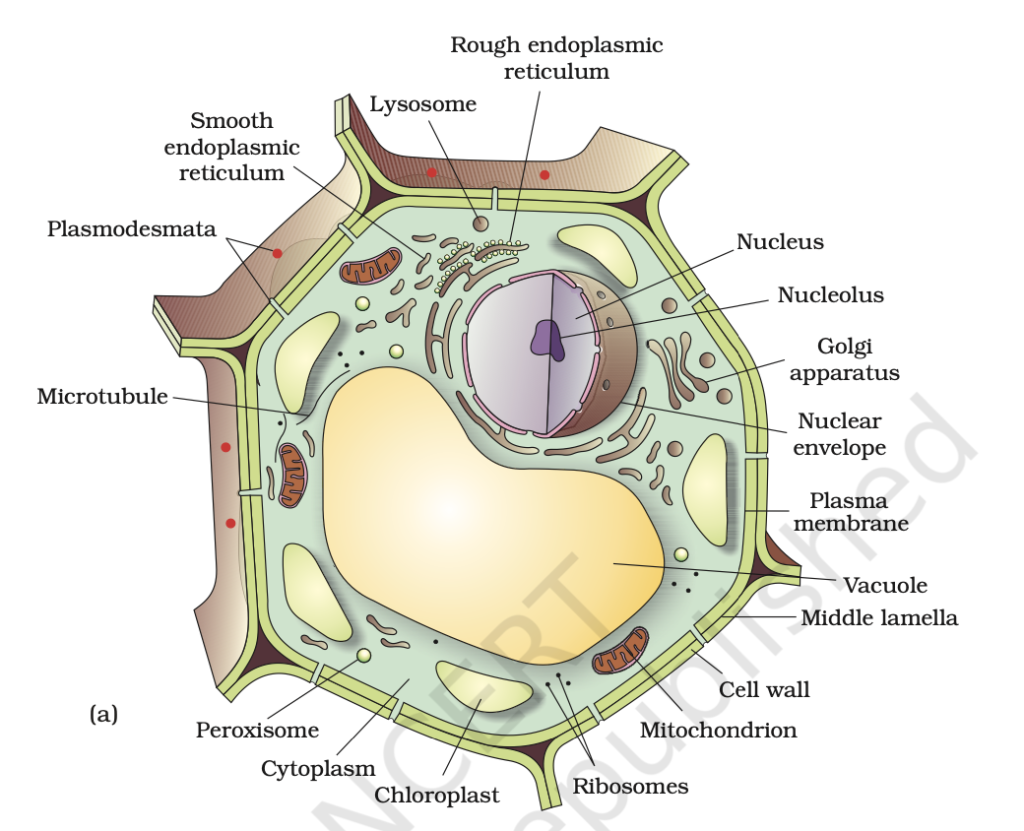
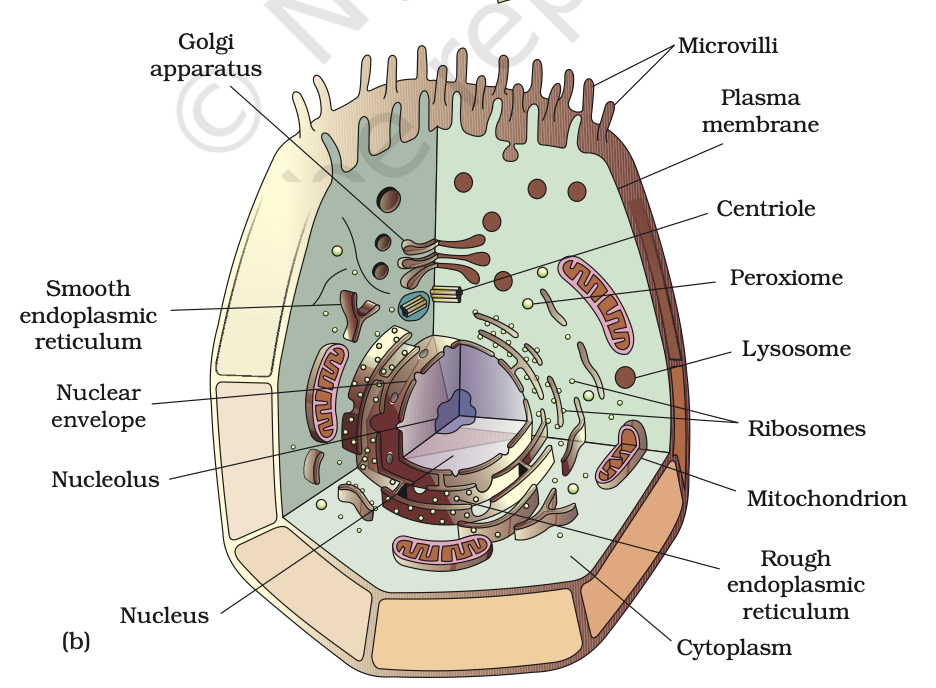
Lysosomes are membrane-bound organelles in the cytoplasm, often called the “suicidal bags” of the cell, because they contain digestive enzymes (hydrolytic enzymes).

Functions:

  1. Intracellular Digestion: Break down cellular waste, damaged organelles (autophagy), and foreign particles (like bacteria via phagocytosis).
  2. Autolysis: Release enzymes that self-destruct damaged or unwanted cells.
  3. Defense Mechanism: Destroy pathogens (bacteria, viruses) engulfed by the cell.
  4. Recycling of Cellular Components: Help recycle useful molecules after breakdown.
  5. Enzyme Storage: Store enzymes safely to prevent unwanted digestion within the cell.

Sol –

Characteristic

Plant Cells

Animal Cells

Cell Wall

Present

Absent

Shape

Generally rectangular or square-shaped

Generally round or irregularly shaped

Vacuole

Large central vacuole

Small or multiple vacuoles

Plastids 

Present (for photosynthesis)

Absent

Energy Storage

In form of Starch (in chloroplasts)

In form of Glycogen (in cytoplasm)

Centrioles

Absent

Present (during cell division)

Nucleus 

Peripheral nucleus

Central nucleus 

Photo

Sol –

Differences Between Mitosis and Meiosis

Aspect

Mitosis

Meiosis

Purpose

Growth, repair, and asexual reproduction

Formation of gametes for sexual reproduction

Number of Divisions

1 division

2 divisions (Meiosis I and Meiosis II)

Number of Daughter Cells

2 daughter cells

4 daughter cells

Chromosome Number

Maintains the same (diploid, 2n → 2n)

Reduces by half (diploid, 2n → haploid, n)

Genetic Variation

Daughter cells are identical to the parent cell

Daughter cells are genetically unique

Crossing Over

Does not occur

Occurs during Prophase I

Type of Cells Produced

Somatic (body) cells

Gametes (sperm or egg cells)

Occurrence

In all body cells

Only in reproductive organs (testes/ovaries)

Role in Evolution

Does not contribute to genetic variation.

Increases genetic diversity through crossing over and independent assortment.

Cytokinesis

Occurs once at the end of telophase, resulting in two cells.

Occurs twice: once after meiosis I and once after meiosis II, resulting in four cells.

Significance 

  • Growth: Allows organisms to grow by producing more cells.
  • Repair: Replaces damaged or dead cells (e.g., in wounds).
  • Asexual Reproduction: In single-celled organisms, mitosis is the basis for reproduction.
  • Maintains Genetic Stability: Produces genetically identical cells, preserving the chromosome number.
  • Gamete Formation: Produces sperm and egg cells for sexual reproduction.
  • Maintains Chromosome Number: Ensures that offspring have the correct chromosome number (haploid gametes combine to form a diploid zygote).
  • Genetic Variation: Introduces diversity through crossing over and independent assortment, which is important for evolution and adaptation.

Leave a Comment

Your email address will not be published. Required fields are marked *

error: Content is protected !!
Scroll to Top
Telegram WhatsApp Chat