

Auditing is the systematic and scientific examination of an entity’s books of accounts and records by an independent and qualified professional, known as an auditor. The primary purpose is to ensure the accurate and reliable presentation of the financial state of affairs and profit/loss in the balance sheet and profit and loss account, providing a true and fair view.
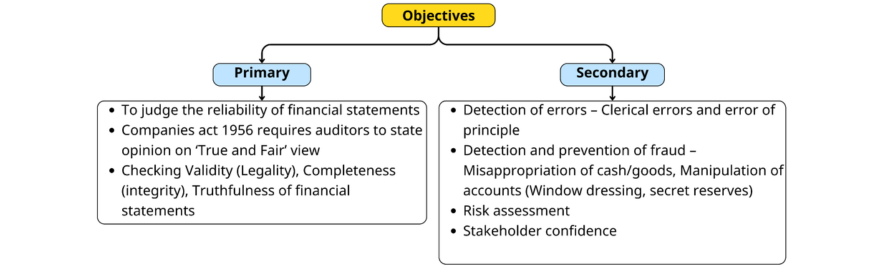
An audit programme consists of a series of verification procedures to be applied to the financial statements and accounts of a given entity for the purpose of obtaining sufficient evidence to enable the auditor to express an informed opinion on financial statements.
- Contents of Audit Programme
- Name of the company.
- Nature of operations of the company.
- Date of commencement of audit.
- Duration of the audit exercise.
- Accounting system adopted by the company.
- Effectiveness of internal control in the company.
- Points of caution based on the auditor’s report of the previous year.
- Schedule of checking of books relating to:
- Cash and petty cash
- Purchases and purchase returns
- Sales and sales returns
- Bills receivable and bills payable
- Journal
- Ledger accounts
- Statutory requirements
Under Section 13, expenditure audits are conducted by the Comptroller and Auditor General of India to ensure that government expenditure is properly authorised, legally incurred, and used efficiently for public purposes. The main types of expenditure audits are as follows:
- Compliance/Regularity Audit: This audit checks whether the expenditure incurred complies with the provisions of the law, statutory requirements, and the Financial Rules and Regulations framed by the competent authority.
- Audit of Sanctions: It verifies that all government expenditures have been properly approved and sanctioned by the competent authority.
- Audit against Provision of Funds: It ensures that expenditure is incurred only for authorised purposes and within the limits of funds approved by the legislature.
- Propriety Audit: This audit goes beyond checking legal correctness. It examines whether the expenditure was necessary, reasonable, and in the public interest. It also questions wasteful, excessive, or extravagant spending even if such expenditure is legally permissible.
- Efficiency-cum-Performance Audit: This audit evaluates whether government programmes and schemes are being implemented economically and efficiently and whether they are achieving the intended objectives. It includes:
- Economy Audit – ensuring minimum cost of resources,
- Efficiency Audit – ensuring optimum utilisation of resources, and
- Effectiveness Audit – ensuring achievement of desired results.
- Efficiency-cum-Performance Audit: This audit evaluates whether government programmes and schemes are being implemented economically and efficiently and whether they are achieving the intended objectives. It includes:



