

Genetic & Lifestyle Diseases are health problems that can be passed down through our genes or develop because of the way we live. In Biology, we learn how our family history, daily habits, food choices, and even stress levels work together to affect our chances of getting these diseases.
Genetic Diseases
Genetic diseases are disorders caused by abnormalities or mutations in an individual’s DNA. These mutations can be inherited from one or both parents or can occur spontaneously. Genetic diseases can affect a single gene (monogenic), multiple genes (multifactorial), or be caused by chromosomal abnormalities.
Types of Genetic Diseases
- Monogenic (Single-Gene) Disorders:
- Caused by mutations in a single gene.
- Autosomal dominant: Only one copy of the mutated gene is needed for the disease to be expressed.
- Autosomal recessive: Two copies of the mutated gene are needed for the disease to be expressed.
- X-linked: Mutation occurs in genes located on the X chromosome.
- Chromosomal Disorders:
- Caused by abnormalities in the number or structure of chromosomes.
- Trisomy: Having three copies of a chromosome instead of the normal two (e.g., Down syndrome, Trisomy 21).
- Monosomy: Missing one chromosome from a pair (e.g., Turner syndrome).
- Mitochondrial Diseases:
- Caused by mutations in mitochondrial DNA (mtDNA).
- These diseases are inherited from the mother, as mitochondria are passed from mother to offspring.
- Example: Leber’s hereditary optic neuropathy, MELAS syndrome.
- Multifactorial Disorders:
- Caused by a combination of genetic mutations and environmental factors (e.g., lifestyle, exposure to toxins).
- Examples: Heart disease, type 2 diabetes, certain cancers.
A) Types of Monogenic Disorders
1. Autosomal Dominant Disorders
- Inheritance: Only one copy of the mutated gene from one parent is sufficient to cause the disease. Affected individuals have a 50% chance of passing the mutation to their offspring.
- Characteristics: Individuals with a dominant genetic disorder are affected by the disease even if they have only one mutated gene (heterozygous).
- Examples:
- Huntington’s Disease: Caused by a mutation in the HTT gene, characterized by progressive motor dysfunction, cognitive decline, and psychiatric symptoms.
- Marfan Syndrome: Caused by mutations in the FBN1 gene affecting connective tissue, leading to skeletal deformities, cardiovascular issues, and vision problems.
- Achondroplasia: A form of dwarfism caused by mutations in the FGFR3 gene that affects bone growth.
- Neurofibromatosis Type 1: Caused by mutations in the NF1 gene, leading to the growth of tumors along nerves, skin changes, and learning disabilities.
2. Autosomal Recessive Disorders
- Inheritance: An individual needs to inherit two copies of the mutated gene (one from each parent) to express the disease. If only one copy is mutated, the individual is a carrier and does not show symptoms.
- Characteristics: Both parents must be carriers of the mutated gene for their child to have a chance of being affected.
- Examples:
- Cystic Fibrosis: Caused by mutations in the CFTR gene, leading to the buildup of thick mucus in the lungs and digestive tract, causing breathing difficulties and infections.
- Sickle Cell Anemia: Caused by a mutation in the HBB gene that affects hemoglobin, leading to sickle-shaped red blood cells, which block blood flow and cause pain episodes.
- Tay-Sachs Disease: Caused by mutations in the HEXA gene, leading to the loss of motor skills, blindness, and death in early childhood.
- Phenylketonuria (PKU): Caused by a deficiency in the enzyme phenylalanine hydroxylase (PAH), leading to a buildup of phenylalanine in the blood, which can cause intellectual disabilities if untreated.
3. X-linked Disorders
- Inheritance: The mutation occurs on the X chromosome. Males are more likely to be affected, as they have only one X chromosome, while females, with two X chromosomes, are typically carriers unless both X chromosomes carry the mutation.
- Characteristics: Males are usually affected more severely because they have only one X chromosome.
- Examples:
- Hemophilia: Caused by mutations in the genes for clotting factors (Factor VIII or IX). It leads to difficulty in blood clotting, resulting in excessive bleeding and bruising.
- Duchenne Muscular Dystrophy (DMD): Caused by mutations in the dystrophin gene, leading to progressive muscle weakness and degeneration.
- Color Blindness: Caused by mutations in the genes responsible for color vision located on the X chromosome. Individuals with color blindness cannot distinguish certain colors, especially red and green.
- Fragile X Syndrome: Caused by a mutation in the FMR1 gene on the X chromosome, leading to intellectual disabilities, anxiety, and social difficulties.
Sickle Cell Anemia
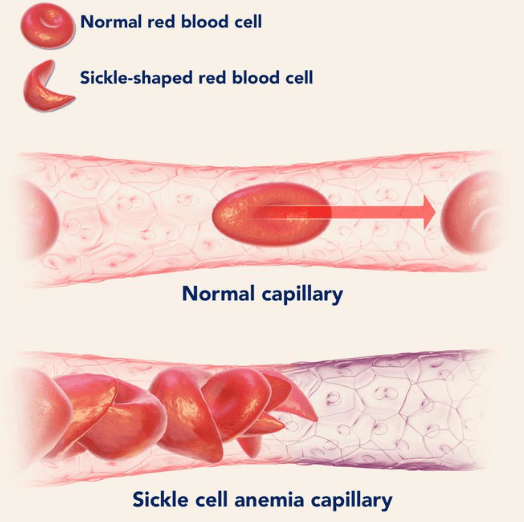
Sickle Cell Anemia is a genetic disorder characterized by the production of abnormal hemoglobin, known as hemoglobin S (HbS), in red blood cells. This causes the red blood cells to change shape, becoming rigid and sickle-shaped, which can lead to blockages in blood vessels, reduced oxygen flow, and various complications.
Causes
- Mutation in HBB Gene on chromosome 11 produces hemoglobin S (HbS), which behaves abnormally after releasing oxygen
Pathophysiology
- Normal vs. Sickle Cells:
- Normal RBCs: Round, flexible, and transport oxygen efficiently.
- Sickle RBCs: Crescent-shaped, rigid, and block blood flow, causing complications.
- Hemoglobin S Polymerization:
- When oxygen levels in the blood decrease, hemoglobin S molecules stick together and form long chains, causing the red blood cells to assume a sickle shape. This results in:
- Impaired oxygen transport
- Shorter RBC lifespan (10–20 days vs. normal 120 days)
- Vessel blockages causing pain and organ damage.
- When oxygen levels in the blood decrease, hemoglobin S molecules stick together and form long chains, causing the red blood cells to assume a sickle shape. This results in:
Symptoms
- Anemia: Fatigue, weakness, and pallor due to low RBC count.
- Pain Episodes (Crisis): Severe pain in chest, joints, or abdomen from blocked blood flow.
- Frequent Infections: Spleen damage lowers immunity.
- Delayed Growth: Slowed physical development in children.
- Vision Problems: Blocked eye blood vessels lead to vision issues.
- Stroke: Blood flow blockages in the brain, especially in children.
- Acute Chest Syndrome: Life-threatening condition causing chest pain, fever, and difficulty breathing.
Color Blindness
Color blindness, or color vision deficiency, is the inability to perceive certain colors correctly, most commonly red, green, or blue. Severity can range from mild to total inability to see colors.
Types of Color Blindness
Red-Green Color Blindness (Most Common):
- Protanopia: Cannot perceive red (missing red cones).
- Deuteranopia: Cannot perceive green (missing green cones).
Blue-Yellow Color Blindness (Less Common):
- Tritanopia: Cannot perceive blue (missing blue cones).
Total Color Blindness (Monochromacy):
- Rare and severe; sees everything in shades of gray due to dysfunction in all cones (red, green, and blue).
Causes of Color Blindness
- Genetic Factors:
- X-linked Recessive Inheritance: Mutation on the X chromosome; more common in males (one X chromosome- XY) than females (Since two X chromosomes- XX).
- Acquired Causes:
- Age-Related: Lens changes over time affect color perception.
- Eye Diseases: Cataracts, macular degeneration, or glaucoma.
- Neurological Factors: Damage to brain regions responsible for visual processing.
B) Chromosomal Disorders
- Chromosomal disorders occur when there is a change in the number or structure of chromosomes, which can affect the development, function, and health of an individual. These disorders can arise from either numerical abnormalities (extra or missing chromosomes) or structural abnormalities (alterations in the structure of chromosomes).
Types of Chromosomal Disorders:
1. Numerical Chromosomal Abnormalities
- Down Syndrome (Trisomy 21):
- Cause: An extra copy of chromosome 21, leading to three copies instead of the usual two.
- Symptoms: Intellectual disability, developmental delay, characteristic facial features (flat face, upward slanting eyes), heart defects, and increased risk of other medical conditions like leukemia.
- Turner Syndrome (Monosomy X):
- Cause: A female is born with only one X chromosome (instead of two).
- Symptoms: Short stature, infertility, webbed neck, heart defects, and normal intelligence.
- Inheritance: Occurs randomly, not inherited.
- Klinefelter Syndrome (XXY Syndrome):
- Cause: Males are born with an extra X chromosome (XXY).
- Symptoms: Reduced fertility, taller than average height, mild developmental delays, and less muscle tone.
- Inheritance: Occurs randomly, not inherited.
- Triple X Syndrome (Trisomy X):
- Cause: Females have an extra X chromosome (XXX).
- Symptoms: Often mild or no symptoms, but may include taller stature, learning difficulties, and early ovarian failure.
- Inheritance: Usually occurs randomly, not inherited.
- Edwards Syndrome (Trisomy 18):
- Cause: An extra chromosome 18.
- Symptoms: Severe developmental and intellectual disabilities, organ malformations, clenched fists, and abnormalities in the skull and face.
- Prognosis: Often fatal in early infancy.
- Patau Syndrome (Trisomy 13):
- Cause: An extra chromosome 13.
- Symptoms: Severe developmental delays, facial abnormalities, heart defects, and brain malformations.
- Prognosis: Often fatal in early infancy.
2. Structural Chromosomal Abnormalities
- Deletion:
- Cause: Part of a chromosome is missing or deleted.
- Example: Cri-du-chat Syndrome, caused by a deletion on chromosome 5. Individuals may have a high-pitched cry, developmental delays, and intellectual disabilities.
- Duplication
- Cause: A portion of the chromosome is duplicated.
- Example: Charcot-Marie-Tooth Disease, caused by a duplication of a part of chromosome 17, leading to progressive nerve damage.
- Inversion:
- Cause: A section of the chromosome is reversed or inverted.
- Example: Pericentric inversion on chromosome 9. This usually does not cause symptoms but can lead to issues during reproduction, including miscarriages or congenital disabilities.
- Translocation:
- Cause: A part of one chromosome is transferred to another chromosome.
- Example: Chronic Myelogenous Leukemia (CML), caused by a translocation between chromosomes 9 and 22, resulting in the Philadelphia chromosome.
- Isochromosome:
- Cause: A chromosome with two identical arms (either two short arms or two long arms).
- Example: Isochromosome Xq in females, which causes Turner syndrome-like features.
Common Chromosomal Disorders and Their Characteristics
| Disorder | Chromosomal Abnormality | Symptoms | Affected Chromosomes |
| Down Syndrome | Trisomy 21 (extra chromosome 21) | Intellectual disability, heart defects, distinctive facial features | Chromosome 21 |
| Turner Syndrome | Monosomy X (missing X chromosome) | Short stature, infertility, webbed neck | X chromosome |
| Klinefelter Syndrome | XXY (extra X chromosome in males) | Reduced fertility, developmental delay, taller stature | X chromosome (extra one in males) |
| Edwards Syndrome | Trisomy 18 (extra chromosome 18) | Severe developmental delays, organ malformations | Chromosome 18 |
| Patau Syndrome | Trisomy 13 (extra chromosome 13) | Severe intellectual and developmental delays, organ malformations | Chromosome 13 |
| Cri-du-chat Syndrome | Deletion on chromosome 5 | High-pitched cry, intellectual disability, developmental delay | Chromosome 5 |
| Charcot-Marie-Tooth Disease | Duplication of chromosome 17 | Progressive nerve damage, muscle weakness | Chromosome 17 |
| Chronic Myelogenous Leukemia (CML) | Translocation between chromosomes 9 and 22 | Leukemia, abnormal blood cell production | Chromosomes 9 and 22 (Philadelphia chromosome) |
| DiGeorge Syndrome | Deletion on chromosome 22 | Heart defects, immune system problems, cleft palate | Chromosome 22 |
C) Mitochondrial Diseases
- Mitochondrial diseases are a group of disorders caused by dysfunctions in the mitochondria, the energy-producing organelles in cells.
- Mitochondria play a critical role in generating the cell’s energy through oxidative phosphorylation.
- These diseases can affect various organs and systems in the body, particularly those that require high energy, such as the brain, muscles, and heart.
Causes of Mitochondrial Diseases
- Mitochondrial DNA Mutations:
- Mitochondria have their own DNA (mtDNA) separate from the nuclear DNA. Mutations in mtDNA can lead to a dysfunction in energy production.
- These diseases are inherited maternally since mitochondria are passed down from mother to child.
- Nuclear DNA Mutations:
- While mitochondria have their own DNA, they depend on proteins encoded by nuclear DNA. Mutations in nuclear DNA can also affect mitochondrial function.
- Inheritance Patterns:
- Maternal Inheritance: Diseases caused by mitochondrial DNA mutations are inherited only through the mother.
- Mendelian Inheritance: Diseases caused by nuclear DNA mutations follow traditional inheritance patterns, such as autosomal dominant, autosomal recessive, or X-linked.
Common Mitochondrial Diseases
- Leber’s Hereditary Optic Neuropathy (LHON):
- Cause: Mutation in mitochondrial DNA affecting the optic nerve.
- Symptoms: Sudden vision loss, often in young males.
- Inheritance: Maternal inheritance.
- MELAS (Mitochondrial Encephalomyopathy, Lactic Acidosis, and Stroke-like Episodes):
- Cause: Mutation in mitochondrial DNA, affecting energy production.
- Symptoms: Seizures, strokes, muscle weakness, lactic acidosis, hearing loss.
- Inheritance: Maternal inheritance.
- MERFF (Myoclonic Epilepsy with Ragged-Red Fibers):
- Cause: Mutation in mitochondrial DNA affecting the nervous system and muscles.
- Symptoms: Myoclonus (muscle spasms), seizures, ataxia, hearing loss.
- Inheritance: Maternal inheritance.
- Kearns-Sayre Syndrome:
- Cause: Deletions in mitochondrial DNA affecting multiple organs.
- Symptoms: Progressive weakness of eye muscles, heart block, ataxia, hearing loss.
- Inheritance: Maternal inheritance.
- NARP (Neuropathy, Ataxia, and Retinitis Pigmentosa):
- Cause: Mutation in mitochondrial DNA.
- Symptoms: Peripheral neuropathy, ataxia, vision loss, hearing loss.
- Inheritance: Maternal inheritance.
- Pearson Syndrome:
- Cause: Deletion in mitochondrial DNA affecting bone marrow and other organs.
- Symptoms: Bone marrow failure, pancreatic insufficiency, liver issues.
- Inheritance: Maternal inheritance.
- Chronic Progressive External Ophthalmoplegia (CPEO):
- Cause: Mutation in mitochondrial DNA.
- Symptoms: Progressive eye muscle weakness, ptosis (drooping eyelids), double vision.
- Inheritance: Maternal inheritance.
- Mitochondrial Myopathy:
- Cause: Mutation in mitochondrial or nuclear DNA.
- Symptoms: Muscle weakness, fatigue, cramping, exercise intolerance.
- Inheritance: May follow maternal inheritance or other patterns, depending on the cause.
D) Multifactorial Disorders
- Multifactorial disorders, also known as complex genetic disorders, are caused by a combination of genetic factors (inherited variations) and environmental influences. Unlike single-gene disorders, which are caused by mutations in a single gene, multifactorial disorders involve multiple genes and the interaction between these genes and environmental factors.
Causes of Multifactorial Disorders
1. Multiple Gene Involvement
- Polygenic Contribution: Several genes contribute to the disorder, with each gene playing a minor or significant role.
2. Environmental Factors
- Key Triggers: Diet, lifestyle (e.g., smoking, lack of exercise), infections, toxins, and pollutants influence the onset and progression.
3. Gene-Environment Interaction
- Combined Effect: A genetic predisposition may only lead to the disorder if triggered by external environmental factors (e.g., poor diet or inactivity triggering heart disease).
4. Inheritance Patterns
- Complex Inheritance: Does not follow Mendelian genetics.
- Family Risk: Higher risk in first-degree relatives, especially if multiple family members are affected or the condition is severe.
Common Multifactorial Disorders
- Cardiovascular Diseases (CVD):
- Examples: Coronary artery disease, heart attacks, hypertension, stroke.
- Genetic Contribution: Variants in genes related to lipid metabolism, blood pressure regulation, and clotting factors.
- Environmental Factors: Diet, smoking, physical activity, stress.
- Type 2 Diabetes:
- Genetic Contribution: Variants in genes related to insulin production, glucose metabolism, and fat storage.
- Environmental Factors: Obesity, sedentary lifestyle, poor diet, stress.
- Cancer:
- Examples: Breast cancer, prostate cancer, colorectal cancer.
- Genetic Contribution: Mutations in tumor suppressor genes and oncogenes.
- Environmental Factors: Exposure to carcinogens, radiation, poor diet, and lack of physical activity.
- Obesity:
- Genetic Contribution: Variants in genes involved in appetite regulation, fat storage, and metabolism.
- Environmental Factors: Diet, physical activity, cultural influences, and sleep patterns.
- Alzheimer’s Disease:
- Genetic Contribution: Variants in genes related to beta-amyloid processing (e.g., APOE gene).
- Environmental Factors: Age, head trauma, cardiovascular health, diet, and mental activity.
- Cleft Lip and Palate:
- Genetic Contribution: Several genes associated with facial development.
- Environmental Factors: Maternal smoking, alcohol use, nutritional deficiencies, infections during pregnancy.
- Hypertension (High Blood Pressure):
- Genetic Contribution: Variants in genes regulating blood pressure, salt retention, and kidney function.
- Environmental Factors: Obesity, stress, diet high in sodium, lack of exercise.
- Asthma:
- Genetic Contribution: Genes related to immune response and airway inflammation.
- Environmental Factors: Allergens, air pollution, respiratory infections, tobacco smoke.
- Osteoarthritis:
- Genetic Contribution: Genes involved in cartilage formation and inflammation.
- Environmental Factors: Obesity, joint injuries, age, repetitive joint stress.
- Parkinson’s Disease:
- Genetic Contribution: Mutations in genes involved in dopamine production and regulation.
- Environmental Factors: Pesticide exposure, head trauma, age.
Lifestyle Diseases
Lifestyle diseases are health conditions that are primarily caused by an unhealthy lifestyle or behavior. These diseases often result from a combination of poor diet, lack of physical activity, smoking, excessive alcohol consumption, and chronic stress. They are preventable, and their risk can be reduced through changes in daily habits and lifestyle choices.
Causes of Lifestyle Diseases
- Poor Diet → High processed foods, unhealthy fats, sugar, and salt → Obesity, cardiovascular diseases, diabetes.
- Lack of Physical Activity → Sedentary lifestyle → Obesity, high blood pressure, cardiovascular diseases, diabetes, poor mental health.
- Tobacco Use → Smoking → Lung cancer, heart disease, respiratory issues.
- Excessive Alcohol Consumption → Chronic use → Liver disease, high blood pressure, cancer, mental health problems.
- Chronic Stress → Long-term stress → Heart disease, digestive issues, mental health disorders, unhealthy behaviors (overeating, smoking).
- Poor Sleep Hygiene → Irregular or insufficien sleep → Obesity, diabetes, heart disease, mental health issues.
Common Lifestyle Diseases
- Cardiovascular Diseases:
- Examples: Coronary artery disease, heart attack, stroke, high blood pressure (hypertension).
- Risk Factors: Poor d
- iet (high in fats and salts), smoking, lack of exercise, and excessive alcohol consumption.
- Type 2 Diabetes:
- Risk Factors: Obesity, poor diet, lack of exercise, smoking, and stress.
- Development: Insulin resistance or reduced insulin production leading to high blood sugar.
- Obesity:
- Risk Factors: Poor diet, lack of physical activity, and genetic predisposition.
- Consequences: Increased risk of heart disease, diabetes, joint problems, and sleep apnea.
- Cancer:
- Examples: Lung cancer, breast cancer, colorectal cancer, liver cancer.
- Risk Factors: Smoking, poor diet, lack of exercise, excessive alcohol consumption, and exposure to environmental toxins.
- Chronic Respiratory Diseases:
- Examples: Chronic obstructive pulmonary disease (COPD), emphysema, chronic bronchitis.
- Risk Factors: Smoking, air pollution, and exposure to industrial chemicals.
- Mental Health Disorders:
- Examples: Depression, anxiety, stress-related disorders.
- Risk Factors: Chronic stress, lack of sleep, poor diet, and sedentary lifestyle.
- Osteoarthritis:
- Risk Factors: Obesity, lack of physical activity, repetitive joint stress, and aging.
- Consequences: Joint pain, reduced mobility, and disability.
- Non-Alcoholic Fatty Liver Disease (NAFLD):
- Risk Factors: Obesity, diabetes, poor diet, and sedentary lifestyle.
- Consequences: Liver damage, cirrhosis, and potential liver failure.
- Gastrointestinal Disorders:
- Examples: Irritable bowel syndrome (IBS), acid reflux, and peptic ulcers.
- Risk Factors: Stress, poor diet, alcohol consumption, and lack of exercise.
- Hypertension (High Blood Pressure):
- Risk Factors: High salt intake, smoking, alcohol use, and physical inactivity.
- Consequences: Increased risk of heart disease, stroke, and kidney failure.
Prevention and Management of Lifestyle Diseases
- Adopt a Healthy Diet
→ Emphasize fruits, vegetables, whole grains, lean proteins, and healthy fats.
→ Limit processed foods, sugary drinks, and excessive salt. - Regular Physical Activity → Aim for 30 minutes of moderate exercise most days..
- Quit Smoking → Cessation reduces risks of heart disease, lung cancer, and respiratory issues.
- Limit Alcohol Consumption.
- Stress Management → Practice relaxation techniques (meditation, yoga, deep breathing).
- Get Sufficient Sleep → Aim for 7-8 hours of sleep per night. → Create a relaxing bedtime routine and reduce screen exposure.
- Routine Health Check-ups → Regular screenings for blood pressure, cholesterol, and glucose levels.
Vitamins: Essential Nutrients for Health
Vitamins are organic compounds required in small quantities to support various physiological functions and maintain overall health. They are essential because the body cannot synthesize most of them in sufficient amounts, so they must be obtained from the diet.
Classification of Vitamin based on their solubility:
- Fat-Soluble Vitamins:
- Stored in the liver and fatty tissues.
- Over Consumption may lead to toxicity.
- Examples: Vitamins A, D, E, K.
- Water-Soluble Vitamins:
- Dissolve in water and are excreted in urine.
- Need regular replenishment as the body doesn’t store them.
- Examples: Vitamin C and B-complex vitamins (B1, B2, B3, B5, B6, B7, B9, B12)
Roles of Different Vitamins
| Vitamin | Sources | Functions | Deficiency Disorders |
| Vitamin A | Carrots, sweet potatoes, liver | Vision, immune function, skin health | Night blindness, xerophthalmia |
| Vitamin D | Sunlight, fish oil, egg yolks | Calcium absorption, bone health, immune support | Rickets (children), osteomalacia (adults) |
| Vitamin E | Nuts, seeds, spinach | Antioxidant, protects cells from oxidative damage | Neuromuscular issues, immune dysfunction |
| Vitamin K | Green leafy vegetables, broccoli | Blood clotting, bone metabolism | Excessive bleeding |
| Vitamin C | Citrus fruits, bell peppers | Collagen synthesis, wound healing, antioxidant, immune support | Scurvy (bleeding gums, fatigue, poor healing) |
| Vitamin B1 | Whole grains, pork, legumes | Energy metabolism, nerve function | Beriberi, Wernicke-Korsakoff syndrome |
| Vitamin B2 | Milk, eggs, green vegetables | Energy production, skin and eye health | Cracked lips, sore throat |
| Vitamin B3 | Meat, fish, peanuts | DNA repair, energy metabolism | Pellagra (diarrhea, dermatitis, dementia) |
| Vitamin B5 | Whole grains, avocados | Fatty acid synthesis, energy metabolism | Rare; fatigue, irritability |
| Vitamin B6 | Bananas, poultry, fish | Neurotransmitter synthesis, hemoglobin production | Anemia, irritability, depression |
| Vitamin B7 | Eggs, nuts, seeds | Fatty acid synthesis, metabolism of carbohydrates and proteins | Hair loss, brittle nails |
| Vitamin B9 | Leafy greens, beans, fortified cereals | DNA synthesis, red blood cell production, fetal development | Megaloblastic anemia, birth defects |
| Vitamin B12 | Meat, fish, dairy | Nerve function, red blood cell formation | Pernicious anemia, nerve damage |
FAQ (Previous year questions)
- A chromosomal abnormality, also known as a chromosomal aberration, is a disorder involving structural or numerical changes in one or more chromosomes, which can affect autosomes, sex chromosomes, or both.
- Normally, humans have 46 chromosomes (23 pairs), but chromosomal disorders can involve extra, missing, or structurally altered chromosomes.
- Chromosome abnormalities typically result from errors in cell division (mitosis or meiosis), which can occur during the prenatal, postnatal, or preimplantation stages.
Examples :
Patau Syndrome :
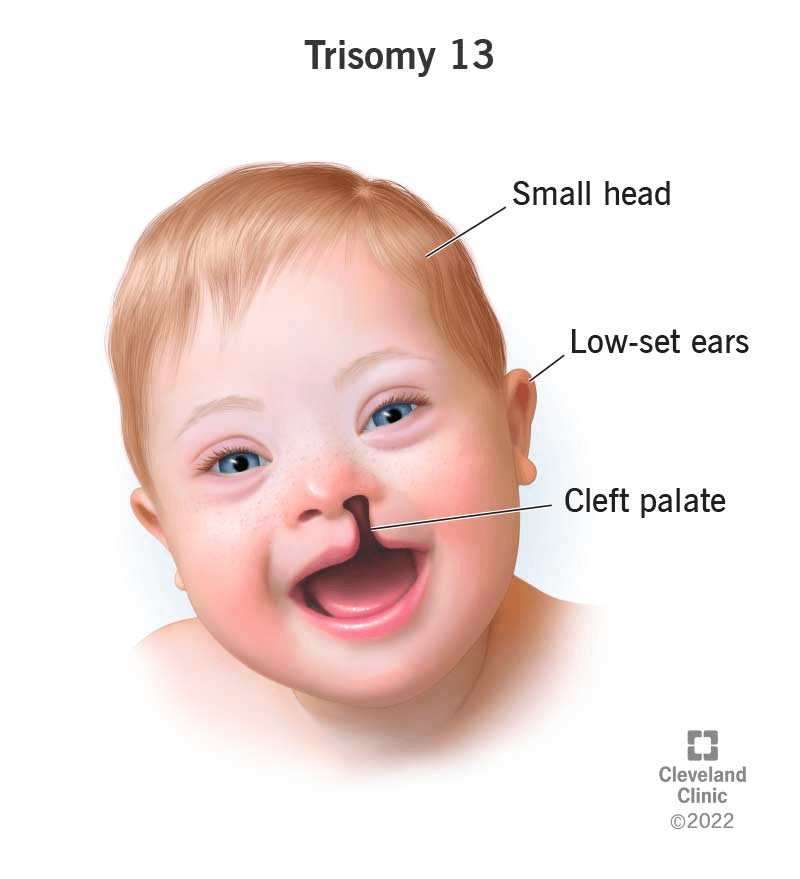
- Cause: Trisomy of 13th chromosome (Extra copy of 13th chromosome) ; Karyotype: 47, XX or XY
- Clinical Features:
- Small head
- Incomplete separation of the brain hemispheres
- Abnormally small eyes or absent/merged eyes
- Cleft lip and/or palate
- Extra fingers or toes
- Heart defects present at birth
- Undescended testes
- Abnormalities of the brain or spinal cord
- Low muscle tone at birth
- Severe intellectual disability
Klinefelter Syndrome :
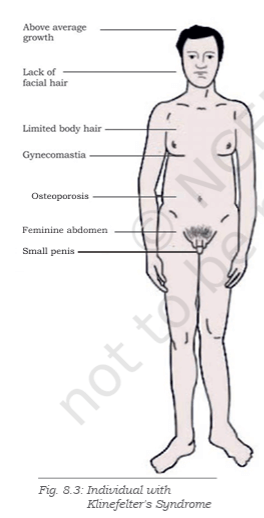
- Cause: An extra X chromosome in males ; Karyotype: 47, XXY instead of 46, XY
- Clinical Features:
- Tall stature with disproportionately long arms and legs
- Low upper-to-lower body segment ratio
- Enlarged breast tissue (gynecomastia)
- Sparse facial and body hair with a female-pattern distribution
- Delayed or incomplete puberty
- Small testes (testicular atrophy) and infertility
- Developmental delays, particularly in language and learning
- Increased risk of developing breast cancer
A chromosomal abnormality, also known as a chromosomal aberration, is a disorder involving structural or numerical changes in one or more chromosomes, which can affect autosomes, sex chromosomes, or both.
Normally, humans have 46 chromosomes (23 pairs), but chromosomal disorders can involve extra, missing, or structurally altered chromosomes.
Chromosome abnormalities typically result from errors in cell division (mitosis or meiosis), which can occur during the prenatal, postnatal, or preimplantation stages.
Examples :
Patau Syndrome :
Cause: Trisomy of 13th chromosome (Extra copy of 13th chromosome) ; Karyotype: 47, XX or XY
Clinical Features: Small head
Incomplete separation of the brain hemispheres
Abnormally small eyes or absent/merged eyes
Cleft lip and/or palate
Extra fingers or toes
Heart defects present at birth
Undescended testes
Abnormalities of the brain or spinal cord
Low muscle tone at birth
Severe intellectual disability
Klinefelter Syndrome :
Cause: An extra X chromosome in males ; Karyotype: 47, XXY instead of 46, XY
Clinical Features: Tall stature with disproportionately long arms and legs
Low upper-to-lower body segment ratio
Enlarged breast tissue (gynecomastia)
Sparse facial and body hair with a female-pattern distribution
Delayed or incomplete puberty
Small testes (testicular atrophy) and infertility
Developmental delays, particularly in language and learning
Increased risk of developing breast cancer



