The history of the Gurjara-Pratihara dynasty is a significant part of the medieval power structures in Rajasthan. The history of Rajasthan highlights the contributions of this dynasty and their political, social, and cultural impacts. Through their military and administrative capabilities, the Gurjara-Pratiharas established their authority over Rajasthan and Northern India.
Gurjara-Pratihara Dynasty
The Gurjara-Pratiharas were one of the most powerful dynasties of North India from the 6th to the 12th centuries.
They successfully repelled Arab-Turkic invasions from the northwest for almost two centuries. For this reason, they are called the “Shield of India.”
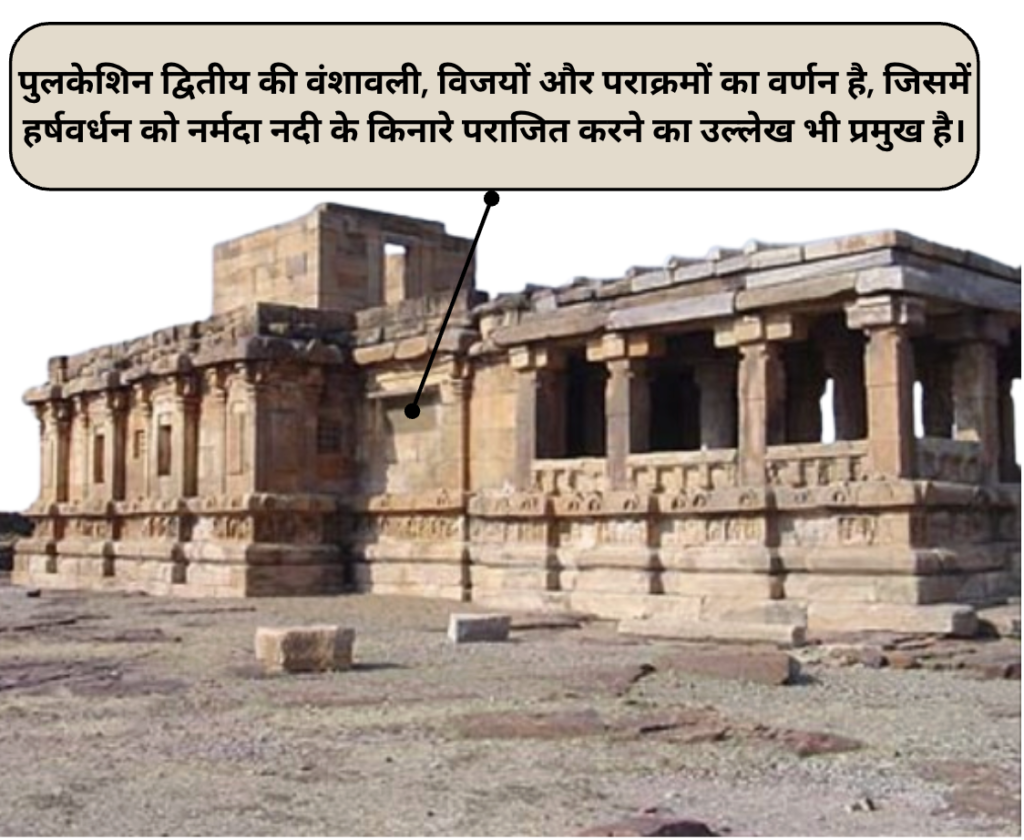
First clear epigraphic mention – in the Aihole inscription composed by Ravikirti, the Jain court poet of the Chalukya king Pulakeshin II.
Main region – Gurjaratra (the region bordering Rajasthan and Gujarat), later Avanti (Ujjain) and Kannauj.
Meaning – “Pratihara” = doorkeeper; initially served as feudatories/doorkeepers, later became independent rulers.
Origin and Place of Residence:
The Pratiharas are referred to as Gurjaras in the Nilkund, Radhanpur, Deoli, and Karadah inscriptions.
They are included among the ‘Pancha Dravidas’ in the Skanda Purana.
Arab travelers of the early medieval period called them Jurz or Al-Gurjar, while the Chinese traveler Xuanzang called them Ku-che-lo (Gurjara).
Gwalior Prashasti (Mihira Bhoja) – Nagabhata is called a descendant of Rama’s Pratihara, i.e., Lakshmana.
Scholars’ opinion regarding the origin
Opinion
Scholar
Iranian origin
Kennedy
Descendants of the Shaka and Yuezhi tribes
Alexander Cunningham
Descendants of the Huns
Smith, Bühler, Hoernle
Foreign Gurjara origin
Bhandarkar
Indian origin
Dr. Gopinath Sharma, Dasharatha Sharma, K. M. Munshi
Jodhpur and Ghatiyala inscriptions –
Their original place of residence is considered to be Gurjaratra (Western Rajasthan).
H.C. Ray suggested Mandore (Jodhpur) as their original place.
Sanjan copper plates of Amoghavarsha (Rashtrakuta) – Pratiharas (doorkeepers) of Ujjain.
Most scholars consider their original place of residence to be Avanti (Ujjain).
Branches of the Pratiharas –
Nainsi described 26 branches
Branch
Founder
Mandore (oldest)
Harishchandra
Jalor / Bhinmal
Nagabhata I / Nahad
Rajorgarh
Manthanadeva
Kannauj
Nagabhata II
Ujjain
Nagabhata I
Merta
Nagabhata I
Bharuch
Dadda / Daddha
Pratiharas of Mandore
Pratiharas of Mandore – the oldest branch
Sources of Information –
Jodhpur Inscription
Two inscriptions of Ghatiyaala (Kakka) – 836 AD
Founder – Harishchandra (Rohilasiddha)
According to the Ghatiyaala inscription, he had two wives.
The children born to the Brahmin queen were called Brahmin Pratiharas.
The children born to the Kshatriya queen Bhadra – Bhogabhatta, Kaddala, Rajjila, Daha – all four were called Kshatriya Pratiharas.
Harishchandra and his four sons together conquered Mandore (Mandavyapura) and made it their capital.
Rajjila
The genealogy of the Pratiharas of Mandore begins with Rajjila.
Rajjila’s grandson Nagabhata was the first powerful ruler of this dynasty.
Nagabhata shifted his capital from Mandore to Merta.
Nagabhata’s son Tata remained in Mandore as an ascetic.
Shiluka (10th generation ruler)
Shiluka had two wives – Queen Padmini and Queen Durlabha Devi.
A son, Bauka, was born to Queen Padmini.
A son, Kakkuka, was born to Queen Durlabha Devi.
Bauka
Bauka commissioned a detailed description of his lineage in the Jodhpur inscription of 837 CE.
Kakkuka
After Bauka, his brother Kakkuka became the ruler.
Kakkuka had the Ghantiyala inscription (861 CE) engraved.
Kakkuka also erected victory pillars in Ghantiyala and Mandore.
After Kakkuka, no reliable information is available regarding the Mandore-Pratiharas.
Sahajpal Chauhan’s Mandore Inscription – 1145 CE
This inscription provides information that by the mid-12th century, the Chauhan rulers had established their dominance over Mandore.
Despite this, the Pratiharas of the Inda branch retained control over Mandore.
1395 CE : The Pratiharas of the Inda branch were troubled by the continuous attacks of Hammir Parihar.
The Pratiharas gave the fort of Mandore as a dowry to Chunda.(son of Rao Viram Rathore).
After this, the Rathores established their supremacy over Mandore.
Jalore–Ujjain–Kannauj Pratiharas and Empire Expansion
Jalore Fort (Suvarnagiri) –
The construction of Jalore Fort is originally believed to have taken place in the 8th century during the time of the Gurjara-Pratihara ruler Nagabhata-I.
The ancient name of this fort was “Suvarnagiri”.
This fort is situated on a high rocky hill of the Aravalli mountain range.
Strategically, the fort was a major stronghold controlling the Marwar-Gujarat-Malwa route.
Popular names (nicknames) of Jalore Fort – Suvarnagiri, Songarh, Jalalabad (during the Muslim period), Kanchanagiri (due to the golden rocks)
Major attractions of the fort –
Ashapura Mata Temple – This is the oldest and most important Shakti Peeth of Jalore Fort.
Mallik Shah’s Dargah – A monument from the Muslim period.
Topkhana Mosque – It is believed to have been a Sanskrit school built by Bhoj Parmar, which was later converted into a mosque.
Mansingh’s Palace – Residence of the Rajput rulers.
Rani’s Palace – Residence of the royal family women.
The fort also houses ancient water harvesting tanks, ramparts, and bastions.
Gurjara-Pratiharas of Jalore, Ujjain and Kannauj
These three were closely related to the Pratiharas of Mandore.
According to Dr. Ojha –
Bhinmal was seized from the Chavda Rajputs in 739 AD.
After this, Abu, Jalore and Ujjain were conquered.
Ujjain was made the capital.
Later, Kannauj was conquered and also made the capital.
Nagabhata – I (730–760 AD)
He was the founder of the Pratihara dynasty of Jalore, Ujjain and Kannauj.
His court was called “Nagavaloka’s court”.
His feudatories included Guhil, Chauhan,Parmar, Rathore, Chandela, Kalachuri, Chalukya, etc.
According to the Arab writer Al-Baladhuri, he defeated the Sindh governor Junaid and drove the Arabs out of Sindh. (This is also confirmed by the Nausari copper plate)
His epithets were – Nagavaloka, Narayana and Destroyer of Mlecchas (foreigners/barbarians).
In the Gwalior inscription (Bhoja), he is called “Narayana, the destroyer of Mlecchas”.
The Rashtrakuta ruler Dantidurga performed the Hiranyagarbha sacrifice in Ujjain appointed Nagabhata – I as the Pratihara (gatekeeper) there.
According to Dr. Dasharatha Sharma, he constructed the Jalore fort, Suvarnagiri, Songarh, Jabalipur, Jalalabad and Kanchanagiri forts.
“Saka” – 1311 AD
During the invasion of Alauddin Khilji, Kanhaḍadeva and Jaitalade were martyred.
Kakkuka (Kakustha) – 760–783 AD
Devraj also ruled.
He was the nephew of Nagabhata – I.
Devraj
He was the younger brother of Kakustha.
Vatsaraja (783–795 CE)
He was a follower of Shaivism.
His titles were Samrat and Ranahastin.
His court scholars were Udyotanasuri (Kuvalayamala) and Jinasena (Harivamsa Purana).
He constructed the Mahavira Swami (Jain) temple in Osian.(The oldest Jain temple in Western India)
The tripartite struggle for Kannauj began during his reign.
The three powers involved in this conflict were the Gurjara-Pratiharas, the Palas, and the Rashtrakutas.
Vatsaraja defeated the Pala ruler Dharmapala in the Battle of Doab.
After being defeated by the Rashtrakuta ruler Dhruva, he had to return to Jabalipur.
Ultimately, the final victory in this conflict went to Nagabhata II.
Nagabhata II (795–833 CE)
He was the first Pratihara ruler who made Kannauj his capital.
In the Buchkala inscription (815 CE), he assumed the title of Paramabhattaraka Maharajadhiraja Parameshvara.
His feudatory Guvaka I defeated the Sindh governor Begwaris.
He constructed the ghats of Pushkar.
In 833 CE, he took Jal Samadhi (ritualistic drowning) in the Ganges River.
Ramabhadra (833–836 CE)
His reign is considered the period of decline of the Pratihara power.
Mihir Bhoja / Bhoja I (836–885 CE)
He was the most powerful ruler of the Pratihara dynasty.
Father – Ramabhadra, Mother – Appa Devi.
His titles were – Paramabhattarak Maharajadhiraja Parameshvara, Adivaraha (Gwalior inscription) and Prabhasa (Daulatpur inscription).
The Arab traveler Sulaiman visited India during his reign.
Sulaiman called Bhoja an “enemy of Islam” and praised his empire.
According to the Skanda Purana, Bhoja abdicated the throne and handed it over to his son Mahendra.
Feudatory kings of Mihir Bhoja / Bhoja-I (836–885 AD):
Bauka – Mandor (Jodhpur region) Jodhpur inscription of 837 AD
Harshraj – Guhila dynasty (Mewar region) (Mentioned in the Chaksu inscription (813 AD).)
Kalachuri – Gunambodhi Deva
Kalinjar ruler – Jayshakti Chandel
Mahendrapal – I (885–910 AD)
Mahendrapal-I’s guru and court scholar was Rajasekhara.
Rajasekhara’s major works – Karpuramanjari, Kavyamimamsa, Balabharata, Balaramayana, Viddhasalabhanjika, Haravilasa,Prachanda Pandava and Bhuvanakosha.
Titles bestowed by Rajasekhara – Raghukulachudamani, Nirbhayaraja, Nirbhayanarendra.
Other royal titles – Paramabhattaraka, Paramabhagavata, Maharajadhiraja,Parameshwara.
Bhoja – II (910–913 AD)
A war of succession began during Bhoja-II’s reign.
According to the Bilhari inscription, Kokkaladeva-I (Chedi feudatory) helped Bhoja-II ascend the throne of Kannauj.
Mahipal – I (913–943 AD)
According to the Khajuraho inscription, Kshitipaladeva (Mahipal-I) defeated his brother Bhoja-II.
Mahipal-I’s royal guru and court scholar was Rajasekhara.
Titles bestowed by Rajasekhara –
Maharajadhiraja of Aryavarta and Raghukulamukutmani.
The Rashtrakuta king Indra-III invaded Malwa, captured Ujjain, crossed the Yamuna River, and destroyed the capital city of Mahodaya (Kannauj).
The Guhila feudatory Bhatta defeated the Rashtrakuta ruler Govinda-IV. (Chatsu inscription, 813 AD)
The Arab traveler Al-Masudi confirmed the Pratihara-Rashtrakuta conflict.
According to Al-Masudi, there was deep enmity between Baur (Mahipal-I) and Ballhara (Rashtrakuta) .
Al-Masudi visited India in 915 AD.
Successors of Mahipala-I
Mahendrapala – II (945–948 AD)
Devapala (948–949 AD)
Vinayakapala (953–954 AD)
Mahipala – II (955–960 AD)
Vijayapala (960–990 AD)
Rajyapala (990–1019 AD)
During his reign, Mahmud of Ghazni attacked Kannauj twice in 1018–1019 AD.
Trilochan Pala (1019–1027 AD)
Yashpala (1027–1093 AD)
In 1093 AD, his feudatory, the Gahadavala king Chandradeva, seized Kannauj from the Pratiharas.
After this event, a new independent”Gahadavala dynasty” was established in Kannauj.