

The Chauhan dynasty is a prominent and glorious chapter in Rajasthan history, significantly influencing the politics and culture of medieval India. The valor, administrative capabilities, and cultural contributions of the Chauhan rulers are still considered inspirational in the context of Rajasthan’s history.
Origin of the Chauhan Dynasty
The Chauhan dynasty was one of the prominent dynasties of Rajasthan, whose initial territory is considered to be the area around Jangaldesh and Shakambhari (Sambhar). Their origin is believed to be in the region called Sapadalaksha, and their initial capital was Ahichhatrapur (Nagaur).
Surya vanshi Dynasty Origin Theory –
- Some ancient texts describe the Chauhan dynasty as descendants of the Suryavanshi Kshatriyas .
- Hammira Mahakavya — Nayanchandra Suri
- Hammira Raso — Jodhraj
- Prithviraj Vijay — Jayanaka
- Supporting Scholars: –
- Pandit Gaurishankar Hirachand Ojha
Chandra vanshi Dynasty Origin Theory –
- Some inscriptions relate the Chauhans to the Chandravanshi .
- Hansi Inscription (Haryana)
- Achaleshwar (Abu) Inscription
Brahmin Origin Theory –
- Some historical records state that the Chauhans originated from a Brahmin gotra (clan), who later became Kshatriyas.
- Bijolia Inscription — “Vipra Shri Vatsa Gotra”
- Supporting Scholars: –
- Dr. Dasharatha Sharma
- Kavi Jan (Kayamkhani Rasau)
Chauhans of Sambhar/Ajmer
Vasudeva Chauhan (circa 551 AD) –
- Considered the initial and true founder of the Chauhan dynasty.
- Established the kingdom in Nagaur (Ahichchhatrapur) in 551 AD.
- Established the capital in Sambhar.
- Achieved victory in a long struggle against foreign invaders.
- The people honored Vasudeva, considering him an incarnation of Vishnu.
- Shakambhari Devi was considered the family deity.
- Constructed the salt lake in Sambhar.
- The resurgence and expansion of the dynasty is considered to have begun with Vasudeva.
- Bijolia Inscription (1170 AD, Engraver: Lolak)
- Vasudeva is called the first Rajput ruler of Rajasthan.
- Mention of the construction of Sambhar Lake.
- Mention of the construction of the Shakambhari Devi temple.
Samantaraj (684–709 AD) —
- After Vasudeva, the Pushyabhuti dynasty (rulers of Thanesar and Kannauj) rose to prominence, which is why there is less mention of the Chauhans between 551–684 AD.
- Approximately 125 years after Vasudeva, Samantaraj assumed power and strengthened the Chauhan dynasty once again.
- Colonel Tod referred to Samantaraj as “Manikya Rai”.
- Samantaraj’s elder brother, Dularaj, attained martyrdom in a battle against Arab invaders.
- In 684 AD, Samantaraj re-established his control over Sambhar.
- Samantaraj expanded his kingdom, due to which many feudatories accepted his suzerainty.
- This fact is confirmed by the Bijolia inscription and Prithviraj Vijay.
Naradeva or Purnatalla (709 AD) –
- The Bijolia inscription mentions this ruler’s name as “Nripa”.
- The Prithviraj Vijay text does not mention this ruler’s name.
Ajayaraj I / Ajayapal Chakri (approximately 721–734 AD) —
- Other name: Ajayapal Chakri
- He attained the title of Chakravarti (emperor) after winning several battles.
- He is credited with the construction of Ajmer and the Ajmer fort (Taragarh).
- According to Akhbar-ul-Akhbar, this was the first fort built on a mountain in India.
- The Ajayaraj mentioned in Prithviraj Vijay (12th century) is different; however, inscriptions of the Kshatriyas and Jain texts prove that the original settlement is related to Ajayaraj I.
- Shri Harvilas Sharda: Based on Kshatriya inscriptions and texts, the credit for the settlement of Ajmer goes to Ajayaraj I.
- Even today, his memorial and place of worship exist under the name Ajaybamba.
Chandra Raj – I and Gopendra Raj – Sons of Vigraharaj I
- According to Prabandha Kosha, Gopendra Raj defeated Beg Varish.
- Arab expansion halted → Culturally and militarily significant
- Pratihara-Chahamana alliance
Durlabharaja I (784–809 CE) –
- Son of Chandraraja and successor of Gopendra Raja
- Title: Gauda Rasasvada (Prithviraj Vijaya)
- Conquered up to Gangasagar, bathed his sword in the waters of Gangasagar.
- Beginning of Chahamana influence in the Bengal region
- During the reign of Pratihara Vatsaraja, Durlabharaja I was a feudatory of the Pratiharas.
Guvaka I / Govindaraja (809–836 CE) —
- Other name : Govindaraja.
- Mentioned in the Harsha Temple inscription.
- Title: The title of “Prasiddhavira” was bestowed by Pratihara Nagabhata II.
- According to C.V. Vaidya, he was an independent emperor.
Guvaka II (863–890 CE) —
- Guvaka II was the son of Chandraraja, who organized a swayamvara (bride’s choice ceremony), invited 12 feudatories, and married his sister Kalavati to Emperor Bhoja I of Kannauj.
Chandraraja II (836–863 CE) —
- Other name: Shashinripa.
- Lineage: Son of Guvaka II.
- Mention: Called a brave warrior in Prithviraj Vijay.
- Military achievement: Defeated and killed the Tanwar king Rudra (Rudradatta/Rudradeva) of Delhi in battle (according to the Harsha inscription).
- Religious work: Queen Rudrani (Atmaprabha) established 1000 Shiva lingams in Pushkar.
Vakpatiraja I –
- Other name – Vakpati, son of Queen Indrani.
- The first ruler of the Chauhan dynasty to assume the title of Maharaja.
- Victorious in 188 battles (Prithviraj Vijay).
- Defeated and captured the Pratihara feudatory Tantrapala.
- Annexed Mandalgarh and Bijolia to his kingdom.
- Constructed a Shiva temple in Pushkar.
Singharaja –
- Brother of Lakshmana, the founder of the Nadol branch.
- Defeated and captured the Tanwar king.
- Victorious in all four directions (Harsha inscription).
- Clashed with the Arab general Haim (Hammira Mahakavya).
- Assumed the title of Maharajadhiraja. The first truly independent ruler.
- Started the construction of the Harsha Nath temple.
- Vigraharaja II — Defeated the Chalukya Mulraja I of Gujarat (killed in battle according to Hammira Mahakavya), donated villages for the Ashapura temple in Bharuch and the Harsha temple.
- Titles – Khura, Rajondhakara, and Durladhyameru.
- Durlabharaja II (998–1012 CE) —Conquered the ‘Ratisimhan’ (Rohtak region) and annexed it to his kingdom.
- Govindaraja II (1012–1026 CE) – According to Prabandha Kosha, he defeated Mahmud Ghaznavi.
- Vakpatiraja II (1026–1040 CE) – He attacked the Guhilot ruler Amba Prasad (who died in battle) in the Udaipur region near Ahar. This was the first major clash between the Chahamanas and Mewar (Guhilot dynasty).
- After Vakpatiraja II, Viryarama (1040 CE), Chamundaraja (1040–1065 CE), Singhat, Durlabharaja III (Virasingh) (1065–1070 CE), and Vigraharaja III (1070–1090 CE) ruled successively.
- Prithviraja I (1090–1105 CE) – According to Prabandha Kosha, he was the conqueror of the Turk army.
Ajayaraja II (1105–1133 CE) —
- Military Achievements –
- He defeated and captured the commander of the Malwa emperor Sulhana/Naravarman in battle.
- Religious and Administrative Works –
- He established a large mint in Ajmer from which silver and copper coins were issued.
- These coins remained in circulation as far as Mathura.
- The coins bore the image of the emperor on horseback on one side and the name of Empress Somaladevi on the other.
- His wife Somalekha/Somaladevi also issued her own coins (silver and copper). These coins were called Ajayapriyadrama.
- Expansion of Ajmer – The city of Ajmer existed before him, but he expanded it.
- Abdication – He handed over the throne to his son Arnoraja and went to Pushkar for religious asceticism.
Arnoraja –
- He constructed the Anasagar Lake in Ajmer in 1137 CE.
- He married Kanchan Devi, the daughter of the Chalukya ruler Jayasimha.
- The Chalukya ruler of Gujarat, Kumarapala, defeated Arnoraja in a battle near Mount Abu.
- Arnoraja built the Varaha temple in Pushkar.
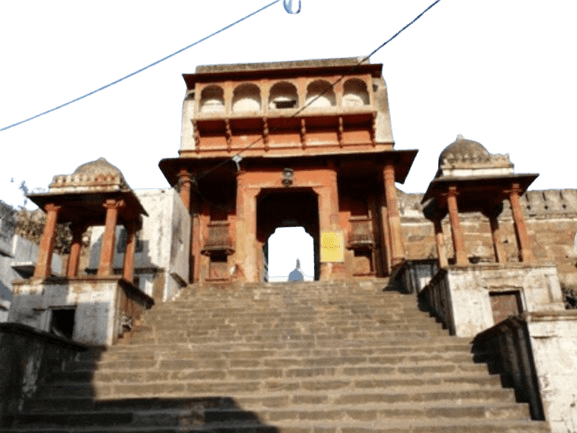
- Among his prominent court scholars were Devabodha and Dharmaghosha.
- Arnoraja was murdered by his son.
Vigraharaja IV / Bisaldev Chauhan (1158–1163 CE) —
- Son of Arnoraja; defeated his brother Jagadeva in 1158 CE and gained control of Ajmer.
- Defeated the Tomar ruler of Delhi, Tanwar, and annexed Delhi to his kingdom — the first ruler of the Chauhan dynasty to conquer Delhi.
- Assumed the title “Vigraharaja IV” after the conquest of Delhi.
- Defeated Sajjan, a feudatory of Kumarapala, and annexed Chittorgarh to his kingdom.
- Patron of poets and scholars — given the title “Kavibandhava” in Jayanaka’s ‘Prithviraj Vijay’.
- Narapati Nalha – Bisaldev Raso
- Somadeva – Lalit Vigraharaja
- Creator of the Harikeli Natya –
- Subject: Mahabharata → Shiva (Kirata)-Arjuna dialogue
- Language: Sanskrit
- Mentioned in: Raja Ram Mohan Roy Memorial (Bristol), Sanskrit School (Ajmer)
- Scholar Kielhorn compared him to “Kalidasa and Bhavabhuti”.
- Constructed the Saraswati Kanthabharana school (Ajmer) — on the lines of the Sanskrit school of the Thar region.
- Later converted into a mosque by Qutb-ud-din Aibak (1198 CE).
- Current name: Adhai Din Ka Jhonpra
- Naming: First named by John Marshall.
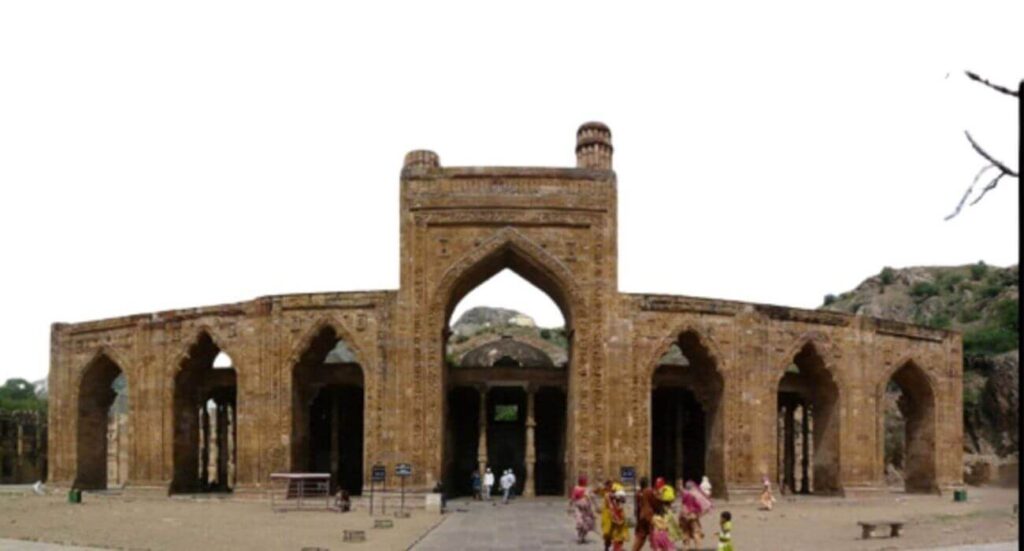
- Constructed the Shivalik pillar in Delhi in 1163 CE.
- Imposed a ban on animal slaughter.
- Founded the city of Bisalpur in Tonk and constructed the Bisalpur Dam.
- Dasharatha Sharma called his reign the “Golden Age of the Chauhan Dynasty”
Amargangeya (Aparagangeya) (1164–1165 CE) —
- Son of Vigraharaja IV, was young and unmarried. Within a year, Jagdev was defeated in battle and dethroned by his son Prithviraj II. (According to the Ruthi Rani Shiva Temple inscription)
Prithviraj II (1165–1168 AD) —
- He defeated Amargangeya in battle and ascended the throne.
- Popular among the people; considered an “incarnation of Rama” due to his defense of the country and bravery.
- Short reign; had no children.
- After his death, his uncle Someshwar ascended the throne.
- Dhod village inscription, Vikram Samvat 1225 — Inscription on the Ruthi Rani temple.
Someshwar –
- Title – Pratap Lankeshwar
- Planted a Kalpavriksha (wish-fulfilling tree) in Ajmer.
Prithviraj III (1177–1192 AD) —
- The last powerful ruler of the Chauhan dynasty, born in 1166 AD; father Someshwar, mother Karpuri Devi (daughter of Anangpal Tomar).
- Other name – Raipithora
- Ruled at the age of 11, guided by his minister Kadambavas/Kaimas in the initial period of his reign.
- Title – Dalpungala / Vishwavijeta (World Conqueror) (due to his victorious campaigns).
- Military campaigns –
- Secured power by defeating Amargangeya (his uncle).
- Suppressed the Nagarjuna rebellion, captured the Gudapura region (with the help of Kaimas).
- Suppressed the Bhandanaka rebellion (Bharatpur-Mathura region), 1182 AD — described by Jinapati Suri.
- Conquest of Mahoba (1182 AD), Chandela ruler Parmardideva defeated. Alha and Udal attained martyrdom in this war (famous in folk tradition). Mahoba was captured, and Panjunrai was appointed as the officer.
- Gujarat-Chalukya conflict (1184 AD), war with Jagdev Pratihar, the prime minister of Bhimdev II → later a treaty was signed.
- First Battle of Tarain (1191 AD) → Prithviraj’s victory
- Muhammad Ghori was wounded by Govindaraja of Delhi, and Ghori fled.
- Not pursuing Muhammad Ghori is considered a historical mistake of Prithviraj.
- Second Battle of Tarain (1192 AD) → Prithviraj defeated
- Allies → Samarsingh (Mewar), Govindraj (Delhi)
- Tajul-Maasir (Hasan Nizami): Ghori had sent a peace treaty proposal before the battle.
- After the battle → Ghori gained control of Ajmer and Delhi.
- Jayachandra-Sanyogita episode –
- In Kannauj, the Rajasuya Yagna and the Swayamvara of Sanyogita were held, but Prithviraj was not invited.
- Sanyogita was abducted, due to which Jayachand did not provide support in the Second Battle of Tarain.
- Chand Bardai’s (folk tradition) couplet:
“Chaar baans chaubees gaj, angul ashth pramaan. Ta upar sultaan hai, mat chooke chauhaan.”
- Assessment of the reign:
- The loss of administrative control over Delhi and Ajmer paved the way for Muslim rule in North India.
The Chauhans of Ranthambore
Govindaraja Chauhan —
- Founder of the Ranthambore branch of the Chauhan dynasty.
- Son of Prithviraj III (Rai Pithora)
- After accepting Ghori’s suzerainty, Prithviraj’s uncle Hariraja expelled Govindaraja from Ajmer.
- Govindaraja went to Ranthambore and established an independent kingdom (1194 AD).
- Qutb-ud-din Aibak also recognized Govindaraja as the ruler of Ranthambore.
Valhanadeva (Ranthambore Chauhan branch) —
- Son of Govindaraja.
- According to the Manglana inscription (Samvat 1272), Valhanadeva ruled Ranthambore, Ghor, and under the Sultan Shamsuddin of Ghazni.
- The Manglana inscription mentions a well constructed by the feudatory Jaitrasimha (Padmasimha Deva of the Dadhibat clan). Title/Position — “Garhpati Valhanadeva”
- Prahladan – Died after being wounded during a lion hunt; appointed his son Viranarayana as his successor and his brother Vagbhata as regent.
Viranarayana –
- Son of Prahladan.
- Married the daughter of Bijaladeva, the Kachhwaha king of Amer.
- The Sultan of Delhi, Iltutmish, attacked Ranthambore. Since the Ranthambore fort was strong, Iltutmish could not conquer it directly, so he sent a deceptive offer of friendship. Viranarayana went to Delhi and stayed under Iltutmish’s protection, but he was poisoned and murdered (approximately 1226 AD).
Vagbhata –
- Vagbhata — Son of Valhanadeva and uncle of Viranarayana.
- He killed the king of Malwa and established his influence there.
- Taking advantage of the political crisis in Delhi (1236 AD), he recaptured the Ranthambore fort.
- He repelled the attacks of Nasiruddin’s general Ulugh Khan in 1248 and 1253 AD.
- Minhaj-us-Siraj called him the most powerful king of India. He ruled Ranthambore for approximately 12 years.
- Successor – Jaitrasimha.
Jaitrasingh –
- Jaitrasingh is also known as Jaisimha; two main inscriptions → Kunwalji and Atru.
- According to the Balban inscription, Jaitrasingh was as fierce as the scorching sun for King Jaisimha (Parmar) of Malwa.
- He dared to wield an axe against the neck of the king of Amer.
- He regularly paid tribute to the Yaduvanshi king of Tihungarh (Karauli).
- During Jaitrasingh’s reign, the Delhi Sultan’s army (February 8, 1259 AD) attacked the Ranthambore fort under the leadership of Malik ul-Nawab but were unsuccessful.
- Jaitrasingh had three sons – Surtaan, Viram, and Hammir.
- Jaitrasingh made Hammir, the most capable of his sons, his successor.
Hammir Dev Chauhan –
- Hammirdev became the ruler of Ranthambore in approximately 1283 AD (Vikram Samvat 1339).
- He is considered the last great ruler of the Chauhans.
- Main sources –
- Hammir Mahakavya – Nayanchandra Suri
- Amir Khusrau, Ziauddin Barani
- Tabqat-i-Nasiri – Minhaj-us-Siraj
- Jodhraj – Hammir Raso
- Hammir Hath – Chandrashekhar
- Balban and Garh inscriptions
- Hammir’s conquests –
- He defeated the Parmar king Arjun of Malwa.
- He received tribute/victory from Mandalgarh, Ujjain, Abu, Chittorgarh, Vardhanpura, Champa, Pushkar, Mareth, Khandeta, and Chatsu.
- The Yaduvanshi king of Kakrala (Tribhuvangarh/Timangarh) paid tribute.
- Policy of giving refuge –
- Hammir gave refuge to Alauddin’s rebels (1298 AD) – Qamiji, Kehbru, and Muhammad Shah.
- This was the main reason for Alauddin’s attack on Ranthambore.
- Hammir’s statement: “It is the duty of a Kshatriya to protect those who seek refuge.”
- War against Jalaluddin Khilji (1290–1292 AD):
- Hammir thwarted Jalaluddin Khilji’s first and second attacks.
- First encounter at Jhai outside Ranthambore — 70 Hindu warriors attained martyrdom.
- Result — Jalaluddin was unsuccessful.
- Initial conflict against Alauddin Khilji (1299 AD):
- Alauddin’s general, Ulugh Khan, was defeated near the banks of the Banas River.
- Bhim Singh (Hammir’s general) seized Ulugh Khan’s drums and elephants in the battle.
- Cause of Bhim Singh’s death — the wrong advice of Prime Minister Dharam Singh.
- Treachery/Betrayal (1300 AD):
- Alauddin cunningly lured the following:
- Ratipal – the main traitor
- Ranmal – a leading figure in the army
- Their betrayal weakened the fort’s defenses.
- The siege dragged on, and food supplies began to run out.
- The Kothiyari (grain officer) lied, claiming there was plenty of grain, but later the granaries were found empty. Hammir had Kothiyari executed.
- 1301 AD – Three-month siege, fierce battle.
- Alauddin cunningly lured the following:
- Jauhar and the final battle:
- Muhammad Shah (the one who sought refuge) sacrificed his family first.
- Maharani Rangadevi, Devaldevi, and other women performed Jauhar (self-immolation).
- Hammirdev donned saffron robes and fought the final battle.
- Viram, Tank, Gangadhar, Kshetrasingh, Rajad, and others attained martyrdom.
- Hammir cut off his own head with his sword before being captured.
- July 10, 1301 AD – Hammirdev fought his last battle.
- Fall of Ranthambore – July 12, 1301 AD (Hammir Chauhan’s rule ended after 8 years of reign)
- After the battle –
- Alauddin had the traitor Ratipal skinned alive and killed.
- Ranmal and his companions were killed by the sword.
- After receiving treatment, Muhammad Shah said, “If I survive, I will kill Alauddin.” Upon hearing this, Alauddin had him crushed to death by an elephant.
- Hammir in literature –
“Sinh sawan satpurush vachan, kadali phalat ik baar.
Triya tel hammeer hath, chadhe na dooji baar.”
- “Stubborn Hammir” = A brave warrior who does not abandon those who seek refuge.
The Chauhans of Nadol
Rao Lakshman / Rao Lakhan —
- The founder of the Nadol branch
- Lineage – One of the three sons of Vakpatiraj I, the ruler of Shakambhari.
- His eldest son, Singhraj (944 AD), became the ruler of Sambhar.
- Arrival in Nadol – Upon reaching Nadol, he camped outside the temple and, through his strength and prowess, established an independent kingdom in Nadol.
- Suppression of the Meds (Mewatis) – He annihilated the Mewatis who were terrorizing the Nadol and Marwar regions, thus establishing peace in the area.
- Blessing of the family deity Ashapura – According to legend, she appeared to him in a dream at night and blessed him with victory and the establishment of a great kingdom.
- The story of 12,000 horses – It is said that 12,000 horses from Malwa spontaneously arrived in Nadol.
- Construction of a large fort – He built a strong fort and a magnificent palace on the Nadol hill, and established the temple of Ashapura Mata at its main gate.
- Surajpol – Rao Lakhan also constructed the famous Surajpol in Nadol.
- Marriage to the daughter of a Vaishya merchant – His sons from this marriage were made officers of the royal treasury. The present-day Bhandari Vaishyas are considered to be their descendants.
- Influence on Gujarat and Mewar – According to an ancient inscription, Rao Lakhan was so powerful that he collected tolls from Patan, the capital of Gujarat, and the ruler of Mewar paid him tribute.
- Temple construction – An inscription in the Neelkanth Mahadev temple (Vikram Samvat 1025) reveals that Rao Lakshman built the Lakshman-Swami Vishnu temple.
- Titles ‘Shakambhaririddha’ and ‘Shakambharimanikya’ – In the Sundha Mountain inscription, Rao Lakhan is called ‘Shakambhaririddha’.
- In the Mount Abu inscription, he is called ‘Shakambharimanikya’. This means: – The great prince of Shakambhari / The jewel of Sambhar.
Sobhit – Approximately 982–990 AD
- Conquered Dhara (Malwa)
- Mentioned in the Sevadi copper plate inscription (Vikram Samvat 1076)
- Balraj – Approximately 990–996 AD: Defeated the army of Parmar ruler Munja (974–995 AD).
- Vigrahpal – Short reign (approximately 996 AD)
- Mahendra – Approximately 994–1005 AD : Arranged the marriage of his sisters to Chalukya Durlabharaja, which is mentioned in the Dwashraya Kavya.
- Ashwapal – Approximately 1005–1015 AD
- Constructed the Ashwaleshwar Shiva Temple.
- Ahil – Approximately 1015–1024 AD
Anhil – Approximately 1024–1055 AD
- Fought against Mahmud of Ghazni.
- Was the most powerful ruler of the Nadol branch.
Balaprasad – Approximately 1055–1070 AD
- Ruled the Nadol branch for the longest period.
Jendraraj / Jenduraj – Approximately 1070–1110 AD
- Constructed the Jendrarajeshwar Temple (Nadol).
Prithvipal – Approximately 1110–1120 AD
- Constructed the Prithvipalaleshwar Temple.
Jojaldev – Approximately 1120–1140 AD
- A ruler who issued orders of religious tolerance.
Asraj – Approximately 1140–1160 AD
- It became a feudatory of Chalukya Siddharaja Jayasimha.
Raipal – Approximately 1160–1180 AD
- Reconquered Nadol.
- Sahajpal – Approximately 1180–1190 AD
Alhanadev – Approximately 1140–1163 AD
- Issued an order prohibiting the killing of animals. Son: Kirtipal (Founder of the Jalore branch)
Kelhanadeva – Approximately 1163–1178 CE
- Defeated Muhammad Ghori at Kasahrada (Kayandra) in 1178 CE. In celebration of this victory, a golden archway was constructed and offered to Lord Somnath.
Jayasimha – Approximately 1178–1197 CE
- After being defeated in battle by Qutb-ud-din Aibak, Muslim rule began in Nadol.
- ➡️ End of the Nadol branch in 1197 CE.
Sonagara Chauhan (Jalor)
Kirtipal –
- Kirtipal was the youngest son of Alhanadeva, the ruler of Nadol, and his mother was Analadevi.
- In Vikram Samvat 1218, Alhanadeva granted Kirtipal the jagir (fiefdom) of 12 villages of Nadolai.
- Kirtipal defeated Samantsingh, the ruler of Mewar, and conquered Mewar.
- Later, Kirtipal defeated the Parmar king Kuntalpal and conquered Jalore and Siwana.
- Kirtipal established the kingdom of Jalore (Sonagiri) in Vikram Samvat 1238.
- Kirtipal defeated Muhammad Ghori in battle.
- Kirtipal worshipped Surya, Shiva, and Agni, and he was also a patron of Jainism.
- Kirtipal died in Vikram Samvat 1239.
- The ancient name of the Jalore mountain was Sonagiri, hence this branch was called Sonigara Chauhan.
- Samarsingh – He was the son and successor of Kirtipal.
Uday Singh –
- Uday Singh made a treaty with Sultan Iltutmish of Delhi and returned him after giving him 400 camels and 200 horses.
- Uday Singh defeated both Sultan Aram Shah and Iltutmish of Delhi.
- Uday Singh defeated the king of Sindh.
- Uday Singh’s prime minister was Yashovir, who was also a renowned poet.
- Uday Singh is considered the most powerful ruler among the Chauhan rulers of Jalore.
Chachigdev –
- Chachigadeva assumed the titles of Maharajadhiraja and Mahamandaleshwara.
- During the reigns of Sultan Nasiruddin Mahmud and Balban of Delhi, Chachigadeva faced no invasions.
- Chachigadeva exempted Brahmins from taxes and worshipped Sundha Mata
Samantasimha –
- During Samantasimha’s reign, the Jalore kingdom remained completely independent.
- Samantasimha made his son Kanhadadeva a partner in the administration.
Kanhadadeva –
- The last great Sonagara Chauhan ruler
- Kanhadadeva explicitly refused to give Alauddin Khilji passage through Jalore to Gujarat. “Your army will destroy religion, women, cows, and Brahmins, therefore, passage will not be granted.”
- In 1299 AD (Vikram Samvat 1356), while returning from the Gujarat campaign, Ulugh Khan’s army was defeated near Sakrana.
- Thousands of Hindu prisoners were freed, and five fragments of the broken idols of Somnath were re-consecrated.
Siwana Fort –
- Alauddin Khilji attacked Siwana Fort in 1308 AD.
- At that time, the ruler of Siwana Fort was Sataladeva (Kanhadadeva’s nephew).
- Alauddin Khilji surrounded Siwana Fort from all sides with a large army.
- The Rajputs used catapults, stones, and strong military resistance to defend the fort.
- The Khilji army deceitfully polluted the fort’s water source, causing a severe water shortage in the fort. Due to the water shortage, it became impossible to live in the fort. After this, 1584 Rajput women performed Jauhar (self-immolation). After the Jauhar, the Rajputs donned saffron robes and fought their last battle. In this final battle, the fort commander Sataladeva attained martyrdom. Alauddin Khilji gained control of Siwana Fort.
- After the victory, Alauddin Khilji renamed Siwana Fort to “Khairabad”.
- After the conquest of Siwana, Alauddin Khilji planned an attack on Jalore.
Jalore Fort –
- Alauddin Khilji launched his final and decisive attack on Jalore Fort in 1311 AD.
- The fort was being defended under the leadership of the brave Kanhaḍadeva Chauhan. Supplies of food and water were maintained in the fort for a long time, which led to the Khilji army’s failure in the initial stages.
- Alauddin Khilji resorted to deception and treachery. A traitorous Dahia Rajput, “Bika,” allowed the Khilji army to enter the fort through a secret passage. Bika’s wife (Hira De) revealed the secret of the betrayal to Kanhaḍadeva, but by then it was too late.
- Alauddin Khilji conquered Jalore, thus ending the independent Rajput rule of Marwar.
- In this fierce battle, the brave Kanhaḍadeva attained martyrdom.
- Alauddin Khilji renamed Jalore Fort as Jalalabad.



