

Irrigation is a crucial topic in Rajasthan Geography, as it determines the sustainability of agriculture in a state marked by arid and semi-arid climatic conditions. Due to low and uneven rainfall, agriculture in Rajasthan largely depends on irrigation through canals, wells, tube wells, and modern projects to support crops and allied activities. The development of irrigation has significantly influenced cropping patterns, productivity, and regional agricultural growth across the state.
Main Source of Irrigation
- Geographically, Rajasthan is the largest state in the country, but the availability of surface water is only 1.16 % of India and ground water only 1.72%.
- In Rajasthan, wells, tubewells, Canals, tanks, etc., are the main sources of irrigation.
Wells and tubewells
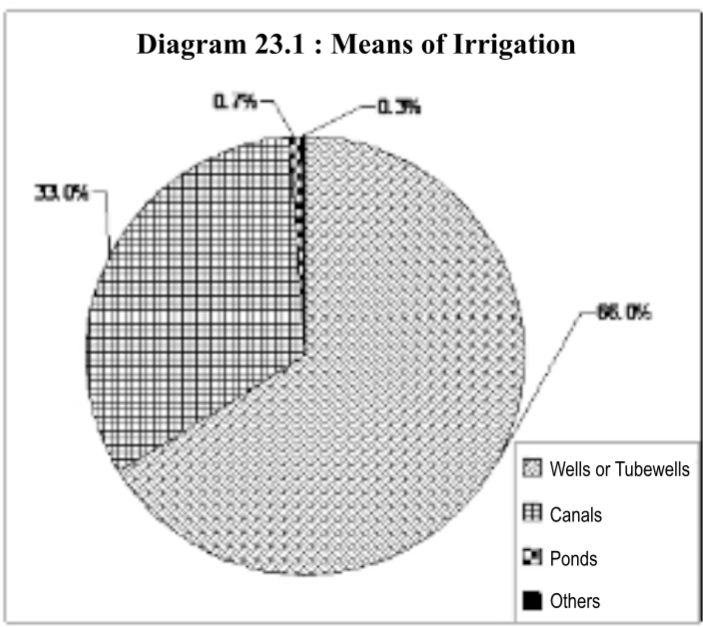
- It is the main source of irrigation in the state. The 66% area out of the total irrigated area of the state is irrigated by wells and tubewells.
- Most of the irrigation by this mode is done in Jaipur and Alwar.
- Due to the availability of fresh water in the Chandna tubewell in Jaisalmer district, this place is called “Ghara (Pitcher)of Thar”.
Canals
- 33% area of the state is irrigated by canals. Sri- Ganganagar district has the first place in canal irrigation.
Ponds
- 0.7% part of the state is irrigated by this means of irrigation. This is the major source of irrigation in the southern and southeastern parts of the state.
- In irrigation by the ponds, Bhilwara district is in first place, and Pali district is in second place.
| Classification of an irrigation project | ||
| Small irrigation project (0-2000 Hectare) | Medium irrigation project (2000-10,000 Hectare) | Large irrigation project (More than 10,000 hectares) |
Major Irrigation Projects Of Rajasthan
- River projects
- Canal projects
River projects
Bhakra Nangal Project
- This is a joint project of Punjab, Haryana, and Rajasthan.
- Rajasthan share – 15.2%
- In the Bhakra Nangal Project, two dams were built on the Sutlej River at Bhakra and Nangal—
- Start – 1948, Complete – 1963
Bhakra Dam
- It is a concrete gravity straight dam. Its foundation stone was laid on 17 November 1955 by the then Prime Minister Jawaharlal Nehru, and its construction was completed in October 1962.
- Nehru called it the “New Temple of Resurgent India”
- Specifications:
- Behind the Bhakra Dam, a large reservoir was created in Bilaspur (Himachal Pradesh), named Gobind Sagar. It supplies drinking water to Punjab, Haryana, Delhi and Rajasthan.
Nangal Project
- Nangal Dam – This dam was completed in 1952. It is constructed on the Sutlej River, 13 km downstream of the Bhakra Dam. Its brief details are as follows –
- Canals originating from the dam –
- Bist Canal – Taken out from the Sutlej River below Nangal Dam at Ropar Headworks, it provides irrigation facilities to Punjab.
- Bhakra Canal – Taken out from the Nangal Dam, it provides irrigation facilities to Punjab, Haryana and Rajasthan.
- From this project, irrigation mainly benefits the Hanumangarh district.
- Canals originating from the dam –
Beas Project
- This is a joint project of Punjab, Rajasthan, and Haryana, utilising the waters of the Satluj, Ravi and Beas rivers. Under this, the following two dams have been constructed on the Beas River in Himachal Pradesh :
- Pandoh Dam – Located at Pandoh (21 km from Mandi town in Himachal Pradesh).
- Share of Rajasthan:- 20%
- Pong Dam – Constructed in the Kangra district at the Pong site (Himachal Pradesh).
- Pandoh Dam – Located at Pandoh (21 km from Mandi town in Himachal Pradesh).
- Share of Rajasthan:- 58.5%
- Rajasthan receives the maximum share of water from the Ravi and Beas rivers through this dam.
- The main objective of the Pong Dam is to maintain the water supply for the Indira Gandhi Project during the winter season.
- Under the Ravi – Beas River water dispute, as part of the Rajiv – Longowal Agreement (Iradi Commission), the Irrigation Commission, formed in 1986, allocated 8.6 million acre – feet of arterial water share for Rajasthan.
Chambal Multipurpose Project
- It is a joint project of Rajasthan and Madhya Pradesh. Both states have a participation of 50% each.
- Four dams have been built under this project. Gandhi Sagar and Kota Barrage were built in the 1st phase, while Rana Pratap Sagar in Chittorgarh was built in the 2nd phase, and Jawahar Sagar was built in the 3rd phase.
- 4.5 lakh hectares of land are irrigated through this project. This has provided irrigation facilities mainly in Kota, Bundi and Baran districts of Rajasthan and Madhya Pradesh.
- The state receives 193 MW (50%) of electricity from this project.
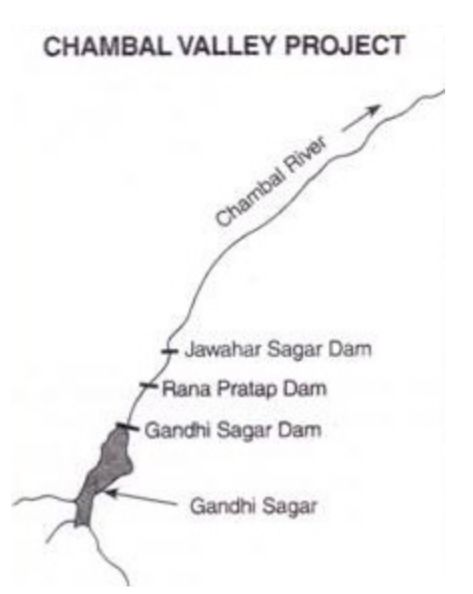
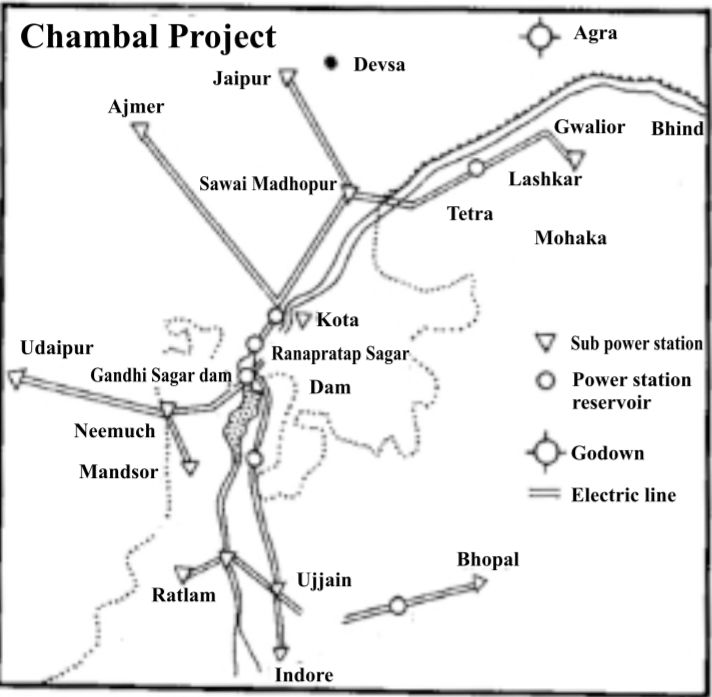
- Canals of Chambal Project: In this project, two main canals have been drawn from the Kota Barrage –
- Left Main Canal:
- Its length is 259 km. This has provided irrigation facilities in Ladpura tehsil of Kota district and Keshoraiatan, Bundi and Indragarh tehsils of Bundi district.
- Right Main Canal:
- Its length in Rajasthan is 124 km. This has provided irrigation facilities in Ladpura, Digod and Pipalda tehsils of Kota district and Anta and Mangrol tehsils of Baran district.
- Left Main Canal:
- Chambal Lift Projects: To provide irrigation facilities in the areas not falling in the flow area of the Chambal River, the following 8 lift schemes have been made on the Dangi Main Canal of the Chambal river
- Digod Lift Scheme (Kota)
- Pachenel Lift Scheme (Baran)
- Kachari Lift Scheme (Baran)
- Ganeshganj Lift Scheme (Baran)
- Anta Lift Scheme (Bara)
- Anta Lift Minor (Chakshanabad – Baran)
- Sorkhand Lift Scheme (left)
- Jalipura Lift Scheme (Kota)
- Madhya Pradesh-Rajasthan Inter – State Power Control Board, Kota, is an advisory body for the Chambal project.
| Trick :- Deepak,Ganesh,Aa,Aa,So ,Ja |
| Phase | Dam | Power Capacity | Other Details |
| I(1959) | Gandhi Sagar (M.P.) Kota BarrageIrrigation Dam) | 115 MW (5 X23) | Kota Thermal Power Station has been established near this dam, built in Kota. Water for irrigation in the Chambal project is provided from this dam. |
| II(1970) | Rana Pratap Sarar | 172 MW (4×43) | Built near Rawatbhata in the Chittorgarh district |
| III(1972) | Jawahar Sagar | 99 MW(3 X33) | Pickup Dam was built in 1972 on the border of Bundi and Kota near Borabas (Kota). This is a 45 m high and 39 m long dam. |
| Total Capacity | 386 MW |
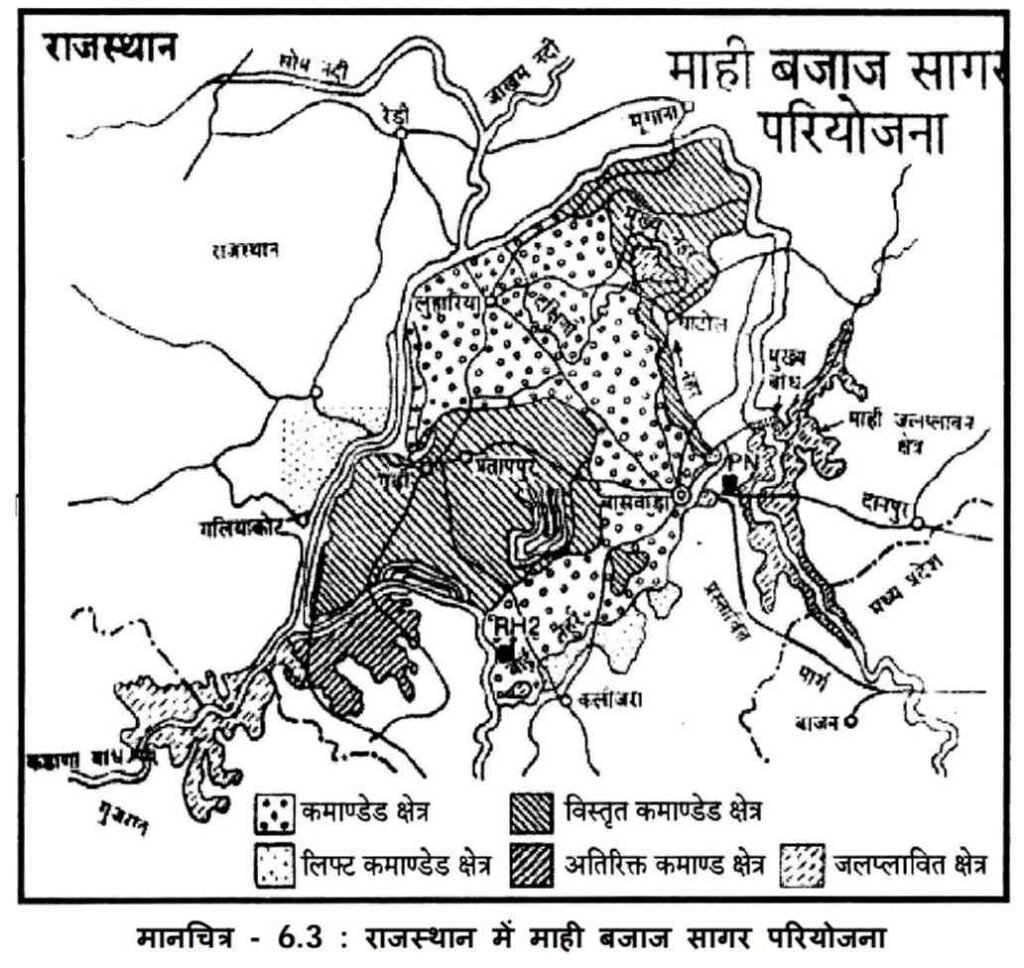
Mahi Bajaj sagar project
- Joint project of Rajasthan and Gujarat for the development of tribal dominated districts of Banswara and Dungarpur of southern Rajasthan.
- The largest dam in Rajasthan.
- According to the agreement of 1966, Rajasthan has a share of 45%, and Gujarat has a share of 55%.
- First stage – The Mahi Bajaj Sagar Dam was built. The dam was completed in 1983, the cost of which was borne by Rajasthan and Gujarat in the ratio of 45: 55.
- Second stage – Two canals, namely Anandpuri and Sagwara, have been built for irrigation facilities.
- Third stage – Two power stations for electricity generation. Three dams were constructed under this project. In this, the construction of two power houses of 50 MW and 90 MW on the main dam was completed in 1986 and 1989, respectively. Banswara district gets the maximum benefit from this project.
- 3 Dams were constructed.
- Mahi Bajaj Sagar – situated in Borkheda (Banswara).
- 140 MW Electricity Generation (100% for Rajasthan)
- Mahi Bajaj Dam (3109 m) is the longest dam in Rajasthan.
- Kagdi pickup – located in Banswara.
- Kadana dam -situated in Gujarat.
- Mahi Bajaj Sagar – situated in Borkheda (Banswara).
- Canals –
- Anandpuri Bhukiya Canal
- Bhikhabhai Sarwara Canal
Jawai Dam Project
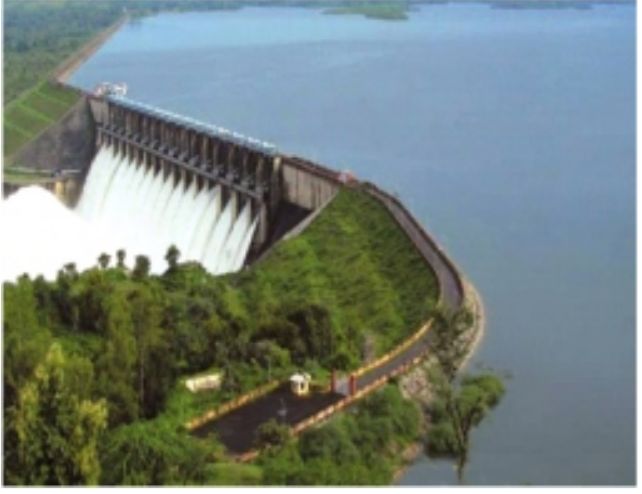
- Located in the Pali district, it was inaugurated by the then Maharaja Ummed Singh on May 13, 1946.
- Jawai Dam provides drinking water to 985 villages, including Shivganj town of the present Sirohi district and nine towns of Pali district, including Sumerpur, Desuri, Rani, Jaitaran, Rohat, Sojat and Bali.
- It is the largest dam in western Rajasthan.
- This dam supplies water to Pali, Jodhpur, Sirohi and Jalore districts.
Renukaji Multipurpose project
- It is a joint project of Himachal Pradesh, Haryana, Uttar Pradesh, Rajasthan, and Delhi on the Giri River.
- The hydro power production capacity of the project is 40MW.
- Financial assistance for this project of the Centre and the state is a 90:10 ratio.
Lakhwaar multipurpose project
- On yamuna River.
- Funding: – centre: state (90:10)
- Benefited states: Himachal Pradesh, Haryana, Uttar Pradesh, Uttarakhand, Rajasthan, New Delhi
- Hydroelectric production: – 300 MW
Canal Multipurpose Projects
Gang Canal Project
- First canal project of the state, constructed by Maharaja Shri Ganga Singh Ji ‘ Bhagirath of Modern India’ of the Bikaner princely state in 1897.
- Lift Canal of Gang Canal
- Karni Lift Canal
- Samija lift canal
- Lalgarh lift canal
- Laxminarayan Lift Canal
- The foundation stone of the Gang Canal was laid by Maharaja Ganga Singh Ji on 5 September 1922 at the Firozpur Headworks. The work was completed in 1927.
- Inaugurated by Lord Irvin and Madan Mohan Malviya on 26 October 1927.
- Total length -129 km
- Punjab – 112 km
- Rajasthan – 17 km
- Most Benefited district – Sri Ganganagar
- Irrigated land – 3.08 lakh hectare
Rajiv Gandhi Sidhmukh Canal project
- Built on the Ravi and Vyas rivers. Hanumangarh (Nohar, Bhadara) and Churu (Sadulpur, Rajgarh) districts mainly benefited from this canal.
- Started – In 2002
- Financial assistance was provided by the European Union in the initial phase, but currently, financial assistance is provided by NABARD.
Narmada Canal Project
- States included – M.P., Gujarat, Maharashtra, Rajasthan. Long-term districts of Rajasthan –
- Jalore (Sanchore)
- Barmer
- Enters Rajasthan from Selu village in Jalore.
- Narmada Mata Temple – Sardar Sarovar Dam – Narmada (M.P.)
- Total length of the Narmada Canal – 458 + 74 (Gujarat + Rajasthan) = 532 km
- Features :
- The Narmada Canal enters Rajasthan from the Sardar Sarovar Dam (Gujarat).
- The use of sprinkling & drip system/dams and full reservoirs up to Sanchore is mandatory on the Narmada Canal.
- Lift canals of the Narmada Canal :
- 1. Sanchore Lift Canal
- 2. Bhadreda Lift Canal (Barmer)
- 3. Punoriya Lift Canal (Barmer)
Yamuna Lift Canal/ Gurgaon canal
- Participation:- Rajasthan and Haryana
- Start:- 1985
- Beneficiary districts: Bharatpur (maximum), Churu, Sikar, Jhunjhunu (Shekhawati)
Indira Gandhi Canal Project (Maru Ganga)
- River – confluence of Satluj and Vyas rivers.
- Engineer of the Canal: Kanwar Sen
- Purpose: Irrigation and Drinking Water
- Inauguration:- 31 March 1958, by Home Minister Govind Ballabh Pant.
- It was named the Indira Gandhi Canal Project on 2nd November, 1984.
- Water Flow by Sarvapalli Radhakrishnan in 1961.
| Indira Gandhi Canal (649 km) | |
| I st Phase (393 km) | II Phase (256km ) |
| Rajasthan Feeder (204 Km) Harike Barrage to Masitawali Main Canal (189km) (Hanumangarh)to Pugal, (Bikaner) | Main canal (256 km) Pugal (Bikaner)to Mohangarh, (Jaisalmer) |
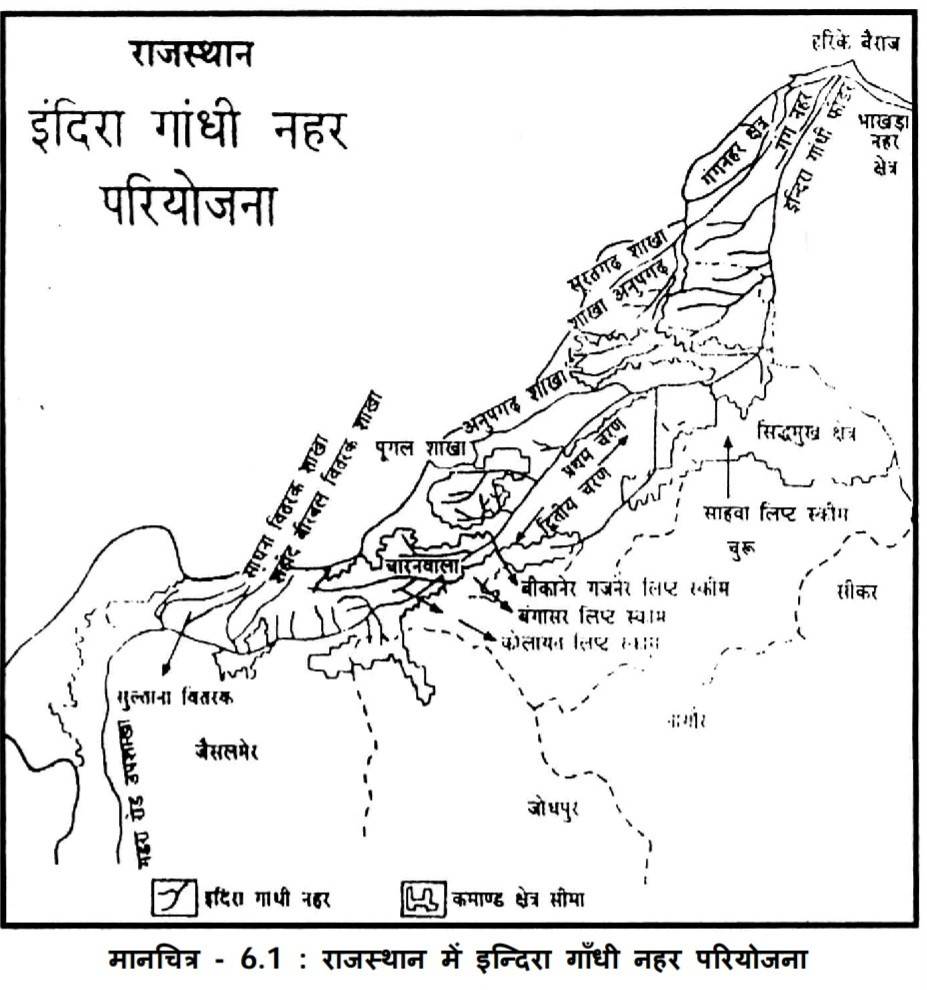
9 Branches of Indira Gandhi Canal
- Rawatsar branch (Hanumangarh) -only left side branch
- Suratgarh branch (Sri-Ganganagar)
- Anupgarh branch (Sri-Ganganagar)
- Pugal branch (Bikaner)
- Dattor branch (Bikaner)
- Birasalpur branch (Bikaner)
- Charanwala branch (Bikaner + Jaisalmer)
- Shaheed Birbal branch (Jaisalmer)
- Sagarmal Gopa branch (Jaisalmer)
- Sub -branch – Baba Ramdev
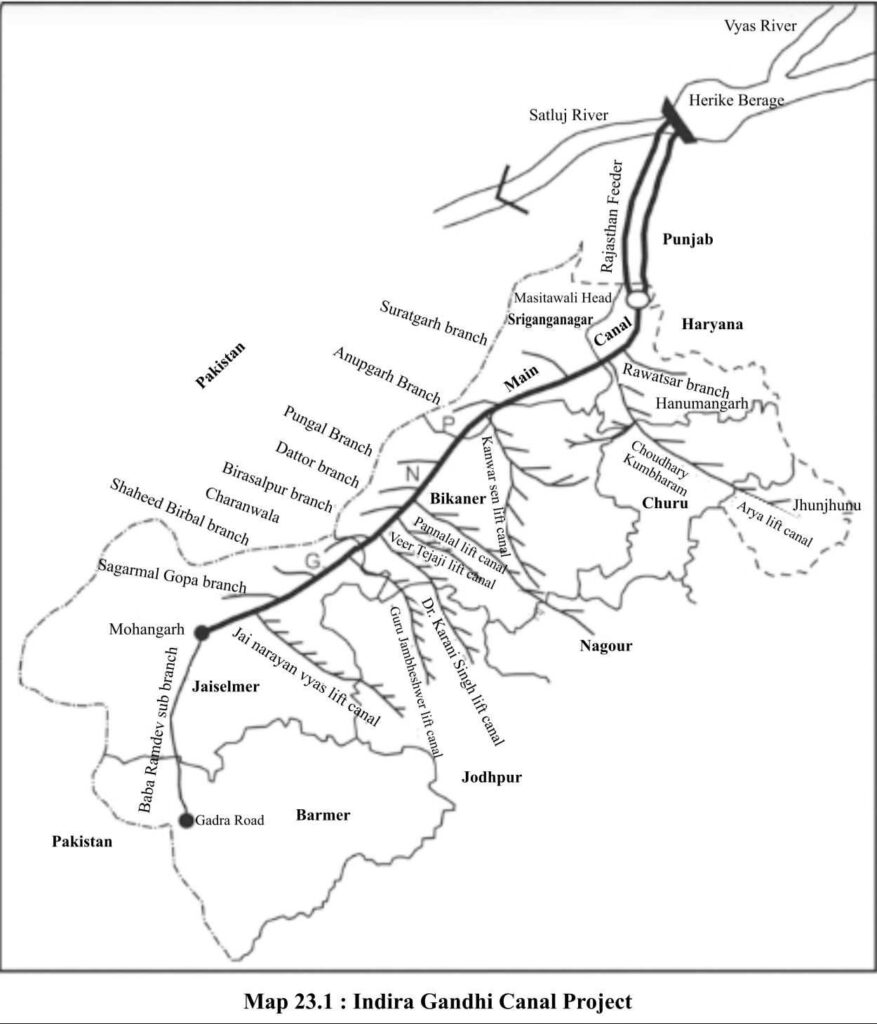
- The length of the main canal with the feeder is 649 km.
- Main canal – 445km
- The canal is made from the Harike Barrage to Gadra Road in Barmer.
- From Harike Barrage to Hanumangarh Masitawali, 204 km (170 km in Punjab and Haryana + 35 km in Rajasthan) is a feeder canal.
- Most Benefited District – Bikaner
- Irrigated Area – 16.17 Lakh Hectare.
- Longest lift canal – Kanwarsen lift canal
- Smallest Lift Canal – Veer Tejaji Lift Canal
- The project has been envisaged to utilise 7.59 MAF of Rajasthan’s share of surplus water from the Ravi-Beas rivers.
| Lift canal (1495km) | Beneficiary Districts |
| Chaudhary Kumbharam Lift Canal (Gandheli – Nohar Sahwa Lift Canal) | Hanumangarh, Churu, Jhunjhunu and Bikaner districts. |
| Kanwar Sen (Bikaner -Lunkaransar) lift canal | Covers Sri-Ganganagar and Bikaner districts. First and longest lift canal of the Indira Gandhi canal project. |
| Pannalal Barupal (Gajner) lift canal | Covers Nagaur and Bikaner districts.(Jayal de – flouride drinking water project related to this project ) |
| Veer Tejaji Bherudan Chalani (Bangarsar) lift Canal- | Only in Bikaner |
| Dr Karni Singh (Kolayat) lift canal | Jodhpur and Bikaner |
| Guru Jambheshwar (Phalodi) lift canal | Jaisalmer, Jodhpur and Bikaner districts |
| Jai Narain Vyas (Pokhran) lift canal | Jaisalmer and Jodhpur districts. |
| Trick:- Chaudhary, Kanwar, panna, veer, karni, Guru, ki, jai | |
Eastern Rajasthan Canal Project
- Other name –
- Ramsetu link project
- Parvati-Kalisindh – Chambal project
- Modified Parvati-Kalisindh Canal Project
- Objective: Interlink rivers in the Chambal basin and integrate with the Eastern Rajasthan Canal Project for efficient water resource use. Introduced in the 2017 – 18 state budget.
- Covered Districts:- Kota, Bundi, Baran, Jhalawar, Tonk, Swai-Madhopur, Dausa, Karauli, Alwar, Dholpur, Bharatpur, Deeg, Khairthal-Tijara, Kotputli-Behror, Jaipur, Beawar, Ajmer
- MoU Signed: 28th January 2024 (between the Government of India, Rajasthan, and Madhya Pradesh)
- Rivers – Chambal, Parvati, Kalisindh, Kunu, Mej
- Financial Contribution –
- 90% -central govt
- 5% – Rajasthan – Madhya Pradesh
- Fund:- 45,000 cr. increased by 37,250 cr.
- Barrages and Dams:
- Ramgarh Barrage (Kul River), Baran
- Mahalpur Barrage (Parbati River)
- Navnera Barrage (Kalisindh + Chambal River)
- Mej Barrage (Mej River), Bundi
- Rathod Barrage (Banas River)
- Doongri Dam (Banas River)
- MERCP Project inaugurated by Prime Minister Shri Narendra Modi on 17 December 2024 from Dadia Village of Jaipur.
- Area – 2.8 Lakh Hectare.
Other Irrigation Projects of Rajasthan
|
Irrigation Projects |
Associated District |
|
|
|
|
|
|
|
|
|
|
|
|
|
|
|
|
|
|
|
Dausa + Sawai – Madhopur |
|
|
|
Jaipur |
|
Jalore |
|
Sirohi |
|
|
|
|
|
Banswara |
|
Chittorgarh |
|
|
|
|
|
|
Water Conservation Techniques
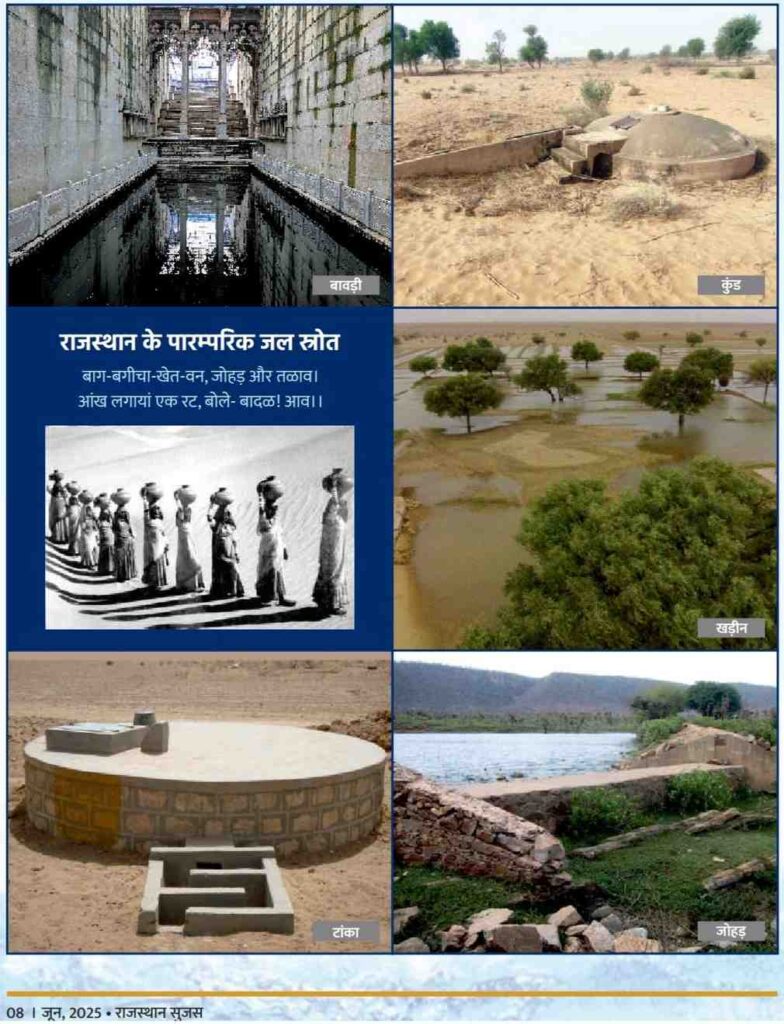
Beri/Kui
- Small, circular and less deep pit which are formed for water storage in western Rajasthan.
Nadi
- A type of pond to collect rainwater. Mainly in Jodhpur.
Tanka/Kund
- Tanks are mainly constructed for the purpose of storing drinking water in homes or public places, In which rain water is stored.
Toba
- These are the sources of deep water harvesting, such as the Nadi, in which rainwater is stored. The water stored in these is used for drinking.
Jhalra
- The water of Jhalra is used for bathing in religious rituals. ex – Toorji ka jhalara and Mahila bhag ka jhalra
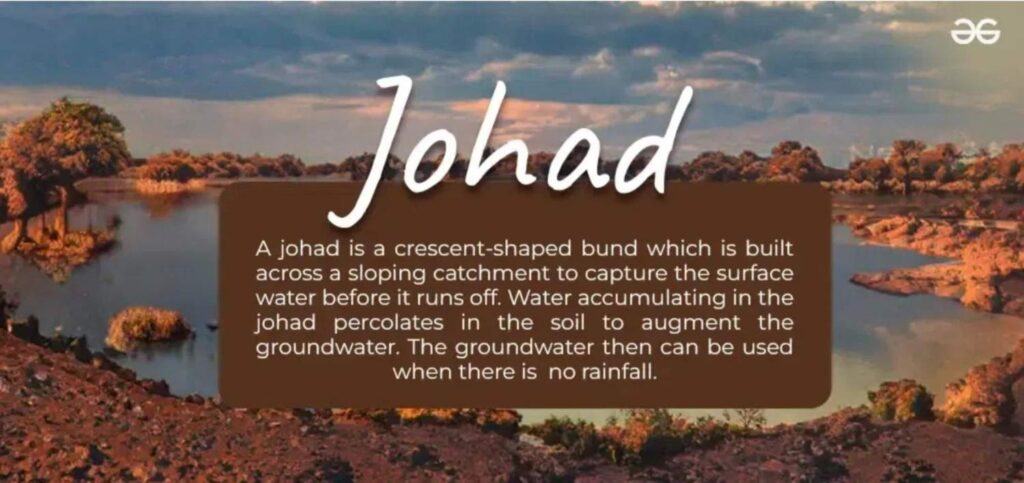
Johad
- The rainwater flowing towards the slope is collected in the lowland, which is called johad.
- It is more prevalent in Shekhawati, where they are called raw wells of water.
- The credit for reviving the Johad system goes to Shri Rajendra Singh (Alwar), known as “Johad Wale Baba”.
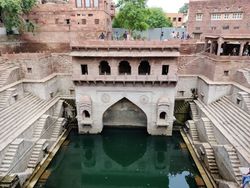
Stepwell of Rajasthan(Bawari)
- In Rajasthan, Step wells are locally known as Bawari. These are sweet water aquifers getting a regular recharge through rainwater.
- Bawaris were mainly set up in cities and big towns to provide a water supply to the community through the conservation of rainwater.
- Bawaris and Sarovar have remained important sources of drinking water and irrigation, respectively, since ancient times.
Bundi “City of Step Wells.
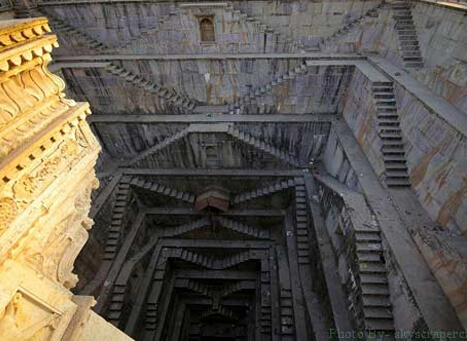
- Rani ji ki Baori was built by Rao Raja Anirudh Singh’s queen Rajmata Nathawati in 1699 AD.
- Anarkali stepwell
- Gulab stepwell
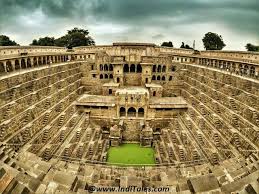
(Abhaneri)Dausa
- Chand Baori Chand Stepwell –built by King Chanda or Chandra of the Nikumbh dynasty in the 8th to 9th century.
Sirohi
- Lahini stepwell
- Doodh stepwell
Jodhpur
- Bhoot’s stepwell
- Paanch Manjeesha stepwell
- Kharbooja stepwell
| Stepwell | District |
| Trimukhi stepwell | Udaipur |
| Hadirani Baori | Tonk |
| Naulakha Baori | Dungarpur |
| Nau Manjisa Baori | Alwar |
Other related information
- Relining of Sirhind Feeder & Indira Gandhi Feeder (Punjab Portion) – A MoU was signed between the Government of India, the Government of Rajasthan and Punjab to complete the relining work of Indira Gandhi Feeder (Punjab Part) and Sirhind Feeder
- Financial assistance – 60 per cent central assistance and 40 per cent will be borne by the state government
- Share:- Punjab and Rajasthan have 54.15 and 45.85 per cent share respectively. (source: sujas)



