Transport Network

Transport Network In world geography, a transport network refers to the interconnected system of roads, railways, waterways, and air routes that facilitate the movement of people and goods. It plays a crucial role in economic development, regional connectivity, and globalization by linking different parts of the world.

  • The transfer or movement of goods and people from one place to another by means of any physical medium is called transport.
  • The regional pattern of the transport system of any state is called the transport network.
  • The modern means of transport may be put under three broad categories-
    • Land (Roads and rail routes)
    • Water
    • Air
    • Other pipelines (water, oil and gas)
  • Land Transport
  • Land transport can be divided into two major parts- 
    • Road transport 
    • Rail transport
  • Roads : Roads are of two types :
    • Unmetalled Roads
    • Metalled roads

Road Transport

Length of Roads

CountryRoad Network Size 2025 (km)
United States66,45,582
India63,60,004
China54,36,845
Russia15,79,923
Brazil15,63,600
Australia13,22,245
Japan12,31,084
France11,18,600
Canada10,42,718
Germany8,29,530

Major Road Routes of the World

Highway

Connected Regions / Countries

Important Details

Pan-American Highway

North America, Central America, South America

  • Longest highway in the world
  • Starts from north west Alaska and ends at Brasรญlia (Brazil)
  • Passes through Santiago (Chile) and Buenos Aires (Argentina)

Trans-Canadian Highway

Canada (Eastโ€“West)

  • Connects Saint John (Newfoundland Province) to Vancouver (British Columbia)

Alaska National Highway

Canadaโ€“USA

  • Connects Edmonton (Canada) to Anchorage (Alaska, USA)

Stuart Highway

Australia (Northโ€“South)

  • Connects Birdum (North Australia) to Oodnadatta (South Australia) via Alice Springs (Acc to RBSE)
  • Now from Darwin (North) to Port Augusta (South) via Alice Springs

Regional Distribution of Road Transport

United States of America (USA)
  1. Highway density in North America is very high, about 0.65 km per sq km.
  2. Almost every place is within 20 km of a highway.
  3. Total road length is about 66 lakh km, the highest in the world.
  4. The majority of roads are concentrated in the eastern part of the USA.
  5. The USA has about one-third of the worldโ€™s total road length.
  6. Nearly half of the worldโ€™s motor vehicles are found in the USA.
  7. The dense road network is due to high industrialization and urbanization in the eastern region.
Africa
  1. Due to diverse landforms, roads are the most important means of transport.
  2. Railways and waterways are limited in many regions.
  3. Roads provide connectivity across deserts, plateaus, and forested areas.
Europe
  1. Europe has a well-developed and dense network of highways.
  2. A large number of vehicles operate on European roads.
  3. Road transport faces strong competition from railways and waterways.
Russia
  1. A dense highway network is found in the industrial region west of the Ural Mountains.
  2. Moscow acts as the central axis of the road network.
  3. The Moscowโ€“Vladivostok National Highway serves eastern Russia.
  4. Due to the large geographical extent, road density is lower than railways.
  5. Rail transport is more dominant than road transport in Russia.
China
  1. Roads are the major means of transport in China.
  2. The road network is mainly spread over the eastern plains.
  3. Highways criss-cross and connect major cities:
    • Tsungtso (near Vietnam border)
    • Shanghai (central China)
    • Guangzhou (south China)
    • Beijing (north China)
  4. A recent Sichuan-Tibet Highway connects Chengdu (Sichuan province) to Lhasa (Tibet Autonomous Region).
India
  1. India has a large network of national highways.
  2. As of March 2025, Indiaโ€™s road network stands at more than 63 lakh kilometres, the second largest in the world. 
  3. Within this, the National Highway network has grown to 1,46,204 kilometres
  4. Roads in India are classified into:
    • National Highways
    • State Highways
    • District Roads
  5. NH 44 is the longest, running from Srinagar (Jammu & Kashmir) to Kanyakumari (Tamil Nadu)
  6. Under the Corridor Plan:
    • Eastโ€“West Corridor: Silchar (Assam) to Porbandar (Gujarat)
    • Northโ€“South Corridor: Kashmir to Kanyakumari
  7. Six-lane and eight-lane highways and green corridor highways are under construction.
  8. Construction and maintenance of national highways are carried out by the National Highway Authority of India (NHAI).
Border Roads
  • The roads built along the international borders are called Border roads.

Rail Transport

  • In England, James Watt invented the engine in 1769 and George Stephens invented the steam engine in 1814 for the first time. 
  • On September 27, 1825 the first train of the world started in England between Arcton of Northern England and Darlington.
  • The breadth (gauge) of rail lines is different in each country. 
  • Generally, they are classified into broad gauge (more than 1.5 metres), metre gauge (1 metre) and narrow gauge. 
  • Rail transport in India started in 1853 between Mumbai and Thane (34 kms.). 
  • The Indian Rail is operated in four lines
    • Broad gauge (width 1.676 metre) 
    • Metre gauge (width 1 metre) 
    • Narrow gauge (0.762 metre) and 
    • Lift gauge (0.610 metre). 
  • The use of Standard gauge also known as Stephenson Gauge(1.44 meter), in the world, is done in Britain.
Railway density (Kilometres of lines operated per 1000 sq. kms.)
PositionCountryDensity
1.Switzerland128.8
2.Czechia120.6
3.Belgium118.9

Total Railroad Length (km)

CountryTotal Railroad Length (km)
United States220,044
China159,000
Russia105,000
India65,554
Canada49,422
Germany39,379
Australia36,064
Brazil29,850
France27,860
Japan27,311

Regional Distribution of Rail Transport

Continent

Key Points on Rail Network

Europe

  1. Densest rail network in the world with about 121 thousand km of rail routes.
  2. Most routes are double or multi-track.
  3. Industrial regions show very high rail density.
  4. Major rail centres: London, Paris, Brussels, Milan, Berlin, Warsaw.
  5. Euro Tunnel connects London and Paris.
  6. Railways mainly used for long-distance freight transport rather than passengers.

Russia

  1. Western part of Ural mountain has a dense network of railways.
  2. On the basis of railroutes, Russia has the third position in the world

Asia

  1. Highest rail density in China, Japan and India due to dense population.
  2. Deserts and sparsely populated regions have minimal rail development.
  3. India ranks 4th in the world and 3rd in Asia in rail length.
  4. Total rail length in India: 65,554 km.
  5. Rail network is densest in the Northern Plains of India.
  6. The Peninsular Plateau region has comparatively fewer rail routes.

North America

  1. Most extensive rail network in the world, accounting for about 40% of global rail routes.
  2. Dense rail network in east-central USA and adjoining industrial regions of Canada.
  3. Railways are mainly used for freight transport over long distances.
  4. In Canada, railways are in the public sector.
  5. Two trans-continental routes in Canada: Canadian Pacific Railway and Canadian National Railway.
  6. Canadian Pacific Railway: Halifax โ€“ Montreal โ€“ Winnipeg โ€“ Vancouver.
  7. Canadian National Railway: Quebec Winnipeg โ€“ Edmonton โ€“ Prince George โ€“ Prince Rupert.
  8. Trans-continental routes transport maximum wheat and coal.

South America

  1. Dense rail routes in Pampas of Argentina and coffee-producing regions of Brazil.
  2. About 40% of South Americaโ€™s rail routes lie in these two regions.
  3. Chile has a considerable rail network connecting coastal centres with interior mining areas.
  4. Short single-line routes in Peru, Bolivia, Ecuador, Colombia and Venezuela.
  5. Only one trans-continental rail route passes through Uspallata Pass (3900 m) across the Andes Mountains.
  6. This route connects Buenos Aires (Argentina) with Valparaiso (Chile).

Africa

  1. Despite being the second largest continent, rail length is only about 40,000 km.
  2. About 31,000 km of rail routes are in South Africa due to mining activities.
  3. Benguela Railway connects Angola with the Katangaโ€“Zambia copper belt.
  4. Tanzania Railway connects Zambia copper belt to Dar-es-Salaam port.
  5. Rail routes through Botswana and Zimbabwe link landlocked countries with the South African network.
  6. Blue Train runs from Cape Town to Pretoria in South Africa.

Australia

  1. Rail routes mainly concentrated in south-eastern Australia.
  2. The total rail length is about 36 thousand km.
  3. 25% of rail routes are in New South Wales alone.
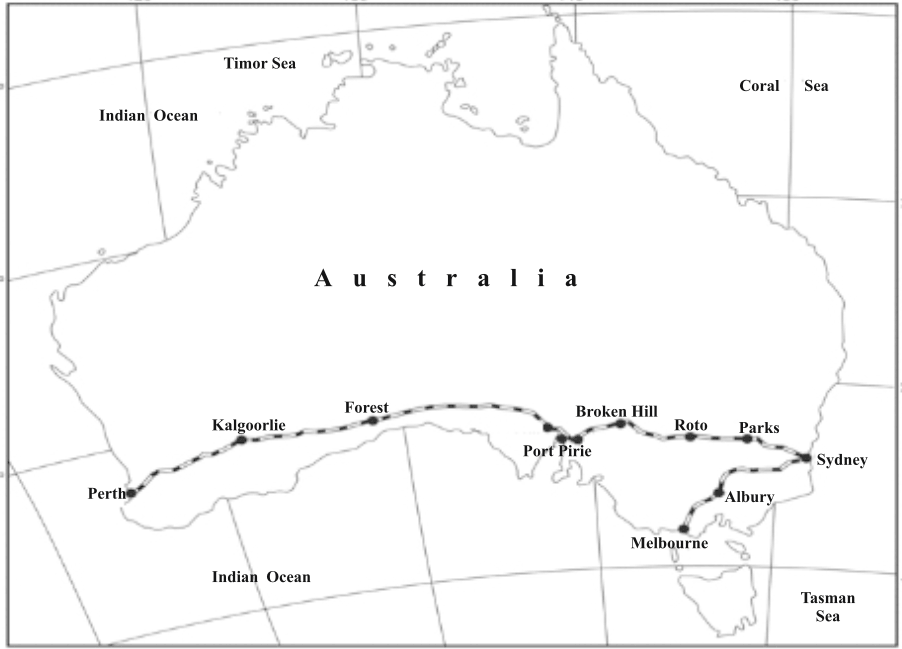
  4. Westโ€“East Australian National Rail Route connects Perth to Sydney.
  5. Major ports Perth, Melbourne and Sydney are connected to their hinterlands by rail routes.

Major Rail routes of the world

Railway Route 

Route & Major Centres

Special Features

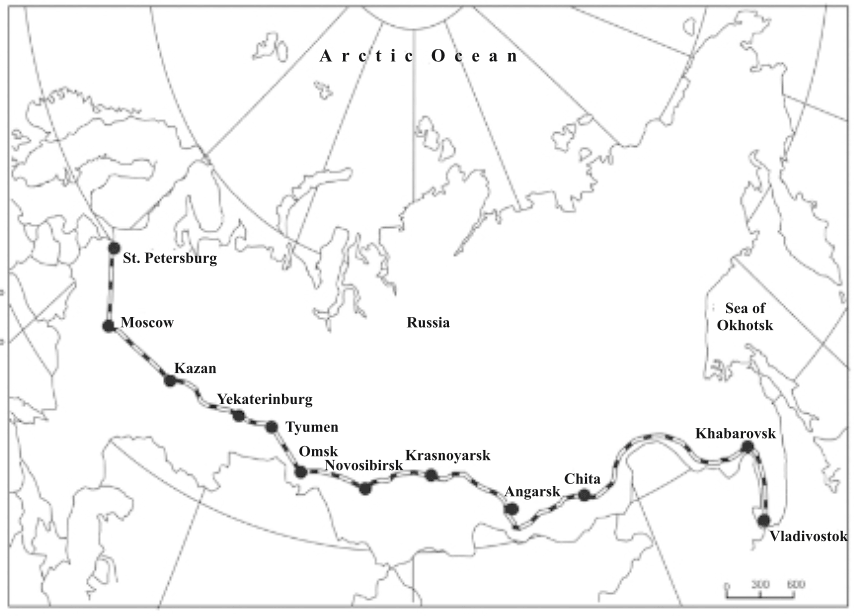
Trans-Siberian Railway (Asiaโ€“Europe, Russia โ€“ 9,560 km)

Leningrad (St. Petersburg) โ†’ Moscow โ†’ Tula โ†’ Kuiveshev (Volga River) โ†’ Ufa (Ural region) โ†’ Viliyaibinstu โ†’ Omsk (Steppes) โ†’ Cheeta โ†’ Vladivostok

  • Longest railway in the world
  • Connects East Russia with West Russia and connects Russia to Western European markets
  • Crosses Ural Mountains
  • Backbone of Siberian economic development
  • Double-lane electrified

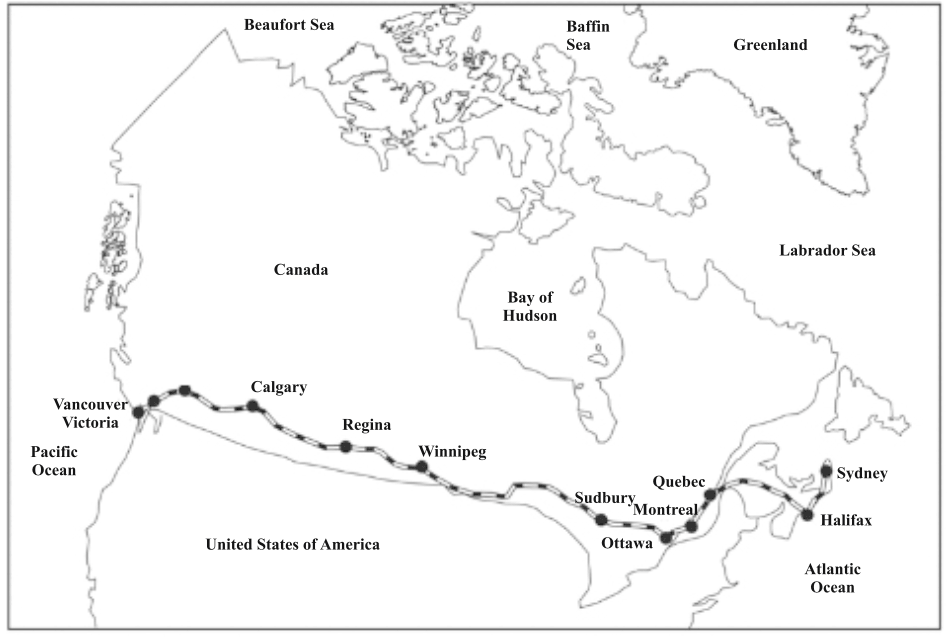
Canadian Pacific Railway (North America, Canada โ€“ 7,050 km)

Atlantic Coast โ†’ Quebec โ†’ Montreal โ†’ Pacific Coast

  • Built in 1886
  • Major eastโ€“west transport corridor

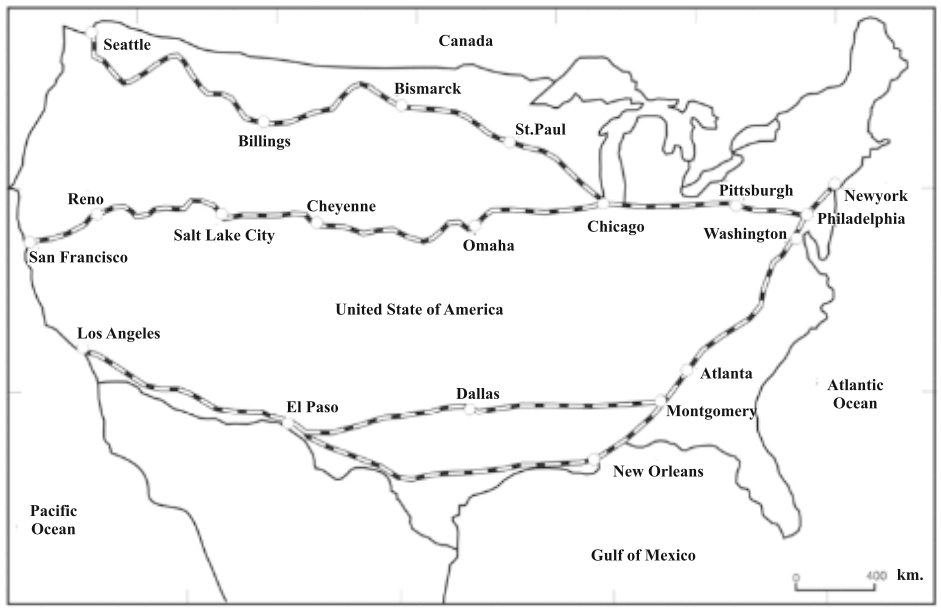
Northern Inter-continental Railway (North America, USA โ€“ 6,100 km)

New York โ†’ Pittsburgh โ†’ Chicago โ†’ Chicago-Gary industrial area (Lake Michigan) โ†’ Bismarck (Prairie region, Saint Paul) โ†’ Rocky Mountain passes & tunnels โ†’ Seattle

  • Longest U.S. rail route
  • Links North-Eastern industrial belt with North-Western region
  • Transports grains, iron-steel, machinery, timber, meat

Central Inter-continental Railway (North America, USA)

New York โ†’ Chicago โ†’ Omaha (River Missouri) โ†’ Platte River Valley โ†’ Cheni City โ†’ Salt Lake City (Inns Pass, Rocky Mts.) โ†’ Sacramento โ†’ San Francisco

  • Passes through Missouri Basin, Rocky Mountains and California Valley
  • Major eastโ€“west trade route

Southern Inter-continental Railway (North America, USA)

New York โ†’ New Orleans โ†’ Los Angeles

  • Passes through major industrial belt
  • Connects Atlantic coast with Pacific coast

Australian Inter-continental Railway (Australia)

Sydney โ†’ Great Dividing Range โ†’ Broken Hill (River Darling) โ†’ Peter Buro โ†’ Port Pirie โ†’ Port Augusta โ†’ Kalgoorlie โ†’ Coolgardie โ†’ Perth

  • Eastโ€“west rail corridor
  • Crosses Great Dividing Range
  • Gauge variation exists
  • Connects mining towns and ports

Orient Express Railway (Europe)

Paris โ†’ Strasbourg โ†’ Munich โ†’ Vienna โ†’ Budapest โ†’ Belgrade โ†’ Istanbul

  • Important international European rail route; transports cheese, pork, oats, liquor, fruits and machinery

Asiatic Railway โ€“ Proposed (Asia)

Istanbul โ†’ Iran โ†’ Pakistan โ†’ India โ†’ Bangladesh โ†’ Myanmar โ†’ Bangkok

  • Proposed route to link Europe with South-East Asia

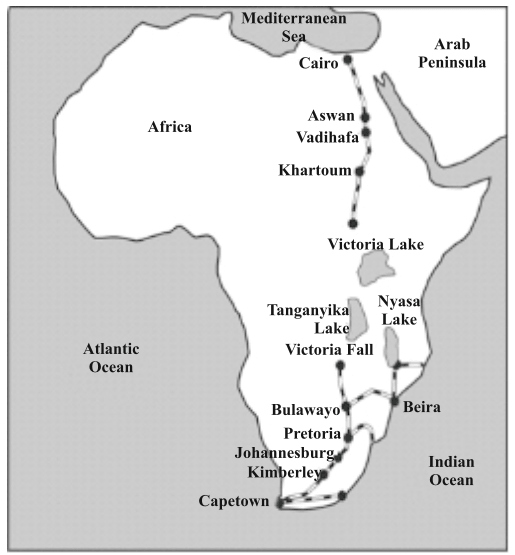
Capeโ€“Cairo Railway โ€“ Proposed (Africa โ€“ 14,000 km)

Cairo โ†’ Sudan โ†’ Central Africa (missing link) โ†’ Zimbabwe โ†’ Pretoria โ†’ Kimberley (Gold mine) โ†’ Cape Town

  • Would unite North and South Africa
  • Only northern and southern sections completed
  • Central section undeveloped due to forests, mountains and backwardness
Trans-Siberian Railway
Trans-Canadian Rail route
Intercontinental Rail route of U.S.A.
Australian Transcontinental Rail route
Cape Cairo Rail route
Water Transport

  • Water transport is the cheapest and most easily available means of transport among all modes.
  • Water routes pass through rivers, lakes, canals and oceans.
  • Mainly used for transporting cheap and heavy goods such as coal, iron ore, iron and steel, cement, grains, etc.
  • Water transport is divided into two categories:
    • Inland Waterways
    • Sea or Ocean Waterways
  • Inland waterways pass through rivers and lakes located within continental or land areas.
  • Only seasonal transport is possible in rivers and lakes that dry up in summer or freeze in winter.
  • Inland water transport is well developed in regions having large rivers with sufficient and regular water flow.
  • The major inland waterways of the world are found in areas with big perennial rivers.

Major Inland Waterways of the World

Continent

Details

Europe

  • Major Rivers / Waterways: 
    • Rhine, Seine, Po are rivers flowing towards north and  
    • Danube, Don, Dnieper, Dniester are rivers flowing towards south, 
    • Volga river falling into the Caspian sea 
  • Navigability & Extent: Widely navigable rivers flowing towards the Atlantic Ocean, Mediterranean Sea and Caspian Sea
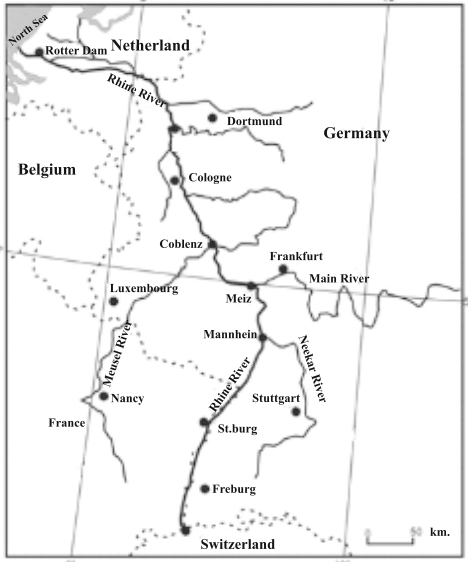
  • Rhineโ€“Rhone waterway is highly navigable. 
  • Importance: Best developed inland waterways in the world
  • Support international trade
  • Extensive canal network
  • Rhineโ€“Rhone is the most used inland waterway, passing through industrial and coal belt regions of Western Europe.

North America

  • Major Rivers / Waterways: 
  • In USA – Great Lakes (Superior, Michigan, Huron, Erie, Ontario), Mississippi, Missouri, Ohio 
  • In Canada – Saskatchewan, Mackenzie, Ottawa. 
  • Navigability & Extent: Great Lakes are fully navigable, Mississippi system is navigable, Saskatchewan, Mackenzie and Ottawa are seasonally navigable. 
  • Importance: Important trade route between USA and Canada
  • Ships move to the mouth of the St. Lawrence River
  • Rivers connect major industrial cities
  • Transport interrupted in winter due to freezing.

Asia

  • Major Rivers / Waterways: 
  • In China – Hwang-Ho, Yangtse-kiang, Sikiang
  • In South-east Asia – Irrawadi, Menan, Sikiang.
  • Navigability & Extent: Hwang-Ho navigable up to about 200 km from the mouth 
  • Yangtse-kiang navigable from Shanghai to Que-kiang
  • Sikiang comparatively more navigable
  • South East Asian rivers are navigable only for short distances. 
  • Importance: Yangtse-kiang is the most important inland waterway of China
  • Limited navigability in many regions
  • Low importance of inland waterways in trade in South-East Asia.

South America

  • Major Rivers / Waterways: Amazon and its tributaries, Parana, Paraguay, Plata. 
  • Navigability & Extent: Amazon system provides about 30,000 km long waterways 
  • Paranaโ€“Paraguayโ€“Plata system navigable up to 1500 km from the mouth. 
  • Importance: Largest inland waterway network in the world
  • Important for Southern Brazil, Argentina and Uruguay.

Africa

  • Major Rivers / Waterways: Nile, Congo, Niger. 
  • Navigability & Extent: Nile navigable mainly near the mouth
  • Congo and Niger are navigable up to 1100 km inland. 
  • Importance: Inland navigation is limited
  • Congo and Niger are important inland transport routes.

Australia

  • Major Rivers / Waterways: Murray, Darling. 
  • Navigability & Extent: Murray and Darling navigable up to 1500 km from the mouth; other rivers are not navigable. 
  • Importance: Only major navigable rivers of Australia; inland water transport is very limited.
Rhine Waterways
Transport Network

Major Ocean Waterways of the World 

Suez Canal Route
Transport Network
Panama Canal Route
Transport Network

Ocean Waterway

Connected Regions / Route

Key Features / Importance

North Atlantic Route

Western Europe โ†” North America (U.S.A. & Canada)

  • Busiest ocean waterway of the world.
  • Carries about ยผ of worldโ€™s international trade.
  • 25% of world ships sail on this route.
  • 30 out of 50 major seaports of the world are located on it.

Mediterranean Seaโ€“Indian Ocean Waterway

Western Europe โ†” Eastern Africa โ†” South Asia โ†” Australia โ†” New Zealand

  • Longest trading route of the world.
  • Serves about 70% of world population.
  • Passes through the ancient Heart Land region.
  • Major ports include Port Said, Aden, Mumbai, Cochin, Colombo, Adelaide

Cape of Good Hope Route

Western Europe & Western Africa โ†” South America

  • Important Atlantic route.
  • Traffic less than the North Atlantic route.
  • Ships pass via Cape Verde Islands to Cape Town harbour.
  • Further connects to Australia and New Zealand

Southern Atlantic Waterway

Eastern South America โ†” Africa โ†” Asia โ†” Australia

  • Exports include wheat, maize, wood, leather, meat, coffee, cotton, tobacco, sugar, machinery, iron-steel, minerals.
  • Major ports: Rio-de-Janeiro, Santiago, Buenos Aires, Bahia Blanca

Caribbean Sea Route

Caribbean countries โ†” Gulf of Mexico โ†” U.S.A.

  • Short-distance route. 
  • Major exports include sugar, coconut, coffee, banana, petroleum, iron ore, bauxite.
  • Linked via Panama Canal

Pacific Ocean Waterways

Americas โ†” East & South-East Asia โ†” Australia & New Zealand

  • Spread in 12% area but trade comparatively less.
  • Main route passes through Honolulu (Hawaii) in the middle of North Pacific ocean.
  • This waterway is divided into two waterways:
  • The northern route goes to Japan, China, Philippines, Indonesia.
  • Southern route to Australia & New Zealand

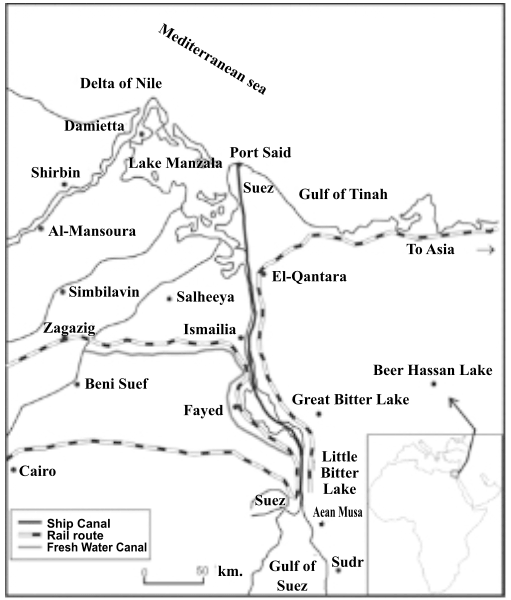
Suez Canal Route

Mediterranean Sea โ†” Red Sea โ†” Indian Ocean (North America โ†” Europe โ†” Asian countries โ†” Australia & New Zealand)

  • Artificial canal in Egypt
  • 162 km long
  • Inaugurated in 1869 
  • Nationalized in 1956.
  • Saves 1600 km between Liverpoolโ€“Colombo
  • About 100 ships sail daily

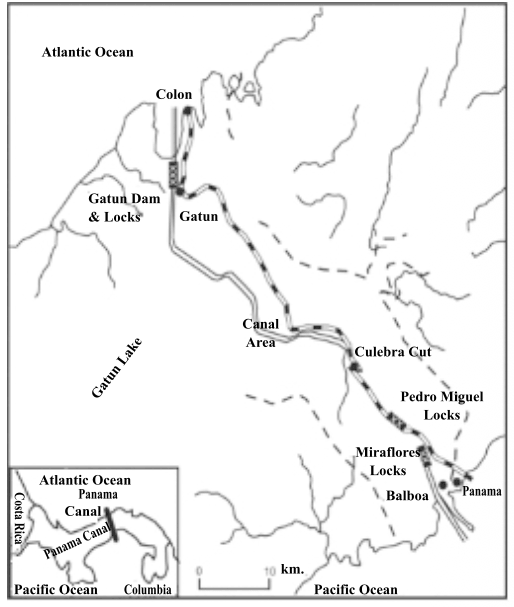
Panama Canal Route

Atlantic Ocean โ†” Pacific Ocean

  • 82 km long canal.
  • Inaugurated 15 August 1914
  • Uses lock system (Gatun, Pedro Miguel, Miraflores)
  • Saves 13,000 km between New Yorkโ€“San Francisco
  • Important for South American economy

Air Transport

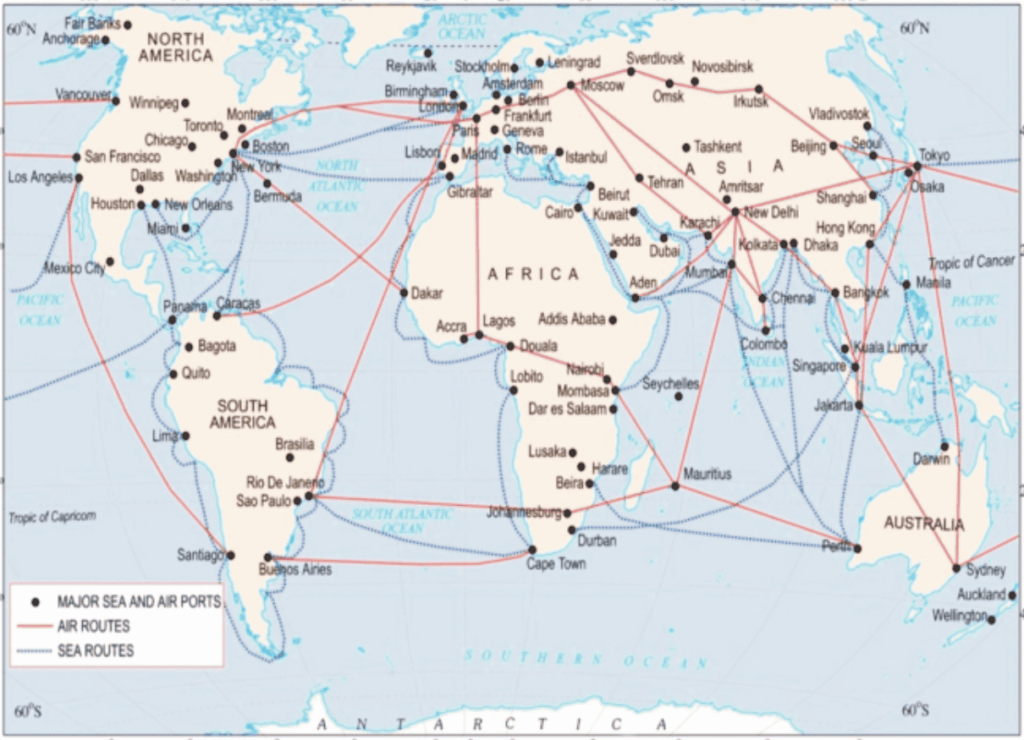
Major Sea & Air routes of the world
Transport Network

Type of Airways

Features

Inter-Continental Global Airways

  • These are the routes of the longest journeys.
  • (i) New York โ€“ London โ€“ Paris โ€“ Rome โ€“ Cairo โ€“ Delhi โ€“ Mumbai โ€“ Kolkata โ€“ Hong Kong โ€“ Tokyo airway. It is the longest airway.
  • (ii) New York โ€“ San Francisco โ€“ Honolulu โ€“ Hong Kong โ€“ Adelaide โ€“ Perth route, which crosses the Pacific Ocean.

Continental Airways

  • Airways between different countries of a continent, such as: 
  • (i) New York โ€“ Chicago โ€“ Montreal route 
  • (ii) London โ€“ Paris โ€“ Frankfurt โ€“ Prague โ€“ Warsaw route 
  • (iii) London โ€“ Frankfurt โ€“ Warsaw โ€“ Moscow airway 
  • (iv) Delhi โ€“ Kolkata โ€“ Hong Kong โ€“ Tokyo route

National Airways

  • Used for long-distance journeys within a country, such as: 
  • (i) New York โ€“ Chicago โ€“ San Francisco route 
  • (ii) Leningrad โ€“ Moscow route 
  • (iii) Delhi โ€“ Kanpur โ€“ Patna โ€“ Kolkata route

Regional Airways

  • Shorter journeys within a region are made by airways to save time. 
  • Such regional airways have developed in rich countries like the U.S.A., U.S.S.R., Germany, Britain, Japan, Canada, Australia, etc., and their use is constantly increasing.

Local Airways

  • Local air travel is usually done by means of helicopters.

Special / Official Airways

  • Journeys of heads of states, administrators, army officers, and those related to war, diplomatic, and political importance are carried out by various kinds of aeroplanes and helicopters.

Major Airports of the World

ContinentMajor Airports / Cities
North AmericaNew York, New Orleans, Chicago, San Francisco, Los Angeles (U.S.A.); Montreal, Ottawa (Canada); Mexico City
South AmericaRio-de-Janeiro, Buenos Aires, Santiago, etc.
EuropeLondon, Paris, Berlin, Rome, Moscow, etc.
AsiaTokyo, Shanghai, Beijing, Bangkok, Singapore, Jakarta, Rangoon, Kolkata, Mumbai, Delhi, Chennai, Karachi, Colombo, etc.
AfricaCape Town, Addis Ababa, Nairobi, Cairo, etc.
AustraliaSydney, Melbourne, Perth, Canberra, etc.

Pipeline Transport

  • Pipelines are the most modern means of transport.
  • Through pipelines, crude oil reaches the refineries and purified petroleum products reach the consumer centres.
  • Transport of natural gas is also done by pipelines.
  • Greater density of pipelines in the world is found in Europe and Middle East countries.
  • Pipelines ensure uninterrupted flow and transport of liquid and gaseous materials such as water, petroleum and natural gas.
  • Supply of domestic gas and L.P.G. in many parts of the world is done by pipelines.
  • In New Zealand, milk is sent from farms to factories by means of pipelines.
  • A dense network of oil pipelines exists between producing areas and consumer centres in the U.S.A.
  • Pipelines are used to connect oil wells with refineries, ports and domestic markets.
  • Pipelines have been extended to Iran and some ports of China from Turkmenistan in Central Asia.
  • The proposed Iranโ€“India gas pipeline via Pakistan will be the longest international oil and natural gas pipeline in the world.

Major Pipelines of the World

Pipeline Name

Details 

Big Inch Pipeline

  • Oil is transported through this pipeline from the coastal wells of the Gulf of Mexico to the north-eastern states of the U.S.A.

TAP Line (Trans-Arabian Peninsula) Pipeline

  • This pipeline connects the oil wells near the Persian Gulf to Sidon. 
  • Its total length is more than 1600 km.

TAP Pipeline (Trans Adriatic Pipeline)

  • It carries gas from Azerbaijanโ€™s Shah Deniz-II gas field to Europe.
  • Azerbaijan โ†’ Georgia โ†’ Turkey โ†’ Greece โ†’ Albania โ†’ Adriatic Sea โ†’ Italy.
  • Approx. 878 km (onshore + offshore).
  • Operational since 2020.

COMECON Pipeline

  • Located in the erstwhile U.S.S.R.
  • Oil is transported from the Volga and Ural oil fields to the countries of Eastern Europe.

O.I.L. Pipeline

  • The 1157 km long, Asiaโ€™s first pipeline, running from Naharkatiya oil field (Assam) to Barauni oil refinery(Bihar), was built by I.O.L. It was extended up to Kanpur in 1966.

H.V.J. Pipeline

  • Haziraโ€“Vijaypurโ€“Jagdishpur (HVJ).
  • Recently, a 1256 km long pipeline from Salaya (Gujarat) to Mathura (U.P.) has been built.

TAPI Pipeline (Still in progress)

  • The Turkmenistanโ€“Afghanistanโ€“Pakistanโ€“India (TAPI) gas pipeline project was inaugurated on 3 December 2015 at Mary (Turkmenistan), a historical Silk Route city. 
  • It is 1814 km long, from Galkynysh (Turkmenistan) to Fazilka (India) via Kandahar (Afghanistan โ€“ 774 km) and Multan (Pakistan โ€“ 826 km).

Leave a Reply

Your email address will not be published. Required fields are marked *

error: Content is protected !!
Scroll to Top
Telegram WhatsApp Chat