

Sources of Rajasthan History provide the foundation for understanding the region’s political, social, and cultural evolution. In the context of Rajasthan History, these sources include literary texts, inscriptions, coins, architecture, and archaeological findings that help historians reconstruct the past accurately.
Sources of Rajasthan History
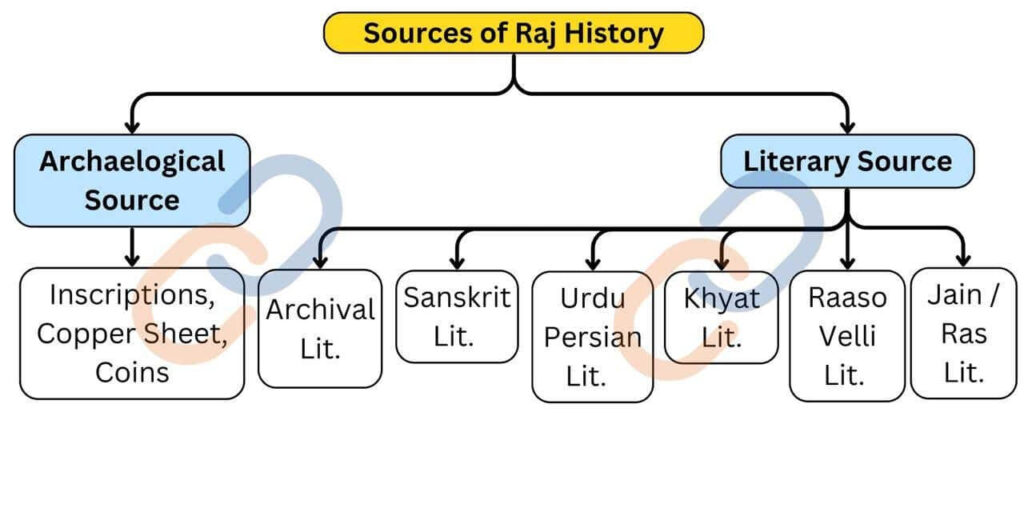
The history of Rajasthan is renowned for its rich and multifaceted heritage. Information about it is derived from historical texts, inscriptions, eulogies, travelers’ accounts, and archaeological materials. Among these, inscriptions serve as the most reliable source, providing precise details about events, dynasties, administrative systems, and cultural trends. The Archaeological Survey of India (established in 1861 CE under the leadership of Alexander Cunningham) laid the foundation for archaeological research in Rajasthan. The first systematic survey in the region was conducted in 1871 CE under the supervision of A.C.L. Carlleyle. Discoveries like the painted rock shelters in Bundi (Chhaja River area), Kota (Chambal River area), Viratnagar (Jaipur), Sohanpura (Sikar), and Harsora (Alwar) serve as remarkable evidence of prehistoric human life and art in Rajasthan.
Painted Rock Shelters
1. Depiction of Swastika Dadikar (Alwar)
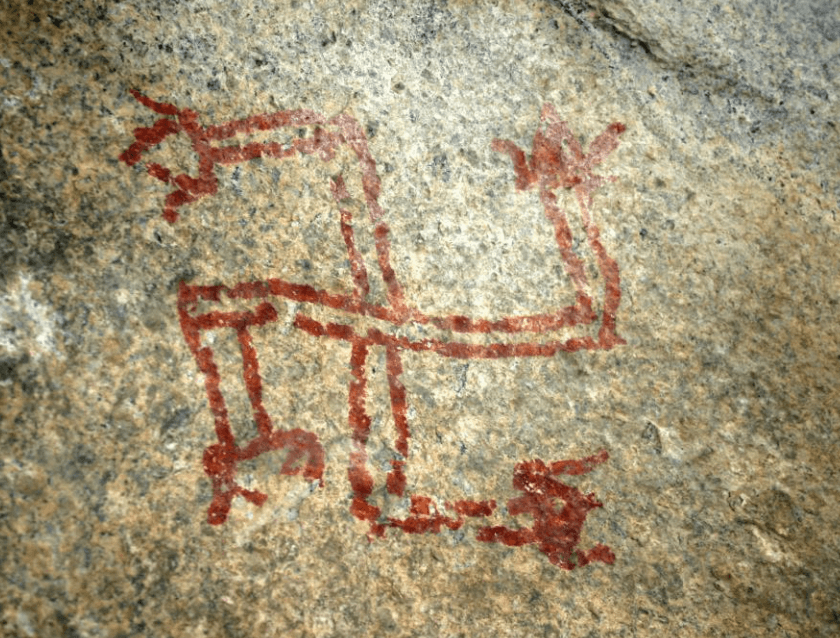
2. Forearms and legs Painting, Dadikar (Alwar)
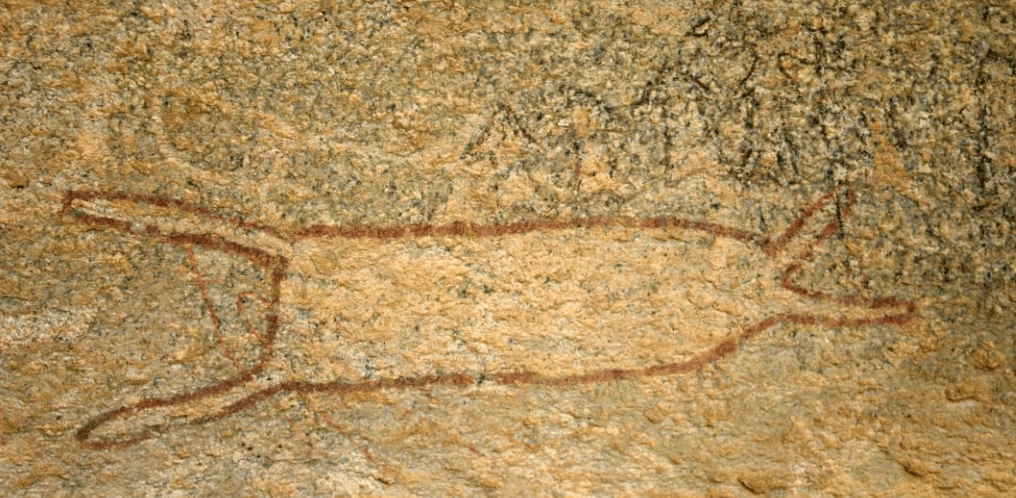
3. Ambush Painting, Dadikar (Alwar)
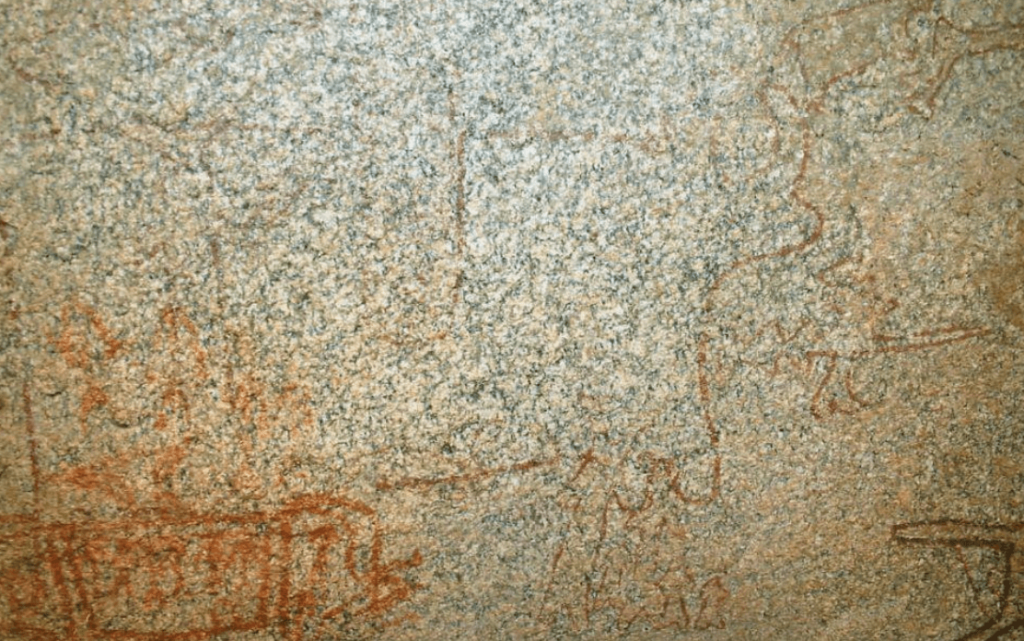
4. Human figure with weapon- Kunjota (Jpr)
5. Painted rock shelter- sohanpura (Sikar)
While studying these sources, it is crucial to understand how historical timelines are structured and defined. A proper comprehension of key terms like BC (Before Christ), AD (Anno Domini), and Vikram Samvat (VS) is essential for accurate interpretation of historical dates.
AD (In the year of Lord) refers to the years after the birth of Christ. It counts time forward,
- BC (Before Christ)
- Refers to the years before the birth of Jesus Christ. It is a counting method that moves backwards in time from the year 1 AD. For example, 1000 BC means 1000 years before Christ’s birth.
- In history, BC helps to mark events that happened before the start of the Gregorian calendar.
- AD (Anno Domini)
- starting from the year 1 AD.
- For example, 2026 AD means 2026 years after the birth of Christ. This is the standard calendar used worldwide today.
- Vikram Samvat (VS)
- This is an ancient Indian calendar system that started in 57 BC with the victory of King Vikramaditya over the Sakas.
- The Vikram Samvat is still widely used in India and Nepal for religious and cultural purposes. It runs parallel to the Gregorian calendar but is 57 years ahead of the Gregorian system. For example, 2026 AD corresponds to 2083 VS.
- Let’s Start Our Journey Through Time 🌍
| Time (BC/AD) | Vikram Samvat (V.S) | Event | Details |
| 10000 BC |  | Stone Age | Early humans lived as hunters-gatherers. |
| 7000 BC |  | Early Farming | Agriculture and Domestication of Animals started. |
| 2600 BC | 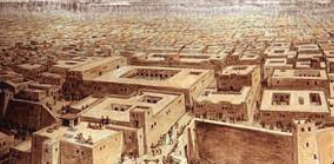 | Harappan Civilization | Advanced urban culture (Harappa, Mohenjo-Daro), Also called (First Urbanization) |
| 1700 BC | 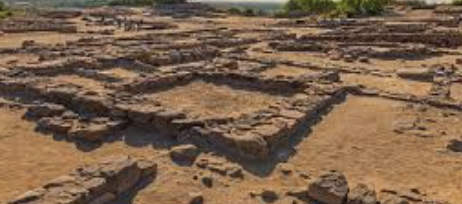 | Decline of the Harappan Civilization | Various theories of decline of civilization |
| 1500 BC | 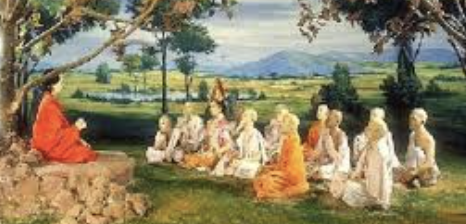 | Vedic Period | Arrival of Aryans. Rigveda composed. Settlements grew along Sarasvati and Ganga rivers. |
| 1200 BC |  | Iron age | Use of iron tools encouraged agriculture and warfare. Formation of early states. |
| 600 BC | 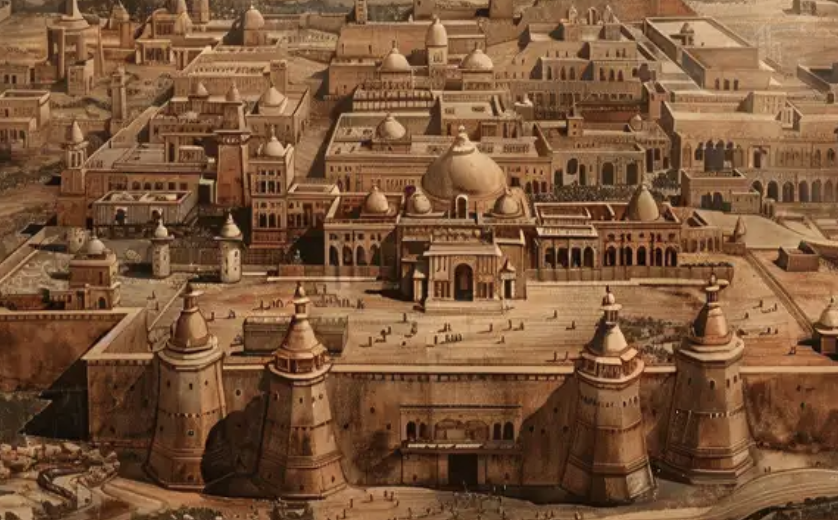 | Rise of Mahajanpada | Second urbanisation phase Large kingdoms like Magadha, Kosala and Avanti emerged, leading to the development of new cities like Pataliputra (modern Patna) and Varanasi. Jainism (Mahavira) and Buddhism (Gautam Buddha) were established. |
| 322 BC |  | Mauryan Empire(322 BC- 185 BC) | Chandragupta Maurya unified India.At this time, Rajasthan, Sindh, Gujarat and Konkan regions were known as Upper Janpad or Western Janpad. |
| 185 BC |  | Fall of the Maurya Empire Invasions of foreign races began on India | The last ruler of Maurya dynasty, Brihadratha, was murdered by his commander Pushyamitra Shunga.After the Mauryans, Rajasthan was divided into small Ganas.Beginning of foreign invasions on Rajasthan (150 BC Menander took over Madhyamika Nagari, Chittor) |
| 57 BC |  Starting of Vikram Samvat Starting of Vikram Samvat | Victory of Chandragupta Vikramaditya | King Vikramaditya defeated the Sakas, marking the beginning of Vikram Samvat. |
| 1 BC | End of BC Era | The last year before Christ’s birth. The timeline shifts to AD (Anno Domini).Fall of foreign tribes Kushan Pahlava from Rajasthan (130 A.D. – 150 A.D.) | |
| AD 1 |  | Birth of Christ | Beginning of Anno Domini (AD) era. |
| 320 AD |  | Gupta Period | Shree Gupta establishes Gupta dynasty |
| 646 AD |  | End of Vardhan Dynasty | Lack of strong centre power, as resultMany Rajput dynasties (Pratihara, Chauhan, Guhil, Parmar) were established in Rajasthan |
| 8th – 12thAD |  | Rajput Era | Era of Rajput in rajasthan. |
| 1947 AD | 2004 V.S | India’s Independence | |
| 2026 AD (Present) | 2083 V.S | Modern Era | The current year in Vikram Samvat is 2083 (2026+57) and in AD is 2026. |
Major Inscriptions and Eulogies of Rajasthan
Now that we have grasped the foundation of historical timelines, we can proceed to explore Rajasthan’s historical sources in greater detail.
|
S.No |
Year |
Place |
Language/Script |
Key Facts |
|
1. |
443 BC |
Barli, Ajmer |
Script – Brahmi |
|
|
2. |
250 BC |
Bairath, Jaipur |
Language – PrakritScript – Sanskrit |
|
|
3. |
2nd century BC |
Ghosundi, Chittor |
Language – SanskritScript – Brahmi |
|
|
4. |
225 AD |
Nandsa Yupe Stambha, Bhilwara |
Language – Sanskrit |
|
|
5. |
227 AD |
Barnala Yupe Stambha, Jaipur |
Language – Sanskrit |
|
|
6. |
238-239 AD |
Badwa Stambha, Baran |
Language – Sanskrit |
|
|
7. |
423 AD |
Gungdhar, Jhalawar |
Language – Sanskrit |
|
|
8. |
424 AD |
Nagari |
Language – Sanskrit |
|
|
9. |
490 AD |
Bharamar Mata, Pratapgarh |
Language – Sanskrit |
|
|
10. |
625 AD |
Basantgarh, Sirohi |
Language – Sanskrit |
|
|
11. |
646 AD |
Samoli, Mewar |
Language – SanskritScript – Kutil |
|
|
12. |
661 AD |
Nadi Village, Mewar |
Language – Sanskrit Script – kutil |
|
|
13. |
685 AD |
Mandore, Jodhpur |
Language – Sanskrit |
|
|
14. |
713 AD |
Manmori, Chittor |
Language – Sanskrit |
|
|
15. |
738 AD |
Kanaswan, Kota |
Language – Sanskrit |
|
|
16. |
861 AD |
Ghantiyala, Jodhpur |
Language – Sanskrit |
|
|
17. |
861 AD |
Ghantiyala, Jodhpur |
Marathi Verses & Sanskrit |
|
|
18. |
865 AD |
Osian, Jodhpur |
Language – Sanskrit |
|
|
19. |
880 AD |
Gwalior Eulogy |
Language – SanskritScript – Brahmi |
|
|
20. |
971 AD |
Nath Prashasti |
Language – SanskritScript – Devanagari |
|
|
21. |
973 AD |
Harshnath Eulogy |
Language – Sanskrit |
|
|
22. |
977 AD |
Aahad |
Language – Sanskrit |
|
|
23. |
1170 AD |
Bijolia inscription |
Language – Sanskrit |
|
|
24. |
1285 AD |
Achleshwar Inscription |
Language – Sanskrit |
|
|
25. |
1325 AD |
Dhaibipeer’s dargah |
|
|
|
26. |
1439 AD |
Ranakpur Eulogy |
Language – SanskritScript – Nagri |
|
|
27. |
1460 AD |
Kirti Stambh Eulogy |
Language – Sanskrit |
|
|
28. |
1460 AD |
Kumbhalgarh Eulogy |
Language – SanskritScript – Nagri |
|
|
29. |
1535 AD |
Copper plates of Pur |
|
|
|
30. |
1675 AD |
Trimukhi Stepwell Eulogy |
|
|
|
31. |
1676 AD |
Rajsingh Eulogy |
Language-Sanskrit |
|

FAQ (Previous year questions)
About : The Ghosundi inscription, dating back to the 2nd century BC, is a Sanskrit inscription written in Brahmi script, found in Ghosundi, Chittor.
Significance: The Ghosundi inscription is the oldest known reference to the Vaishnava / Bhagwat sect.
It provides evidence of the performance of Ashvamedha Yajna by King Sarvatata, highlighting the religious practices of the time.
The inscription mentions the deities Krishna and Sankarshana (Balram), emphasizing their significance in local religious practices.



