

Buffer solutions are aqueous solutions that resist changes in pH when small amounts of acid or base are added to them.
- They prevent changes in pH by utilizing the equilibrium between a weak acid and its conjugate base (or a weak base and its conjugate acid) to neutralize added acid or base, maintaining the pH of the solution within a relatively narrow range.
Eg Blood maintain pH of 7.4 → contain carbonate/bicarbonate buffer –
Acidic Buffer Solutions: | Basic Buffer Solutions: |
Examples
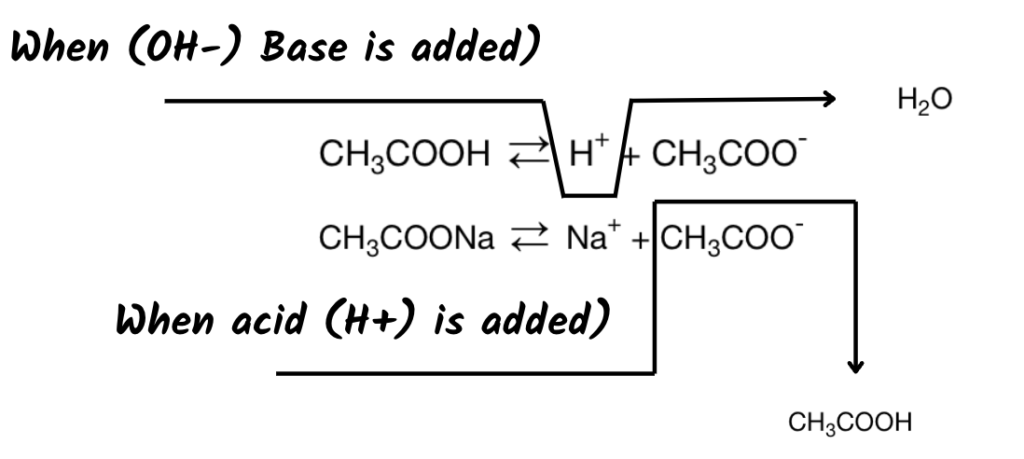 |
Examples
Ammonia/Ammonium Chloride Reaction with Acid (Hydrochloric Acid, HCl): NH3 + HCl →NH4Cl Reaction with Base (Sodium Hydroxide, NaOH): NH4Cl +NaOH →NH3 + NaCl + H2O |



