

A robot is a programmable machine capable of carrying out a complex series of actions automatically, often controlled by computer programs or algorithms.
Increasing integration of intelligent machines into daily life, from cobots to driverless cars, is reshaping economies.
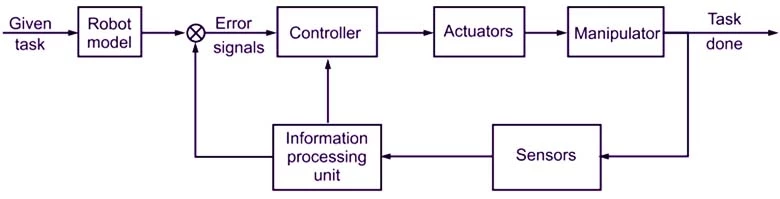
Reasons for robots surge :
- Robots are becoming cheaper than human
- Robots are rapidly becoming more capable : Innovations in AI, machine learning, and computing power
- Demand for manufactured goods is rising, and countries like china is investing heavily in robots to position itself as the global manufacturing leader
Impact on economies
Opportunities | Challenges |
|
|
Reshaping of the labor market highlights the need for proactive measures to address the social impacts of automation and mitigate potential inequalities.
| Aspect | Top-Down | Bottom-Up |
| Process | Subtractive (removal of material). | Additive (building from atoms/molecules). |
| Precision | High precision in patterning. | Intricate structures but less precise. |
| Waste | Generates material waste. | Minimal waste. |
| Applications | Electronics (chips, circuits). | Drug delivery, quantum dots, carbon nanotubes. |
| Cost | High due to expensive equipment. | More cost-effective for complex structures. |
| Scalability | Suitable for mass production. | Difficult to scale industrially. |
Nanotechnology in Indian Agriculture
- Faster Seed Germination: Nano-priming with zinc and titanium dioxide speeds up germination.
- Irrigation Automation: For example, Nano Ganesh allows farmers to control irrigation pumps remotely via mobile phones.
- Nano Fertilizers: Nano-fertilizers increase nutrition absorption, reducing waste and environmental impact. Example: Nano-Urea, Nano-DAP developed by IFFCO.
- Precision Farming: Nano-sensors monitor soil health, pH, moisture, and nutrient levels.
- Pest and Disease Control: Nano-pesticides target pests precisely, minimizing environmental damage. Example: Nano-silver for fungal infections.
- Water Management: Nano-coatings improve water retention and soil hydration. Example: Hydrophobic nano-coatings, Nano porous zeolite → improve water holding capacity of soil.
- Genetic Engineering: Development of genetically modified crops with drought tolerance and pest resistance. Example: Bt Cotton, HtBt Brinjal.
- Sustainable Agriculture: Reduces chemical dependency and promotes eco-friendly practices.
The integration of AI and nanotechnology offers sustainable farming solutions, enhancing efficiency, crop yield, and resource optimization, paving the way for a more eco-friendly and advanced agricultural system in India.
- Nanotechnology involves manipulating matter at the scale of 1 to 100 nanometers, where materials exhibit unique physical, chemical, electrical, biological, and optical properties governed by quantum physics.
- The fascination with nanotechnology largely arises from the unique quantum and surface phenomena that matter displays at the nanoscale.
Applications of Nanotechnology:
- Medicine and Healthcare:
- Nanorobots deliver drugs to specific cells or tissues, enhancing efficacy and reducing side effects.
- Cordy Gold Nanoparticles (Cor-AuNPs), can make drug delivery in the human body faster and surer.
- Gold nanoparticles are used to locate and eliminate cancer cells
- Nanoelectronics: Nanomaterials like carbon nanotubes and quantum dots are used to develop smaller, faster, and more efficient electronic devices, such as transistors and memory storage.
- Energy:
- Nanomaterials like perovskite and quantum dots are used to improve the efficiency and cost-effectiveness of solar cells.
- Organic nanogenerator that harvests light energy can power wearable devices on the go
- Materials Science:
- Strengthening Materials: Nanocomposites. For example, carbon nanotubes reinforce polymers in sports equipment and aerospace components.
- Self-Cleaning Surfaces:Nanostructured coatings repel water and dirt, creating self-cleaning surfaces. Ex Silica-based nanocomposites
- Environment:
- Water Purification: Silver nanoparticles (Ag NPs) are highly toxic to microorganisms.
- Air Filtration: Nanofiber filters with high surface area and porosity are employed.
- Food and Agriculture:
- Food Packaging: Bio-Nanocomposite materials. Eg. starch and cellulose derivatives, Ca, Zn.
- Precision Agriculture: Nanosensors
- Nano porous zeolite → improve water holding capacity of soil
- Other industrial application :
- Tiny carbon ‘flowers’ turn light to heat at unrivalled efficiency
- IIT Ropar’s Air nano-bubble technology to reduce 90 percent water use in textile
By prioritising safety measures and continued research into nano toxicity, we can harness the full potential of nanotechnology for sustainable and responsible innovation.
A. How is quantum computing different from traditional computing?
Aspect | Traditional Computing | Quantum Computing |
Basic Unit | Bits (0 or 1) 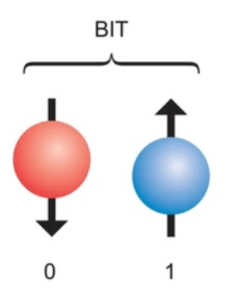 | Qubits (0, 1, or both simultaneously) 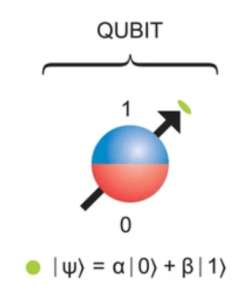 |
Governed by | Classical physics | Quantum physics→ Quantum Entanglement and Quantum Superposition |
Processing | Sequential processing | Parallel processing |
Calculation Speed | Limited by classical physics and Moore’s Law | Exponential speedup potential due to quantum parallelism. |
Power | Power increases in a 1:1 relationships with transistors | Power increases exponentially in proportion to number of qubits |
Noise tolerance | Minimal inherent noise | Extremely sensitive to noise (Decoherence) |
Measurement | Provides definite values for bits | Probabilistic measurement |
Copy operation | No restriction on copying | Copying quantum information destroys quantum state |
Temperature of Working | Operates at room temperature | Typically requires cryogenic temperatures for stability |
Processing Method | Classical logic gates (AND, OR, NOT) | Quantum gates (Hadamard, CNOT) |
Applications | General-purpose computing | integer factorization, optimization, and quantum simulation. |
B. What are superposition and entanglement?
(Quantum Entanglement → Enables correlations between qubits
Quantum Superposition → Allows qubits to exist in multiple states simultaneously)
Superposition:
- Superposition refers to the ability of a quantum system, such as a qubit (quantum bit), to exist in multiple states simultaneously.
- A qubit in superposition can represent both 0 and 1 at the same time, in various proportions.
- This property allows quantum computers to perform multiple calculations simultaneously, enabling massive parallelism and potentially speeding up certain computations exponentially.
Entanglement:
- Entanglement is a phenomenon where the quantum states of two or more particles (qubit pairs) become correlated in such a way that the state of one particle cannot be described independently of the state of the others, even when they are separated by large distances.
- This means that the state of one particle instantly influences the state of the other(s), regardless of the distance between them.
- It allows for the creation of highly correlated qubits, which can be used to perform complex computations and enable secure communication protocols like quantum cryptography
C. Enlist the salient provisions of the National Quantum Mission.
National Quantum Mission (NQM)
- Implementation: launched by the Department of Science & Technology (DST), with a total cost of Rs. 6000 crore from 2023-24 to 2030-31.
- Objective: The mission aims to seed, nurture, and scale up scientific and industrial R&D in Quantum Technology (QT), fostering a vibrant and innovative ecosystem.
- Mission Deliverables:
- Develop intermediate-scale quantum computers (50-1000 physical qubits) , Establish satellite-based secure quantum communications, Develop high-sensitivity magnetometers and Atomic Clocks for precision timing.
- Mission Implementation: Establish four Thematic Hubs (T-Hubs) at top academic and National R&D institutes focusing on:
- Quantum Computing
- Quantum Communication
- Quantum Sensing & Metrology
- Quantum Materials & Devices
A. National Quantum Mission (NQM): A Leap Towards Quantum Future
- Approved in April 2023 with ₹6,003 crore for 8 years (2023–2031).
- Objective →
- Seed, nurture, and scale up scientific and industrial R&D in Quantum Technologies (QT).
- Build a vibrant ecosystem to position India as a global leader in Quantum Technology & Applications (QTA).
- Implemented by → Department of Science & Technology (DST).
- Focus → Quantum Communication, Computation, Sensing & Metrology, and Materials & Devices.
- Structure → 4 Thematic Hubs at IISc, IIT Madras, IIT Bombay, IIT Delhi.
- Key Goals →
- Develop 50–1000 qubit quantum computers.
- Secure satellite-based quantum communication (2000 km).
- Quantum materials like superconductors and sensors.
- Significance → Boosts national security, economy ($125 bn market), and global scientific stature.
B. Quantum Communication
- Quantum communication uses the principles of quantum mechanics, especially quantum entanglement and superposition, to enable highly secure data transmission.
- Key Feature → Provides unhackable security through Quantum Key Distribution (QKD).
- Applications:
- Military and defense secure communications.
- Secure banking and financial transactions.
- Indian Initiatives:
- Satellite-based quantum communication (ISRO, DRDO projects).
- National Quantum Mission (NQM) targets 2000 km quantum communication network within India.
- Quantum Communication Hub → spearheaded by the Indian Institute of Technology (IIT) Madras in collaboration with the Centre for Development of Telematics (C-DOT), New Delhi.
- Global Relevance → Critical in quantum internet development, countering cyber threats.
- Significance → Enhances national security, strategic autonomy, and technological leadership.


