

Nano Technology for RAS Prelims: Basics, Types and Applications is an important topic in Science and Technology that focuses on the study and application of materials at the nanoscale (1–100 nanometers). It enables the development of advanced materials with unique physical and chemical properties.
Under this topic, we will study the basic concepts, types, and applications of nanotechnology in areas such as medicine, electronics, environment, and industry.
This post is written for the RAS Prelims examination; click here to read the detailed version for the RAS Mains exam.
Nano Technology: Types and Applications
Introduction
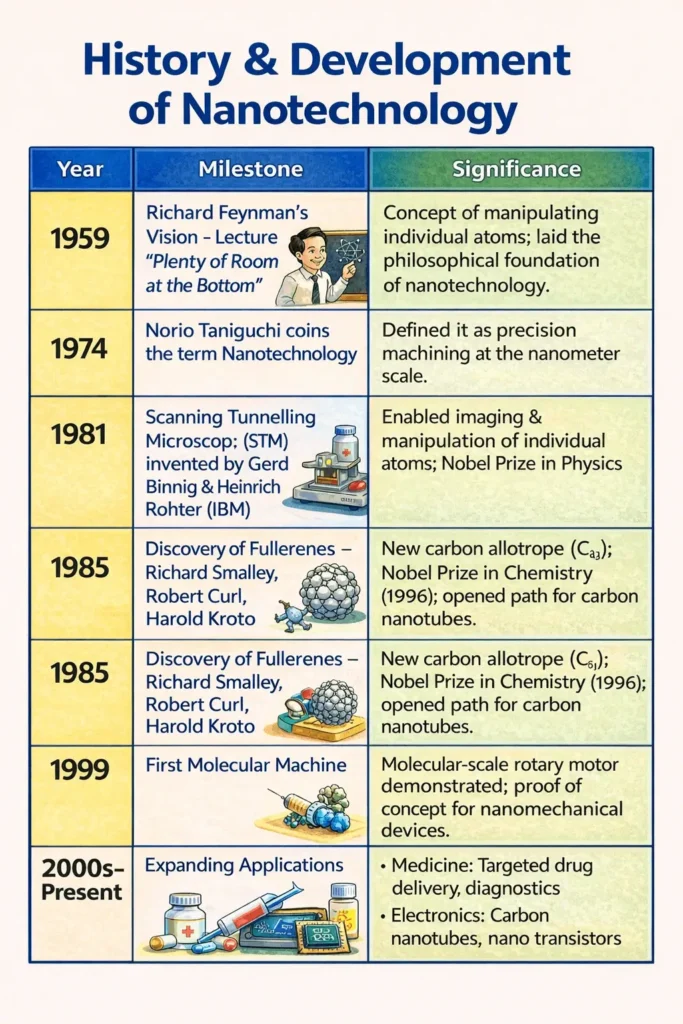
- Nanotechnology involves the manipulation and control of matter at the nanoscale, typically in the range of 1 to 100 nanometers. (1 nm = 10-9 metres).
- The concept behind nanotechnology is a research paper “There’s Plenty of Room at the Bottom” by physicist Richard Feynman in 1959.
- The term nanotechnology was coined by Professor Norio Taniguchi.
Characteristics of Nanotechnology
- The properties of nanomaterials are different from those of micromaterials or bulk materials due to their size and surface effects.
- Nanoparticles have a high surface area to volume ratio compared to bulk materials.
- This characteristic gives them unique properties, such as enhanced chemical reactivity, strength, and the ability to absorb more molecules, making them ideal for applications in fields like medicine, electronics, and energy.
- Nanoscale Dimensions:
- 1 nanometer = one billionth of a meter (10⁻⁹ meters).
- Comparison:
- A sheet of paper is about 100,000 nm thick.
- A virus (~100 nm), DNA strand (~2 nm in diameter).
- A single human hair is about 80,000–100,000 nm wide.
Key Properties of Nanomaterials
- Quantum Effects:
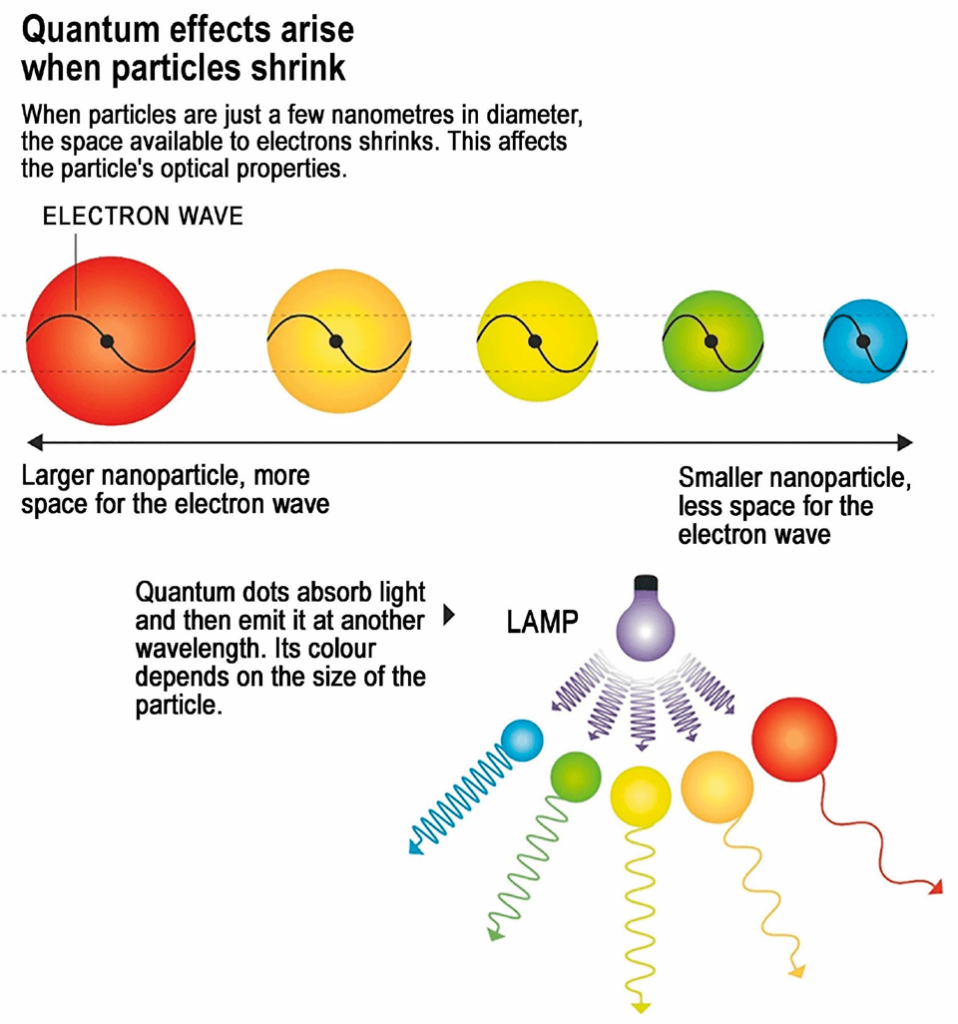
- Quantum Confinement: Restricted electron movement leads to discrete energy levels, changing electrical, optical, and magnetic properties.
- Example (Optical): Quantum dots emit different colors based on size (used in LED displays, medical imaging).
- Example (Electrical): Electron tunneling (used in tunneling diodes).
- Superparamagnetism: Materials become magnetic only when exposed to an external magnetic field (e.g., MRI contrast agents).
- Quantum Confinement: Restricted electron movement leads to discrete energy levels, changing electrical, optical, and magnetic properties.
- High Surface Area-to-Volume Ratio: Enhances reactivity and strength.
- Example (Reactivity): Nanocatalysts (e.g., platinum, gold) speed up chemical reactions in fuel cells and automotive industry.
- Enhanced Strength: Materials like Carbon Nanotubes (CNTs) are incredibly strong and light due to structure.
- Improved Properties: Better solubility, conductivity, and increased interaction with biological systems.
- Melting Point Reduction: The melting point drops significantly as particle size decreases (e.g., gold).
- Capillary Forces: Significant due to the large surface area.
- Nanoscale Friction:
- Governed by surface forces (e.g., van der Waals forces) and atomic interactions.
- High surface-to-volume ratio increases contact area and potential for friction.
- Managing nanoscale friction is essential for nanotechnology applications like MEMS and nanorobotics.
Types of Nano Materials
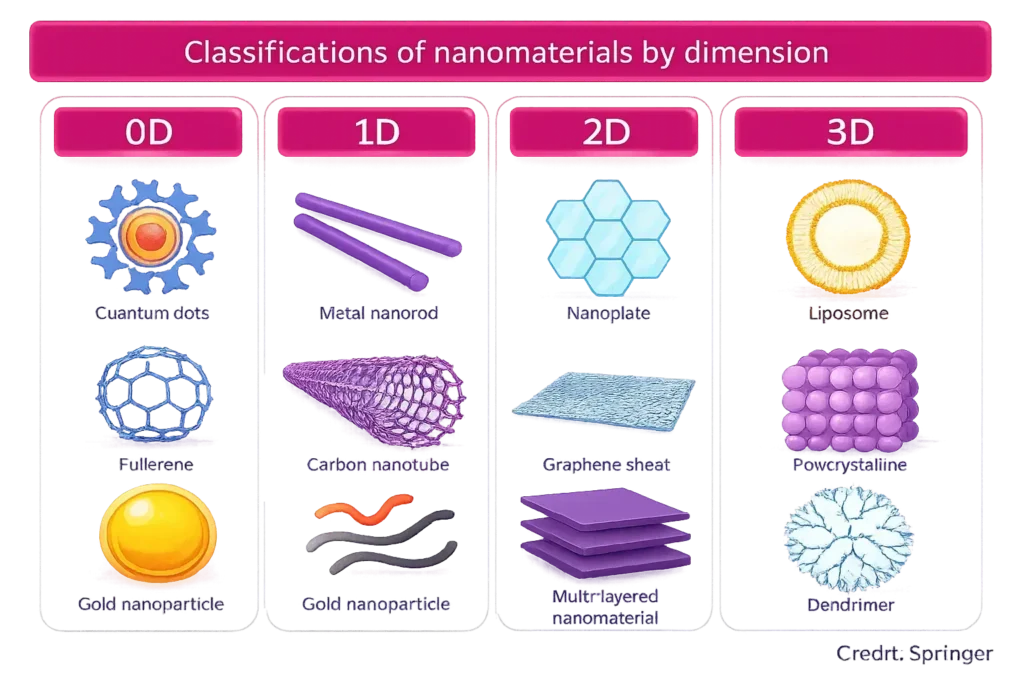
A. Classification of Nanomaterials by Dimensions
| Dimension | Meaning | Examples |
| 0D | All three dimensions (Length, width, and height) < 100 nm | Quantum dots, fullerenes, nanoparticles (dots) |
| 1D | One large dimension, two nanoscale | CNTs, nanowires, nanorods (wires or tubes) |
| 2D | One nanoscale (thickness), two larger | Graphene, nanosheets, thin films (sheets or layers), Quantum well |
| 3D | Assembled from nanoscale units | Nanocomposites, dendrimers, nanoparticle aggregates |
Carbon Allotropes: Dimension + Structure
| Allotrope | Dimension | Structure |
| Fullerene (C₆₀) | 0D | Spherical (soccer-ball like) |
| Carbon Nanotube | 1D | Cylindrical tube |
| Graphene | 2D | Single sheet of carbon atoms |
| Graphite / Diamond | 3D | Graphite = layered sheets; Diamond = rigid 3D network |
B. Types Based on Composition:
- Organic/Carbon-Based: Carbon Nanotubes (CNTs), Fullerenes.
- Inorganic/Metal-Based: Nanosilver, Nanogold, Quantum Dots, Metal Oxides (e.g., titanium dioxide).
- Nanocomposites: Combinations of nanomaterials with other materials (e.g., nanosized clays in plastics).
- Dendrimers: Branched polymers with a tree-like structure, useful in drug delivery and molecular recognition due to their high surface area and functionalization capabilities.
C. Special Types:
- Nanoporous Materials: Contain nanopores; used in filtration and catalysis.
- Nanofibers: Fibrous (polymer/carbon); high surface area, used in filtration, textiles, tissue engineering.
- Nanocapsules: Hollow nanoparticles for controlled, targeted drug delivery.
- Nanofoams: Solid/liquid matrices filled with gas; used for insulation and lightweight materials.
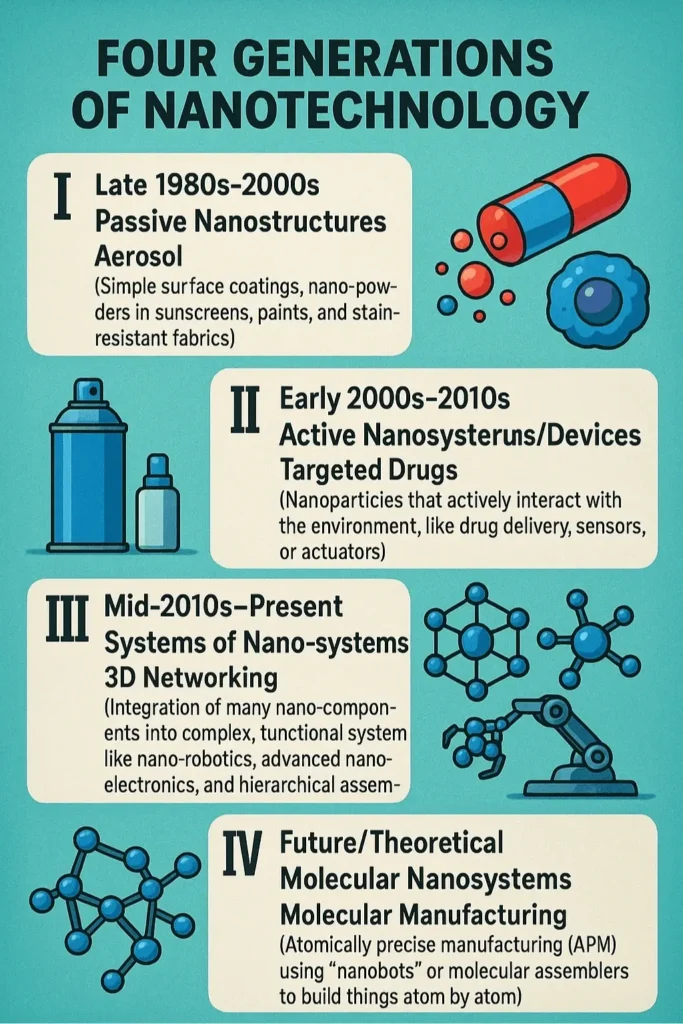
Four Generations of Nanotechnology
| Gen. | Timeline | Technical Name | Examples |
| I | Late 1980s- 2000s | Passive Nanostructures | Aerosol (Simple surface coatings, nano-powders in sunscreens, paints, and stain-resistant fabrics). |
| II | Early 2000s- 2010s | Active Nanostructures/Devices | Targeted Drugs (Nanoparticles that actively interact with the environment, like drug delivery, sensors, or actuators). |
| III | Mid-2010s – Present | Systems of Nano-systems | 3D Networking (Integration of many nano-components into complex, functional systems like nano-robotics, advanced nano-electronics, and hierarchical assembly). |
| IV | Future/Theoretical | Molecular Nanosystems | Molecular Manufacturing (Atomically precise manufacturing (APM) using “nanobots” or molecular assemblers to build things atom by atom). |
Nanofabrication Techniques
- Top-Down Approach (Sculpting):
- Starts with bulk material, removes parts to get nanoscale dimensions.
- Techniques: Lithography (Photo, EBL, X-ray), Etching (RIE, Wet, Laser Ablation).
- Examples: Microchips, Nano-patterning for solar cells.
- Pros: High precision, suitable for large-scale production.
- Cons: Wasteful, expensive (sophisticated tools).
- Bottom-Up Approach (Building):
- Starts at the atomic/molecular level, builds structures via self-assembly or chemical synthesis.
- Techniques: Self-Assembly (DNA Nanotechnology), Chemical Vapor Deposition (CVD), Atomic Layer Deposition (ALD), Epitaxial Growth, Colloidal Synthesis.
- Examples: Quantum dots, Carbon nanotubes, Drug delivery systems.
- Pros: Minimal waste, enables complex/intricate structures.
- Cons: Less precise than Top-Down.
| Aspect | Top-Down | Bottom-Up |
| Process | Subtractive (removal of material). | Additive (building from atoms/molecules). |
| Precision | High precision in patterning. | Intricate structures but less precise. |
| Waste | Generates material waste. | Minimal waste. |
| Applications | Electronics (chips, circuits). | Drug delivery, quantum dots, carbon nanotubes. |
| Cost | High due to expensive equipment. | More cost-effective for complex structures. |
| Scalability | Suitable for mass production. | Difficult to scale industrially. |
Popular Nanomaterials
Graphene
- An allotrope of carbon consisting of a single layer of Carbon atoms arranged in a two-dimensional hexagonal (honeycomb) lattice.
- Properties:
- Thinnest compound (one atom thick).
- Lightest material known
- Strongest material discovered (between 100-300 times stronger than steel) yet more flexible than rubber.
- Best conductor of heat at room temperature and best conductor of electricity.
- Almost perfectly transparent as it absorbs only 2% of light.
- Applications: Electronics (flexible screens, transistors), Defence (lightweight armour), Energy (batteries, supercapacitors), Environment (desalination, sensors), Medicine (drug delivery, tissue engineering).
Carbon Nanotubes (CNTs)
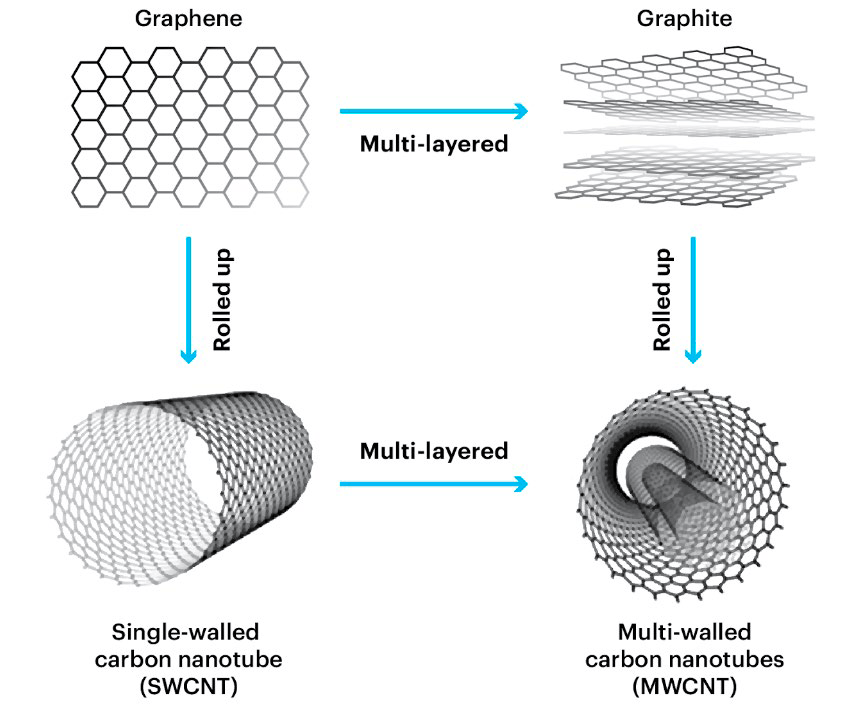
- Graphene can be rolled up to form CNTs which are cylindrical in shape with diameter in nanoscale.
- They are considered one‑dimensional because their length is much greater than their diameter (nanometer scale).
- Properties:
- Very high tensile strength (100–300× steel) and light-weight.
- High electrical (higher than copper) and thermal conductivity.
- Have large surface area and is chemically stable.
- Synthesis Methods
- Arc Discharge Method
- Laser Ablation Method
- Chemical Vapor Deposition (CVD).
- Applications
- Nanoelectronics (transistors, interconnects)
- Aerospace composites
- Energy storage (batteries, supercapacitors)
- Drug delivery systems
- Water purification membranes
- Biosensors.
Fullerene
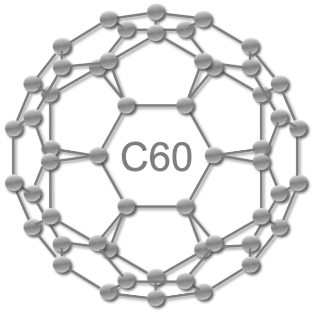
- Fullerene is a family of carbon allotropes that consists of cage-like or tubular structures (3D structure).
- The most well-known fullerene is buckminsterfullerene (C60), which resembles a soccer ball with 60 carbon atoms forming pentagons and hexagons.
- Fullerenes, though not typically abundant, are found naturally in soot, volcanic eruptions, interstellar dust clouds and lightning strikes.
Carbon Nano Florets
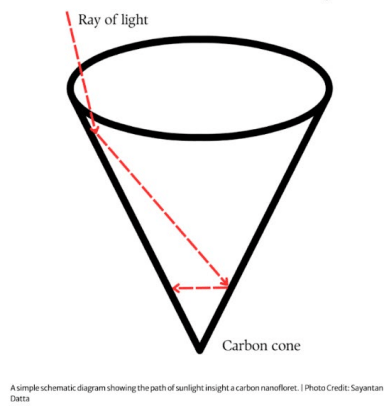
- Unique nanostructure composed of carbon atoms arranged in a distinctive flower-like structure.
- They can absorb up to 87% of sunlight (infrared, visible, and ultraviolet light), and convert it into heat with exceptional efficiency, unlike traditional solar-thermal conversion materials that Only absorb visible and ultraviolet light.
- Their cone-like shape minimises reflection allowing for maximum light absorption.
Other Important Nano Materials
Quantum Dot
- A semiconductor nanostructure typically sized between 2–10 nanometers.
- Electrons are confined in all three dimensions. QDs are often nicknamed “artificial atoms” because their electrons and holes are confined in all three spatial dimensions.
- They exhibit quantum confinement effects, giving them unique optical and electronic properties.
- Applications: LEDs, solar cells, bio-imaging, and quantum computing.
- In 2023, the Nobel Prize in Chemistry was awarded to Moungi G. Bawendi, Louis E. Brus, and Alexei I. Ekimov for the discovery and synthesis of quantum dots.
Quantum Well
- A Quantum Well is formed when one dimension of a material is reduced to the nanoscale (1–100 nm) while the other two dimensions remain large.
- This causes quantum confinement in one direction, altering the electronic and optical properties of the material.
Gold Nanoparticles (AuNPs)
- Unique Properties:
- Small Size (1-100 nm): High surface area-to-volume ratio → Increased reactivity.
- Optical Properties: Strong light absorption/scattering (Surface Plasmon Resonance).
- Biocompatibility: Non-toxic, suitable for biomedical uses.
- Medical Applications:
- Diagnostics: Biosensors, imaging.
- Drug Delivery: Carries drugs/DNA to targeted cells.
- Therapeutics: Photothermal therapy (converts light to heat to destroy cancer cells).
- Cosmetics: Antioxidant, anti-aging.
- Recent Development: Cordy Gold Nanoparticles (Cor-AuNPs)
- Combination of Cordyceps fungi extract + gold nanoparticles.
- Innovation: Developed collaboratively by four Indian scientific institutions; recently patented internationally (Germany).
- Applications: Enhance drug delivery making it faster and safer inside the human body.
- Significance: Advances nanomedicine and targeted therapies.
Fluorescent Nanodiamond (FND)
- Nanometre-sized diamonds made of carbon nanoparticles with property of fluorescence.
- Applications: High-resolution imaging, microscale temperature sensing, correlative microscopy, and to track cells and their progeny over long periods.
Goldene
- Definition: A 1-atom-thick layer of gold (analogous to graphene but with gold atoms).
- Created by sandwiching silicon between titanium carbide layers, depositing gold, allowing gold atoms to replace silicon, forming a monolayer.
- Potential Applications: Catalyst in electronics, carbon dioxide conversion, hydrogen generation, water purification.
- Importance: Emerging 2D material with promising industrial and environmental applications.
MXenes
- Definition: Two-dimensional layered ceramic materials derived from MAX phase crystals.
- Properties: Excellent conductivity, volumetric capacitance.
- Uses: Energy storage (supercapacitors, batteries), optoelectronics, biomedical devices.
Nanozymes
- Definition: Nanozymes are nanomaterials with enzyme-like catalytic properties.
- They mimic natural enzymes such as oxidase, peroxidase, catalase, and superoxide dismutase.
- They were first reported in 2007 (Fe₃O₄ nanoparticles mimicking peroxidase).
- They are made from inorganic or artificial nanomaterials rather than proteins.
- Advantages of Nanozymes:
- More stable than natural enzymes.
- Cost-effective.
- Can work in harsh conditions (pH, temperature).
- Applications:
- Medical diagnostics (e.g., biosensors for glucose detection).
- Environmental cleanup (removal of pollutants).
- Antibacterial therapy.
- Cancer treatment (ROS-based therapy).
NANOPTA (Platinum-based Synthetic Nanozyme)
- Nature: Platinum-containing synthetic nanozyme (artificial enzyme).
- Function: Mimics oxidase enzymes – removes hydrogen from substrates in oxygen’s presence, producing water.
- Applications
- Environmental Use
- Can oxidise pollutants in industrial wastewater.
- Works in the presence of sunlight → reduces wastewater toxicity.
- Highly robust → withstands pH & temperature variations.
- Biomedical Use
- Can oxidise neurotransmitters (dopamine, adrenaline) → leads to colour change in solution.
- Enables measurement of neurotransmitter levels.
- Potential application in diagnosis of neurodegenerative diseases like Parkinson’s & Alzheimer’s.
- Environmental Use
Nano Plastic
- Plastic particles < 5 mm (microplastics) < 100 mm (nanoplastics)
- Found in cosmetics, synthetic clothing, plastic bags and bottles.
Development in Nanomaterials
CalBots – Magnetic Nanobots for Tooth Sensitivity
- A novel nano-bot system to treat tooth sensitivity.
- Developed by: Indian Institute of Science (IISc), Bengaluru and Theranautilus Pvt Ltd (IISc-incubated startup).
- Type: Magnetic bioceramic nanoparticles (Size: ~400 nm).
- Mechanism:
- Driven by external magnetic field.
- Enter dentinal tubules of teeth.
- Self-assemble into plugs, blocking pain signals.
- Effect: Provides long-lasting relief in a single application.
Nano Fertilizer
- Nano fertilisers are highly efficient types of fertilisers that provide nutrients like nitrogen to crops through fine granules.
Nano Urea Liquid
- Developed in 2022 by Indian Farmers and Fertiliser Cooperative (IFFCO) to replace conventional urea and reduce its requirement by 50%.
- India will be the first country to start commercial production of Liquid Nano Urea.
- Particle size < 100 nm → allows higher surface area → better absorption.
Nano DAP (Liquid)
- A liquid fertilizer that is a nanotechnology-based agri-input developed by IFFCO in 2023.
- Composition: 8% Nitrogen (N), 16% Phosphorus (P₂O₅).
- Features:
- Particle size < 100 nm → high surface area → efficient absorption.
- Nutrient use efficiency >90% (vs ~30–40% in conventional fertilizers).
- Significance: Reduces dependence on imported fertilizers.
- Current Update: First Nano DAP plant inaugurated at Kalol, Gandhinagar (Gujarat).
Urea Gold
- Urea Gold was launched by the Prime Minister of India on 27 July 2023 at Sikar, Rajasthan.
- Urea Gold is a new variety of urea coated with sulphur developed by Indian Farmers Fertiliser Cooperative Ltd. (IFFCO).
- Focus: Dual Nutrient Delivery (Nitrogen + Sulphur), addressing sulphur deficiency, and increasing Nitrogen Use Efficiency (NUE).
Key Fertilizer Types (IFFCO)
| Type | Example | Purpose |
| Neem-coated Urea | Launched in 2015 | Reduces misuse, slows release |
| Nano Urea | 2021 | Liquid form, efficient absorption |
| Urea Gold | 2023 | Fortified with sulphur |
Nano Gold
- Type: Eco-friendly universal disinfectant.
- Composition: 10 ppm nano gold, made via nanotechnology, encapsulated in chitosan-based biopolymer, embedded on amino acid, suspended in water.
- Application: Disinfection of pathogenic microorganisms (health + agriculture).
- IIT Bombay & AIIMS Delhi developed a nano‑gold based biosensor for early cancer detection (clinical trials in 2025).
Nano Filter
- Developers: IIT Madras & BHU.
- Type: Nanotechnology-based Advanced filtration/purification.
- Function: Removes contaminants, heavy metals, pathogens from water/soil.
- Application:
- Clean drinking water solutions in rural areas.
- Agricultural use to reduce heavy-metal contamination in irrigation.
Bio Decomposer (Pusa Bio Decomposer)
- A microbial liquid spray that breaks down organic waste and crop residue into organic manure.
- Pusa Bio Decomposer is a fungi-based bio decomposer developed by the Indian Council of Agricultural Research (ICAR). It can convert crop residue into organic manure in 15–20 days.
- Significance:
- Reduces stubble burning (Delhi-NCR pollution).
- Increases soil fertility & organic content.
Nanotechnology in Cancer Treatment (India’s Breakthroughs)
- Gold “Nano-Cup” Photothermal Therapy (PTT)
- Developed by: INST Mohali, IIT Bombay & Tata Memorial Centre, Bombay.
- Mechanism:
- Gold nano-cups engineered to target cancer cells.
- On exposure to near-infrared light (NIR) → absorb light → convert into heat → cancer cell destruction.
- Advantages:
- Minimally invasive, chemical-free.
- Cost-effective therapy.
- Published in Nature journal → global recognition.
- Nanoarchaeosomes for Breast Cancer Treatment
- Developed by: IIT Madras.
- Mechanism:
- Biocompatible nanocarriers deliver anti-cancer drugs directly to tumor cells.
- Stable at room temperature → crucial for rural healthcare logistics.
- Advantages:
- Targeted drug delivery → reduces damage to healthy cells.
- Improved efficacy of anti-cancer drugs.
- Reduced side effects compared to chemotherapy.
- Status: Patent filed; Clinical trials pending.
NanoSniff Technologies
- What it is: IIT-Bombay incubated startup (SoilSens & NanoSniff Pvt. Ltd.).
- Breakthrough: Developed world’s first microsensor-based explosive trace detector (ETD) → NanoSniffer.
Nanoshells
- Definition: Nanoparticles with dielectric core (e.g., silica) + thin metallic shell (gold).
- Unique Property: By tuning core size + shell thickness, they can absorb/scatter specific wavelengths → useful for targeted applications.
- Applications:
- Medical therapy:
- Cancer treatment (PTT): Absorb NIR light → convert to heat → kill cancer cells.
- Drug delivery: Targeted release.
- Diagnostics & Imaging: Optical contrast agents.
- Biosensors: Detects biomolecules at very low concentration.
- Environmental: Pollutant detection, water purification.
- Medical therapy:
Grey Goo
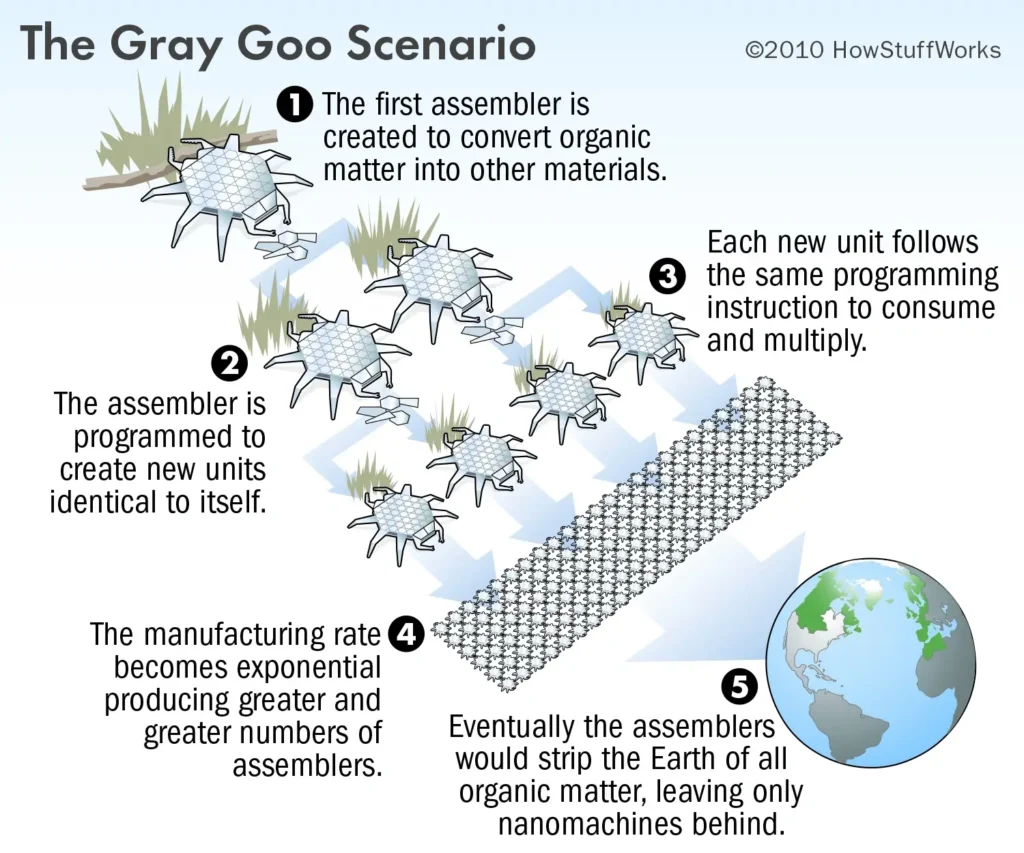
Grey Goo: A hypothetical situation where self-replicating nano robots go out of control, and consume all matter on the earth.
Government Initiatives
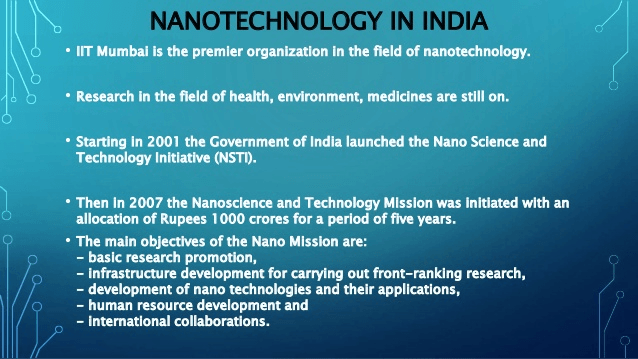
2001: Nano Science and Technology Initiative (NSTI)
- Launched under the Department of Science and Technology (DST) with an initial funding of Rs. 60 crores.
- Aimed to build research infrastructure and promote basic research in nanoscience.
2002-2007: Tenth Five-Year Plan
- Recognized the need for a dedicated Nanomaterials Science and Technology Mission (NSTM).
2007: National Mission on Nano Science and Technology (Nano Mission)
- Launch: 2007, by Department of Science & Technology (DST).
- Leadership: Directed by Nano Mission Council (NMC) under Prof. C.N.R. Rao (Father of Indian Nanotechnology).
- Objectives:
- Building research infrastructure
- Developing human resources
- Fostering public-private partnerships
- Developing international partnerships.
- Phases:
- Phase I (2007–2012) → Establish labs, fund R&D.
- Phase II (2012–2017) → Consolidation, innovation, industry linkages.
- The Nano Mission was completed on March 31, 2017, and was converted into the National Programme on Nano Science and Technology (NPNST).
- Associated Initiative: Nano City Project, Panchkula (Haryana)
- Aimed at developing nanotech hubs.
- Proposed by: Haryana Govt. (2006) with Nobel Laureate Richard Smalley (Carbon Nanotubes, Rice Univ., USA).
- Modeled on Silicon Valley.
- Minimal progress vs. international models (e.g., Suzhou Nano City, China).
UNNATI (UNispace Nanosatellite Assembly & Training by ISRO)
- ISRO Satellite Training Programme.
- Launched by: ISRO in 2019 (UNISPACE+50 initiative).
- Objective: Train participants from developing countries in design, assembly, integration & testing of nanosatellites.
ICANN 2025 (IIT Guwahati, Dec 12–14, 2025)
- 9th International Conference on Advanced Nanomaterials and Nanotechnology.
- Focus areas: healthcare, nano‑materials, nanoelectronics, quantum technologies, environment, energy, semiconductors, sensors, photonics, micro/nano‑fluidics.
ICNAN 2025 (VIT, Vellore)
- International Conference on Nanoscience and Nanotechnology.
- Themes: energy, medicine, environmental science, electronics.
Current Updates
- India’s first 3nm chip design centers were launched in Noida.



