

Gupta and Early Medieval Fine Arts: In the subject of Ancient and Medieval India, the Gupta and early medieval periods are regarded as a classical age of artistic excellence, marked by significant developments in sculpture, painting, architecture, and decorative arts. The Gupta style is noted for its elegance, balance, and spiritual depth, which later influenced regional art forms during the early medieval period, leading to diverse and rich artistic traditions across India.
Gupta Architecture
Gupta period stupas and caves
- Two Gupta Buddhist stupas—’Jarasandha Ki Baithak’ at Rajgir and Dhamekh Stupa at Sarnath—were built during this period.
- Narasimha Gupta Baladitya built a magnificent temple of Buddha at Nalanda.
- During the Gupta period, the architectural development of caves continued. However, the use of mural paintings on the walls of the caves became an added feature. Some of the finest examples of mural paintings can be seen in the caves of Ajanta and Ellora.
Ajanta Caves
Location and Form
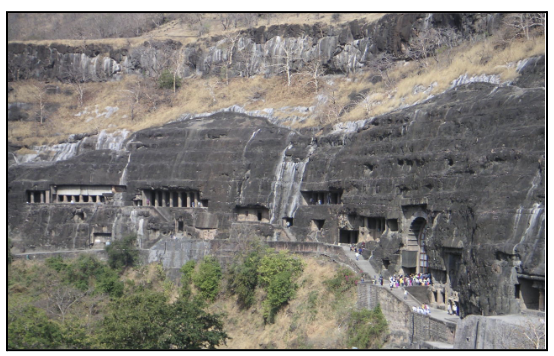
- Located in Aurangabad district of Maharashtra, near Ajanta village, on the Waghora River in the Sahyadri hills.
- The caves were created by cutting into rock, forming roofs, pillars, assembly halls, large gateways, walls, and sculptures.
- Represent a remarkable combination of architecture, sculpture, and painting.
- Shape: Horseshoe-shaped.
Number and Types
- A total of 29 caves:
- 25 Viharas (residential monasteries)
- 4 Chaityas (prayer halls)—caves 9, 10, 19, 26
- Discovered in 1819 by Captain John Smith
Chronology
- Construction period: 200 BCE – 650 CE.
- Early Phase (2nd–1st century BCE): Caves 9, 10, 12, 13
- Pre-5th century Phase: Caves 11, 15, 6, 7
- Major Phase: Most caves belong to the 5th–6th centuries CE.
- Gupta Period Caves 16 and 17 (debate regarding cave 19).
- Hinayana Caves
- Caves 8 and 13
- A total of 5 Hinayana caves; the remaining 24 belong to Mahayana Buddhism.
- Sources: Accounts of Fa-Hien and Xuanzang (Hiuen Tsang).
Architecture
Chaitya Caves
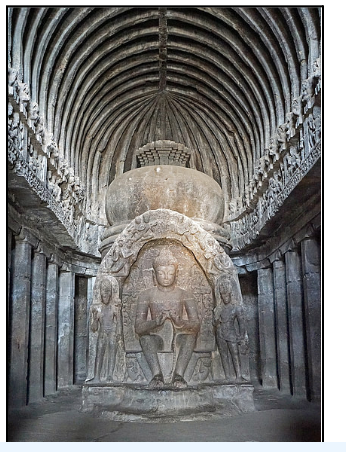
- Rich sculptural decoration with vaulted (gajaprishta) roofs.
- Decorated with figures of Buddha and Bodhisattvas.
- Cave 26
- Large hall with numerous sculptures.
- Contains a massive statue of Buddha in Mahaparinirvana.
Vihara Caves
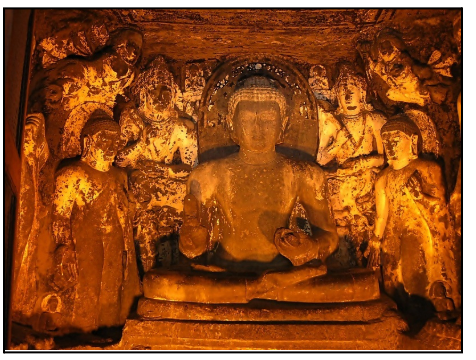
- Consists of pillared verandas, central halls, and cells (rooms).
- At the rear is a sanctuary containing an image of Buddha.
Sculpture
- Large and energetic statues, showing similarity with the Sanchi style.
- Sculpture and painting developed simultaneously.
Painting
- Maximum paintings in Cave 17, known as the “Picture Gallery.”
- Built by Varahadeva, minister of Vakataka king Harishena.
- Major painting centers: Caves 16 and 17
- Satavahana Period paintings: Caves 9 and 10
- Latest paintings: Caves 1 and 2 (6th–7th century).
Style
- Combination of fresco and tempera techniques.
- Colors made from vegetable and mineral pigments.
- Deep red or black outlines; blue color is absent.
- Distinctive hairstyles.
- Subjects include Jataka stories, the life of Buddha, plants, animals, and daily life scenes.
Three Stages of Painting
- First Stage (1st century BCE): Sharp lines, limited colors, and simple and less decorative figures.
- Second Stage: Variety of skin tones and rhythmic curves.
- Fifth Century Phase: Prominent body forms, heavy figures, and outward projection.
Important Painting Examples
Cave 16
- Four scenes of Buddha’s renunciation
- Preaching scenes
- Dying princess (Sundari)
Cave 17
- Mahabhinishkramana (Great Renunciation)
- Yashodhara presenting Rahul to Buddha
- Various Jataka paintings
Cave 2
- Princess on a swing
Cave 9
- Monks moving towards a stupa
Cave 1
- Fighting bulls
- Reception of Pulakeshin and Parvez (Khusrau)
- Bodhisattva Vajrapani, Manjushri, Padmapani
- Shibi Jataka and Matriposhaka Jataka
Cave 19
- Naga king and his queen
Ellora Caves
Location and Features
- Located in Aurangabad district, Maharashtra.
- Consist of 34 caves, representing three religions.
| Cave Numbers | Religion |
| 1–12 | Buddhist |
| 13–29 | Hindu / Brahmanical |
| 30–34 | Jain |
- Period: 5th–11th century CE.
- Unique site where rock-cut monuments of Buddhism, Hinduism, and Jainism exist together.
- Reflects religious diversity and artistic interaction.
Buddhist Caves (1–12)
- Represent Vajrayana Buddhism.
- Deities include Tara, Mahamayuri, Akshobhya, Avalokiteshvara, Maitreya, and Amitabha.
- Large structures, including three-storeyed caves.
- Massive pillars and grand Buddha statues.
- Padmapani and Vajrapani appear as guardian figures.
Important Caves
- Cave 10: Vishvakarma Chaitya
- Cave 14: Ravana ki Khai
- Cave 15: Dashavatara Cave
- Cave 16 – Kailasa Temple
- Built by Rashtrakuta king Krishna I.
- Carved from a single rock.
- Built in Dravidian architectural style.
- Includes Nandi Mandapa and Gopuram-like structures.
Hindu Caves (13–29)
- Mainly Shaivite themes:
- Andhakasura Vadha
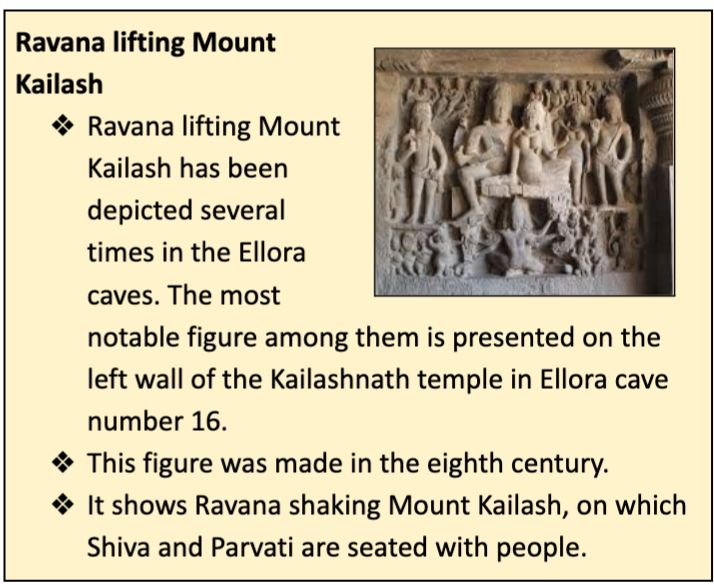
- Ravana lifting Mount Kailasa
- Kalyanasundara (marriage of Shiva and Parvati)
- Also depict various incarnations of Vishnu.
Jain Caves (30–34)
- Famous caves:
- Indra Sabha
- Jagannath Sabha (caves 32–33)
- Known for fine carvings and images of Tirthankaras.
Paintings at Ellora
- Murals found in five caves, mainly around the Kailasa temple
- Two Phases
- During the excavation of the caves
- Later centuries
- Early Paintings: Vishnu and Lakshmi on Garuda
- Later Paintings: In Gujarati style, depicting processions of Shaivite ascetics.
- Subjects: Related to Buddhism, Hinduism, and Jainism.
Important Painting Themes
- Vishnu–Lakshmi
- Shiva with followers
- Ornamented Apsaras
1. Bagh Caves
Location and Background
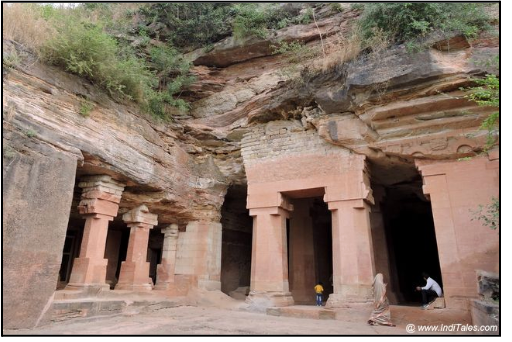
- Located in Dhar district (Madhya Pradesh) on the banks of the Baghani River.
- Period: 5th–6th century CE (Gupta–Vakataka period influence)
- Sect: Mahayana Buddhism
- Number of Caves
- A total of 9 caves, but only 5 remain preserved.
Architecture
- Built by cutting sandstone rocks.
- Architectural style similar to Ajanta caves.
- All caves consist of Viharas with a Chaitya shrine at the rear
- Painting
- Paintings in Caves 2, 3, and 7 are destroyed.
- Cave 4 (Rang Mahal) contains the finest murals.
- Subjects
- Jataka stories
- Buddhist themes
- Scenes of everyday life
- A large painting measuring 45 × 6 feet exists in Cave 4.
- Colors Used: Ochre (Hirounji), White, Black, Green, Yellow, Red, Blue
- Features
- Excellent design and composition.
- Strong Ajanta influence.
- Lively depiction of nature and birds such as peacocks, chakors, and pigeons.
2. Junagadh Caves
- Located in Gujarat.
- Not fully developed cave complexes; two main sites:
- Baba Pyare caves
- Upper Kot cave
- Special Feature
- In front of the prayer hall stands a fort-like structure called “Upper Kot,” about 30–35 feet high.
3. Nasik Caves
- Located in Maharashtra.
- Also called Pandavleni Caves.
- A total of 24 Buddhist caves.
- Period: 1st century CE
- Religion: Initially associated with Hinayana Buddhism, later influenced by Mahayana Buddhism.
4. Armamalai Cave Paintings
- Located in Vellore district (Tamil Nadu).
- Period: 8th century CE.
- Associated with a Jain temple.
- Subjects
- Stories of the Ashta-Dikpalas (eight guardians of directions).
- Themes related to Jain religion.
- Structure
- Served as resting places for Jain monks.
- Technique
- Paintings made on a clay base using colored pigments.
5. Sittanavasal Cave Paintings
- Located in the Pudukkottai district, Tamil Nadu.
- Famous example of Jain cave painting.
- The style resembles Ajanta and Bagh paintings.
- Subject
- Samavasarana—the preaching hall of Jain Tirthankaras.
- Technique
- Mineral and vegetable pigments were used.
- Painted on wet plaster (fresco technique).
- Major Scene
- Lotus pond with swans, fish, and monks plucking lotus flowers.
- Period
- 7th century CE, renovated during the Pallava or Pandya period.
6. Ravana Chhaya Rock Shelter
- Located in the Keonjhar district, Odisha.
- The structure resembles a half-open umbrella-shaped rock shelter.
- Subjects
- Depiction of a royal procession of the 7th century.
7. Lepakshi Paintings
- Located in the Anantapur district (Andhra Pradesh) at the Veerabhadra Temple.
- Period: 16th century CE, during the Vijayanagara Empire
- Subjects
- Ramayana
- Mahabharata
- Avatars of Vishnu
- Features
- The blue color is absent.
- Outlines drawn in black.
- Overall decline in artistic quality compared to earlier traditions.
Rock-Cut Cave Tradition in South India
- Outside Maharashtra, important centers include:
- Karnataka: Badami, Aihole
- Andhra Pradesh: Vijayawada
- Tamil Nadu: Mahabalipuram (Pallava period)
8. Badami Caves
- Location: Badami (Karnataka)—capital of the Chalukyas.
- Period: 6th century CE.
- Number of Caves
- 4 caves
- 3 Hindu
- 1 Jain
- Painting
- Rare example of early Hindu paintings.
- Features
- Figures with large oval eyes and slightly protruding lips.
- Expressions show compassion and grace.
- Subjects
- Chalukya kings
- Shiva–Parvati
- Jain monks
- Brahma seated on a swan
- Technique
- Similar to the Bagh painting technique, but more refined.
- Shows strong influence of Ajanta art.
9. Elephanta Caves
- Location
- Located about 6 miles from Mumbai on an island.
- Original name: Dharapuri.
- Nature
- Important Shaiva religious center.
- Created by cutting into two hills.
- Structure
- The temple size is approximately 130 × 130 feet.
- Main Theme
- Large sculptures of Shiva, along with other deities
- Sculptural Feature
- Massive figures with slender bodies
- Strong use of light and shadow effects.
- Female figures are graceful and richly ornamented.
- Lips appear thick and slightly protruding
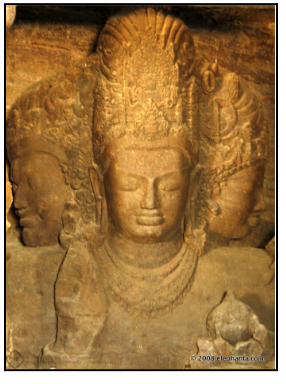
- Maheshmurti (Trimurti)
- Period: 6th century CE
- Structure
- Three faces of Shiva:
- Central face: Shiva (peaceful aspect)
- Side faces: Bhairava and Uma
- Three faces of Shiva:
- The unseen rear faces represent the concept of five-faced Shiva.
- Artistic Importance
- Smooth surface, rhythmic composition, and complex yet balanced structure.
- Nearby panels include Ardhanarishvara and Gangadhara.
Cave Tradition of Eastern India
1. Buddhist Cave Tradition in Andhra Pradesh
(a) Guntupalli (Eluru District)
- A site where Buddhist stupas, viharas, and caves were constructed together.
- Chaitya Cave: Circular in shape, smaller in size compared to the chaitya caves of Western India.
- Vihara Caves
- Greater in number but smaller in size.
- Rectangular structure.
- Arched roofs.
- Include single-storeyed and double-storeyed caves.
- The main viharas are decorated with chaitya-toranas at the entrance
- Period of construction: 2nd century BCE.
(b) Ramparempallam
- Contains a small stupa carved from the rock of a hill.
(c) Anakapalli (near Visakhapatnam)
- Cave construction during the 4th–5th century CE.
- A large stupa carved out of a hill, considered one of the largest rock-cut stupas in India.
- Several smaller votive stupas were built around the main stupa
2. Cave Tradition of Odisha
(a) Khandagiri and Udayagiri Caves
- Located near Bhubaneswar.
- Among the earliest caves of Odisha.
- Inscriptions of the Jain king Kharavela are found here.
- Originally built as residences and meditation centers for Jain monks.
(b) Major Features
- Some caves consist of a single chamber.
- Certain caves are carved in animal shapes.
- Larger caves include:
- Rows of pillars
- Entrances decorated with chaitya-toranas.
Famous Universities of Ancient India
Odantapuri –
- It was located in Bihar and was built under the patronage of King Gopal of the Pala dynasty.
- It was a Buddhist Mahavihara.
- It was destroyed by Bakhtiar Khilji.
Vikramshila –
- Location: Bihar (Bhagalpur district)
- Founded by King Dharmapala of the Pala dynasty
- Center for Buddhism, especially the Vajrayana sect.
- Subjects like tantric education, logic, astronomy, law, and philosophy were taught.
- Foreign scholars were invited.
Jagaddal-
- It was the center of learning for the Vajrayana sect of Buddhism in Bengal.
- Many scholars took refuge here after the fall of Nalanda and Vikramshila.
- It was probably founded by King Ramapala of the Pala dynasty.
Vallabhi –
- Vallabhi is located in Saurashtra, Gujarat.
- It was an important center of learning for Hinayana Buddhism.
- Various subjects like administration and statecraft, law, philosophy, etc., were taught here.
- The Chinese scholar Hiuen Tsang visited here.
- It was supported by grants from the Maitraka dynasty rulers of Gujarat.
Nalanda –
- Nalanda University existed during the Gupta period.
- It gained prominence during the reign of Harshvardhan and under the Pala kings.
- It was the main center of Mahayana Buddhist education.
- Subjects like Vedas, fine arts, grammar, philosophy, logic, medicine, etc. were also taught here.
- It attracted scholars from Central Asia, Southeast Asia, and other parts of the world.
- Tibetan Buddhism was heavily influenced by Nalanda.
- Famous scholars of Nalanda were Nagarjuna (Madhyamik nihilism) and Aryabhata, the astronomer.
- Hieuntsang spent two years at this university.
- Another Chinese scholar, Itsing, spent ten years in Nalanda in the late seventh century.
Taxila-
- Presently located in Pakistan.
- The oldest educational center existed till the 5th century BC.
- Chanakya is believed to have written Arthashastra at this place.
- Both Buddhist and Hindu religious scholars were taught here.
- Education in politics, hunting, medicine, military strategy, and law.
- Fahian came here in 405 AD.
- Scholars like Panini and Charaka were associated with it.
Kanchipuram
- It was a center of learning for Hinduism, Jainism, and Buddhism from the 1st century AD and gained great prominence under the rule of the Pallavas.
Manyakheta:
- Now called Malkhed (Karnataka).
- It gained fame under the Rashtrakuta rule.
- Scholars of Jainism, Buddhism, and Hinduism studied here.
- There was also a ‘Math’ of the Dvaita philosophy sect here.
Pushpagiri Vihar and Lalitgiri (Orissa)—
- It was established by Kalinga kings around the third century AD near the Udayagiri hills.
- It was mainly a center of Buddhist education.
Sharada Peeth –
- It was located in present-day Pakistan-occupied Kashmir.
- It was an important place for Sanskrit scholars, and many important texts were written here.
- There was also a temple of Sharda Devi here.
Nagarjunakonda –
- It is located 160 km from Amaravati in Andhra Pradesh and was a major Buddhist center where scholars from Sri Lanka, China, etc., came for higher education.
- There were many Viharas, Stupas, etc. here.
- It was named after Nagarjuna, a South Indian scholar of Mahayana Buddhism.



