Temples of Rajasthan

Temples of Rajasthan are an important part of the state’s rich religious and architectural heritage. In the subject of Rajasthan Art & Culture, these temples reflect the artistic excellence, spiritual traditions, and historical development of different dynasties. From ancient Gupta and Gurjar-Pratihara temples to the magnificent Solanki-style temples, Rajasthan showcases remarkable diversity in temple architecture and devotion.

This post is written for the RAS Prelims examination; click here to read the detailed version for the RAS Mains exam.

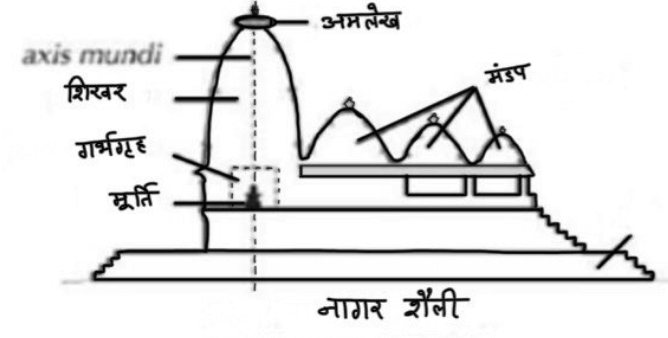
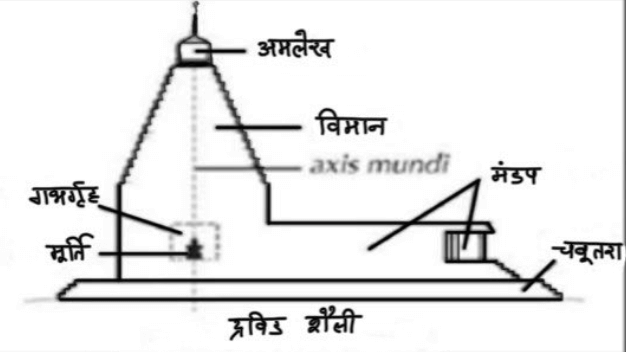
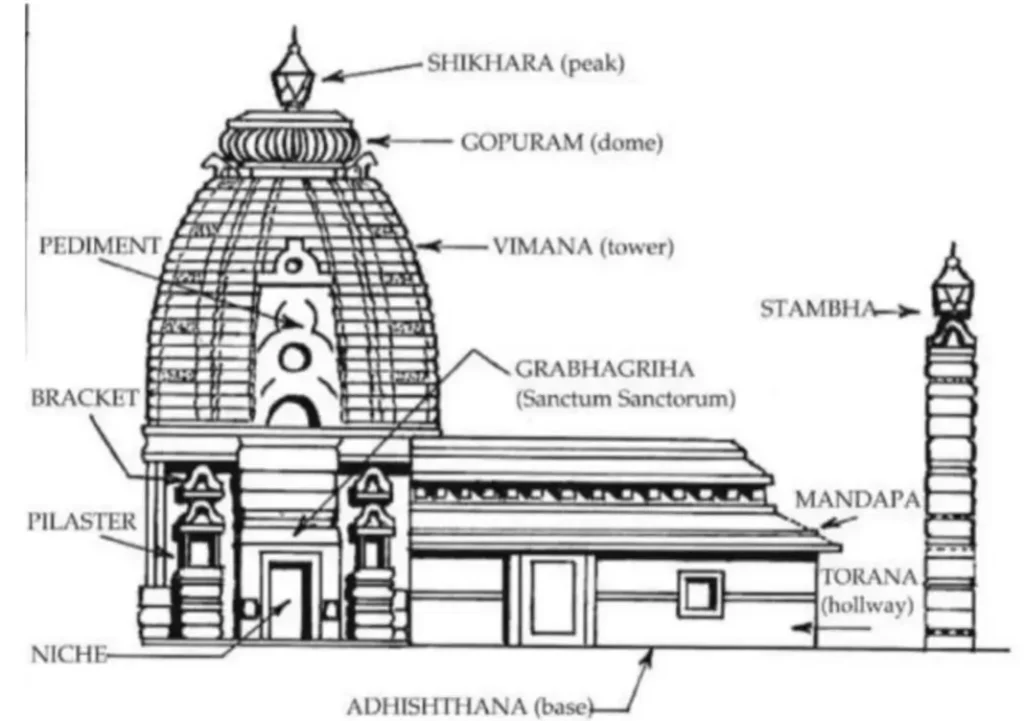
Major Temples of RajasthanTemple construction in India have seen systematic development during Gupta period (4th–6th century). In early stages, temples were built using perishable materials such as wood and brick, but over time, the use of durable materials like stone and sandstone increased. Indian temple architecture is generally classified into three main styles: Nagar, Dravid and Vesar.

S.No.

Nagar style

Dravid style

Vesar style

Temples of Rajasthan

Area

Himalayas to Vindhyachal

Krishna River to Kanyakumari

Vindhyachal to Krishna River

Original form

North Indian style

South Indian style

Nagara + Dravidian mixture

Summit

Curved

Pyramidal Gopuram

Mixed and balanced

Sanctum (गर्भगृह)

square

With a spacious courtyard (Mandapa)

Compact

Key features

Micro carving

Huge complex, gopuram

simple and balanced design

examples (India)

Bhitargaon Vishnu Temple (oldest)

Meenakshi Temple (Madurai), Brihadeshwara (Thanjavur)

Ladkhan Temple, Aihole (oldest)

Examples (Rajasthan)

Someshwar (Kiradu), Ambika (Jagat), Dadhimata (Nagaur), Osian

Ranganath Temple (Pushkar), Tirupati Balaji (Sujangarh)

📱 For better view, please rotate your phone horizontally.
StyleKey featuresExamples (India)Examples (Rajasthan)
Panchayatana StyleOne principal deity (Vishnu) + four subsidiary deities (Surya, Shakti, Shiva, Ganesha), a circumambulation path.Harihar Temple, Osian Bhanddevra (Baran), Budhadit (Kota), Jagdish (Udaipur), Bardoli
Bhumij StyleNagara sub-style, open circumambulatory path (प्रदक्षिणा पथ) Sewadi Jain Temple, PaliUndeshwar (Bijolia), Mahanalaleshwar (Menal), Bhanddevra (Ramgarh)
Ekayatan Style temple of just 1 main dietytemples having only one god idol
Kachhapghat styleMassive peaks, Meru-Mandavar pillars, Ghatapallava motifs, Panchashakha garlandsKachchhapghat dynastyShantinath Jain Temple, Padmanabha Temple (Jhalrapatan)

7th Century – Evidence of Construction 

7th – 10th Century – 

  • Developmental Phase
  • 8th Century –  Development of the Gurjara-Pratihara / Maha-Maru style.
  • Prominent Temples of this Period:
    • Osian: Sun Temple, Harihara Temple, Mahavira Jain Temple, Sachchiyay Mata Temple, and Paplaj Mata Temple.
    • Abhaneri: Harshat Mata Temple.
    • Chittorgarh: Kalika Mata Temple.
    • Khed (Balotra): Ranchhod Ji Temple, Kameshwar Mahadev, and Magarmandi Mata (Nimaj).
    • Nagaur: Dadhimati Mata Temple.

10th – 11th Century

  • The climax of the Gurjara-Pratihara style and the simultaneous rise of the Solanki style.
  • Prominent Temples of this Period:
    • Kekind/Jasnagar (South of Merta): Nilkantheshwar Temple.
    • Sikar: Harshnath Temple.
    • Nilkantheshwar Temple:
      • Rajorgarh / Paranagar (South-west of Sariska)
      • Commissioned by the Pratihara feudatory Mathandeva
      • Trikutakara (A Triple-Shrine plan consisting of three sanctums opening into a single common assembly hall/mandapa).
    • Someshwar Temple, Kiradu: 1016 AD 
      • Regarded as the final and most superior (best) example of the Gurjara-Pratihara style.
Temples of this period (NOT of Gurjara – Pratihara style)
  • Baroli Temple
  • Sas-Bahu Temple, Nagda
  • Ambika Temple, Jagat (Udaipur)

11th – 13th Century

  • The Golden Age of Temple Architecture: Dominant Styles
  •  Solanki and Maru-Gurjara styles.
  • Key Example: Samidheshwar Temple (Chittorgarh Fort).
    • Architectural Characteristics:  Highly ornate (decorated) Slender, tall, and circular pillars.
    • High plinth (Pithika/Jagati) or base structure.
  • Bhumija Style
    • Sewari Jain Temple, Pali (1010–1020 AD): The oldest (earliest) example of the Bhumija style in Rajasthan.
    • Mahanaleshwar Temple: Located in Menal.
    • Bhand Devra: Located in Ramgarh (Baran).
    • Undeshwar Temple: Located in Bijolia.

Post-13th Century –

General Decline: A period marking a gradual decline in the intricacy and grand scale of temple architecture.

  • Major Large Temples:
    • Jagdish Temple: Udaipur.
    • Eklingji Temple: Near Udaipur (Kailashpuri).
    • Keshoraipatan Temple: Bundi.
    • Jagat Shiromani Temple: Amer.
  • Post-16th Century
    • Impact of Religious Intolerance: 
    • Evolution of Haveli-Temple Architecture:

Temples of Udaipur division

Udaipur District‘s Temple

Temple / Place

Key Details

Temple

Details

Jagdish Temple, Udaipur

  • Construction- (1651) Maharana Jagat Singh I
  • Style – Indo-Aryan (Panchayatan)
  • This Vishnu (Jagannath Rai) temple is situated on a chabutra on the banks of Lake Pichola, with a large statue of Garuda in front of the sanctum.
  • It is also called the “Temple built from dreams“- Jagannath himself revealed the location of the idol to the Maharana in a dream.

Eklingnath Temple, Kailashpuri (Girwa)

  • Construction- (734)
    • Bappa Rawal 
    • present form- Raimal
  • Ishtdev & Kuldev of the rulers of Mewar.
  • Mewar rulers consider themselves regent/ Dewan of Eklingji.
  • Shiva lingam- Chomukha (four-faced) made of black stone 
  • The largest flag is hoisted here.
  • Complex also houses temple of Lakulisha (27th avatar), the founder of the Pashupata sect.
  • Meera Bai Temple– Vishnu temple built by Kumbha is located in the complex.

Rishabhdev (Kesariyaji/ Kalaji) Temple, Dhulev

  • Has 1100 pillars, built without using lime. 
  • Known as Kalaji (due to shining black idol of Lord Rishabhdev) and Kesariyaji (due to the largest amount of saffron offered in the world).
  • This is the only temple in India where the four sects (Jain, tribal, Vaishnava and Shaiva) worship equally.

Ambika Devi Temple, Jagat

  • Construction- 10th CE, during the time of Allat
  • Style – Mahamaru
  • Shakti Peetha dedicated to the Mother Goddesses .
  • Known as “Khajuraho of Mewar” due to exquisite sculptures.
  • The Sikhara is in the Nagara style; although being from Gurjara-Pratihara period, it is not in pure Gurjara-Pratihara style

Sahastrabahu/ Saas-Bahu Temple, Nagda (Girwa)

  • Construction- 10th CE, during the time of Guhil ruler Shridhar
  • 2 twin temples- larger one is called as : Saas Temple (surrounded by 10 subsidiary shrines) and smaller one is called as : Bahu Temple (Panchayatan style).
  • Dedicated to Vishnu.
  • The Saas Temple Sikhara is made of bricks, while the rest of the temple is made of marble.
  • Nagda was the first capital of Guhils.

Adivaraha Temple, Ahar

  • Ancient temple: dedicated to Varaha avatar
  • During the time of Allat

Jain temples of Ahar

  • 10th CE: birthplace of Tapagachha sect of Jainism.
  • It was here, Acharya Jagatchandra Suri received the title ‘Tapa’ after rigorous penance; initiating Tapagachha tradition.

Jawar Vishnu Temple, Jawar

  • Construction- Rambai (daughter of Kumbha)
  • Sculptor: Ishwar (built in Panchayatan style)
  • Location: Jawar Mines, near Ramakund

Machhindra Nath Temple, Udaipur

  • Famous for Sanjhi (evening rituals); hence called Sanjhya Temple.

Gupteshwar Mahadev, Udaipur

  • Location: on the Hada mountain between Titardi-Eklingpura, it is called the “Amarnath of Mewar“.

Chittorgarh District‘s Temple

Temple / Place

Key Details

Samidheshwar / Tribhuvan Narayan Temple (Chittor Fort)

  • Construction- (11th century)
    • Bhoj Parmar 
    • Style – Maru Gurjara 
    • 1428- Maharana Mokal Rebuilt hence called Mokalji’s temple
  • Shiva temple

Mirabai Temple (Chittor Fort)

  • construction- (16th century) Maharana Sanga
  • For devotion of Meera
  • Raidas’s 4 pillar Cenotaph in front

Kumbhasyam Temple (Chittor Fort)

  • 8th century, Pratihara period (Mahamaru style)
  • Originally a Shiva temple (trimukhi/ three-faced Shiva idol)
  • After Mlechchha invasion, Rana Kumbha made it a Vaishnav temple

Kalika Mata Temple (Chittor Fort)

  • construction-
    • (8th century) King Manmori
    • Renovation- Sajjan Singh
  • originally a Sun Temple
  • Style: Mahamaru
  • Aradhya devi of Guhilas

Tulja Bhavani Temple (Chittor Fort)

  • construction (15th century) in Maharana Kumbha’s reign
  • dedicated to fierce goddess Tulja Bhavani (incarnation of Goddess Durga)
  • Tulja Bhavani is Isht Devi (Kul Devi) of Shivaji Maharaj

Baan Mata Temple (Chittor Fort)

  • Kul devi of Guhils 
  • also called:
    • Brahmani Mataji
    • Bayan Mataji (because she killed Baanaasur) 
    •  Baneshwari Mataji

Shringar Chanwari 

  • 11th century, Jain-Rajput mixed style
  • ancient famous Jain temple of Shantinath
  • built- (1448) Bhandari Velka, son of Maharana Kumbha’s treasurer.
  • Center has a small altar having a 4 pillared canopy (Chanvri/ canopy for Kumbha’s daughter’s wedding), hence the name Shringar Chanwari.

Mahanaleshwar Temple (Menal)

  • Major center of Shaivism’s Lakulisha sect
  • has Suhaveshvara temple built in Bhumija style.

Mangaleshwar Mahadev (Matrikundiya, Raashmi Village)

  • on Banas river banks
  • also called: Haridwar of Mewar/ Prayag of Mewar

Sanwalia Seth Temple (Mandphia)

  • Rajasthan’s temple getting maximum offerings (quantity)
  • Jaljhulani Ekadashi Fair

Lalbai-Phoolbai Temple (Putholi)

  • Main center of Jain tradition in Chittorgarh region.

Badoli Shiva Temple Complex (Bhainsrorgarh)

  • built- (9th century) Huna king Mihirakula
  • mixture of Nagara and Panchayatana styles
  • group of 9 temples;
    • principal temple- Ghateshwar Mahadev 
  • 1821- Brought to light by James Tod
  • “To describe their peculiar and magnificent structure accurately is beyond the power of the pen; it is as if a treasure of skill has been completely exhausted.”  –James Tod

Annapurna (Birwadi Mata)

  • Kuldevi Of Sisodia dynasty 
  • in reign of king Hammir

Rajsamand District‘s Temple

Temple / Place

Key Details

Dwarkadhish Temple, Kankroli

  • Built- Maharana Raj Singh
  • Vallabha sect’s one of 7 principal seats

Shreenathji Temple, Nathdwara

  • music here is called Haveli Sangeet.
  • Shree Nathji is also called Sapt Dhawaja ka Swami (Lord of Seven Flags)
  • main center of Vallabha sect

Charbhuja Temple, Garhbor

  • Built– Maharana Mokul
  • Varinath of Mewar; one of four Dhams of Mewar

Kunteshwar Mahadev, Farara

  • believed to be built by Kunti 

Vishwas Swaroopam, Nathdwara

  • world’s major Shiva statue at 369 feet height

Parshuram Gufa

  • Amarnath of Rajasthan
  • Phuta Deval fair held in Shravan.

Banswara District‘s Templerict

Temple / Place

Key Details

Ghotia Amba Mata Temple (Ghotia)

  • main temple of tribals
  • Bhil fair on Chaitra Amavasya
  • Pandava Kund, Bhim Kund; beliefs associated with Pandavas’ exile.

Nandini Mata Temple (Barodiya)

  • Paush Purnima Fair
  • Eight-armed idol
  • Considered 8th child of Devaki.

Tripura Sundari (Talwara)

  • Main Shakti Peetha of Vagad region Also called Turtai Mata

Chhinch Mata Temple (Chhinch)

  • Built-  By Devidas
  • near Brahma Temple

Brahma Temple (Chhinch)

  • built- (12th CE) By Maharawal Jagmal Singh
  • Life-size four-faced statue of Lord Brahma

Kalinjara Jain Temple (Kalinjara)

  • Dedicated to Lord Rishabhdev
  • On Haran River bank

Other temples- Ranchhodji of Dhuni (Banswara)   

Dungarpur District‘s Temple

Temple / Place

Key Details

Beneshwar Dham (Nawatapara)

  • Founder- Saint Mavji (1727)
  • Som-Mahi-Jakham Sangam
  • Kumbh of the Tribals/ Kumbh of Wagar/ Pushkar of Wagar
  • Fair – Magh Purnima
  • Note – Gautameshwar Mahadev (Pratapgarh fair is also known as the “Haridwar of Kanthal“)

Dev Somnath Temple (on Som River banks)

  • 12th CE: 3-story Shiva temple on banks of the Som River
  • Built from white stone, without lime or cement
  • Vaibhav (Splendor) of Wagad

Hari Temple / Sant Mavji Temple (Sabla)

  • Birthplace of Saint Mavji (Nishkalank sect)
  • Mavji’s Vaani- ‘Chopda

Vijay Raj Rajeshwar Temple (Gab sagar)

  • Construction:
    • start: Vijay Singh
    • complete: Laxman Singh (1923)
  • banks of Gaibsagar Lake

Gavari Bai Temple

  • “Meera of Vagad”
  • associate with: Bhakti movement

Phuleshwar Shivalaya

  • construction: (1780) Queen Phool Kanwar

Shiv Gyaneshwar Shivalaya

  • construction: Maharawal Shiv Singh (in memory of his mother).

 Pratapgarh District‘s Temple

Temple / Place

Key Details

Gautameshwar Mahadev Temple (Arnod)

  • Haridwar of Kanthal: Known as the ‘Haridwar’ of the Kanthal region.
  • Fair: Held on Buddha Purnima (Vaisakha Purnima).
  • Significance: The The penance grove (Taposthali) of Sage Gautam

Bhramara Mata Temple

  • Location: Chhoti Sadri, Pratapgarh.
  • Inscription: There is an inscription (490 AD) here which mentions the Gaur and Aulikara dynasties

Sita Mata Temple

  • Location: Situated within the Sita Mata Wildlife Sanctuary.
  • Wildlife: The sanctuary is famous for Flying Squirrels.

Temples of Kota Division

Kota District‘s Temple

Temple / Place

Key Details

Bhimchauri Shiva Temple (Mukandara Hills) 

  • Rajasthan’s oldest Gupta temple with a Pradakshina path
  • in Mukundra Tiger Reserve

Kansua Shiva Temple (Kota) 

  • 8th CE Gupta Era Shiva temple
  • sun’s 1st rays fall directly on Shivalinga.

Daad Devi Temple

  • Kuldevi of Kota royals
  • Fair: 9 days of Chaitra Navratri

Vibhishan Ji’s Temple (Kaithun)

  • India’s only Vibhishana temple (3rd–5th CE)
  • A headless idol is worshipped as a disciple of lord Ram.

Charchauma Shivalaya (Charchauma Village) 

  • Gupta period Chaturmukhi Shivalinga; Sorati fair of Charchauma on Mahashivratr

Budhadit Sun Temple (Digod)

  • 9th century; Old + Aditya (Budhadit) Panchayatan style temple 
  • Known as Chaturveda Harihar Pitamaha Temple

Geparnath Mahadev (Kota)

  • Garbhgriha: 300 feet below ground level; continuous water flow on Shivalinga

Other Temples of Kota District: Gardia Mahadev (ancient Shiva temple); Mathuradhish Temple (1st Peeth/ seat of Vallabh sect); Ganesh Temple in which Ganesha in standing position; Karneshwar Temple (NH-12)

Jhalawar District‘s Temple

Temple / Place

Key Details

Shitleshwar Mahadev (Jhalrapatan)

  • 689 CE: Rajasthan’s oldest Dated temple (Gupta period) 
  • Banks of Chandrabhaga River
  • Ferguson: Architecturally the finest of the earliest Hindu temples

Saat Saheli Temple (Jhalrapatan)

  • Other names: Padmanabha Temple/ Sun Temple/ Charbhuja Temple (James Tod)
  • Rajasthan’s oldest Sun Temple (10th CE)
  • Sun wearing knee-high boots, Saptaratha
  • Construction Style:  Khajuraho/ Kachchhapaghata style

Chandrabhaga Temple (Jhalrapatan)

  • 7th CE
  • Chandrabhaga river bank

Shantinath Jain Temple (Jhalrapatan)

  • Black stone Digambara statue
  • Kachchhapaghata style

Buddhist Caves of Kolvi 

  • Ellora of Rajasthan (7th CE)

Other temples: Chhaneri-Paneri Devalaya; Nageshwar Parshvanath; Chandkhedi Jain temple (Tirthankara Adinath); Karah temple 

Baran District‘s Temple

Temple / Place

Key Details

Bhanddevra Shiva Temple (Ramgarh)

  • Shiva temple of Bhumija style 
  • Built: (10th CE) Medavanshi king Malaya Varma
  • Khajuraho of Hadoti/ Mini Khajuraho of Rajasthan (Erotic sculptures)

Brahmani Mata(Sorson)

  • Folk goddess of Sahariya region
  • Other names: Barmaya Temple, Yogini Temple
  • worship of the back of devi here

Gadagachha Temple (Atru)

  • 10th CE Shivalaya 
  • destroyed by Aurangzeb
    • later rebuilt 
    • Khajuraho style.

Sitabari (Kelwara) 

  • Kumbh of Sahariya tribe 
  • Recognised as Luv-Kush’s birthplace

Kalyan Rai (Shreeji) Temple 

  • 1537: idol brought from Ranthambore by Raikunwar Bai.
  • Dedicated to Lord Vishnu.

Chacha-Bhanja Temple Phooldevra (Atru)

  • Shiva Temple
  • Built without lime or cement.

Kakuni Shiva Temple Chhipabarod

  • Belong from all three Shaivite-Vaishnavite-Jain 
  • 9th-10th CE
  • Parvan River bank

Bansthuni Shiva Temple

  • destroyed/ ruined temple on Kota-Shahabad road.

Bundi district’s temples

Temple / Place

Key Details

Keshavray Ji (Keshavray Patan)

  • 1601 AD, by Raja Shatrushal
  • On the banks of Chambal River, Vishnu temple

Kapaleshwar Temple (Indragarh)

  • On the banks of Chakan River
  • By Jaitrasingh

Temples of Jaipur Division

 Jaipur district’s temples

Temple / Place

Key Details

Jagat Shiromani Temple(Amer)

  • Built (1599–1608): Kanakavati: in memory of son Jagat Singh
  • Mughal influence
  • Meera Temple: this Krishna idol was worshipped by Meera in her childhood

Govind Dev Ji Temple(Jaipur)

  • 1st seat of Gaudiya sect in Rajasthan
  • Vallabha sect worships child form, while Gaudiya sect worships the couple form, i.e. Radha-Krishna.
  • Built: 1735: by Sawai Jai Singh: In Jai Nivas Garden, City Palace
  • Temple without spire/ Shikhar; idol brought from Vrindavan
  • The world’s largest pillarless satsang hall
  • beautiful fusion of traditions of Jagannathpuri, Braj and Dhundhar region

Gopinath Ji Temple(Jaipur)

  • Built: Sawai Jai Singh
  • belongs to Gaudiya sect
  • idol brought from Vrindavan along with Govind Dev Ji

Lakshmi Narayan/ Birla Temple(Jaipur)

  • Sculptor: Ganga Prasad Birla
  • made of: Makrana marble
  • Asia’s 1st air-conditioned temple
  • State’s only temple: Hindu, Christian & Muslim designs

Ganesh Temple(Moti Dungri)

  • Built: 1761: Madho Singh I 
    • statue brought from: Mavalli (maternal home of Madho Singh I’s 1st wife)

Chulgiri Jain Temple(Jaipur)

  • Dedicated to Tirthankara Parshvanath
  • Hill based mail Jain pilgrimage

Ambikeshwar Mahadev(Amer)

  • Built: Kokildev
    • Renovation: Mirza Raja Jai ​​Singh
  • oldest temple of Kachwahas

Surya Temple(Galta Ji)

  • By Rao Kriparam in reign of Sawai Jai Singh II
  • Magh Shukla Saptami/ 7th Fair

Surya Temple (Amer)

  • 954: Inscription;
    • built: Chamundahari’s son

Kalki Temple (Jaipur)

  • built: 1739: Sawai Jai Singh
  • Dravid Shikhar style 
  • world’s 1st Kalki temple

Rajeshwar Shivalaya 

  • built: 1864: Ram Singh II
  • private temple of Jaipur kings

Brihaspati Temple Jaipur (Rajasthan’s 1st Brihaspati temple), Tarkeshwar Temple Jaipur

Alwar District‘s Temple

Temple / Place

Key Details

Neelkanth Mahadev – Sariska

  • built: 1010: King Ajaypal
    • Gurjar-Pratihara period
  • Statue: dancing Ganesha

Bhartrihari Temple, Alwar

  • Kanphata Sadhus tirth (Nath sect)
  • Lakkhi Fair: Baishakh & Bhadrapada

Pandupol Hanuman, Alwar

  • Hanuman statue in sleeping posture
  • Bhima struck his mace & carved a path into mountain

Somnath Temple – Bhangarh

  • built: 1631: Madho Singh 
  • replica of Somnath, Gujarat

Naugaja Jain Temple, Alwar

  • Dedicated to Tirthankara Parshvanath
  • 27-foot-tall statue

Naugawan Jain Temple, Alwar

  • Inscription engraved on the back of the idol

Narayani Mata Temple

  • Kul Devi of Barbers

Dausa-Sikar-Jhunjhunu District‘s Temple

Temple / Place

Key Details

Harshad Mata TempleAbhaneri (Dausa)

  • Built: 8th CE: King Chand
    • Gurjar Pratihara period
    • Mahamaru style
    • Panchayatana type
    • swastika shape
  • Originally Vishnu temple
    • Now: Durga temple
  • She is also known as “Goddess of Joy”
  • Near Chand Baori

Mehandipur Balaji (Dausa)

  • Hanuman idol is part of the mountain itself.
  • devotees come for Removal of ghosts & spirits 
  • Fair: Chaitra Purnima

Harshnath Temple (Sikar)

  • Built: 961: 10th century; by Chauhan ruler Sinharaj during the reign of Vigraharaj II
    • Gurjar Pratihara period
    • Mahamaru style

Khatu Shyam Ji (Sikar)

  • foundation: (1720) by Marwar King Abhay Singh
  • Worship Shyamji (form of Lord Krishna)
  • Before Mahabharata: Barbarika sacrificed his own head to Lord Krishna; hence known as “Shish ka Daani (Giver of Heads)”
  • tradition: offer roses

Sapt Gau Mata Temple (Raiwasa) 

  • Rajasthan’s 1st Sapta Gaumata Temple

Lohargal Temple (Jhunjhunu)

  • Post war: Pandavas bathed in Surya Kund here to absolve themselves of their sins, leading to melting of their weapons.
  • Important sites: Surya Kund; Surya Temple (with Chhay Devi); Pandava Gufa (Cave) and Hanuman Temple.
  • Malketu Mountain: Chaubis (24) Kosi Parikrama

Raghunath Ji Temple

 (Khetri)

  • Rama-Lakshman Statue with mustaches

Other Temples

  • Bande Ke Balaji Temple (Jhunjhunu)
    •  Round Faced Balaji
  • Shri Panchdev Temple (Jhunjhunu)
  • Rani Sati Temple (Jhunjhunu)
  • Dwarkadhish Temple (Nawalgarh)
  • Sharda Devi Temple (Jhunjhunu)
  • Rani Sati Temple (Jhunjhunu)
  • Jagdish Temple (Chirawa, Jhunjhunu)
  • Somnath Temple + Baijnath Temple (Dausa)
  • Neelkanth Temple (Dausa)

Temples of Jodhpur division

Osian District‘s Temple

  • 8th–12th century, contribution of the Pratihara dynasty
  • Jain, Vaishnava and Shakta temples, Mahamaru style called ‘Bhubaneswar of Rajasthan

Temple / Place

Key Details

Mahavir Jain Temple 

  • Built: 8th CE: Pratihara king Vatsaraja 
  • Raj’s oldest Jain temple

Surya Temple 

  • Called
    • Konark of Rajasthan 
    • Black Pagoda

Harihar Temple

  • Combined form of: Harihar-Vishnu-Shiva
  • 3 Pratihara temples of 8th CE 
  • Rajasthan’s 1st Panchayatana style Temple

Sachchiya Mata Temple

  • Main temple of Shaakt tradition
  • Gurjar-Pratihara style
  • Panchayatana style: Vishnu, Shiva & Surya at corners
  • Depictions of mythological & folk tales on doors
  • Kul Devi of Oswals

Piplaj Mata Temple 

  • Famous for healing skin diseases, etc 
  • Kuldevi of Shandilya Gotra

Jodhpur District‘s Temple

Temple / Place

Key Details

Mahamandir

  • Rajasthan’s main enter of Nath sect
  • Built: 1805: by King Man Singh 
  •  massive temple with 84 pillars

Adharshila Ramdev Temple

  • It’s pillar rises 1/2 inch above ground
  • Paglya (Foot imprints) of Baba Ramdev are worshipped 

Ravana Temple (Mandore)

  • Considered 1st Ravana temple in North India
  • Mandodari, Ravana’s wife, believed to be resident of Mandore (ancient capital of Jodhpur)
  • Sculptor: Chunnilal

Veero ki Daalan (Mandore)

  • Built: Maharaja Ajit Singh
  • Statues of: Chamunda, Mahishasura Mardini, Pabuji, Ramdevji, Gogaji, Harduji, Mehaji, etc.

Devtao ki Saal  (Mandore)

  • Built: Maharaja Abhay Singh
  • Statues of: Ganesh Vandana, Shiva-Parvati, Ram, Surya & 5-faced Brahma

Teeja Manji Temple

  • Built: Pratap Kunwari- Bhatiyani queen of Marwar ruler Man Singh

Other temples: Rasik Bihari Temple (Vaishnav tradition); Ghanshyam Temple (Mughal influence); Raj Ranchhodji Temple (built: Queen Jachedi Kanwar in memory of Jaswant Singh II); Kunj Bihari Temple (built: Vijay Singh’s Paswan Gulabrai); Kala-Gora Bhairava Temple (Mandor); Jwalamukhi Temple (rock-cut statue of Mahishasura Mardini)

Jaisalmer District‘s Temple

Temple / Place

Key Details

Ramdevra

  • Village’s former name: Runicha; final resting place of Baba Ramdev.
  • Adopted Dali Bai’s Samadhi 
  • Fair in Bhadwa

Lakshminath Temple (Jaisalmer Fort)

  • couple statue: Lakshmi-Vishnu
  • Jaisalmer kings considered themselves dewans of Lakshmi Narayana.

Lodrawa Parshwanath Temple

  • Black coloured Parshvanatha statue
  • Panchayatana style
  • Rebuilt: 1618: Jain monk Dhirush Shah Bhansali

Parshwanath – Rishabhdev Temple

  • Temples of Parshvanath and Rishabhdev
  • Built: 1416: by Maharawal Laxman Singh
    • sculptor: Dhanna
    • equivalent to Dilwara

Other Temples: Bhatiyani Mata Temple; Surya Temple (built by Vairi Singh; named after Queen Surya Kanwar); Ratneshwar Mahadev; Shantinath-Kunthunath Temple; Sambhavnath Jain Temple; Tikamrai (Adinaryan) Temple; Amarsagar Jain Temple (by Himmat Ram Bafna); Gaj Temple (built by Queen Roop Kanwar in memory of Gaj Singh), Hinglaj Mata Temple; Tanot Mata Temple

Barmer District‘s Temple

Temple / Place

Key Details

Kiradu Temples  

  • Ancient name: Kirat Kup
  • Dilapidated Shiva-Vishnu Temple
  • Also called ‘Khajuraho of Rajasthan’ (due to Erotic Sculptures) and ‘Treasure of Sculptures‘ (scenes of mythological stories)
  • Someshwar Temple:
    • largest temple in Kiradu
    • Last & most magnificent temple of Gurjar Pratihar style

Rani Bhatiyani Temple(Jasol)

  • Known as ‘Bhua Sa’ 
  • princess of Jogidas village, Jaisalmer
  • Revered in west Raj. & Sindh, Pakistan
  • Worshipped by Dholis

Safed Akhara

  • Also called Siddheshwar Mahadev Temple
  • Samadhis of Shiv, Krishna, Radha & Hanuman

Alam Ji Temple(Dhangi Dhora)

  • pilgrimage of horses 
  • famous Alam cattle fair (horse herders come for good breeds)

Kapaleshwar Mahadev (Chauhatan)

  • Pandavas spent their exile here.
  • Worship feet inscriptions of Lord Vishnu (Bishan Pagalya)

Other Temples: Juna Fort & Temple; Chintamani Parshvanath Jain Temple; Safed Akhada; Suiya Fair: Chowhatan (every 4 years, known as Ardh Kumbh), Garib Nath Shiva Temple; Viratara Mata Temple (Kul Devi of Bhopas); Devka Surya Temple (NH-68: Barmer Jaisalmer); Ranchod Rai Temple( Khed)

Balotra District‘s Temple

Temple / Place

Key Details

Bhairav ​​Ji / Nakoda Parshwanath Jain Temple

  • Mewanagar, Pachpadra, Balotra
  • Dedicated to 23rd Tirthankara Parshvanatha
  • Acharya Kirti Ratan Suri established Nakoda Bhairava
  • Local name: Haath Ki Huzur, Jaagti Jot

Haldeshwar Mahadev (Piplud)

  • Rajasthan’s mini Mt. Abu
  • At Chhappan Hills

Other Temples: Brahma Temple (Asotra), Mallinath Ji Temple (Tilwara)

Sirohi District‘s Temple

Temples

Details

Dilwara Jain Temple Complex (Mount Abu)

11th–13th CE: Solanki (Chalukya) architecture
Rajasthan’s best Jain temple
Group of five temples

1. Vimalvasahi Jain Temple

  • Rishabhdev / Adinath Temple
  • Built: 1031 by Vimal Shah, minister of Gujarat’s Chalukya king Bhimdev
  • Architect: Kirtidhar for 57 temples
  • Colonel Tod: “Finest building after Taj Mahal.”

2. Lunavasahi Jain Temple

  • Other names: Neminath / Lunvasahi / Devrani Jethani Temple
  • Built: 1230 by Vastupal–Tejpal, ministers of Bhimdev II
  • Architect: Shobhan Dev
  • Two niches called Devrani & Jethani Gates house statue of 22nd Tirthankara Neminatha

3. Pitalhar Temple

  • Temple of 1st Tirthankara Adinath
  • 108-man brass idol of Adinath
  • Sculptor: Bhim Shah → Bhim Shah Temple

4. Parshvanath Jain Temple

  • Built: 15th CE by Mandalik
  • Also called Kharatwasai
  • 3-story Chomukha (4-faced) temple
  • Temple of Silavats

5. Mahavir Swami Jain Temple

Vashishth Ji Temple

Here, Vashishtha ji performed a yagya, from the fire of which four individuals (Chauhan, Chalukya, Parmar and Pratihara) were born. These later became four Rajput castes.

Achaleshwar Mahadev(Mount Abu)

  • Kul Devi of Parmar rulers
  • At Shivalinga’s site, there’s a pit called Brahmakhad
  • Worship Shiva’s toe
  • Mahmud Begada’s Invasion: army defeated by bee attack → ‘Bhavrathal

Rasiya Balam / Kunwari Kanya Temple (Mount Abu)

  • Statue of a young man & woman holding a poison cup

Saraneshwar Mahadev

  • Fort-like Parkota (Boundary)
  • Kul Devi of Devda kings

Surya Temple (Varman)

  • Bulit: 7th CE
  • Ancient name: Brahman Swami Temple
  • Sun god on a chariot drawn by 7 horses in Sabha Mandap

Other temples: Bajna Ganesh Temple; Kunthunath Digambar Jain Temple (Abu); Arbuda Devi/ Adhar Devi/ Ambika Devi Temple; Vitthal Bhagwan Temple; Deri Seri (group of 12 temples)

Jalore District‘s Temple

Temple / Place

Key Details

Sundha Mata Temple 

  • Also called
    • Chamunda Devi 
    • Adhreshwari Mata (due to worship of torsoless idol)
  • On Mount Sunda
  • It’s an ancient Tantric Shakti Peeth
  • Raj’s 1st ropeway is here

Sire Temple 

  • Ancient Shiv temple
  • Penance place of sage Jalandhar Nath
  • Rebuilt: Mansingh Ji (Jodhpur)

Jinalaya 72(Bhinmal)

  • India’s largest Jain temple 

Other Temples: Jagat Swami Surya Temple (Bhinmal); Varaha Temple: Bhinmal (yellow stone), Neelkanth Mahadev: Jalore (black-yellow Shivaling); Aapeshwar Mahadev Ramseen (Gurjara-Pratihara period); Pataleshwar Temple: Sevada; Chamunda Mata Temple: Ahor

Pali District‘s Temple

Temple / Place

Key Details

Ranakpur Jain Temple

  • This temple complex includes 3 Jain & 1 Surya temple
  • Adinath Chaumukha Temple 
    • On banks of Magahi/ Mathai River
    • Built: by Kumbha’s minister Dharanakshah 
      • sculptor: Depak
    • 4-faced Adinath idol in Garbhgrah; having 2 large bells in front.
    • 24 Mandaps; 84 Shikhars & 1444 pillars
    • Other names: Pillar Museum, Trilok Deepak (Mahakavi Magha), Nalini Gulma Viman (Vimalasuri), Chaturmukh Jina Prasad
    • Engraving on ceiling of the main wall: dancing apsaras & celestial maidens. 
  • Parshvanath Jain Temple 
    • Erotic figurines
    • Hence called “Temple of Vaishya (Courtesans)” 
  • Surya Temple 
    • Built: 13th CE, later renovated
    • Bhumija style
    • Surya (on chariot drawn by 7 horses)- Suryani statue
  • Amba Mata Temple

Sewadi Jain Temple

  • Rajasthan’s oldest Bhumija style temple (1010–20) 

Kameshwar Mahadev (Auwa)

  • Gurjar Pratihar Period
  • Described in Shiv Puran (at this spot Shiv burned Kamadev who was representing the gods)

Swarn TempleFalna (Pali) 

  • Dedicated to Tirthankara Parshvanatha
  • 1st Jain Golden Temple
  • Gateway of Godwad‘ & ‘Mini Mumbai

Munchala Mahavir (Desuri)

  • In Kumbhalgarh Sanctuary, near Ghanerao
  • Life-sized statues of Riddhi-Siddhi

Jain Panchtirtha

  • Varkana, Narlai, Nadol, Ranakpur, Muchhala

Temples of Bikaner Division

Bikaner District‘s Temple

Temple / Place

Key Details

Kapil Muni Temple (Kolayat)

  • on banks of Kapil Sarovar (Kolayat Lake). 
  • Legend says: Kapil Muni’s ashram & Sankhya Darshan (Philosophy) originated here. 
  • 52 ghats on banks of the lake, Deepdan tradition (lit lamps) in the lake; 1 Gurudwara 
  • Largest fair of Jaangal region is held on Kartik Purnima.

Poonrasar Hanuman Ji

  • fair called “Uuthgadi (Camel Cart) Fair” (Bhadra month)

Heramba Ganpati (Junagarh Fort)

  • Ganesh ji riding lion (not Mushak) 

Bhandashah Jain Temple 

  • Other names: Trilok Deepak Prasad/ Bhandeshwar: Sandeshwar
  • Dedicated to 5th Tirthankara: Sumatinath
  • Built: (1514) Bhandashah Oswal (Rao Lunkaran’s reign)
  • Hundreds of Man (मण) ghee poured in foundation
  • temple features intricate mirror work, wall paintings & gold-plated paintings

Lakshminarayan (Lakshminath) Temple 

  • Built: Rao Lunkaran
  • Dedicated to Vishnu-Lakshmi
  • Bikaner rulers consider Lakshminathji: Bikaner’s true king & themselves his dewans.

Raj Ratanbihari Temple

  • Built: (1846–1851) king Ratan Singh
  • within Ratan Bihari Garden

Poorneshwar Mahadev Temple: Bhinasar

  • Named after Saint Purnanand 

Kodamdesar Bhairuji: Kodamdesar

  • Built: Rao Bika brought Bhairava idol from Mandore
  • Site initially chosen for Bikaner’s foundation
  • Rao Bika’s 1st capital

Sunari Devi Temple – Bikaner

  • Major center of regional goddess worship.

Churu District‘s Temple

Temple / Place

Key Details

Salasar Balaji

  • Bearded-Mustached Hanuman’ Statue
  • built: Mahatma Mohandas
  • Muslin artisans: Noora & Dawood

Tirupati Balaji (Venkateswara)  Sujangarh

  • North India’s only Venkatesh temple
  • built: (1994) Sohanlal Janodia 
  • under supervision of Dr. M. Nagaraj & Dr. Venkatacharya
  • Dravidian style; also called Siddh Hanuman Peeth

Sahwa Gurudwara: Sahwa

  • Arrival of Guru Gobind Singh
  • Rajasthan’s largest Sikh fair

Sri Ganganagar- Hanumangarh District‘s Temple

Temple / Place

Key Details

Gurudwara Budha Johad (Dabla)

  • Built: (start: 1954) Baba Fateh Singh
  • Rajasthan’s largest Gurdwara
  • Massive fair: Shravan Amavasya

Gogaji Temple (Gogameri)

  • statue of Gogaji: on horseback & holding a spear
  • Fair: 9th Krishna Bhadra
  • Devotees wear yellow clothes

Bhadrakali Temple (red stone statue); 

Dada Pamparam Dera (Vijayanagar)

Temples of Bharatpur Division

Bharatpur District‘s Temple

Temple / Place

Key Details

Ganga Temple

  • Built: king Balwant Singh (1845). Ganga statue installed by king Brijendra Singh (12 Feb 1937)
  • 1 month salary donated by employees & wealthy people
  • Blend of Rajput, Mughal and Dravidian architectural styles.
  • Statues of Krishna, Laxmi Narayan & Shiv-Parvati.

Lakshman Temple

  • Built: start: Baldev Singh end: Balwant Singh
  • Kuldevta of Bharatpur’s Jat rulers
  • Rajasthan’s only main Lakshmana Temple 
  • Rajasthani architectural style, carved on pink stone.
  • Depictions of flowers, leaves, and birds adorn the walls, ceilings, arches & pillars

Usha Temple/ Usha Mosque

  • Within Bayana Fort complex.

Dholpur District‘s Temple

Temple / Place

Key Details

Sher Shikar Gurudwara

  • Founded on Sikh Guru Hargobind Sahib’s Dholpur visit
  • Near Muchukund

Machkund

  • Believed to cure skin diseases by bathing in it
  • called “nephew of Tirths (pilgrimages)”

Other temple: Chopra Shiva Temple (19th CE); Chausath Yogini Temple; Saipau Mahadev Temple; Mahakaleshwar Temple (Sarmatura)

Karauli District‘s Temple

Temple / Place

Key Details

Shri Mahavir Ji Temple(Hindaun City)

  • Dedicated to: 24th Tirthankara, Mahavir ji 
  • Ancient name: Chandanpur → “Mahavir of Chandanpur” 
  • on banks of Gambhir River Built: Amarchand Bilala (Jain monk)
  • Fair: Chaitra Shukla 13th

Kaila Devi Temple 

  • On Trikuta Mountain, banks of Kalisil River 
  • 16-armed idol of Kaila Devi

Manmohan/ Madanmohan Ji 

  • Temple of Gaudiya sect.
  • Anjani Mata Idol breastfeeding Hanuman.
  • Idol brought from Vrindavan & installed by Jaipur King Gopal Singh

Sawai Madhopur District‘s Temple

Temple / Place

Key Details

Trinetra Ganesh Temple(Ranthambore Fort)

  • India’s oldest Ganesha temple
  • only Trinetra (3 eyed) Ganesha temple
  • Only face of idol
  • 1st invitation to  wedding/auspicious occasion
  • Fair: Ganesh Chaturthi

Ghusmeshwar Mahadev(Shiwad)

  • Recognised as Shiv’s 12th Jyotirling • Shivling always submerged
  • Rajasthan’s only temple where women’s entry in Garbhgrah is prohibited

Chamatkar Ji Temple

  • Jain temple
  • Statue of Rishabhdev

Kala-Gora Bhairav

  • 2 statues of Kala & Gora Bhairava
  • called “Jhoolata Bhairu” as they appear hanging

Other temples: Dhundleshwar Temple; Amareshwar Mahadev

Deeg District‘s Temple

Temple / Place

Key Details

Poonchari ka Lautha(Govardhan)

  • Madhumangal (Lautha Baba), 1 of Lord Krishna’s cowherders 
  • deity in  sleeping posture
  • On 21 km circumambulation route of Giriraj (Govardhan)

Chaurasi Khamba Temple (Kama)

  • Temple without idol
  • Mentioned as Vishnu temple in Puranas

Temples of Ajmer Division

Ajmer District‘s Temple

Temple / Place

Key Details

Ranganath Ji Temple (Pushkar)

  • Dravidian style, Famous for gopuram
  • Built: (1844) Parashurama 
  • Originally Vishnu temple (statues of Vishnu, Lakshmi & Narasimha)

Soni Ji Ki Nasiyan 

  • Also called Laal Temple
  • Dedicated to Rishabhdev (Adinath)
  • built: Moolchand Soni & Tikamchand (1864–65)
  • Swarnanagari Hall (Swarnakalash) on roof.
  • has Siddhakut Chaityalay in it

Brahma Temple (Pushkar)

  • India’s only major Brahma temple
  • Mention in: Padma Purana & other Puranas
  • Constructed by Gokulchand Parikh • Declared a monument of national importance by ASI

Varaha Temple (Pushkar)

  • Dedicated to Lord Varaha (Vishnu’s incarnation)
  • Associated with Vaishnavism

Savitri Temple (Pushkar)

  • Dedicated to Savitri: Brahma’s wife
  • on a hill near Pushkar

Other Temples: Rama Baikunthnath Temple (Vaishnavism); Shiva statue of Naad; Nograho ka Mandir (Kishangarh); Nareli Jain Temple; Sai Baba Temple; Atbhateshwar Mahadev Temple (Hemadpanthi architecture style)

Bhilwara District‘s Temple

Temple / Place

Key Details

Bagor Sahib Gurudwara 

  • Shri Guru Gobind Singh Ji stayed while on his journey to Punjab.

Undeshwar Mahadev Temple 

  • Bhumija Style
  • Has 3 Shiv temple groups (Mahakal, Undeshwar Mahadev & Hazareshwar Temples)

Chamunda Mata Temple; Mandakini Temple (Bijoliya); Tilaswa Mahadev (Sarveshwar Mahadev)

Tonk District‘s Temple

Temple / Place

Key Details

Devdham Temple 

  • confluence of Mansi, Bandi & Kherakushi rivers 

Kalyanji Temple 

  • Built: King Digva (in reign of Rana Sangram Singh of Mewar)
  • Hindus: as Vishnu incarnation
  • Muslims: as Kalhan Pir
  • Renowned for curing leprosy 
  • Shikhar on 16 pillars.
  • Rajasthan’s  only Vishnu statue which appears in child form in morning, youth in afternoon & old form at night.

Gokarneshwar Mahadev Temple

  • called Bisaldev Ji temple
  • in Chambal River region
  • Built: Chauhan ruler Bisaldev (Vigraharaja IV)

Sunheri Kothi

  • 19th CE: also called: Golden Mansion 

Other Temples: Tapasthali of Sage Mandav; Jama Masjid (by Nawab Amir Khan); (Bawdi Village, Todaraisingh); Badri Vishal Temple (Natwara); Dhanna Bhagat Gurudwara


Nagaur District‘s Temple

  • Bade Peer Saheb Dargah; Baba Hariram Temple (Jhorda Wale Baba); Kuchaman Surya Temple

Important Terminology 

  • Toran Dwar: Temple’s ornate entrance 
  • Up-mandap: 1st Mandap post Torana Dwara
  • Sabha Mandapa: Large courtyard/ main gathering place
  • Garbhagriha: main temple housing deity’s (Mool Nayak) idol 
  • Shikhar: vertical curved structure above Garbhagriha
  • Pradakshina Path: circumambulatory corridor surrounding Garbhagriha
TempleDistrict
Chaarchauma Shiva TempleKota
Bhimchori Shiva TempleKota
Kansua Shiva TempleKota
Sheetleshwar MahadevJhalarapatan 
Shiva Temples of DarrahKota-Jhalawar Road
Makanganj TempleChittorgarh 

Period

Temple & Location

8th-9th CE

  • Harshat Mata Temple: Abhaneri (Dausa)
  • Osian’s Surya Temple of: Osian
  • Kalika Mata Temple: Chittor Fort
  • Kumbh Shyam Temple: Chittor Fort

9th CE

  • Kameshwar Temple: Auwa
  • Ranchodji Temple: Khed

10th-11th CE

  • Harshnath Temple: Sikar
  • Nilkantheshwar Temple: Jasnagar (Merta)
  • Nilkantheshwar Temple: Paranagar (Sariska)
  • Markandi Mata Temple: Nimaj (Beawar)
  • Nakti Mata Temple: Jaipur
  • Dadhimata Temple: Goth Manglod (Nagaur)
  • Someshwar Temple: Kiradu (Barmer)

Period

Temple & Location

11th- 13th CE

  • Sachiya Mata Temple: Osian
  • Samidheshwar Temple: Chittor Fort
  • Dilwara Jain Temples: Mount Abu

Some temples dating from Gurjar Pratihar style  but still distinct from it:

  • Baroli Shiva Temple: Ghateshwar
  • Saas- Bahu Temple: Nagda
  • Ambika Temple: Jagat (Udaipur)
  • Surya Temple: Toos Village (Mandesar, Udaipur)
  • Eklingnathji: Udaipur
  • Harsha Temple: Bilada (Jodhpur)

Leave a Reply

Your email address will not be published. Required fields are marked *

error: Content is protected !!
×
New RAS course according to updated syllabus
Visit youtube channel now
Scroll to Top
Telegram WhatsApp Chat