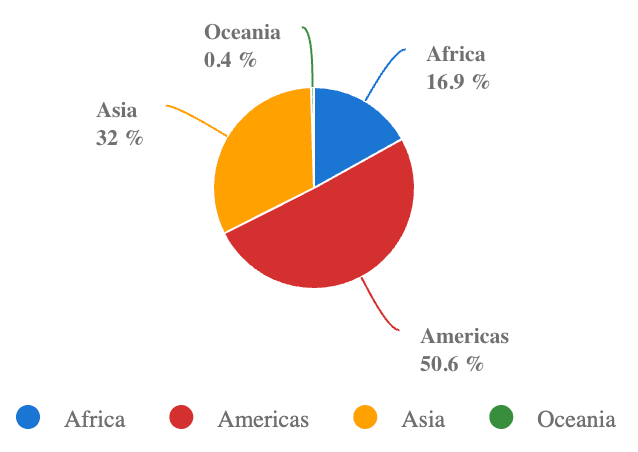
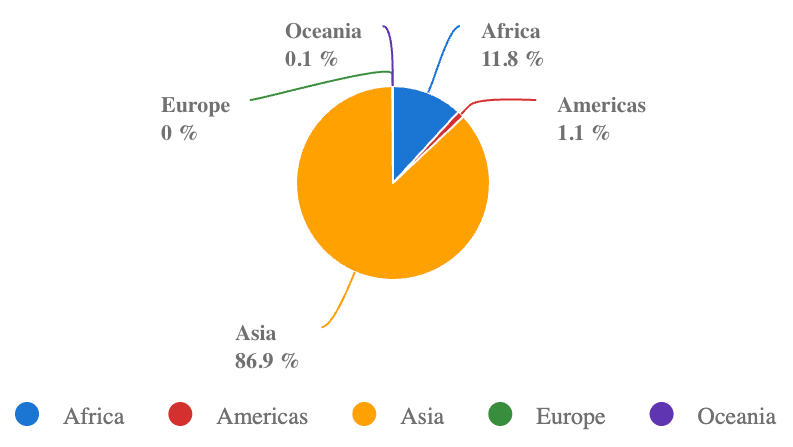
World Agriculture: Types, Classification and Major Crops
World Agriculture: Types and Classification is an important topic in world geography that explains the wide diversity of farming systems practiced across different regions of the world. It includes major types of agriculture such as shifting agriculture, subsistence farming, plantation agriculture, mixed and dairy farming, commercial grain farming, organic and eco-farming, dry and terrace cultivation, multiple cropping, crop rotation, ranching, contract and e-agriculture. The topic also covers agricultural methods and techniques along with important international agricultural organizations.
Types of Agriculture in the World
Shifting Agriculture
Shifting agriculture is the oldest form of agriculture.
It is practised in the tropical forest regions. In this system, the forests are cut and burnt to clear the land, and crops are grown on the cleared land for a few years.
This type of agriculture is practised by primitive tribal communities.
When the fertility of the soil is exhausted, the same process is repeated at another place. Because the trees are cut and burnt, it is also called Slash and Burn Agriculture. It is also known as Bush Fallow Agriculture.
Shifting agriculture is known by different names in different parts of the world.
Main Characteristics of Shifting Agriculture:
The size of the cultivated fields is very small.
Agriculture is practised using primitive tools such as wooden implements, hoes and spades.
After two to three years, when the soil loses its fertility, new fields are prepared at another place and cultivation is started again.
In India, this agriculture is called Jhumming in the eastern states; in Central America and Mexico, it is called Milpa; in Malaysia and Indonesia, it is known as Ladang; and in Vietnam, it is called Ray.
This type of agriculture is also practised in the Amazon Basin, Congo Basin, and the Eastern Islands.
At present, crops such as paddy, local coarse grains (maize, jowar, bajra), pulses and oilseeds are grown under this system.
Names of Shifting Agriculture in Different Parts of the World:
Name
Region
Name
Region
Ladang
Indonesia and Malaysia
Milpa
Central America and Mexico
Roca
Brazil
Conuco
Venezuela
Jhum
North-Eastern India
Tavy
Madagascar
Kaingin
Philippines
Masole
Zaire and Central Africa
Huma
Java and Indonesia
Tungya
Myanmar (Burma)
Chenna
Sri Lanka
Logan
West Africa
Ray
Vietnam
Tamrai
Thailand
Names of Shifting Agriculture in Different Regions of India:
Name
Region
Name
Region
Bewar, Dahiya,
Madhya Pradesh,
Penda, Dipi, Podu,
Andhra Pradesh
Kaman, Binga, Dhavi, Bhringa
Odisha
Kumari
Western Ghats
Batra
South-Eastern Rajasthan
Jara and Erka
Southern India
Khil
Himalayan Region
Kuruva
Jharkhand
Pamlou
Manipur
Walra
South-East Rajasthan
Dipa
Bastar District of Chhattisgarh, Andaman and Nicobar Islands
Primitive Subsistence Agriculture
Gradually, when shifting cultivation assumed a permanent form, it came to be known as Primitive Subsistence Agriculture.
The main characteristics of this type of agriculture are as follows:
Land is cleared and the soil is properly ploughed.
Available water resources are used for irrigation.
Improvement in agricultural production leads to the development of other occupations.
Along with agriculture, animal husbandry is also practised.
Animals are used for ploughing the fields and for transportation.
This type of agriculture is found in North-Eastern India, Malaysia, Indonesia and the countries of the Middle Indies.
Subsistence Agriculture
Although agriculture originated for the purpose of subsistence, gradually it became the main means of livelihood for the farmer.
When agriculture began to fulfil not only the food requirements but also other basic needs of life, it came to be known as Subsistence Agriculture.
During the last 100 years, this type of agriculture has expanded rapidly.
Main Characteristics of Subsistence Agriculture are:
It is a permanent system of agriculture and is practised in regions having favourable natural conditions.
Due to the pressure of population on agricultural land, the land is used very intensively.
The intensity of cultivation is so high that two or three crops are taken in a year.
The land holdings are small in size and highly fragmented.
Along with the extensive use of human labour, agricultural implements and machines are also used.
The use of high-yielding variety seeds, chemical fertilisers and pesticides has increased agricultural productivity.
Irrigation facilities have expanded and the practice of crop rotation is followed.
Due to dense population, mainly food crops are produced.
In this system of agriculture, the output per unit of land is high, but the production per farmer is low.
This type of agriculture is practised in the densely populated regions of Monsoon Asia.
Two Types of Subsistence Agriculture
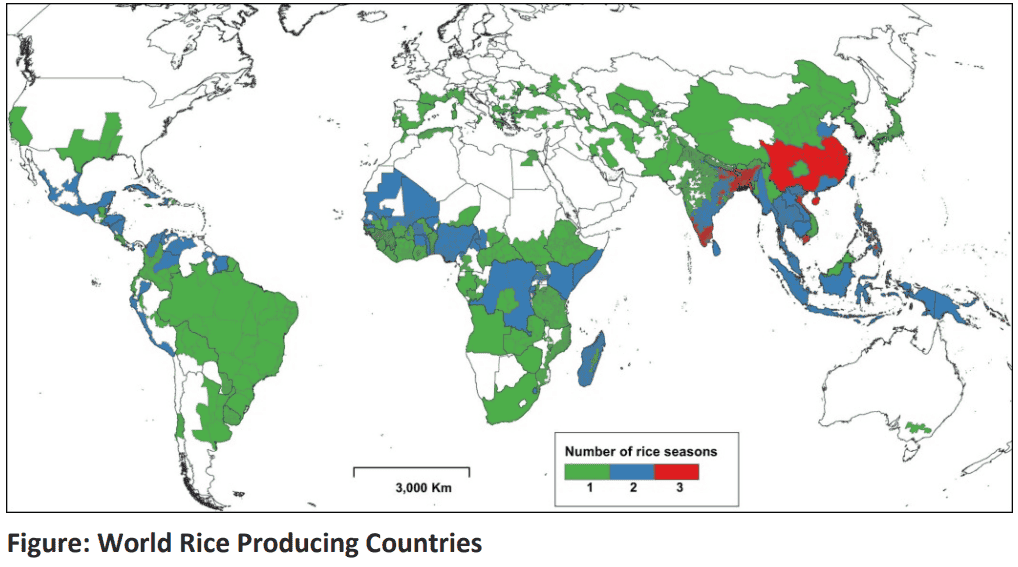
1. Rice-dominant Subsistence Agriculture
Distribution: India, Bangladesh, Myanmar, Indonesia, Cambodia, Thailand, Southern and Central China
In these regions, the annual rainfall is more than 100 cm and rice is the main food crop
2. Wheat-dominant Subsistence Agriculture
Distribution: Northern, Central and Western India, Northern China, Pakistan and Korea.
In these regions, the annual rainfall is less than 100 cm
In these areas, wheat is the main food crop
As per NCERT
Non-Rice Intensive Subsistence Agriculture
In many parts of Monsoon Asia, due to variations in relief, climate, soil and other geographical factors, the cultivation of rice is generally not possible.
Hence, in Northern China, Manchuria, Northern Korea and Northern Japan, crops such as wheat, soybean, barley and sorghum are grown.
In India, wheat is mainly cultivated in the western part of the Indus–Ganga Plains, while jowar and bajra are predominantly grown in the southern and western dry regions.
Most of the characteristics of this type of agriculture are similar to those of rice-dominant intensive subsistence agriculture. The only difference is that irrigation is practised in this system.
Extensive Commercial Grain Farming
When subsistence agriculture assumed an extensive commercial form, agricultural production began to be carried out with a commercial objective rather than only for self-consumption.
This type of agriculture is practised in developed countries where land is abundant and population is sparse.
The main characteristics of Extensive Commercial Grain Farming are:
It is practised on large land holdings. The size of the holdings generally ranges from 240 to 1600 hectares.
All operations from field preparation to harvesting are performed by machines like tractors, harvesters, threshers, combine harvesters, and winnowers.
The main crop is wheat. Other crops such as barley, oats, rye and oilseeds are also grown.
Large warehouses and granaries are constructed for the safe storage of food grains.
The use of human labour is minimum.
The yield per hectare is low, but the per capita production is high.
This type of agriculture is practised in the temperate grassland regions such as the Steppes of Eurasia, the Prairies of North America, the Pampas of Argentina, the Velds of Southern Africa, the Downs of Australia and the Canterbury Plains of New Zealand.
In these agricultural regions, due to continuous increase in population, the area under agriculture is gradually declining.
All the countries practising it are developed countries.
It is highly mechanised and based on modern technology.
Plantation Agriculture
This type of commercial agriculture was developed in the tropical regions during the colonial period by the Europeans.
Its main objective was to supply European countries with those essential crops which could be grown only in the tropical climate.
The British developed tea plantations in India and Sri Lanka, rubber plantations in Malaysia, and sugarcane and banana plantations in the West Indies.
The French introduced coffee and cocoa plantations in West Africa.
The Americans established coconut and sugarcane plantations in the Philippines.
For a long time, the Dutch (Hollanders) had a monopoly over sugarcane cultivation in Indonesia.
In Brazil, several European countries developed coffee plantations, which are known as ‘Fazenda’.
After the end of colonial rule, at present, the ownership of most plantations is under the control of the governments or local citizens. Now these plantations export their produce as well as sell it in the local markets.
Main Characteristics of Plantation Agriculture are:
The size of the agricultural holdings is very large.
It involves heavy capital investment, efficient management, technical support and the use of scientific methods.
A large number of labourers are required.
It is a single-crop farming system.
It provides raw material to industries.
Cardamom, black pepper, sugarcane, rubber, tea, coffee, coconut and banana are the major plantation crops.
This type of agriculture is practised in Indonesia, Malaysia, Southern and Eastern India, Southern China, Myanmar, Cambodia, the Philippines, Sri Lanka, Central Africa, Brazil, Fiji, Cuba and the Hawaiian Islands.
Mixed Farming
In this type of agriculture, the cultivation of crops and the rearing of animals are carried out together.
Distribution: It is practised in the highly developed parts of the world, such as the eastern part of North America, north-western Europe, some parts of Eurasia, and the temperate latitude regions of the southern continents.
Main Characteristics of Mixed Farming are:
Equal importance is given to both crop production and animal husbandry.
The size of the farms is medium.
Wheat, barley, rye, oats, maize, soybean and fodder crops are the major crops grown.
Along with crops, animals such as sheep, goats, pigs, cattle and poultry are reared.
Crop rotation and intercropping help in maintaining soil fertility.
Heavy capital investment is involved in this type of agriculture.
Skilled and efficient farmers practise this farming.
It is generally practised near metropolitan cities.
Improved farming methods, efficient transportation and reliable rainfall strongly support mixed farming.
Dairy Farming:
In Dairy farming, special emphasis is laid on the breeding, grazing, and improvement of the breeds of milk-yielding animals.
The care of animals is carried out by scientific methods.
The processes of milking and processing of milk are done with the help of machines.
It requires intensive labour and the Labour is needed throughout the year for activities such as grazing animals, milking, etc.
Dairy farming is practiced near urban and industrial centres because these areas provide good markets for milk and other dairy products.
The three major regions of dairy farming are: North-Western Europe (The Netherlands, Denmark, etc.), the USA and Canada, New Zealand, South-Eastern Australia, and Tasmania.
Mediterranean Agriculture:
It is a highly specialized type of agriculture.
Its extent is found in the regions adjoining the Mediterranean Sea, stretching from Southern Europe to North Africa from Tunisia to the Atlantic coast. It is also found in Southern California, Central Chile, the south-western part of South Africa, and the southern and south-western parts of Australia.
Mediterranean region is important for supplying citrus fruits.
Grape cultivation is a special feature of this region.
In many countries of this region, high-quality wine is produced from good varieties of grapes. Lower-grade grapes are dried to make currants and raisins.
Fig and olive are also grown here.
During winter, when there is high demand for fruits and vegetables in Europe and the USA, the supply is made from this region.
Market Gardening and Horticulture:
In this type of agriculture, high-value cash crops such as vegetables, fruits, and flowers are grown, which are mainly in demand in urban areas.
The size of farms is small and they are located at places from where good transport facilities are available to the cities. The consumers here are generally people with higher incomes.
This type of farming requires intensive labour and large capital. Besides this, irrigation facilities, fertilizers, good quality seeds, pesticides, greenhouses, and artificial heating in cold regions are also used.
This farming is more developed in North-Western Europe, the north-eastern part of the USA, and the Mediterranean regions, because the population density is high in the industrial cities of these areas.
The Netherlands is famous for flower production, especially for tulips, which are exported throughout Europe.
Where only vegetables are grown, it is called “Truck Farming.” It is so named because the vegetables are transported to city markets overnight by trucks.
Apart from this, factory farming is also practiced in the industrial regions of Western Europe and North America. In this, animals such as cows, bulls, and poultry are reared. They are given ready-made feed and are looked after by scientific methods. A large amount of money is spent on buildings, equipment, lighting, temperature control, and veterinary services. The selection of good breeds and scientific breeding are the main features of this type of farming.
Agriculture can also be classified on the basis of organization, such as the ownership of land by farmers, government policies, and government assistance. All these factors influence the types and methods of agriculture.
Truck Farming:
It is also a specialized type of agriculture in which vegetables are cultivated.
These products are filled in trucks daily and transported to nearby urban markets for sale.
The distance between the market and the farming area depends on how much distance a truck can cover during the night. Hence, it is called truck farming.
It first started in the United States of America.
Due to the high demand for fresh vegetables in rapidly growing metropolitan cities and industrial regions, this type of farming has spread rapidly.
This agriculture has a close relationship with urbanization. In India, urbanization is increasing rapidly. Since the majority of the population is vegetarian, the demand for vegetables is continuously rising. Therefore, truck farming is developing rapidly in the country.
Orchard Farming:
It is also a specialized type of agriculture in which, instead of vegetables as in truck farming, fruits and flowers are cultivated. The demand for fruits and flowers is higher in urban areas.
Different types of fruits are grown in different regions
In tropical regions, banana, mango, and coconut are the main fruits. In temperate regions, apple and pear are grown. In the Mediterranean regions, lemon, orange, mandarins, grapes, etc. are the main fruits.
Co-operative Farming:
When a group of farmers voluntarily forms a co-operative society to carry out agricultural activities for earning higher profits, it is called co-operative farming.
In this system, individual farms remain intact, but farming is done collectively in a co-operative manner
The co-operative society provides all types of assistance to farmers. This assistance includes the purchase of all inputs required for agriculture, the sale of agricultural produce at fair prices, and arranging processed goods at cheap rates.
The co-operative movement started about a century ago and has been successfully implemented in Western European countries such as Denmark, the Netherlands, Belgium, Sweden, and Italy. It achieved the greatest success in Denmark, where almost every farmer is a member of the co-operative society.
Collective Farming:
The basic principle of this type of agriculture is that the ownership of the means of production is based on the entire society and collective labour.
This type of farming was first introduced in the former Soviet Union, where collective farming was started to improve the condition of agriculture, increase production, and achieve self-reliance. This system of collective farming was called Kolkhoz in the Soviet Union. In later years, it was also adopted by some other communist countries such as Eastern Europe, China, Vietnam, and North Korea.
All farmers pool their resources such as land, livestock, and labour and carry out agricultural activities collectively. They keep a small piece of land under their own control for fulfilling their daily needs.
State Farming:
It is also known as Sovkhoz.
This type of agriculture is controlled by the state. In this system, the farms do not belong to the farmers but are the property of the state, on which farmers work as labourers or cultivators.
Farmers are paid wages according to the work they do.
The collective farming practiced in Israel is called Kibbutzim.
Contract Farming:
Contract farming is a system of farming in which farmers produce crops under contract with a company or agency, which supplies inputs and purchases the produce at pre-decided prices.
Under contract farming, special varieties of crops such as mango, banana, garlic, and onion are produced.
For example, contract farming is practiced for tomato production in Punjab, Haryana, and Rajasthan; for sunflower production in Andhra Pradesh and Karnataka; and for fruits and vegetable production in states like Tamil Nadu and Maharashtra.
Zero Farming:
In view of the increasing food requirements, rapid efforts are being made to increase crop production. For this purpose, various fertilizers, pesticides, and new technologies are being used.
As a result, the natural fertility of the land is decreasing, which is harmful for sustainable agricultural development.
To deal with this problem, farmers are now adopting the technique of Zero Input Farming. Under this system, no external fertilizers, manures, or pesticides are added to the soil, due to which the soil gradually becomes suitable for zero farming and the crops become more nutritious. Before starting such farming, the process of organic farming is followed for three years.
E-Agriculture:
E-Agriculture or E-Farming is a type of agriculture developed on the basis of internet-based information and communication technology.
Its objective is to promote agricultural development through the application of newly emerging technologies and various solutions.
Its main aim is to make demand-based agricultural information available to farmers, such as product prices, different methods of ploughing, crop protection, and to establish direct contact with capable buyers to get the right price for their products.
Dry Farming:
Agriculture done without irrigation in regions of insufficient rainfall is called dry farming.
This farming is carried out only with the help of the moisture available in the soil.
Terrace Cultivation:
This type of agriculture is practiced in mountainous regions on contour-lined terrace fields.
Multiple Cropping:
Growing two or more crops successively on the same land within one year is called multiple cropping.
It is practiced in regions having irrigation facilities.
Crop Rotation:
The successive growing of different crops in a fixed sequence in order to maintain the fertility of the soil is called crop rotation.
Organic Farming:
It is a method of agricultural production in which chemical fertilizers and pesticides are not used.
In India, during the final phase of the Tenth Five-Year Plan, the National Organic Farming Project was launched for the production, promotion, and market development of organic farming. Under this project, emphasis was laid on providing financial incentives for compost units made from fruit and vegetable waste, production of bio-fertilizers, and egg production units for vermiculture, etc.
The main objective of this type of agriculture is to preserve the natural quality of soil and to promote small-scale and sustainable agriculture.
Ranching / Pastoral Farming:
When different types of animals are grazed on natural vegetation areas, it is called ranching or pastoral farming.
In this crop production is not carried out.
Ranching is mostly practiced in countries where natural grazing lands are found in the most favorable conditions.
Pastoral farming is mainly practiced in Australia, North America, South America, Tibet, and the mountainous or plateau regions of India.
Eco-Farming / Ecological Farming:
In this system of agriculture, farming is carried out without causing harm to ecological resources.
Instead of chemical fertilizers and pesticides, organic fertilizers and bio-pesticides are given preference.
The main objective of this method is to obtain production from nature up to its capacity with minimum interference in ecological activities.
In this system, emphasis is laid on the use of vermi-compost, neem-based pesticides, and tissue culture techniques.
Agricultural methods and techniques
Fallowing / Leaving Land Fallow:
Continuous cultivation on the same agricultural field reduces the fertility of the soil. Therefore, to maintain soil fertility, the agricultural land is left vacant (fallow) for some time or for a certain period (generally for 3 to 4 years), so that the land may regain its natural fertility.
Cyclic Farming:
When different crops are grown in a cyclic order on the agricultural field instead of leaving it fallow, it is called cyclic farming.
Cyclic farming does not cause a deficiency in soil fertility and nutrients, but the balance of nutrients in the soil is maintained.
In cyclic farming, leguminous plants, especially pulse crops, are mainly grown because they continuously fix nitrogen in the soil.
Mixed Cropping / Mixed Farming:
In mixed farming, different types of crops are grown together on the same agricultural field so that one crop utilizes nutrients while the other provides production. In this way, the balance of nutrients in the soil is maintained.
Along with agricultural activities, animal husbandry is also practiced in mixed farming.
Double Cropping:
In this system, two crops are produced in the same year by the cyclic method.
The main objective of double cropping is to maintain the fertility of the soil. Therefore, one of the crops is nitrogen-fixing in nature.
Such agriculture is practiced in areas having sufficient irrigation facilities or adequate rainfall.
Relay Cropping:
Under this method, the second crop is sown in the vacant spaces between the standing first crop before it is harvested.
Thus, there is no need to wait for the harvesting of the first crop, as is done in double cropping.
Multiple Cropping
Due to the availability of short-duration crops and better water-management techniques, the tendency to grow three crops in a year is increasing. This is called multiple cropping.
Along with agricultural development, farmers are now increasingly adopting multiple cropping.
Agricultural Productivity:
Agricultural productivity means production per hectare or production per worker.
In areas of extensive agriculture, labour productivity is higher, whereas in areas of intensive agriculture, per hectare production is higher. However, due to the inadequate development of agricultural methods in India, the country remains backward in both respects.
Agricultural productivity depends on both physical and non-physical factors. (i) Physical factors include climate, soil, and relief (slope), whereas (ii) non-physical factors include institutional and structural factors along with political and administrative efforts.
Agricultural Efficiency:
Agricultural efficiency includes both productivity and profitability. It means how much output is obtained with minimum investment and what is the market value of that output.
Therefore, it is also possible that even in regions with high productivity, agricultural efficiency may be low.
Cropping Intensity:
In countries like India, further horizontal expansion of fertile land is not possible.
Therefore, the need is to obtain crops more than once in a year from the same agricultural land by cultivating it in different cropping seasons throughout the year.
The maximum utilization of agricultural land is called the vertical development of agricultural land or cropping intensity.
Important International Agricultural Organizations
Organization
Headquarters
Food and Agriculture Organization (FAO)
Rome, Italy
Center for International Forestry Research (CIFOR)
Bogor, Indonesia
World Meteorological Organization (WMO)
Geneva, Switzerland
International Rice Research Institute (IRRI)
Manila, Philippines
International Institute of Tropical Agriculture (IITA)
Ibadan, Nigeria
Major Crops
Rice
Rice is the major food crop of the world.
It is the staple diet of the tropical and sub-tropical regions.
It is a tropical crop belonging to the Poaceae family
Geographical Conditions:
Temperature – A tropical crop, requires 20°C during sowing and 27°C during ripening.
Rainfall – 100–200 cm annual rainfall, fields should be flooded for 75 days, irrigation is necessary in areas with low rainfall.
Climate – Rice is a tropical-humid climate crop.
Soil – Alluvial clayey soil is best (river deltas and coastal areas).
Topography – Flat land is suitable, terraced fields in hilly areas.
Labor – A labor-intensive crop, requires inexpensive labor for land preparation, planting, and harvesting.
Fertilizers – Green manure, farmyard manure, bone meal, ammonium sulfate, and nitrate fertilizers.
Rice grown in low-lying, marshy areas is considered to be of higher quality and yields a greater harvest per hectare.
Upland rice varieties have shorter stalks, smaller, redder grains, and mature quickly with less rainfall. However, this type of rice is harder and less flavorful.
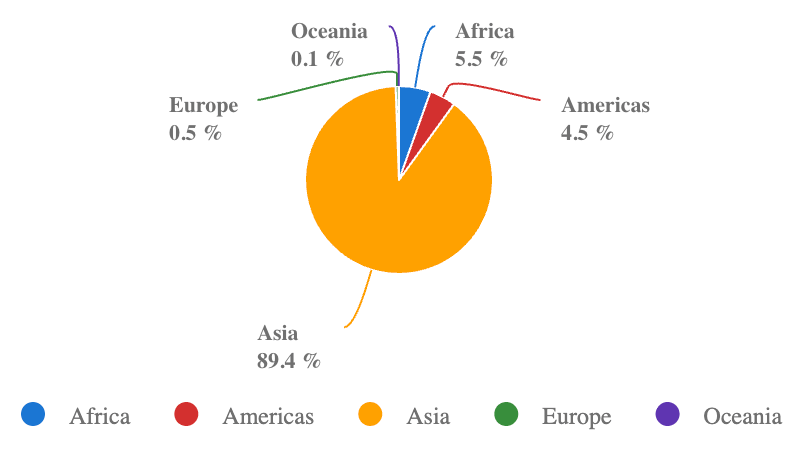
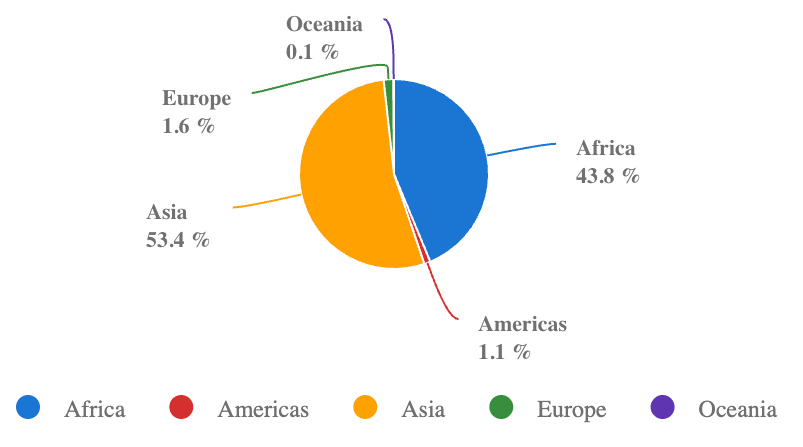
Production share of Rice by Region
Top 5 Producers of Rice in the world
Country
Metric Ton (Approx)
India
217 Million
Mainland China
207 Million
Bangladesh
60 Million
Indonesia
53 Million
Vietnam
43 Million
Wheat
This plant belongs to the Poaceae family.
Geographical Conditions:
Temperate climate is ideal for wheat cultivation.
Soil: Fertile loam, clayey soil, fine alluvial soil (pH 5-7.5)
Rainfall: Cool climate and 50-75 cm of annual rainfall necessary.
Temperature:
Sowing temperature: 10°C
Growing season temperature: 15°C
Ripening/harvesting temperature: 20-28°C
Frost-free period: At least 100 days
Topography: Flat land, suitable for mechanized farming and drainage.
Fertilizers: Compost, organic manure, and chemical fertilizers (NPK) are used
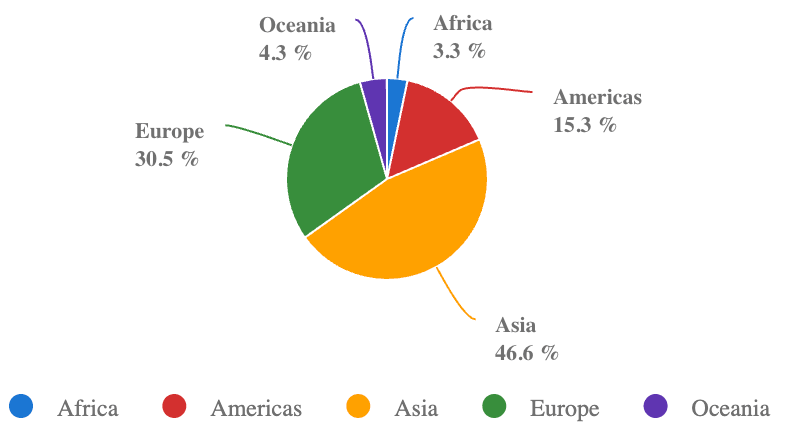
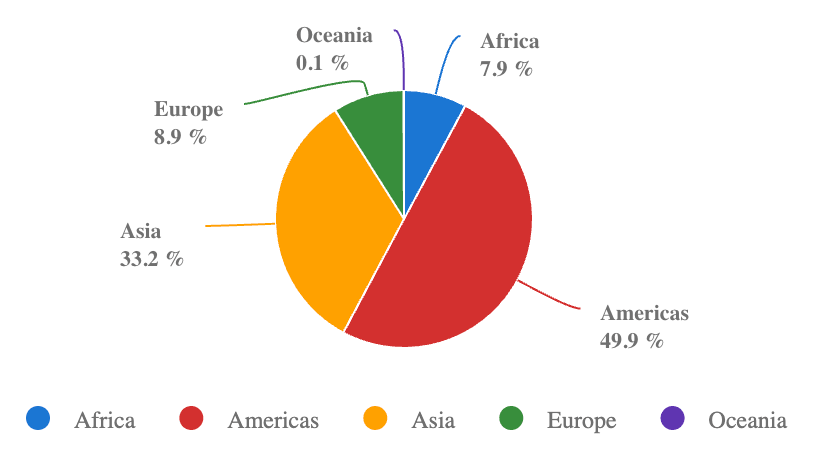
Production share of Wheat by Region
Top 5 Producers of Wheat in the world
Country
Metric Ton (Approx)
Mainland China
140 Million
India
113 Million
Russian Federation
82 Million
U.S.A.
53 Million
Canada
35 Million
Millets
Millet is a collective term referring to a number of small-seeded annual grasses that are cultivated as grain crops, primarily on marginal lands in dry areas in temperate, subtropical and tropical regions.
The most important examples are pearl millet, finger millet, proso millet and foxtail millet.
Millets are anti acidic; gluten free.
Helps to prevent type 2 diabetes.
Effective in reducing blood pressure.
Reduces risk of gastrointestinal conditions like gastric ulcers or colon cancer.
Eliminate problems like constipation, excess gas, bloating and cramping.
Millet act as a probiotic feeding micro flora in our inner ecosystem.
It will also be critical for climate change measures in drylands and important for smallholder and marginal farmers.
Bioethanol can be created using sorghum (jowar) and pearl millet (bajra), and that this fuel could bring down carbon emissions by about half.
Geographical Conditions
Temperature: Millets require warm, sunny conditions, with an optimal growing range of 25oC to 35oC They are highly tolerant to extreme heat but generally require a minimum temperature of 8oC to 10oC for germination.
Rainfall: They are adapted to arid and semi-arid regions, typically requiring low annual rainfall between 300 mm and 600 mm, relying heavily on rainfed rather than irrigated systems.
Soil Type: Well-drained soils, including sandy, loamy, and alluvial types, are ideal. They are highly adaptable, often grown in poor, infertile, and sandy soils. They can also thrive in slightly acidic or alkaline conditions.
Topography & Altitude: They can be grown from sea level up to elevations of 2,100 meters.
Sowing Season: Predominantly grown as a Kharif (summer) crop in many parts of the world, with sowing starting upon the onset of monsoons (June-July).
Country / Region
Major Millets Types
Features
India
Jowar, Pearl millet, Finger millet, Minor millets
World’s largest producerRain-fedMinor millets <35 cm rainfallMajor millets ~40 cmCrucial for dryland agriculture
China
Foxtail millet, Proso millet
One of the two major Asian producers
Myanmar
Minor millets
Small-scale production
Nepal
Finger millet, Minor millets
Limited, subsistence cultivation
Pakistan
Pearl millet, Minor millets
Small quantities under arid conditions
Asia (general)
Kodo millet (cultivated)
Cultivated forms found only in Asia
Nigeria
Pearl millet, Black fonio, Kodo (wild)
Largest African producer (>40% of Africa’s output)Pearl millet vital for food security
Niger
Pearl millet
Major Sahelian producer
Burkina Faso
Pearl millet
Important rain-fed crop
Mali
Pearl millet, White fonio
White fonio especially important
Senegal
Pearl millet
Staple in dry regions
Sudan
Pearl millet
Grown in hot, dry areas
Uganda
Finger millet
Leading producer in Eastern Africa
Tanzania
Finger millet
Important food crop in highlands
Kenya
Foxtail millet, Proso millet
Cultivated in upland areas
Western Africa (Sahelian belt)
Pearl millet
Southern fringes of the Sahara
Eastern & Southern Africa
Pearl millet, Finger millet
Pearl millet in dry zones; finger millet in cooler highlands
Mali (sub-Sahelian West Africa)
White fonio
Grown in small quantities
Nigeria, Togo, Benin
Black fonio
Cultivated in isolated pockets
Guinea (Fouta-Djallon Plateau)
Guinea millet
Restricted cultivation
Sierra Leone (adjacent areas)
Guinea millet
Limited regional cultivation
Western Africa (general)
Kodo millet (wild)
Mostly harvested from wild forms
Russia (Russian Federation)
Proso millet
Major producer among developed countries
Kazakhstan
Proso millet
Concentrated cultivation
Ukraine
Proso millet
Part of CIS millet belt
Europe (general)
Foxtail millet, Proso millet
Minor and localized production
North America
Proso millet
Extremely limited; mainly used as bird seed
Argentina
Minor millets
Cultivation confined to small areas
Australia
Proso millet
Very limited cultivation
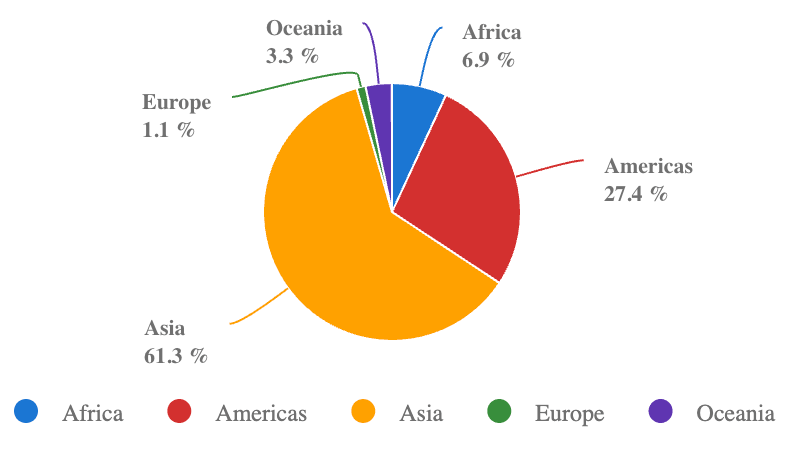
Production share of Millets by Region
Top 5 Producers of Millets in the world
Country
Metric Ton (Approx)
India
12 Million
Niger
3 Million
Mainland China
2 Million
Mali
1.9 Million
Nigeria
1.5 Million
Millets are cultivated globally in 131 countries.
Africa and Asia dominate millets production followed by the European Union, America and Australia.
India is the largest grower of millets accounting 41% of total millets production followed by Niger (11.5%) and China (7.6%).
India covers 83% of Asia’s millet cropping area.
Maize
Maize (corn) is a major cereal crop belonging to the grass family (Poaceae).
It is one of the world’s most important grain crops and is widely used for human consumption, animal feed, and as an industrial raw material.
Maize is cultivated in tropical, subtropical, and temperate regions.
Geographical Conditions:
Climate & Temperature: Warm climate, optimum 21–27°C, germination at ~10°C, >35°C at flowering reduces yield, frost-free period required.
Rainfall: 50–100 cm, well distributed, sensitive to drought and waterlogging, moisture critical at germination, tasseling, grain filling, dry weather at harvest.
Soil: Deep, fertile, well-drained, alluvial/loamy best, pH 5.5–7.5, rich in nitrogen and organic matter.
Relief: Plains, gentle slopes, plateaus, avoid steep and waterlogged areas.
Sunshine & Season: High sunshine (C4 plant), 90–140 days growing period, suited to tropical–warm temperate regions.
Production Share of Maize by region
Top 5 Producers of Maize in the world
Country
Metric Ton (Approx)
U.S.A.
377 Million
Mainland China
294 Million
Brazil
114 Million
Argentina
57 Million
India
40 Million
Cotton
India is the native place of cotton plants. It is a tropical crop which is sown in the semi-arid parts of the country during the Kharif season.
Geographical conditions –
Temperature – 21°C to 27°C
High temperature, light rainfall, 210 frost-free days, clear weather and bright sunshine are the favourable conditions for cotton cultivation.
Rainfall – Areas with 50–100 cm average annual rainfall.
The sky must be cloud-free at the time of flowering of cotton.
Maturity period: 6 to 8 months
Soil – Black (Regur) soil is best; water retention capacity is high. The Deccan lava plateau is the main area.
Surface – Good drainage is essential; waterlogging in the field is harmful.
Labour – More labour is required for sowing seeds, irrigation and picking.
Production Share of Cotton by region
Top 5 Producers of Cotton in the world
Country
Metric Ton (Approx)
Mainland China
18 Million
India
15 Million
U.S.A.
9 Million
Brazil
8 Million
Pakistan
3 Million
Jute
Jute is a natural fibre crop obtained from the bast (outer stem) of jute plants.
It is one of the most important commercial fibre crops after cotton and is valued for being eco-friendly, biodegradable and renewable.
Geographical Conditions
Climate: Hot and humid climate, optimum temperature between 24°C–35°C, high atmospheric humidity, requirement of a frost-free period of about 120–150 days, sensitivity to frost especially during early growth stages.
Growth Period: 6 to 8 months
Rainfall: Heavy and well-distributed annual rainfall of 150–200 cm, continuous moisture during the growing season, dry weather preferred at the time of harvesting for better fibre quality.
Soil: Fertile, deep and well-drained alluvial soils, preference for new alluvium deposited by rivers, soils rich in organic matter, slightly acidic to neutral pH, tolerance to short-term waterlogging but susceptibility to prolonged stagnation.
Relief and Topography: Cultivation in low-lying floodplains and river valleys, periodic flooding aiding soil fertility renewal, flat terrain facilitating cultivation, harvesting and fibre extraction.
Water Availability (Retting): Availability of abundant clean, slow-moving water after harvesting, necessity of water for the retting process, retting essential for obtaining good-quality jute fibre.
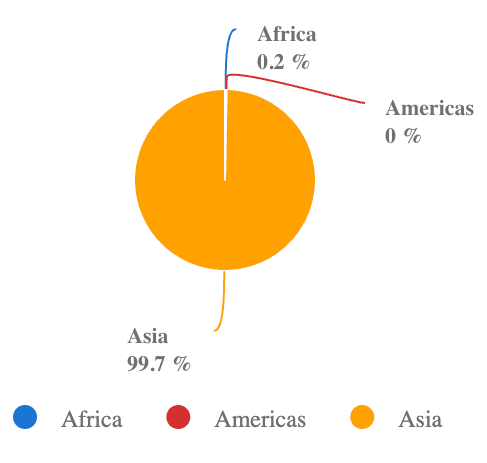
Production share of Jute by Region
Top 5 Producers of jute in the world
Country
Metric Ton (Approx)
Bangladesh
2 Million
India
1.4 Million
Cambodia
0.15 Million
Uzbekistan
0.09 Million
Nepal
0.01 Million
Coffee
Coffee is a beverage crop obtained from the seeds (beans) of the Coffea plant
Native to Ethiopia (East Africa)
Grown mainly in the tropical belt between the Tropic of Cancer and Tropic of Capricorn
Coffee is one of the most important export commodities of developing countries
Major producers: Brazil, Vietnam, Colombia, Indonesia, Ethiopia, India
Geographical Conditions
Climate: Warm and humid tropical climate, moderate temperature conditions, optimum temperature of 15°C–30°C, absence of frost, cool conditions during ripening stage.
Rainfall: Annual rainfall of 150–250 cm, well-distributed throughout the year, short dry period helpful for flowering, heavy rainfall harmful during harvesting.
Soil: Deep, fertile and well-drained soils, loamy or laterite soils, rich in organic matter and humus, slightly acidic soil (pH 5.5–6.5).
Relief and Topography: Cultivation on hill slopes and uplands, altitude ranging from 600–1600 metres, gentle slopes preferred for natural drainage.
Shade: Growth under partial shade, protection from direct sunlight and strong winds, intercropping with shade trees common.
Production Share of Coffee by region
Top 5 Producers of Coffee in the world
Country
Metric Ton(Approx)
Brazil
3 Million
Vietnam
2 Million
Colombia
0.83 Million
Indonesia
0.8 Million
Ethiopia
0.5 Million
Tea
Tea is a beverage crop obtained from the leaves of the tea plant (Camellia sinensis)
Tea leaves contain caffeine and tannins.
Native to China and Southeast Asia
Grown mainly in tropical and subtropical regions
Major types: Black tea, Green tea, Oolong tea
Major producers: China, India, Kenya, Sri Lanka
Geographical conditions
Temperature – 25°–30°C is suitable, shade is beneficial for plant growth, while dry air is detrimental.
Rainfall – 150–250 cm annually, morning sunlight is beneficial for growth (Frost is harmful to the tea crop).
Soil – Well-drained, deep, loamy soil with good organic matter content and adequate drainage is suitable.
Land – Tea plants require moisture, but waterlogging should be avoided, cultivation on hilly slopes and land cleared from forests is considered good.