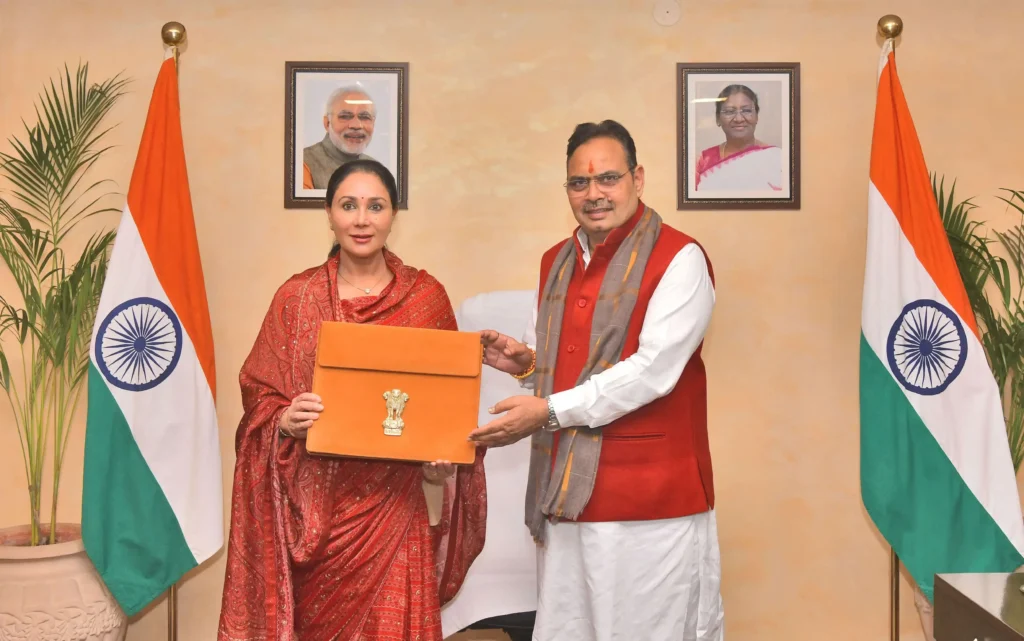
Rajasthan Budget 2026–27 was presented in the Rajasthan Assembly on 11 February 2026 by Deputy Chief Minister and Finance Minister Diya Kumari as the third full budget of the Bhajanlal government. Based on the vision of “Viksit Rajasthan @2047,” the budget emphasizes inclusive and sustainable growth while balancing economic expansion with social development. Its key focus areas include agriculture, education, healthcare, green energy, infrastructure, women and child welfare, employment generation, and citizen safety and convenience. The budget also carries strong expectations for youth, women, and farmers through skill development, social security measures, and new job and infrastructure initiatives aimed at accelerating overall state progress.
Rajasthan Budget 2026–27: Key Announcements
1. Budget at a Glance
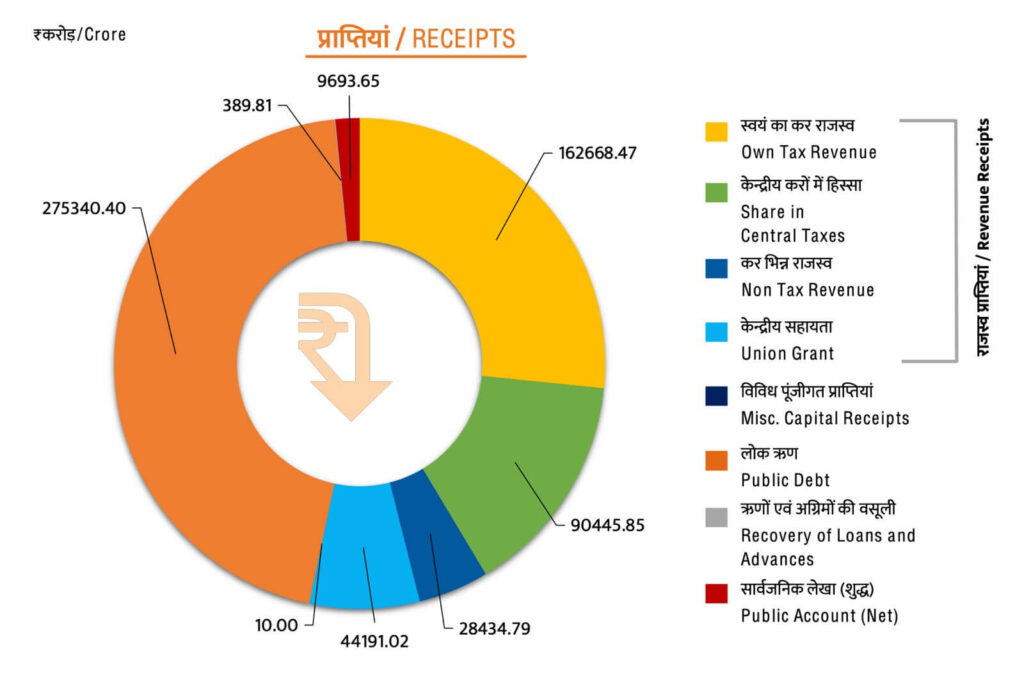
- Total Receipts: Approx. ₹6.11 lakh crore
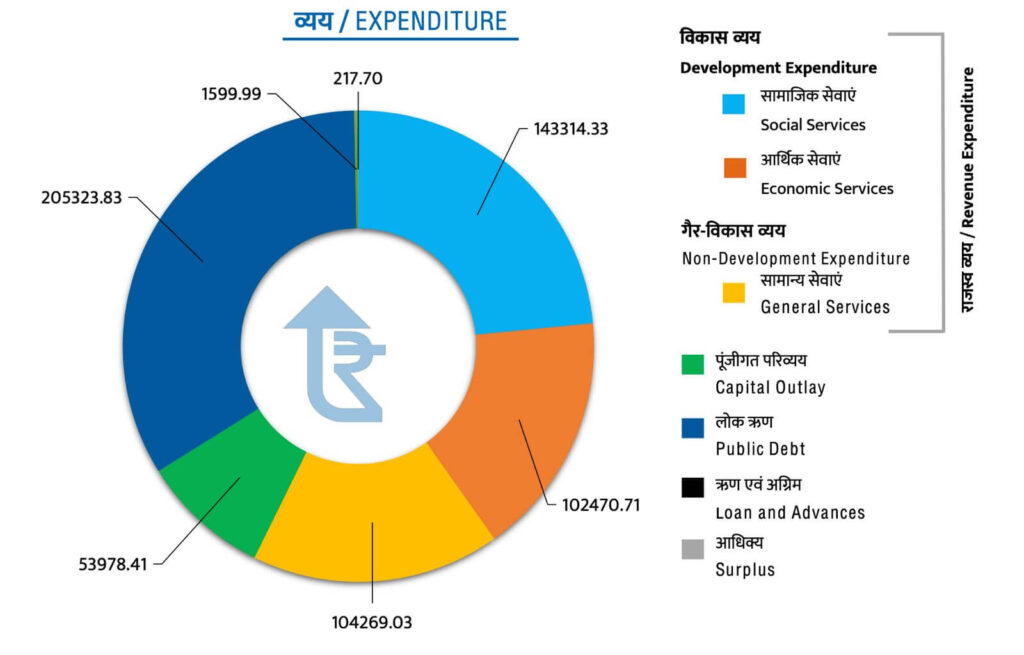
- Total Expenditure: Approx. ₹6.10 lakh crore
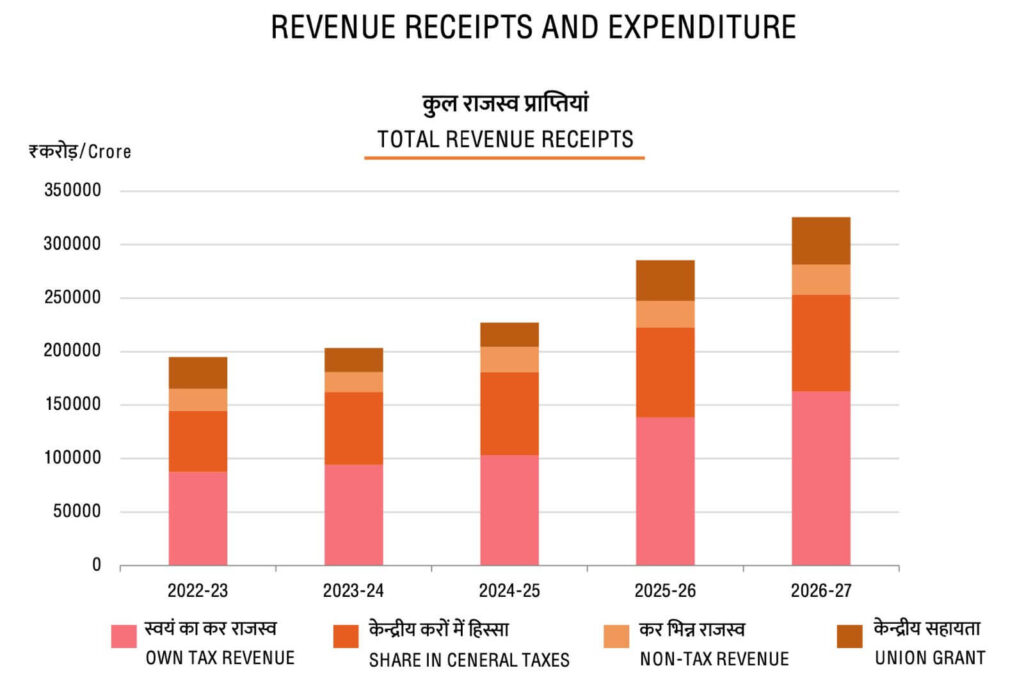
- Total Revenue Receipts: Over ₹3.25 lakh crore
- Capital Receipts: Around ₹2.85 lakh crore
- Fiscal Deficit: Approx. ₹79,000+ crore
- Revenue Deficit: Approx. ₹24,000+ crore
The budget reflects an attempt to maintain financial discipline while continuing large-scale development spending.
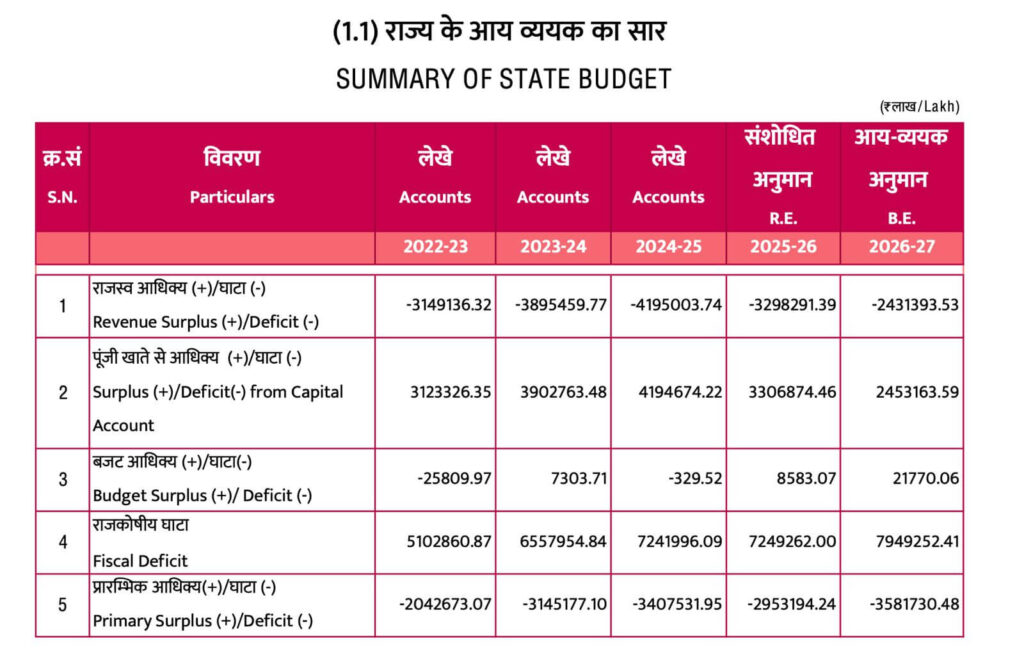
SELECT FISCAL INDICATORS
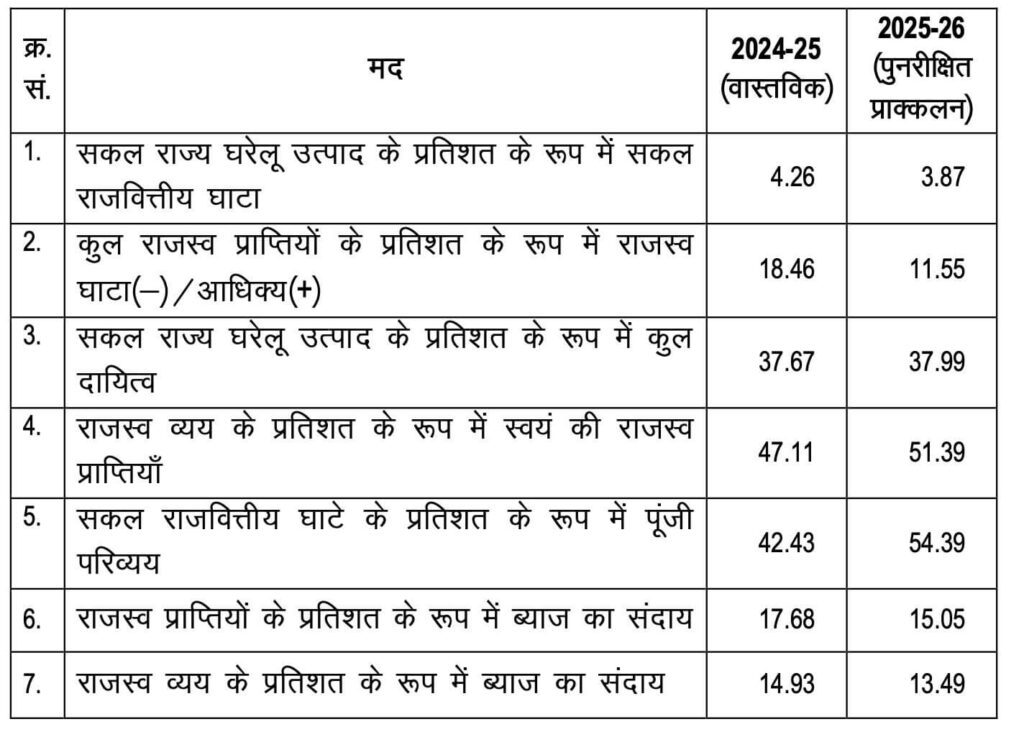
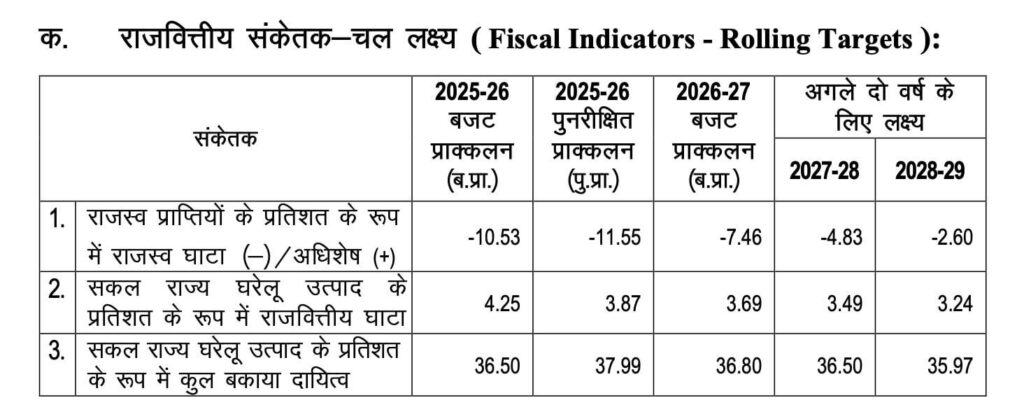
Fiscal Indicators – Rolling Targets
2. Major Revenue Sources
The state’s income mainly comes from the following sources:
- Own Tax Revenue: Over ₹1.62 lakh crore
- State GST
- Stamps & Registration Fees
- State Excise Duty
- Vehicle Tax
- Share in Central Taxes: Over ₹90,000 crore
- Non-Tax Revenue: Mining, petroleum, interest receipts, and service charges
- Union Grants / Central Assistance: Over ₹44,000 crore
GST and Stamp Duty remain the strongest pillars of Rajasthan’s internal revenue generation.
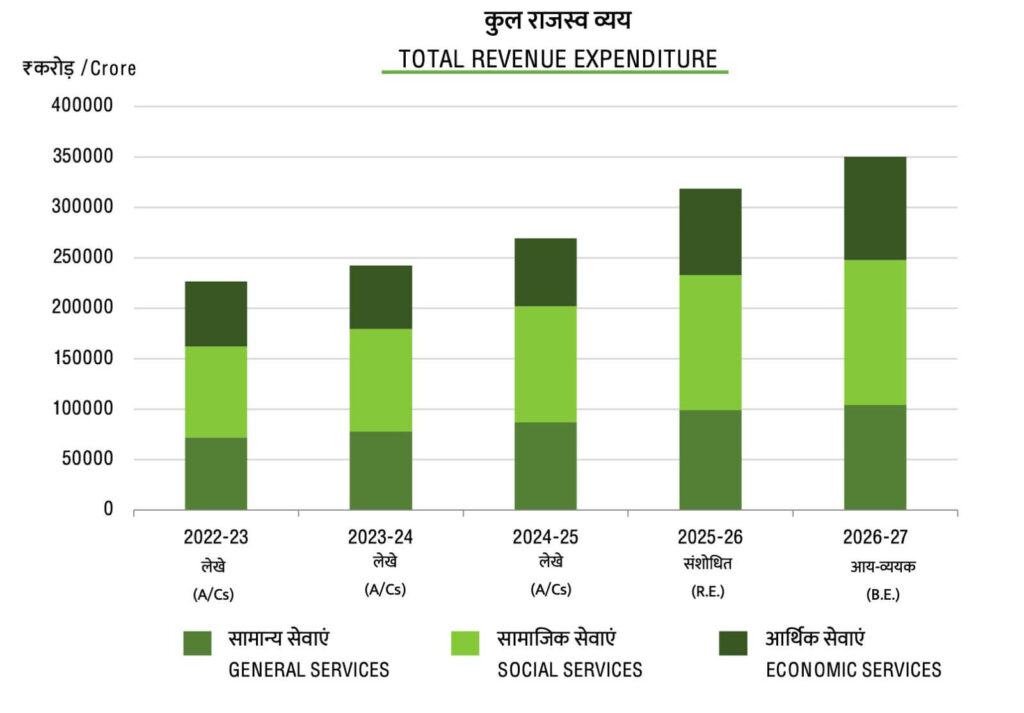
3. Sector-Wise Expenditure Distribution
Social Services
- Highest share of expenditure.
- Includes Education, Healthcare, Women & Child Development, Water Supply, Urban Development, and welfare schemes.
- Focus on improving Human Development Indicators.
Economic Services
- Investment in Agriculture, Irrigation, Energy, Industries, Mining, and Transport.
- Aims at boosting productivity, industrial growth, and job creation.
General Services
- Administrative expenses, police, judiciary, and governance-related costs.
4. Agriculture & Farmers Welfare Budget
Approx. ₹1.19 lakh crore allocated for agriculture and allied sectors:
- Subsidies: Electricity subsidy, interest subsidy, and gaushala support.
- Agricultural Loans: Short-term credit support schemes.
- Irrigation & Infrastructure: Dams, canals, and agricultural electricity connections.
- Crop & Livestock Insurance Schemes.
- PM-KUSUM Scheme: Target of 50,000 solar pump installations.
- Micro-Irrigation Equipment coverage for around 3 lakh hectares.
- Seed Mini-Kits and continued benefits under PM Kisan Samman Nidhi.
5. Health & Medical Sector
Significant allocation to strengthen healthcare facilities:
- Mukhyamantri Ayushman Arogya Yojana: Around ₹3,000 crore.
- Free Medicine & Diagnostic Scheme expansion.
- Rajasthan Health Scheme 2021 continuation.
- Construction of new Medical Colleges, District Hospitals, PHCs & CHCs.
- Health insurance coverage for more than 1.3 crore families.
6. Education & Skill Development
- Samagra Shiksha Abhiyan: Over ₹13,000 crore allocation.
- RTE Fee Reimbursement Schemes.
- PM-SHRI Schools development.
- Emphasis on Digital Learning, Smart Classrooms, and Technical Education.
- Skill development programs to enhance youth employability.
7. Green Budget & Sustainable Development
A large allocation dedicated to environmentally sustainable growth:
- Promotion of Renewable Energy – Solar & Wind Projects.
- Water Conservation and Climate-Resilient Infrastructure.
- Green urban and rural development initiatives.
- Focus on long-term environmental balance and clean energy transition.
8. Gender Budget (Women Empowerment)
- Dedicated funds for women’s education, health, safety, and economic empowerment.
- Special schemes to promote women entrepreneurship and social inclusion.
9. Child Budget
Separate budgetary focus for children (0–18 years):
- School Infrastructure Development
- Nutrition and Mid-Day Meal Programs
- Child Protection and Welfare Schemes
- Health and early childhood care initiatives.
10. SC/ST Sub-Plan
- Special allocations for Scheduled Castes and Scheduled Tribes.
- Focus on education, rural infrastructure, healthcare, housing, and employment.
- Objective is social inclusion and economic upliftment of marginalized communities.
Conclusion
The Rajasthan Budget 2026–27 is a growth-oriented and welfare-driven budget emphasizing agriculture, healthcare, education, green energy, and infrastructure development. With strong investments in social sectors and sustainable initiatives, the budget aims to strengthen Rajasthan’s long-term economy and move steadily toward the goal of “Viksit Rajasthan 2047.” It reflects a balanced approach combining fiscal responsibility with inclusive and future-ready development.
Rajasthan Budget 2026–27 Key Highlights : PDFs
| Budget 2026 Highlights | Download PDF |
| Budget at a Glance | Download PDF |
| Budget Speech | Download PDF |
| Budget Study | Download PDF |
| FRBM Document | Download PDF |
| Green Budget 2026–27 | Download PDF |
| Agriculture Budget 2026–27 | Download PDF |
| Concise Budget Summary | Download PDF |
| Revenue Receipts & Capital Receipts | Download PDF |
| Capital Expenditure | Download PDF |
Click here to read the Union Budget 2026–27.